

Poll: Support for state commission into Oct. 7 recedes as PM pushes alternative
Majority of 55% of Israelis still support the formation of a state inquiry, down from 67% in July 2024; 22% now favor politically appointed probe, says Israel Democracy Institute
 Add ToI as a Preferred Source on Google
Sam Sokol is a former political correspondent at The Times of Israel. He was previously a reporter for the Jerusalem Post, Jewish Telegraphic Agency and Haaretz. He is the author of "Putin’s Hybrid War and the Jews"
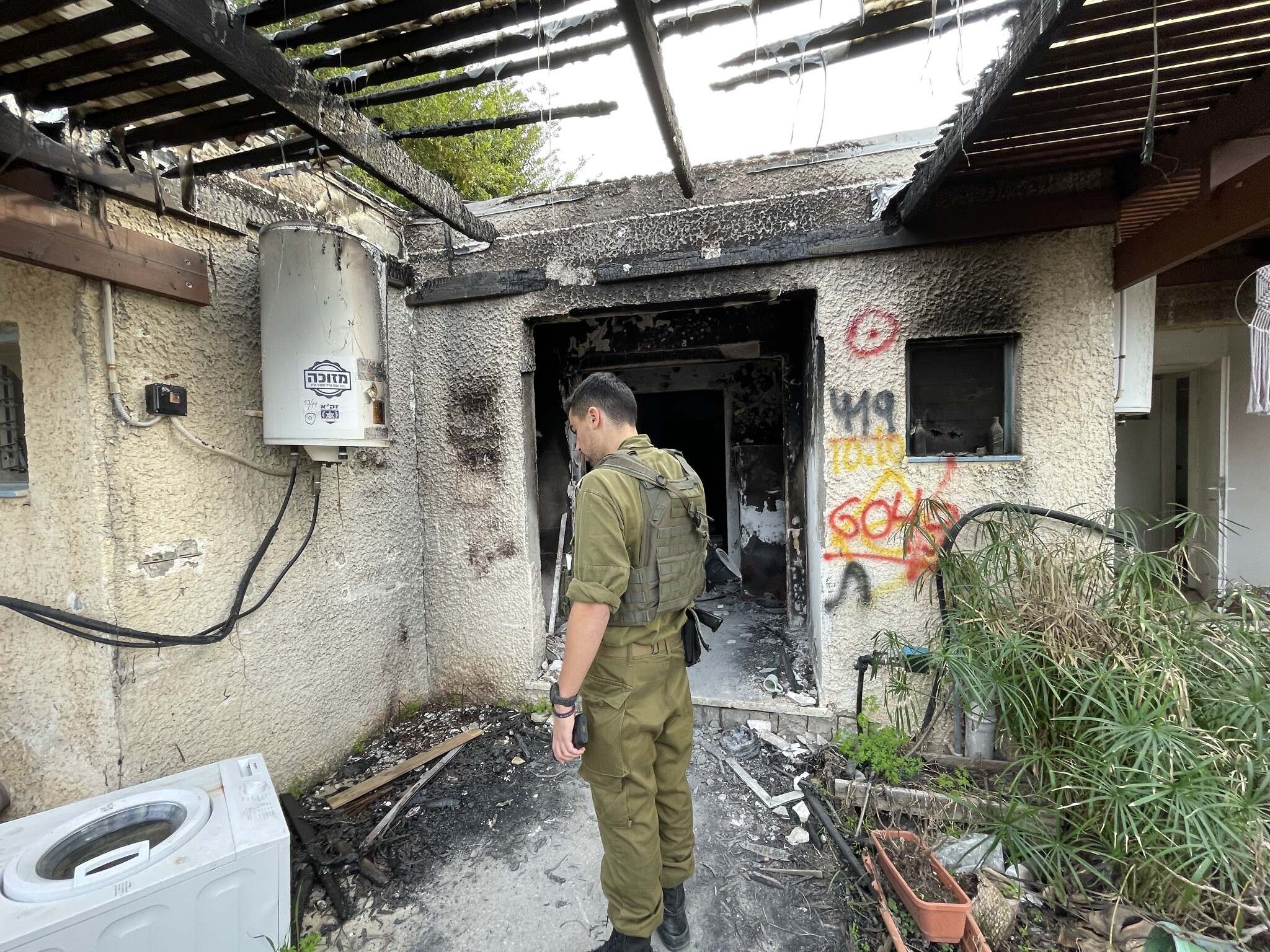
The share of Israelis who support a state commission of inquiry into the failures surrounding Hamas’s October 7, 2023, attack has dropped by nearly 10 percentage points over the last year, while support for a politically appointed probe such as the one pushed by Prime Minister Benjamin Netanyahu’s government has risen, a new poll by the Israel Democracy Institute (IDI) has found.
According to the institute’s monthly Israeli Voice Index for December 2025, 55 percent of Israelis still support the formation of a state commission of inquiry, Israel’s highest investigative authority. But this represents a drop of 9.5% from January 2025, and of 12% from July 2024.
“This change is due to a sharp decline in support, primarily on the right among Jewish Israelis,” IDI said in a statement. Among Jewish right-wing Israelis, support for a state commission of inquiry has “dropped by over 20 percentage points, from 57% in January 2025 to 36% today,” it said.
Support for a state commission of inquiry remains high on the left (100%) and center (84%).
IDI’s polling shows that 22% of Israelis are in favor of an investigative panel whose members are appointed by the government, an increase of 5.5% over January 2025 and 8.5% over July 2024. Meanwhile, 8% support a review by the state comptroller, defense establishment and government agencies.
Among members of Netanyahu’s Likud party, opinion is split, with 36.5% supporting a state commission of inquiry and 36% in favor of a government-appointed probe.
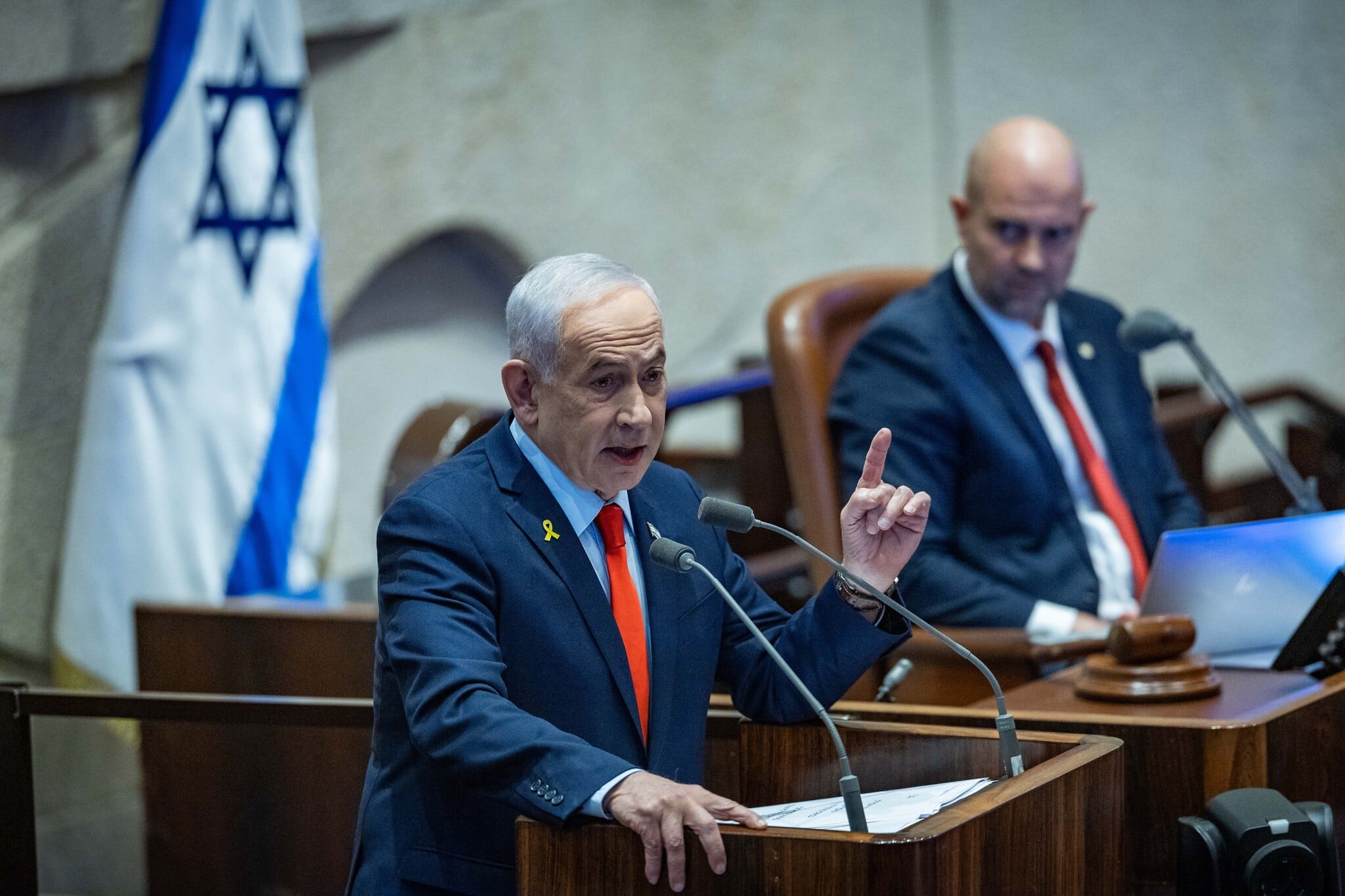
Netanyahu opposes the formation of a state commission, claiming, that as it is appointed by the judiciary, whose powers his government has sought to curb, it would be biased against the government. Last month, his coalition voted in favor of a preliminary reading of a highly controversial bill sponsored by Likud MK Ariel Kallner to set up a politically appointed probe.
Kallner’s plan, a prior version of which the lawmaker floated last year, calls for a Knesset supermajority — 80 out of 120 MKs — to appoint a six-member investigative committee and its chairman. If there is no agreement on the members after two weeks, both the opposition and coalition would be allowed to select three committee members each, who would be joined by four supervisory members representing bereaved families.
The proposal states that if either the coalition or opposition does not cooperate in the process or cannot settle on a candidate, the Knesset speaker will choose instead — giving the coalition effective control, as opposition figures have pledged to boycott the commission.
Critics have argued that such a commission will be highly politicized since all its members will have been selected by politicians who want to avoid being found responsible for the failures.
Attorney General Gali Baharav-Miara has also panned the legislation, describing it as “tailor-made” for the “personal” needs of the government.
Defending the bill during a Knesset debate on Monday evening, Netanyahu claimed that the members of a state commission would be chosen by only one side of the political spectrum, and that supporters of his government would not accept its legitimacy.
Netanyahu noted that in his proposal, half of the commission members are chosen by the government, and half by the opposition. The commission members will have the power to “ask what they want, and to bring whoever they want [for questioning],” he said.
A ministerial committee led by the prime minister is set to decide the mandate and scope of the proposed “state-national” commission, which Netanyahu has said must also examine the 1993 Oslo Accords, the 2005 Disengagement from Gaza and the 2023 protest movement against the current government’s judicial overhaul agenda.

Heritage Minister Amichai Eliyahu, a member of the ministerial panel, has said that the government-appointed investigation will also probe “the judicial system” and others who “weakened our deterrence.”
Addressing the Knesset last month ahead of the vote on Kallner’s bill, Opposition Leader Yair Lapid accused Netanyahu of “evading responsibility” for October 7.
The prime minister “has already said that this fictitious committee will investigate Oslo. Why only Oslo? What about the destruction of the First Temple? What about the Warsaw Ghetto Uprising?” he asked, pledging that “the opposition will not cooperate with this shameful farce.”
Lazar Berman contributed to this report.




The Times of Israel Community.