

Security cabinet to convene on threats along northern border
Monday’s meeting is first since announcement of ceasefire in south Syria, Hariri resignation crisis in Lebanon
 Add ToI as a Preferred Source on Google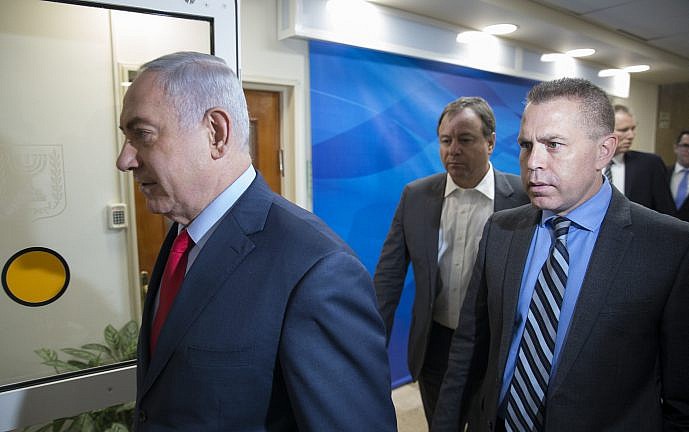
The security cabinet will convene Monday morning to discuss the situation and threats along Israel’s northern border, amidst ceasefire efforts in southern Syria and political upheavals in Lebanon.
Monday’s meeting will be the first by the high-level forum since the United States, Russia and Jordan announced the agreement earlier this month, and since Lebanese Prime Minister Saad Hariri announced his resignation from Riyadh, sparking heightened regional tensions amid rumors of Saudi intervention.
On Sunday night Israeli TV reported Prime Minister Benjamin Netanyahu has warned Syrian President Bashar Assad that Israel will intervene militarily in the Syrian civil war if Assad allows Iran to establish a military presence in Syria.
Netanyahu conveyed the message to Assad via a third party, Hadashot news (formerly Channel 2) veteran Middle East analyst Ehud Yaari reported.
The warning specified that Israel will depart from the policy of non-intervention it has maintained throughout the six years of the civil war to date, Yaari said, if Assad “invites Iranian forces to establish themselves in Syria via an agreement of any kind.” Iran has provided significant logistical, technical, training and financial support for Assad’s regime and forces, as well as deploying military advisers and some combat troops in Syria. It also arms, trains and funds Hezbollah, the Lebanese terror group that has sent thousands of gunmen to fight alongside Assad’s troops.
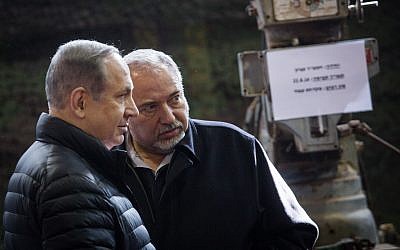
Thus far, Israel has provided medical and humanitarian aid to victims of the war across its border, has hit back when gunfire has crossed the border, and has used air strikes to target weapons stores and convoys intended for the Hezbollah terrorist organization. But, to date, “there was no direct targeting of the Syrian Army or of Assad,” Yaari noted.
The report noted tellingly that this non-intervention contrasted with previous Israeli policy. In 2006, for instance, Israeli jets broke the sound barrier flying over Assad’s presidential palace in Latakia, in what was seen as a warning to him against supporting Palestinian terrorist groups.
The reference to any formal Syrian “invitation” or “agreement” with Iran, the TV report elaborated, stems from the fact that Iran and Russia have been discussing future arrangements for Syria, under which all foreign forces would have to leave the country, except those which are present by agreement with, or invitation from, Assad. Russia’s forces are engaged in Syria on the basis of such an invitation, and Netanyahu’s aim in issuing the warning “is to deter Assad from issuing” a similar invitation to Iran.
The Iranians, the TV report noted, want to build “a naval base, possibly for submarines, an air base and arms factories for precision weapons.”
Earlier this month, the BBC, citing a Western security official, reported that Iran was setting up a permanent base on a site used by the Syrian army near el-Kiswah, 14 kilometers (8 miles) south of Damascus, and 50 kilometers (30 miles) from the Israeli border.

Sunday’s TV report came days after Netanyahu was quoted telling French President Emmanuel Macron in a phone call that Israel sees Iranian activity in Syria as “a target” for its forces, and may carry out strikes against Iranian objectives if security needs require it.
Netanyahu vowed in a speech last week that Iran would not be allowed to gain a regional foothold. “We have made it clear many times that we will not accept nuclear weapons in Iran’s hands, nor will we allow the establishment of Iranian forces near our border, in the Syrian region in general, or anywhere else,” he said.
On November 21, Netanyahu also spoke with Russian President Vladimir Putin by phone about the ceasefire deal in the Syrian civil war and the Iranian presence near Israel’s borders, the Prime Minister’s Office said. “The conversation lasted about half an hour and dealt with Syria, and Iran’s attempt to entrench itself in Syria,” Netanyahu’s office said in a statement. “Netanyahu insisted on Israeli security and reiterated his opposition to Iran’s entrenchment in Syria.”








The Times of Israel Community.