

Teva soars on ‘positive’ trial results for inflammatory bowel disease treatment
Patients treated with antibody ‘duvakitug,’ jointly developed with French drug-maker Sanofi, achieved a higher rate of clinical remission
 Add ToI as a Preferred Source on Google
Sharon Wrobel is a tech reporter for The Times of Israel
Shares in Israel’s Teva Pharmaceutical Industries surged after the generic drug giant said that a clinical study of its duvakitug drug for the treatment of ulcerative colitis and Crohn’s disease produced “positive results’’ and met its primary goals.
In a joint statement, Teva and French drug maker Sanofi, partners in the development of a treatment for moderate-to-severe inflammatory bowel disease (IBD), announced that the Phase 2 clinical trial results for the drug showed “unprecedented results.” Teva’s US-listed shares jumped more than 20 percent.
“The results from the study have exceeded our expectations, and I am deeply moved by the potential for duvakitug to help treat and meaningfully improve the quality of life of people living with IBD,” said Teva’s Chief Medical Officer Eric Hughes. “These positive results reinforce Teva’s ability to develop and accelerate access to innovative medicines.”
IBD is a lifelong, chronic disease that affects the digestive system, and includes Crohn’s disease and ulcerative colitis. About 4.9 million people globally live with IBD.
During the 14-week clinical trial, the two drug-makers said that the human monoclonal antibody duvakitug, targeting the cytokine that causes inflammation, was generally well tolerated in both ulcerative colitis and Crohn’s disease patients “with no safety signal identified.”
The results of the phase 2b study showed that 36.2% of the patients suffering from ulcerative colitis who received a low dose and 47.8% of those getting a high dose of duvakitug achieved clinical remission compared to 20.45% on placebo at week 14.
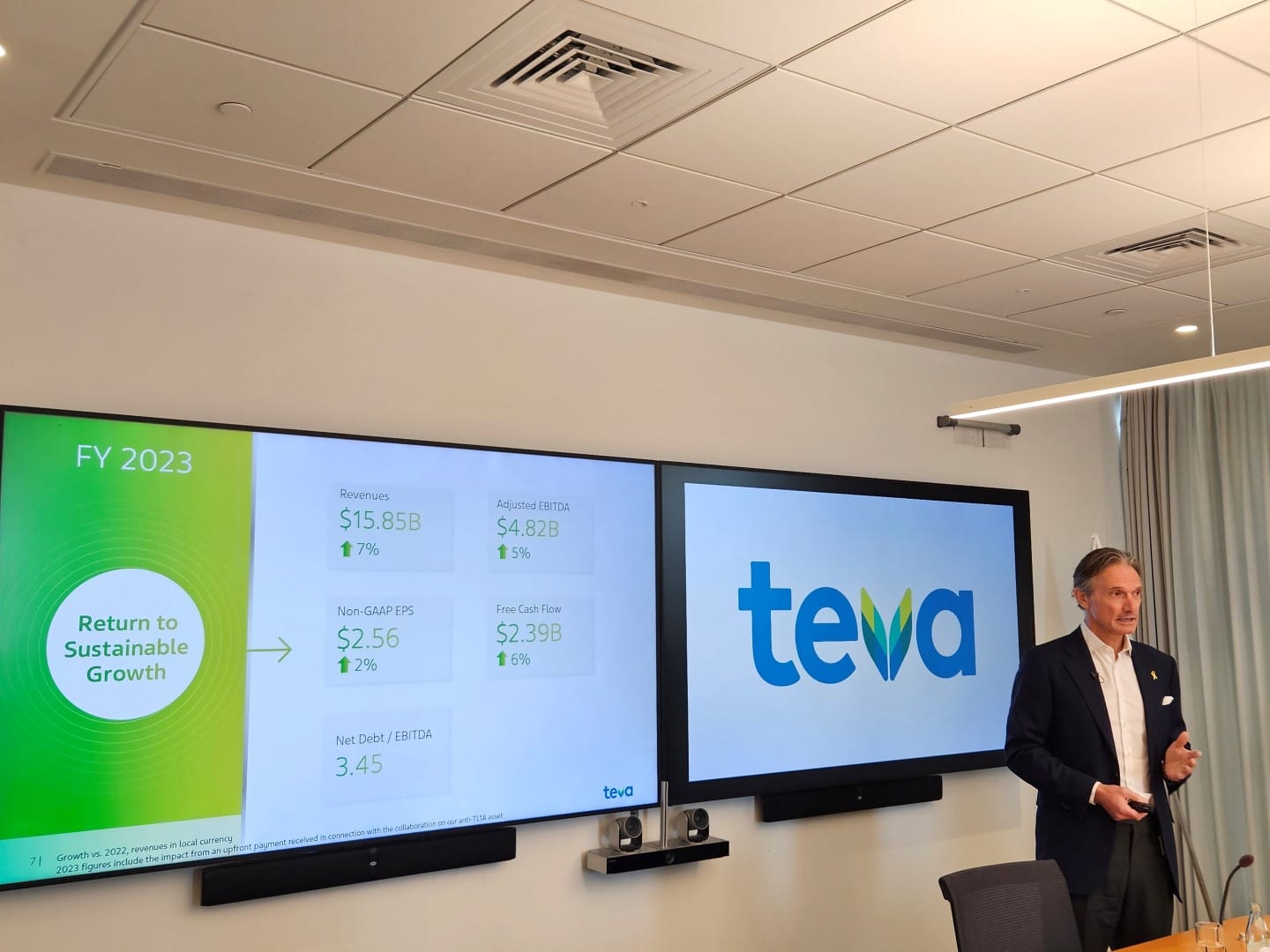
In patients with Crohn’s disease, 26.1% given a low dose and 47.8% treated with a high dose of duvakitug achieved endoscopic response versus 13% on placebo. Teva and Sanofit said that it marked the “first and only randomized, placebo-controlled study to evaluate the impact of an anti-TL1A monoclonal antibody in CD [Crohn’s disease].”
Sanofi and Teva also announced plans to initiate Phase 3 development for the treatment of inflammatory bowel disease, pending regulatory discussions.
“These unprecedented results show that duvakitug could represent the next frontier in treating ulcerative colitis and Crohn’s disease,” said Houman Ashrafian, head of R&D at Sanofi. “If the magnitude of effect persists in the phase 3 program, we believe we will have a differentiated medicine for IBD patients who are in urgent need of new options.”
The efficacy and safety of duvakitug have not yet been evaluated by any regulatory authority, Teva and Sanofi said.
With global headquarters in Tel Aviv, Teva operates four production sites in Israel, including manufacturing sites in Kfar Saba and Neot Haviv, a development center in Netanya and a logistic center in Shoham.









The Times of Israel Community.