

UK museum to commemorate little-known operation to rescue Jews from Nazi Germany
Descendants of Kitchener Camp men to unveil plaque at former military base in Kent that housed 4,000 Jewish refugees at the start of WWII
 Add ToI as a Preferred Source on Google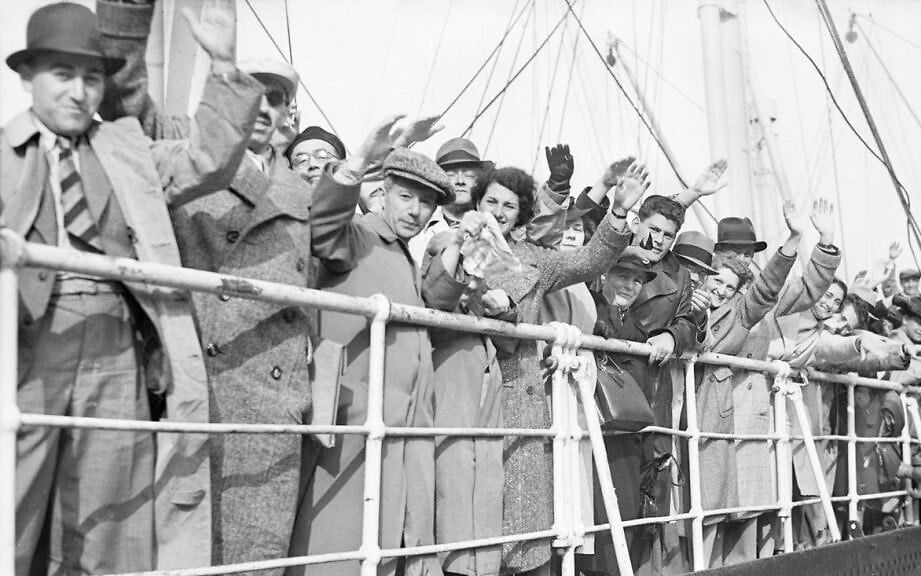
A little-known operation that rescued thousands of Jews from Nazi Germany will be commemorated next week at the former military base in southern England where they were saved.
London’s Jewish museum will unveil an exhibition on Kitchener Camp on Sunday. On Monday, a group of descendants of the 4,000 or so rescued Jewish refugees will unveil a plaque at the former barracks outside the historic town of Sandwich, Kent.
The Jewish-funded operation was launched in 1939 in response to the Kristallnacht pogrom, in which tens of thousands of Jews were dispossessed and sent to Nazi concentration camps.
The Central British Fund — an aid organization now known as World Jewish Relief — convinced the British government late that year to accept a group of Jewish male refugees on the condition they would not be granted citizenship or permanent work visas.
The mainly Austrian and German men were required to emigrate to the US, Australia, Canada or elsewhere within a “reasonable period.”
Read about the amazing rescue of 4000 #refugees from Nazi Europe including my grandfather Paul. Thanks to Claire @kitchenercamp and @WJRelief for not forgetting their story. https://t.co/04q2lv2zX2
— Debbie Cantor (@debbiecantor) August 26, 2019
The refugees were not interned at Kitchener Camp and were allowed to come and go as they pleased. The men worked on local farms, played sports with town residents and put on music productions for the public.
When the war broke out in September 1939, 887 Kitchener men volunteered in the Pioneer Corps to help the war effort. However, after the Dunkirk evacuation in May 1940, British public opinion turned against German-speaking refugees, as many were suspected of being spies.
The refugees not actively involved in the war effort were interned or deported to Australia and Canada, and the Kitchener Camp was subsequently closed.
Clare Weissenberg, a daughter of one of the Kitchener men and curator of the exhibition, said that most people are not familiar with the story of the transit camp.
“It’s not even well-known in [UK] Jewish communities,” Weissenberg told the Guardian in an article published Saturday.
Weissenberg said that while the rescue was a relatively small operation, “it’s not small to the many descendants of Kitchener men, who would not exist if those men hadn’t been rescued.”
Weissenberg’s exhibition, titled “Leave to Land: The Kitchener Camp Rescue 1939,” will run until September 8. The documents and artifacts will be donated to the Wiener Library for the Study of the Holocaust and Genocide.










The Times of Israel Community.