

UN launches push to return Gazan children to school in aftermath of war
UNICEF says it needs $86 million for education program as school materials enter Gaza after being blocked for two years; Israel says learning kits, not textbooks, let into Strip
 Add ToI as a Preferred Source on Google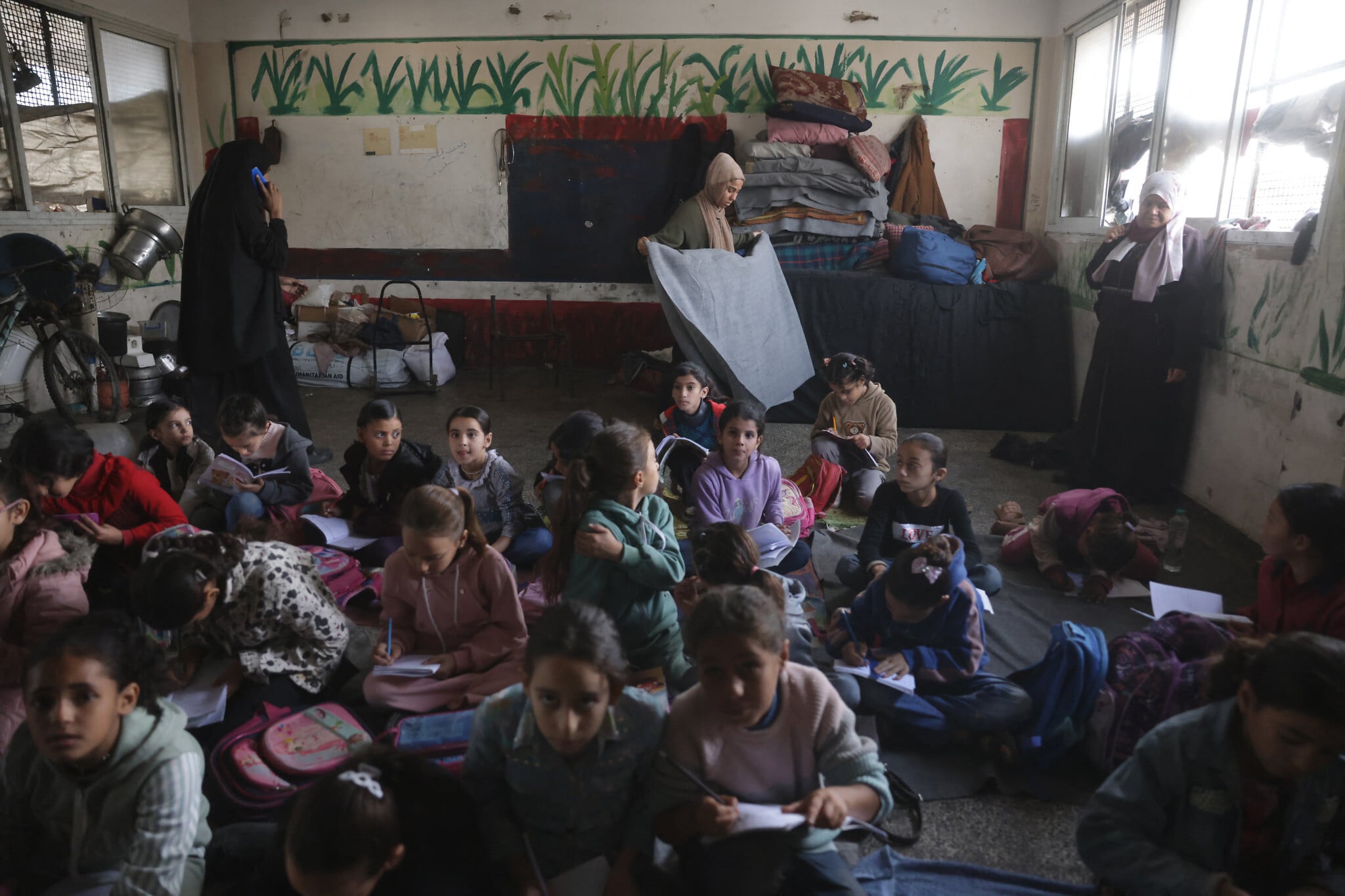
The United Nations announced on Tuesday a major push to get hundreds of thousands of children across the war-scarred Gaza Strip back to school for the first time in more than two years.
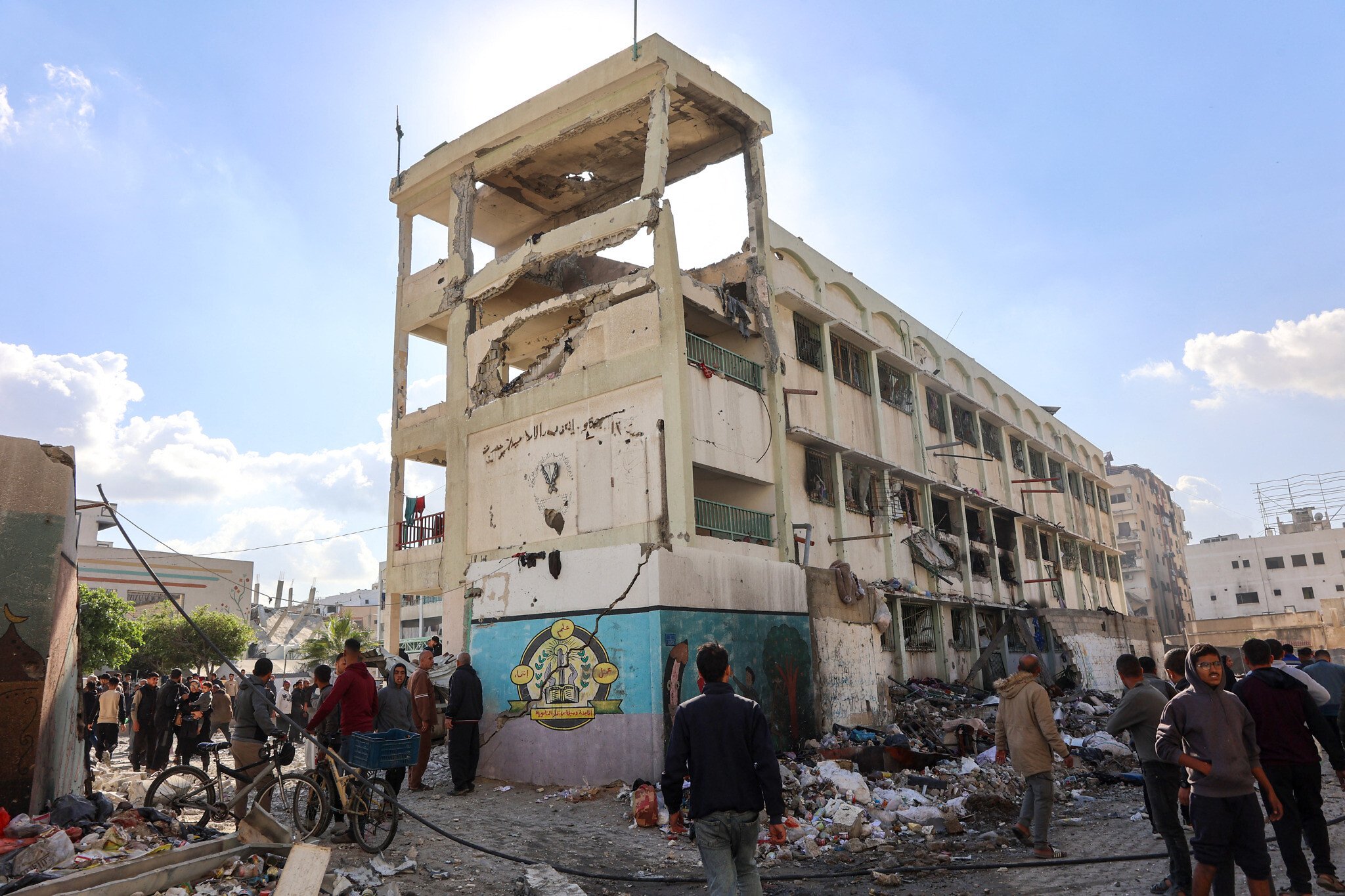
Since the start of the war sparked by the Hamas-led October 7, 2023, massacre in Israel, nearly 90 percent of schools in Gaza have been damaged or destroyed, and more than 700,000 school-aged children have been left unable to access formal education, according to the UN children’s agency UNICEF.
“Almost two and a half years of attacks on Gaza’s schooling have left an entire generation at risk,” agency spokesman James Elder told reporters in Geneva.
UNICEF was now dramatically scaling up its education initiative in the territory, Elder said, in what he described as “one of the largest emergency learning efforts anywhere in the world.”
The push to scale up access to education comes as aid groups have managed to bring more supplies into the besieged territory since a fragile US-backed ceasefire took effect last October. US President Donald Trump kicked off the second phase of the ceasefire last week.
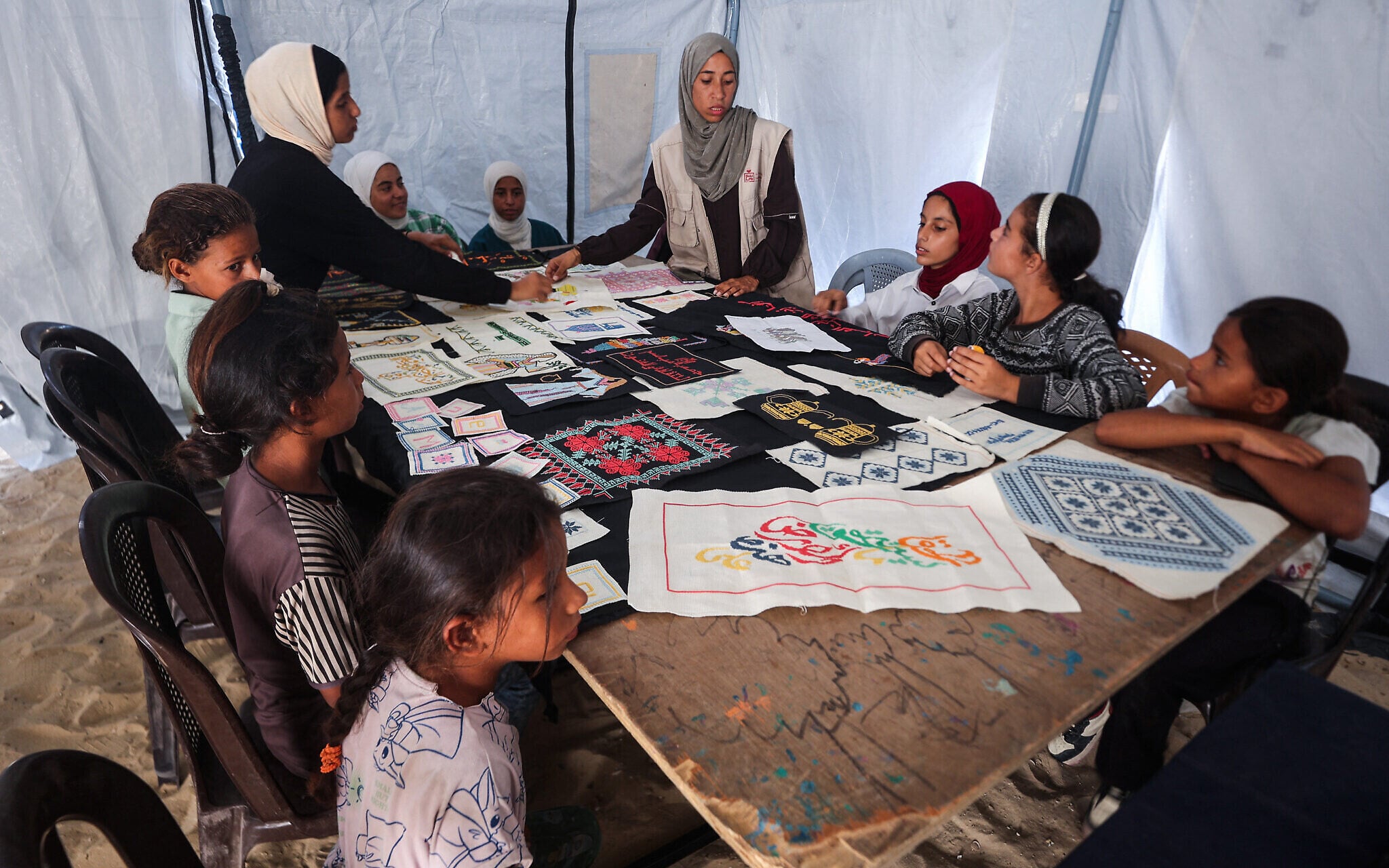
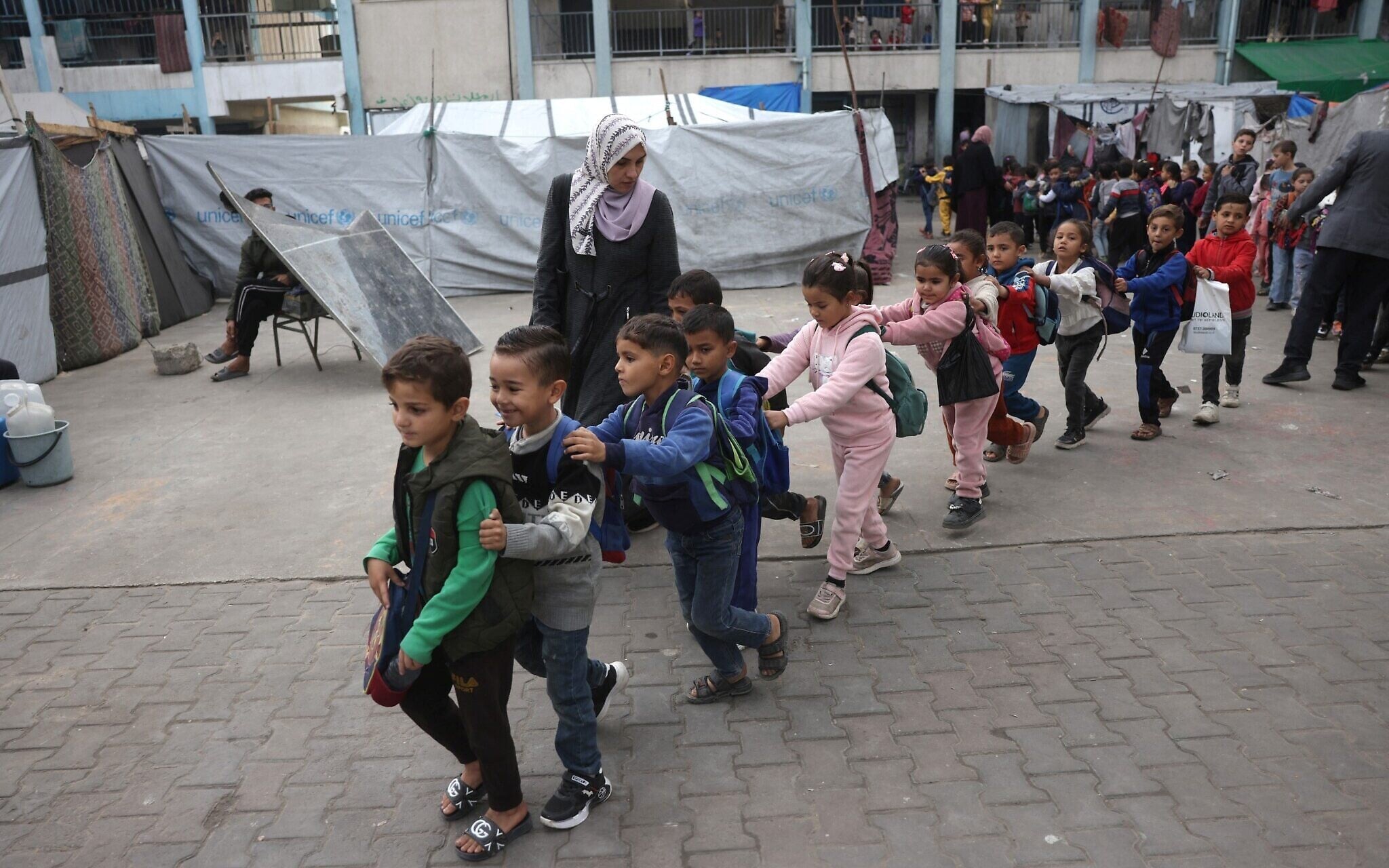
UNICEF currently supports more than 135,400 children receiving education at over 110 learning spaces in Gaza — many of them in tents, he said.
But it now aims to more than double that number to include more than 336,000 children by the end of this year, and to get all school-age children back to in-person learning in 2027.
UNICEF is working on the project with the Palestinian Authority Education Ministry and the UN agency supporting Palestinians, UNRWA, which, before the war, was providing schooling to around half of Gaza’s children.
Israel has sought to oust UNRWA from its role, arguing that it incites Palestinian children to antisemitism and violence and collaborates with terror groups.
For years, research has shown that some materials taught in UNRWA schools in Gaza and the West Bank included incitement to violence against Israel, delegitimization of the State of Israel, and antisemitic or racist content.
Following the October 7 attack, and during the subsequent war in Gaza, Israel stepped up efforts to shut down UNRWA, accusing employees of collaborating with Hamas and presenting evidence that some took part in the day’s atrocities and fighting against Israel.
Israel has passed legislation prohibiting its authorities and public officials from engaging with the organization and banning UNRWA operations in Israel. It has also moved to shut off water and power to UNRWA facilities.
UNICEF would need $86 million for its education program in Gaza this year — “roughly what the world spends on coffee in an hour or two,” Elder said on Tuesday.
Getting children back to school “is not a ‘nice to have.’ It is an emergency,” he said.
He highlighted that “before this war, Palestinians in Gaza had some of the highest literacy rates in the world.”
“Today that legacy is under attack: schools, universities, and libraries have been destroyed, and years of progress erased,” he said. Elder also stressed that learning in Gaza was “lifesaving.”
“These centers provide safe spaces in a territory that is often inaccessible and dangerous,” he pointed out, adding that they also connect children to health, nutrition, and protection services, as well as clean toilets and places to wash hands — “something too many children in shelters simply don’t have.”
Children in Gaza have faced unprecedented damage to their education system, as well as restrictions on the entry of some aid materials, including school exercise books and pencils, meaning teachers had to make do with limited resources, while children tried to study at night in tents without lights, Elder said.
At least 97 percent of schools sustained some level of damage, according to the most recent satellite assessment by the UN in July.
Israel has previously accused Hamas and other terror groups of systematically embedding in civilian areas and structures, including schools, and using civilians as human shields.
UNICEF said, however, that it had managed recently to bring in more than 4,400 recreational kits and 240 School-in-a-Carton kits, containing things like pencils, pens, chalk, exercise books, and geometry sets, claiming that they have not been able to bring in such supplies for two years.
It said it expected the total number of kits brought in to surpass 11,000 by the end of the week, with nearly 7,000 others in the pipeline for the coming weeks.
A spokesperson for COGAT, the arm of the Israeli military that oversees aid flows into the Gaza Strip, confirmed it had recently allowed UNICEF to bring in learning kits, though not textbooks. A COGAT spokesperson told Reuters that learning kits had been let in several times during the war, without saying how.
“It’s been a long two years for children and for organizations like UNICEF to try and do that education without those materials. It looks like we’re finally seeing a real change,” Elder stated.





The Times of Israel Community.