

War-ending deal is signed by US and Iran, takes effect; commits Israel to terms it opposes
‘This was not easy,’ says Trump as he inks agreement; Iran gloats it achieved ‘everything’ it wanted; Hormuz to open ‘immediately’ but Tehran says tolls to be charged after 60 days; Netanyahu has distanced himself from deal
 Add ToI as a Preferred Source on Google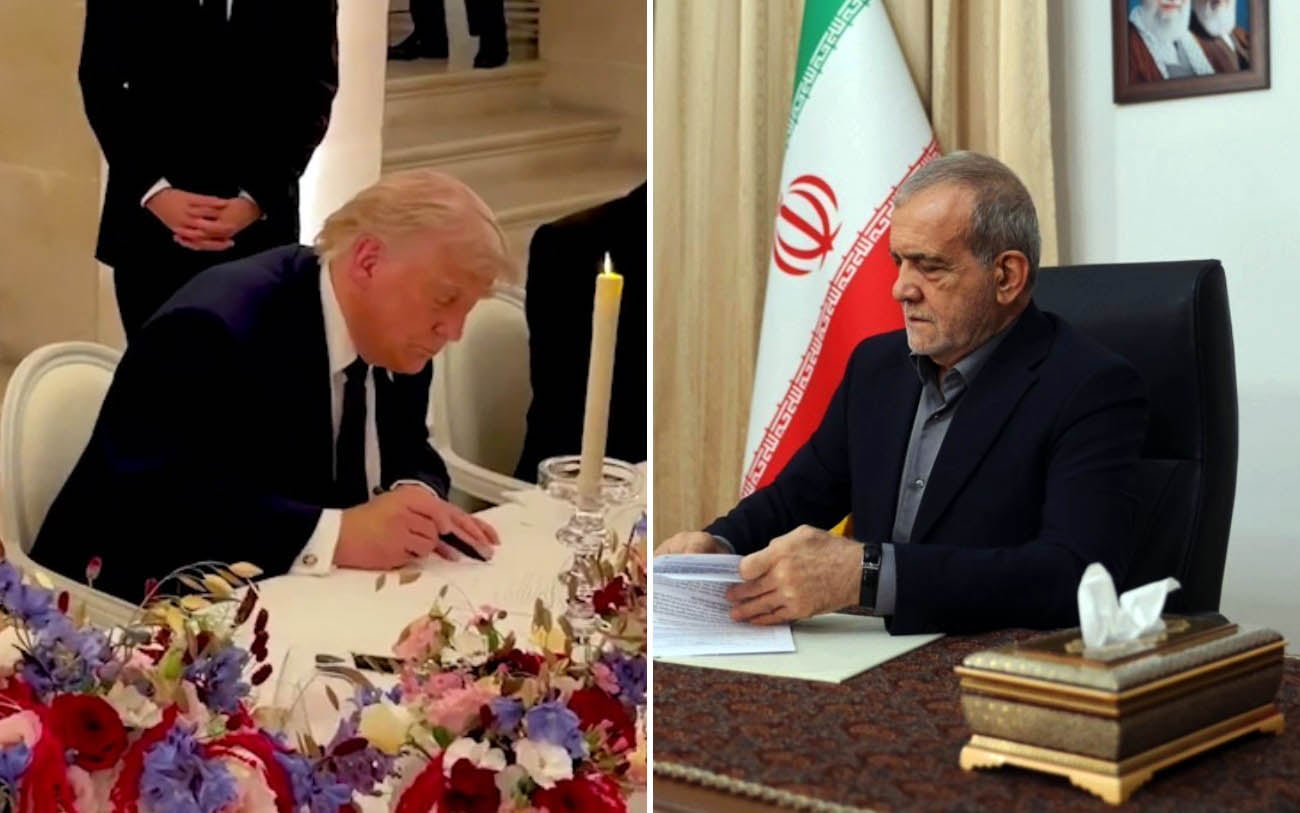
US President Donald Trump and Iranian President Masoud Pezeshkian signed a deal on Wednesday meant to end the Middle East war, causing it to go into effect two days earlier than originally envisioned, with Tehran obtaining large-scale economic relief and agreeing in principle to a subsequent dilution of its enriched uranium.
However, the interim deal itself does not resolve any of the war goals declared by the US and Israel on February 28, since it pushes off discussion of Iran’s nuclear program and other core issues to a 60-day negotiation process. Israel was not a party to the negotiations on the terms, and Israeli officials have expressed grave concern over them.
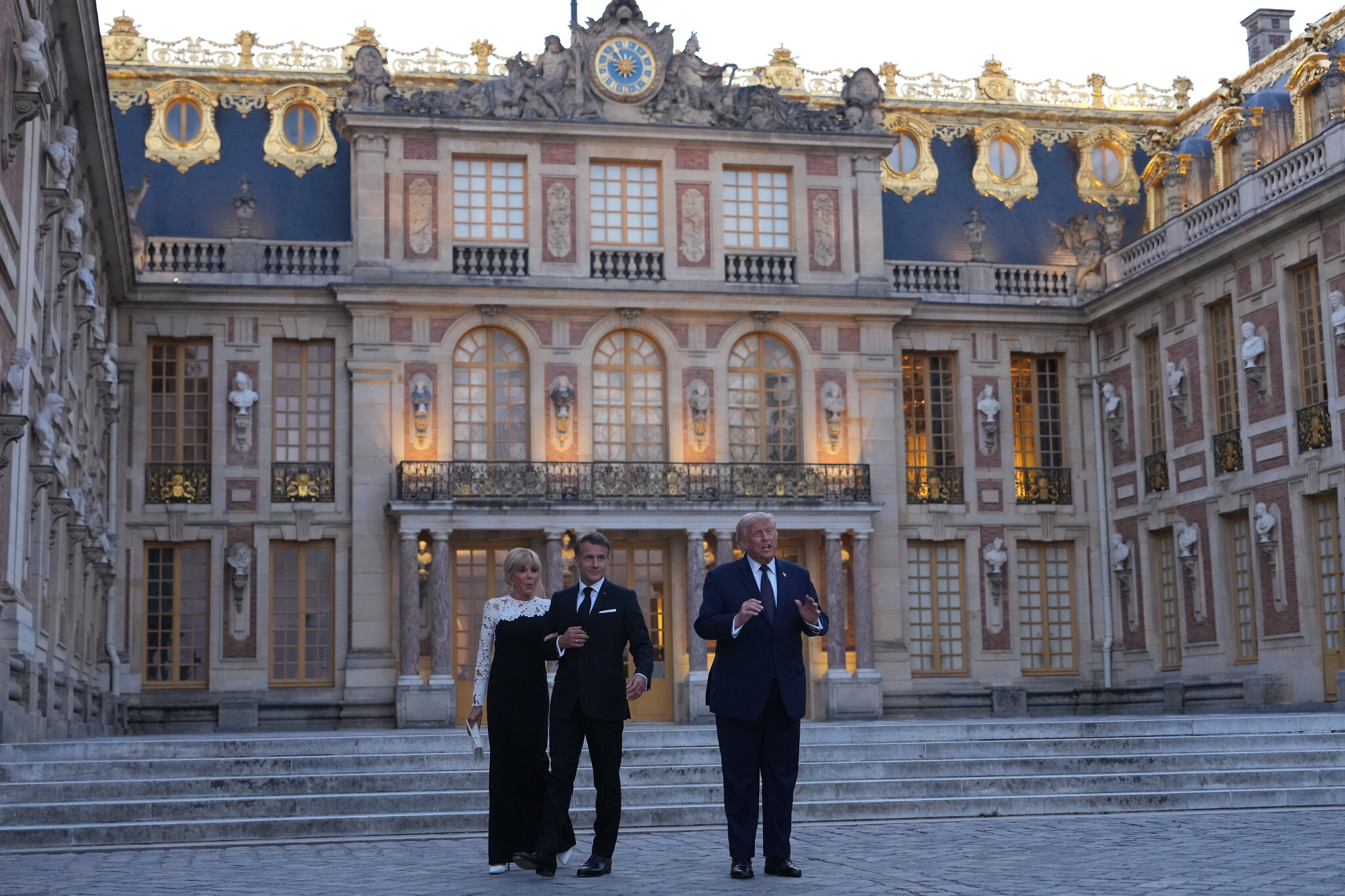
Trump put his signature on the memorandum of understanding during a candlelit dinner at the Palace of Versailles following a G7 summit, as host French President Emmanuel Macron and other guests applauded, a video posted by a Trump aide showed.
“Just signed it,” Trump told reporters as he emerged from the palace.
The first clause of the MOU commits the sides “and their allies” to an immediate and permanent end of fighting, and to no restarting of conflict. Israeli officials have said privately that Israel regards such terms as ending any military leverage over Iran and potentially depriving Israel of the capacity to defend itself, though Trump has said he will “go back to dropping bombs” if Iran breaches the accord.
Prime Minister Benjamin Netanyahu has emphasized that Israel is not a signatory to the deal, and has distanced himself from Trump’s decision to sign it. “This agreement was made by the United States, by the president of the United States. And he believes that he can truly combine both the opening of the [Strait of Hormuz] and the cancellation of the nuclear program… And I repeat and say that this is his decision, and he is leading it,” Netanyahu said on Monday.
“Of course, I expressed my view in various conversations,” he said. “On the other hand, I said that we have our own interests – first of all, regarding the nuclear threat. I am committed that there will not be such a threat facing us.”
Iranian Foreign Ministry spokesman Esmaeil Baghaei, quoted by the state news agency IRNA, said the document “was finalized with the signatures of the presidents.”
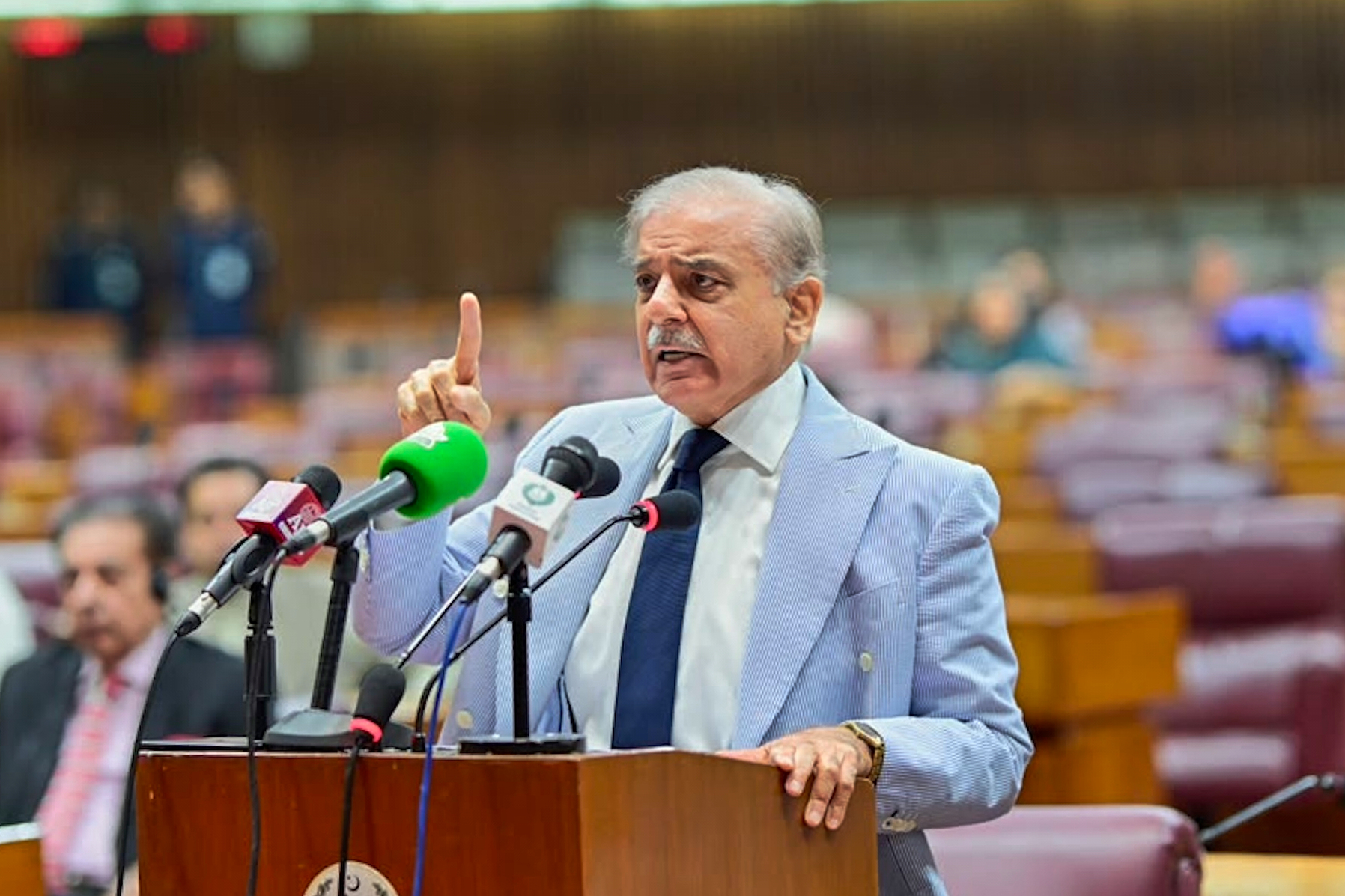
Prime Minister Shehbaz Sharif of Pakistan, which mediated the agreement, said on X that it “shall enter into force with immediate effect.”
In a video posted online by a White House aide, Trump was seen seated at a table next to Macron, signing a paper copy of the agreement. Trump then handed the document and pen to Secretary of State Marco Rubio as people in the room applauded.
“This was not easy,” Trump said right before he signed it, according to a video posted to social media by Macron.
???? President Donald J. Trump has SIGNED the Iran Memorandum of Understanding at Versailles in France. ???????? pic.twitter.com/JQ6qlbvFAF
— The White House (@WhiteHouse) June 17, 2026
In Tehran, a stone-faced Pezeshkian signed the deal on behalf of Iran, according to the regime-run IRNA news agency, which posted an image of him holding up the deal with his signature and Trump’s.
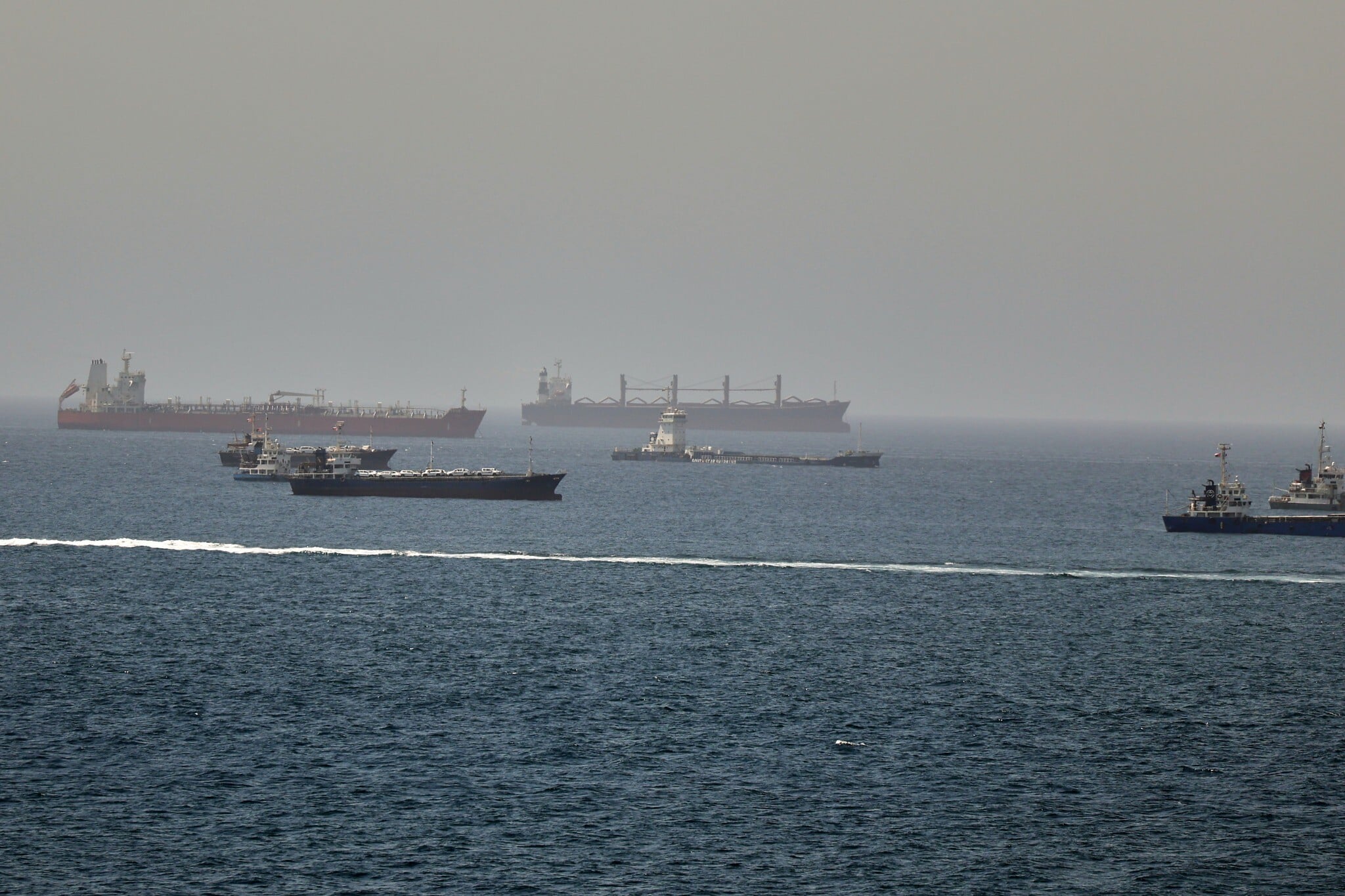
The deal aims to draw a line under the war launched on February 28 by the United States and Israel, which prompted Iran to counterattack with missile and drone salvos across the region and effectively shut down the Strait of Hormuz, a crucial waterway for the world economy. The US responded by blocking shipping to and from Iranian ports.
“As a first step, Islamic Republic of Iran will instantly reopen the Strait of Hormuz and the United States of America will immediately lift the naval blockade,” Sharif wrote.
President Pezeshkian and his US counterpart Trump signed the MoU between Tehran and Washington digitally and remotely. pic.twitter.com/ratIJxoeLG
— Iran in India (@Iran_in_India) June 18, 2026
Under the text, Washington also commits to immediately waiving oil sanctions crippling Iran’s economy.
And if and when a final agreement is reached on the Islamic Republic’s nuclear program, the United States will also facilitate the release of a $300 billion reconstruction fund supported by regional nations, the deal says.
The agreement had earlier been slated to be signed during a Friday summit by Iran’s chief negotiator and parliament speaker, Mohammad Bagher Ghalibaf, and US Vice President JD Vance.
Sharif said an official ceremony would still take place Friday in Switzerland and technical talks would commence, and the Swiss foreign ministry said the plan was still “for the US and Iran, along with mediators Pakistan and Qatar and other involved countries, to meet tomorrow at Burgenstock for initial negotiations about implementing the agreement.”
However, Iran’s foreign ministry spokesman Esmaeil Baghaei said that the talks are not confirmed for now.
“The Friday meeting was confirmed until a few hours ago, but when it was decided that the presidents of the two sides (Iran and the US) would sign the agreement, it was decided to pause consideration of the Friday meeting for now,” Baghaei said.
The deal had been shrouded in secrecy and confusion for days. US officials refused to disclose the terms even after saying Trump and Vance digitally signed it over the weekend.
Iran insisted the deal represented a US “failure.”
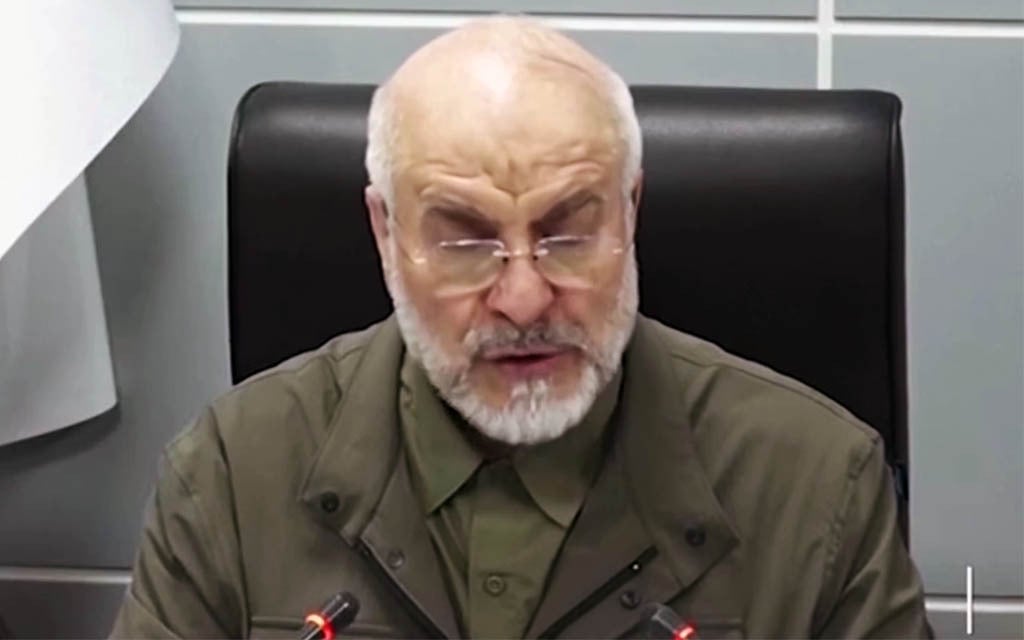
“Everything we sought to achieve through military action, we obtained several times over through negotiation; it was not even comparable,” Iran’s negotiator Ghalibaf told state television about the agreement, which includes the unfreezing of billions of dollars in Iranian assets. “People will see it and judge.”
He also repeated that Tehran will charge ships crossing the Strait of Hormuz after a 60-day fee-free period stipulated in the memorandum of understanding with the US.
Ghalibaf said the “Strait of Hormuz will not return to prewar conditions,” adding: “Iran has the right to sovereignty over the Strait of Hormuz and of course we will receive a fee for services.”
The head of the pro-Tehran Lebanese Shiite terror group Hezbollah, Naim Qassem, described the deal as a “great victory” for Iran.
He thanked Tehran for insisting that the truce cover Lebanon, which was drawn into the conflict when Hezbollah began to fire rockets at Israel on March 2 in support of Iran.
Text of the agreement still has not been formally released by the Americans. US officials dictated draft language to journalists after days of secrecy, speaking on condition of anonymity. Iranian state media has released text that largely tracked what the US put out.
The deal will stop the fighting and start more negotiations
Much of the agreement would restore the status quo before the war, including ending hostilities, restarting talks between the US and Iran over Tehran’s nuclear program, and reopening the Strait of Hormuz, the crucial passage for the world’s oil and natural gas, whose closure created a historic energy crisis.
The agreement opens the strait without tolls for two months, but does not preclude fees in the future, according to the drafts from both countries.
In return, the US will move to waive, but not eliminate, some wide-ranging sanctions against Iran.
The deal also affirms a commitment to Lebanon’s territorial integrity in the face of Israel’s ground operation there against the Hezbollah terror group. That is one of the most delicate parts of the agreement because Israel has maintained it will continue to defend itself and to occupy swaths of southern Lebanon as a security zone it established following the Hezbollah attacks. Iran has said Israel must withdraw under the deal, a condition Israel has already rejected.
The US and Israel went to war on February 28 in part to prevent Iran from ever getting a nuclear weapon. Trump has cited various goals for the war, including, at times, vowing it would end Iran’s nuclear and missile programs and its support for Hezbollah and other proxy groups. He also suggested it could lead to toppling the Iranian government.
The interim deal falls short of all those goals, but Trump hailed it as “very strong.”
He also opened the door to abandoning it: “It’s a memorandum of understanding, and if I don’t like it, we’ll go back to shooting at them, dropping bombs.”
Despite his combative rhetoric, Trump appears to have achieved little of what he said he wanted in going to war, while Iran appears much closer to sanctions relief worth billions of dollars than before it was attacked.
Iran’s theocratic government remains in place, its stockpile of highly enriched uranium has not been surrendered, its ballistic missile capabilities have not been destroyed and it has not ended its support for terror proxies like Hezbollah in Lebanon.
The US agreement to immediately allow Iran to sell its oil freely and the offer to eventually lift all sanctions are major concessions that go beyond the terms of Iran’s 2015 nuclear deal with world powers. Trump withdrew America from that Obama-era pact in his first term, declaring it the “worst deal ever.”
Iran, which is avowed to destroy Israel, maintains its nuclear program is peaceful, though it is the only country to enrich uranium to 60 percent purity without a declared weapons program, according to the International Atomic Energy Agency. Uranium enriched to that level has no civilian use. The interim deal calls for the IAEA to monitor the “downblending” of that uranium in Iran, without elaborating.
The accord likely will draw intense opposition in Washington, and it appears to be a major setback for Netanyahu, who has come under criticism at home from the media, his opponents and even some allies as details emerge.
Under the Obama-era nuclear agreement with Iran that Trump pulled out of, Iran also agreed to restrictions on its nuclear program and promised never to build an atomic weapon in exchange for the lifting of economic sanctions.
Major concessions have been offered to Iran
Some concessions to Iran — including the full lifting of sanctions and the release of frozen assets — would happen gradually and be linked to progress in the nuclear talks, according to Pakistani officials. They outlined some of the deal’s major points on condition of anonymity because of the sensitivity of the issue.
But in the meantime, the US will issue waivers to sanctions that allow Iran to sell oil freely.
The Islamic Republic’s oil export revenues in 2024 were more than $46 billion. Its main buyer of oil, China, is believed to have bought at below-market prices because of its willingness to ignore the sanctions.
Granting oil waivers at the start of the 60-day talks strips the US of a major point of leverage. Only at the conclusion of the overall deal in 2015 were sanctions on Iran’s oil lifted.
The interim deal also opens the door to ending all sanctions Iran faces from the US and at the UN — including those over Tehran’s weapons programs and human rights abuses — though it says the schedule for that will be worked out later. Still, that far surpasses the 2015 deal, which only lifted some sanctions in exchange for Iran drastically reducing its enrichment and stockpile of uranium.







The Times of Israel Community.