

Was it legal? Questions abound as US captures Maduro, says it will ‘run’ Venezuela
With no historic precedent, experts say Trump administration’s stated intention to manage the country contradicts its claim that the military action was a law enforcement operation
 Add ToI as a Preferred Source on Google
WASHINGTON (AP) — The US capture of Venezuela’s president and its claims that it will “run” the country are raising stark new questions about the legality of the actions and about future operations by US President Donald Trump’s administration in the South American nation.
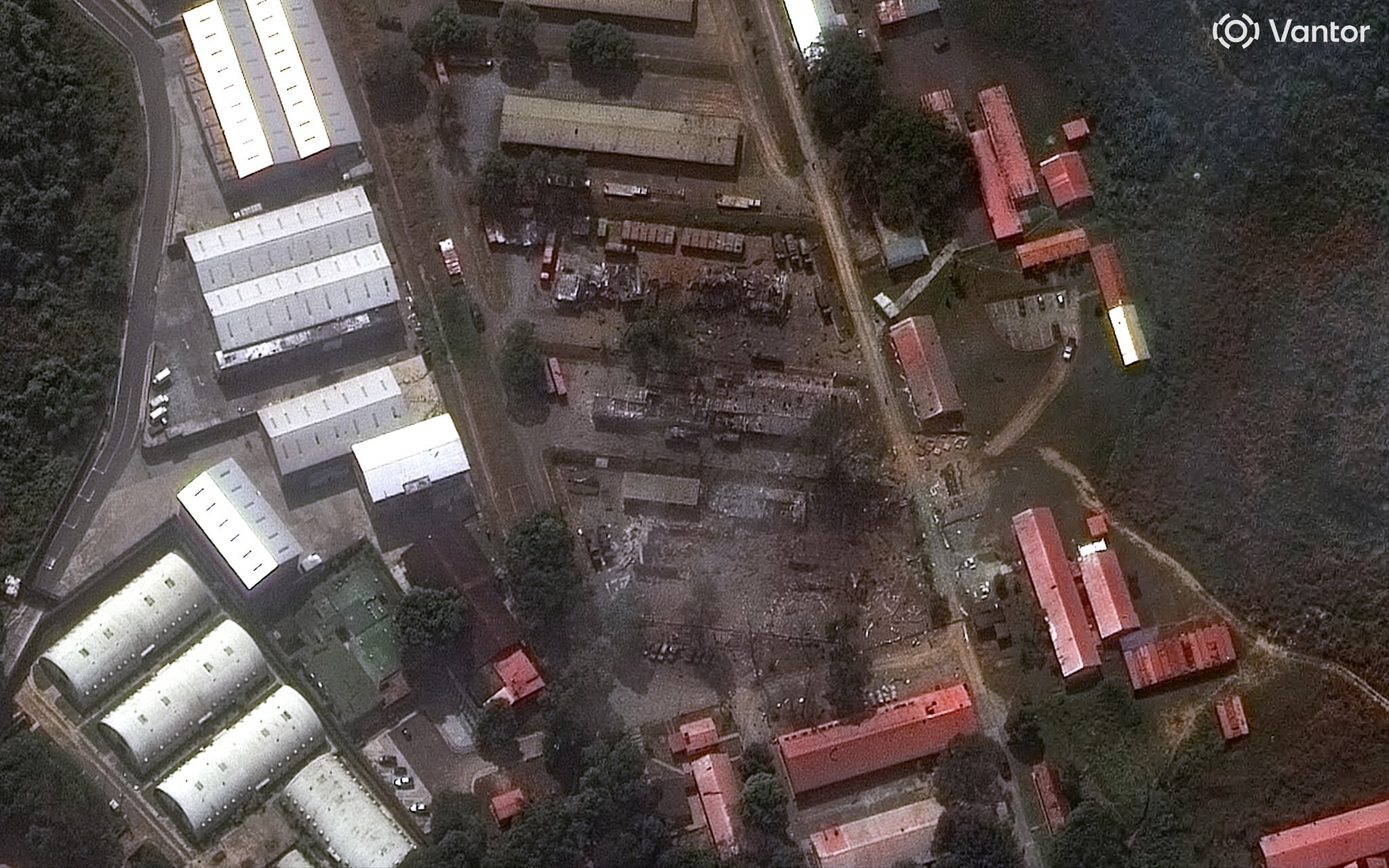
The middle-of-the-night seizure of Nicolás Maduro, who was transported with his wife on a US warship to face narco-terrorism conspiracy charges in New York, is beyond even the most high-profile historical examples of aggressive American actions toward autocratic governments in Panama, Iraq and elsewhere, legal experts said. It came after a surprise US incursion that rocked the Venezuelan capital with overnight explosions.
“This is clearly a blatant, illegal and criminal act,” said Jimmy Gurule, a Notre Dame Law School professor and former assistant US attorney.
Experts in international law said the Trump administration had muddled the legal issues by claiming the operation was both a targeted law enforcement mission and the potential prelude to long-term control of Venezuela by the US.
“You cannot say this was a law enforcement operation and then turn around and say now we need to run the country,” said Jeremy Paul, a professor at Northeastern University specializing in constitutional law. “It just doesn’t make any sense.”
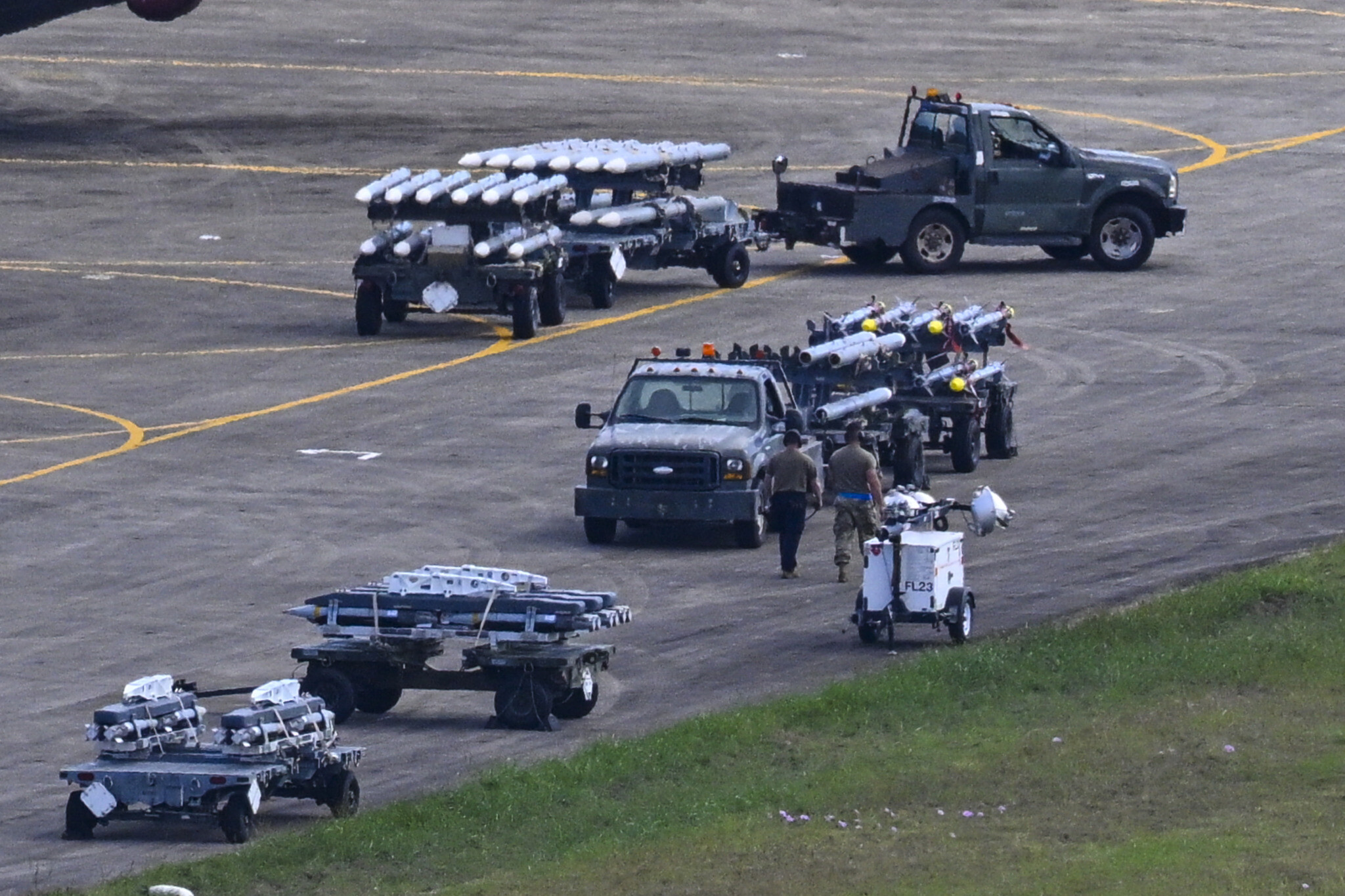
The stunning development caps months of aggressive US military action in the region, including the bombing of boats accused of trafficking drugs and seizures of oil tankers off the coast of Venezuela. The Trump administration has conducted 35 known boat strikes against vessels, killing more than 115 people since September, and positioned an armada of warships in nearby waters.
The bigger debate than the one over legality is yet to come, said John Yoo, an early architect of US policy in Iraq under the administration of former US president George W. Bush, and now a law professor at the University of California, Berkeley.
“It’s easier to remove a dictator,” he said, based on his experience in the Iraq War. But ensuring the transition to a stable democratic government is “the harder part.”
Maduro’s arrest on anniversary of Noriega’s surrender
Maduro’s arrest came 36 years to the day after the surrender of Panama’s strongman Manuel Noriega, a notable milestone in American involvement in the Western Hemisphere. The US invaded Panama in 1989 to arrest Noriega on drug trafficking charges.
In Panama, however, US national security interests were directly at stake in the form of the Panama Canal as well as the safety of American citizens and US military installations in the country.
By contrast, Congress has not authorized any American military strike or law enforcement move against Venezuela.
“The President will claim that this fits within a vast body of precedent supporting broad executive power to defend the United States, its citizens, and its interests,” Matthew Waxman, a Columbia University law professor who was a national security official in the Bush administration, said by email. “Critics will charge that this exceeds the bounds of presidential power without congressional authorization.”
While US agents have a long history of snatching defendants abroad to execute arrest warrants without authorization, federal courts have long deferred to the White House in foreign policy and national security matters.
For example, US bounty hunters, working under the direction of the Drug Enforcement Administration, in 1990 abducted in Mexico a doctor accused of killing DEA agent Enrique “Kiki” Camarena.
“Courts give great deference to the president on issues related to national security,” said Gurule, who led the prosecution against Camarena’s killers. “But great deference does not mean absolute deference and unfettered authority to do anything.”
Congress has yet to authorize or ban US actions
Trump’s administration has declared the drug cartels operating from Venezuela to be unlawful combatants and has said the United States is now in an “armed conflict” with them, according to an administration memo obtained in October by The Associated Press.
The memo appears to represent an extraordinary assertion of presidential war powers, with Trump effectively declaring that the trafficking of drugs into the US amounts to armed conflict requiring the use of military force. That is a new rationale for past and future actions.
Congress, which has broad authority to approve or prohibit the president’s war powers, has failed to do either, even as lawmakers from both political parties grow increasingly uneasy with the military actions in the region, particularly after it was revealed that US forces killed two survivors of a boat attack with a follow-up strike.
Congress’s Democratic leaders, Senator Chuck Schumer and Rep. Hakeem Jeffries, demanded immediate briefings for the “gang of eight” leaders on Capitol Hill, which includes top members of the Intelligence committees, as well as for other lawmakers. Congressional leaders were not notified of the actions until after the operation was underway.
“The idea that Trump plans to now run Venezuela should strike fear in the hearts of all Americans,” Schumer said. “The American people have seen this before and paid the devastating price.”
Michael Schmitt, a former Air Force lawyer and professor emeritus at the US Naval War College, said the entire operation — the boat strikes as well as the apprehension of Maduro — clearly violates international law.
“Lawyers call it international armed conflict,” Schmitt said. “Lay people call it war. So as a matter of law, we are now at war with Venezuela because the use of hostilities between two states clearly triggers an internal armed conflict.”
War powers vote ahead
Republican House Speaker Mike Johnson said the administration “is working to schedule briefings” for lawmakers next week.
Republican lawmakers in Congress largely welcomed the capture of Maduro as ridding the region of a leader they say is responsible for drug trafficking, but Democratic lawmakers warned that in veering from the rule of law, the administration is potentially greenlighting other countries, such as China or Russia, to do the same.
“Beyond the legality, what kind of precedent does it send?” asked Senator Mark Warner, the top Democrat on the Senate Intelligence Committee. He said in an interview that the rebuilding plan ahead has echoes of the Iraq War as the Trump administration promises to use Venezuela’s oil revenue to pay the costs.
Waxman, the Columbia University law professor, said seizing control of Venezuela’s resources opens up additional legal issues: “For example, a big issue will be who really owns Venezuela’s oil?”
The Senate is expected to try again next week to curtail Trump’s actions, with a vote expected on a bipartisan war powers resolution that would block using US forces against Venezuela unless authorized by Congress.
Republican Senate Majority Leader John Thune said he is grateful for the armed forces “who carried out this necessary action.” He said he spoke to US Secretary of State Marco Rubio and wants more information.
“I look forward to receiving further briefings from the administration on this operation as part of its comprehensive counternarcotics strategy when the Senate returns to Washington next week,” Thune said.
Rubio said at a briefing Saturday with Trump that because of the nature of the surprise operation, it was not something that could be shared beforehand with the lawmakers.
Legal experts were skeptical that the United States would face any meaningful accountability for its actions in Venezuela, even if they were unlawful, given the lack of enforcement mechanisms in international law.
“It’s hard to see how any legal body could impose practical consequences on the administration,” said Paul, of Northeastern.
Reuters contributed to this article.






The Times of Israel Community.