

While extremists rise, German Jews expect pro-Israel voices to prevail in Feb. election
The local community enjoys wider political support than in most other Western European countries, but hostile voices on the far right and left raise concerns for the future

 Add ToI as a Preferred Source on Google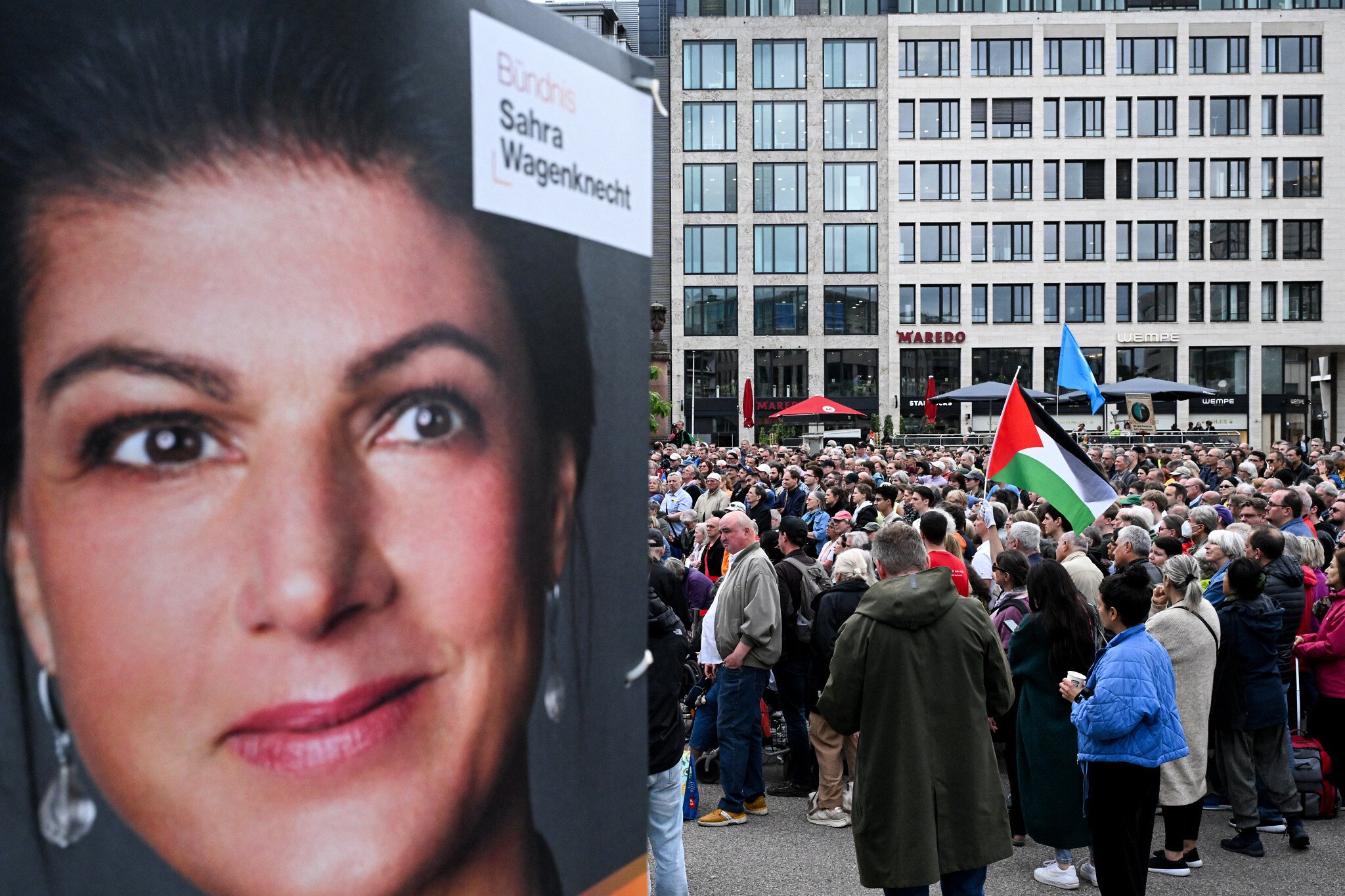
BERLIN — When German Chancellor Olaf Scholz’s coalition government fell last week and new elections were announced, the question was not whether parties on the fringes of the Bundestag — Germany’s federal lower chamber of parliament housed in Berlin’s former Reichstag — would win, but how badly they would maul the traditional center parties. It’s a question that affects the Jewish community in the European Union’s most populous country like no other.
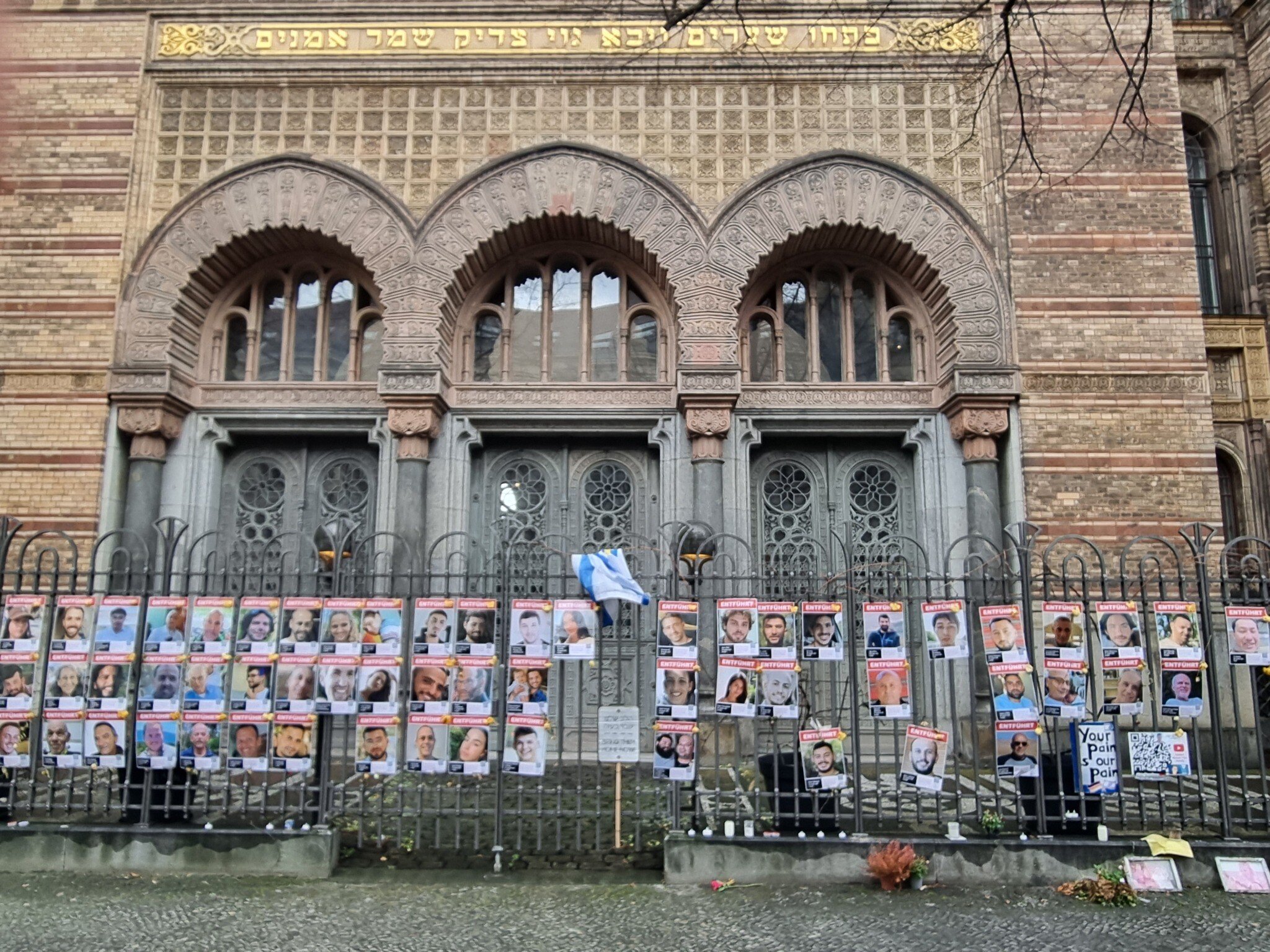
“I’d hate to use the ‘canary in the coal mine’ cliche again,” says Sigmount Konigsberg, commissioner on antisemitism with the Judische Gemeinde, the Jewish community in Berlin.
The Times of Israel spoke with Konigsberg at the historic Neue Synagoge, built in 1865 just north of the river Spree which flows through the center of the German capital.
“We have four parties in the political center we can put our trust in as Jews,” says Konigsberg, “and I believe that after February 23, two or more of those will again form the government.”
The coalition that was sent home after failing a December 16 vote of confidence consisted of the center-left SPD led by Scholz, the ecological left Die Grune (the Green Party) and the conservative liberals of the Free Democratic Party. The fourth mainstream party is the Christian Democratic Union, a traditional conservative powerhouse in German politics, together with its Bavarian sister party the Christian Social Union.
Even though the opinion polls predict that the center will hold and that the next German government will probably be a coalition between the CDU, which is set to become the largest party in the Bundestag, and Sholz’s center-left SPD, the pressure is on from both flanks of the political spectrum: the far-right Alternative for Deutschland and the far-left Sahra Wagenknecht Alliance, named after its populist leader.
Stalwart support for Jews — and the Jewish state
It is hard to avoid Germany’s antisemitic history when walking through the center of its capital — which in winter appears especially bleak.
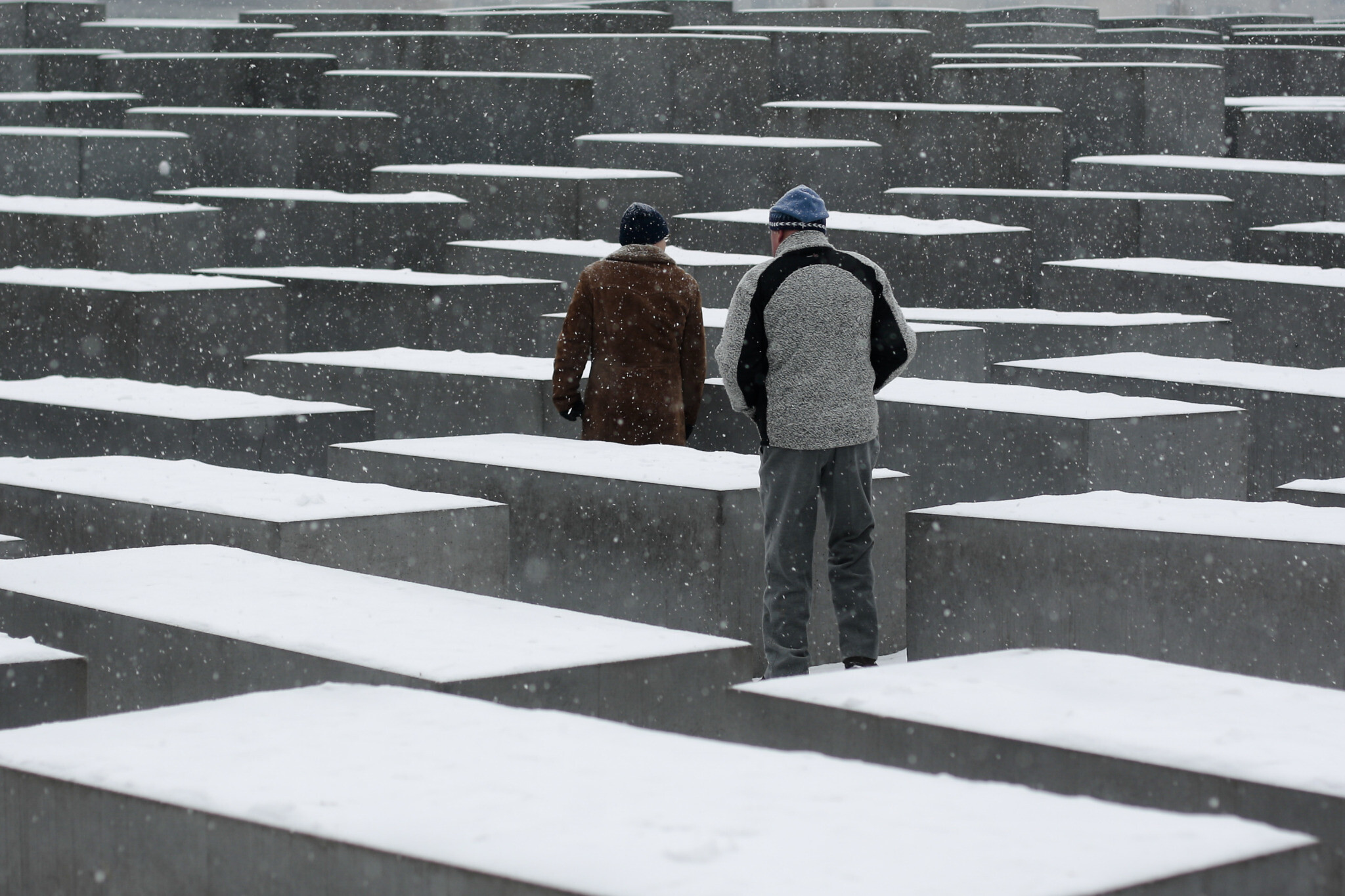
The former Reichstag where the Nazis achieved their biggest victory in democratic elections is a stone’s throw from the Memorial to the Murdered Jews of Europe, which consists of more than 2,700 concrete slabs. Tourists from all over the world use the sober yet impressive forest of stelae to take pictures, often seemingly without knowing its purpose. Directly south of the memorial, across Hannah Ahrendt Street, is the site of the former Fuhrer Bunker, where Adolf Hitler spent his last weeks before he shot himself on April 30, 1945.
Yet last week there was a notable Jewish gathering at the most iconic landmark in Berlin. At the Brandenburg Gate, some 500 young Jews from all over Europe gathered for a youth conference organized by Chabad. Of course, the group was protected by a noticeable police presence, but the question can be posed whether these young Jews could have gathered relatively undisturbed in Paris, London, Amsterdam or any other Western European capital. Their slogan in German was “Wir schämen uns nicht,” or “We are not ashamed.”
Perhaps paradoxically, given the country’s history with its Jewish community, German Jews — and Israel — have stronger political support than in virtually any other state in Western Europe. Most notably in France, Spain and the Netherlands, left-wing and even center-left parties have made a radical swing against the State of Israel, and especially since the Hamas atrocities of October 7, 2023, many have embraced outright anti-Zionism.
Ties between the left-wing Spanish government and the Jewish state have been strained since the Hamas onslaught launched the ongoing war in Gaza, and this has been exacerbated further since far-left Deputy Prime Minister Yolanda Diaz ended a speech in March this year with the words “From the river to the sea, Palestine will be free.”
Meanwhile, Dutch left-wing parties have refused to acknowledge the antisemitic nature of attacks by Muslim youths against fans of football club Maccabi Tel Aviv in November. Even though the rioters themselves dubbed their attacks a “Jew hunt” and some politicians spoke of a “pogrom,” both national left-leaning parties in The Hague and the Amsterdam city council have used the attacks on Israelis in the streets of the Dutch capital to start a campaign “against Islamophobia,” blaming largely non-existent “provocations” by Israelis for the violence.
In France, far-left leader Jean-Luc Melenchon has made anti-Zionism one of the cornerstones of his political platform, which seems to have absorbed more moderate center-left parties into his New Popular Front.
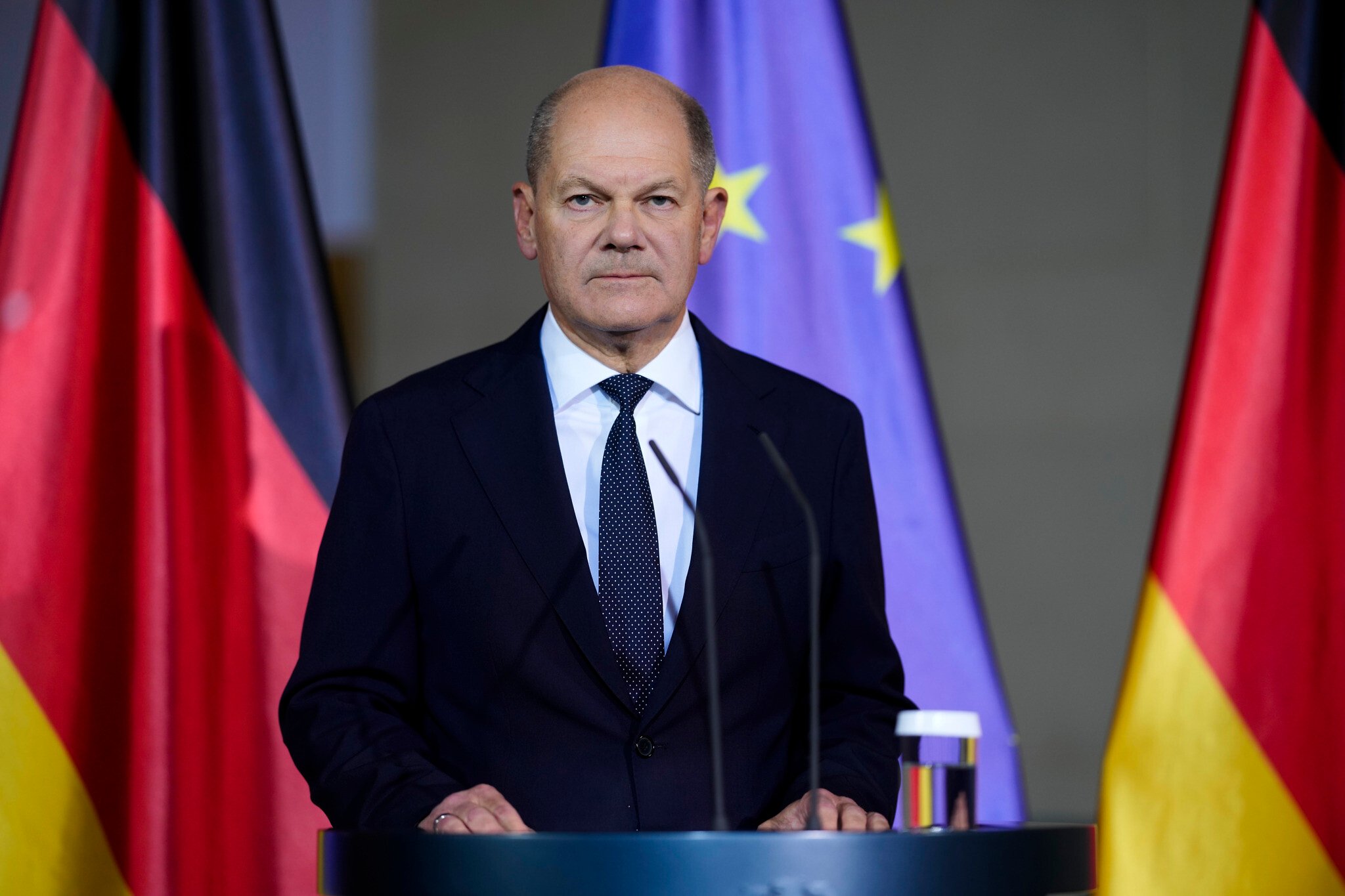
In contrast, the German mainstream left-wing parties seem to maintain a staunchly pro-Zionist attitude. Scholz has steered his country away from the prevalent European calls for an arms embargo against Israel. In defiance of the order by the International Criminal Court in The Hague, Scholz is one of the few European heads of government who has publicly declared that Israeli Prime Minister Benjamin Netanyahu will not be arrested by authorities if he sets foot in Germany. Still more surprising, Scholz’s position is virtually unchallenged in the Bundestag.
Even the German Greens are pro-Israel, an attitude inconceivable among their ideological counterparts in any other Western European country. Robert Habeck, who leads Die Grüne in the run-up to elections on February 23, called the South African-led genocide lawsuit against Israel with the International Court of Justice in The Hague “one of the greatest absurdities.”
The far-left splits
Only Germany’s far left is divided on its position toward Zionism and the Jewish state. This led to a split in Die Linke (The Left), successor to the former Communist Party in East Germany before the fall of the Berlin Wall. Several of Die Linke’s city councilors stormed out when the party adopted a resolution in October against antisemitism, claiming that the text would stifle pro-Palestinian protest.
According to polls, Die Linke is now struggling to reach the 5% voter threshold needed to enter the Bundestag. This is mainly due to a new left-wing phenomenon in Berlin politics: the Sahra Wagenknecht Alliance, known by its German acronym BSW.
Wagenknecht broke away from Die Linke in January this year to form her own populist party, which combines left-wing economic policies with culturally conservative ideas on immigration and transgender rights. BSW is the least pro-Israel party on the German political spectrum.
Josef Schuster, president of the Central Council for Jews, attacked Wagenknecht after she described Israel’s war against Hamas as a “barbaric campaign of destruction.” Wagenknecht countered by saying that the existence of the Jewish state is not a topic of debate within her party, but that the war in Gaza “has gone far beyond self-defense.”
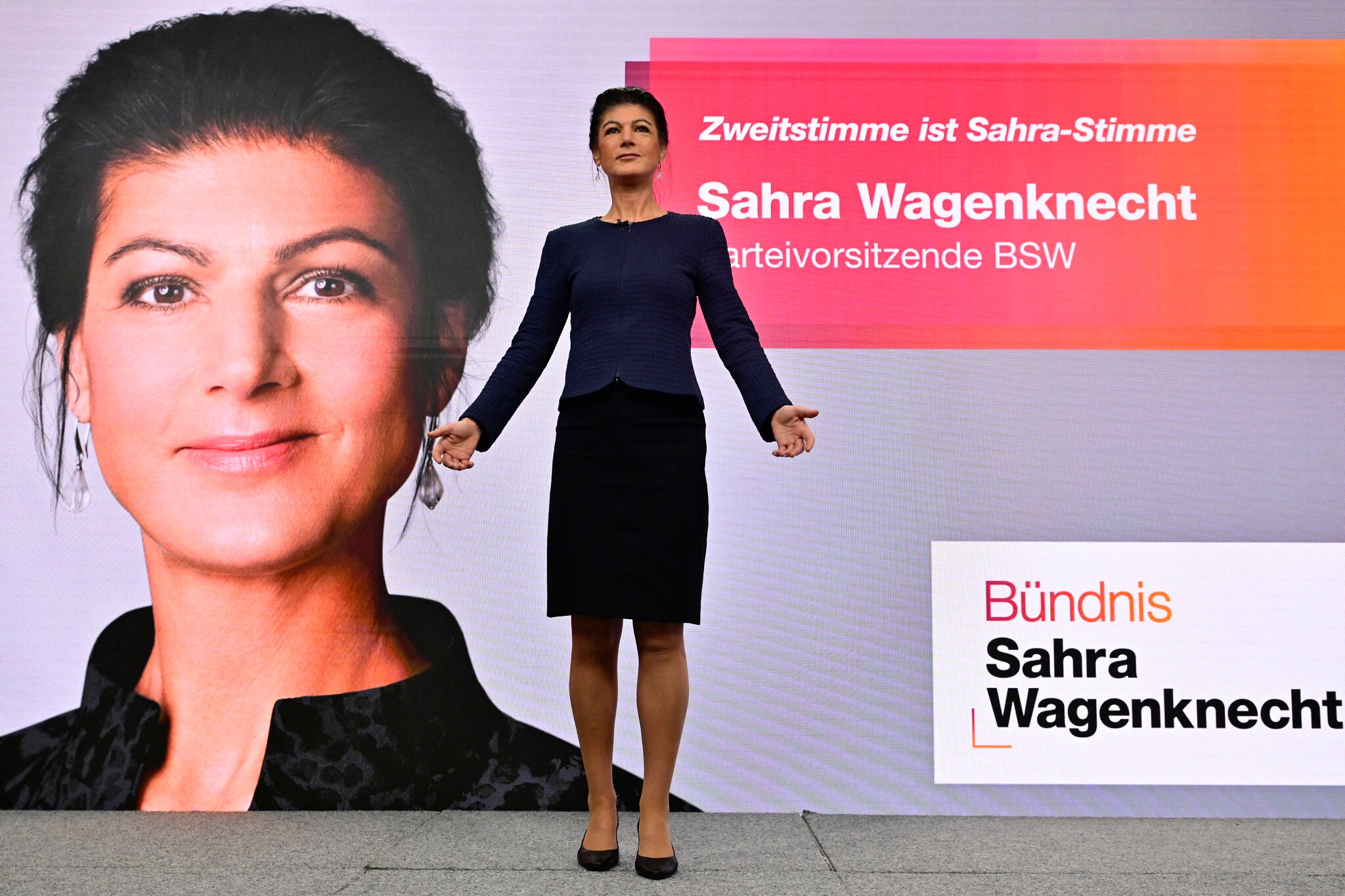
According to recent opinion polls, BSW is set to surpass the five percent minimum required to enter parliament, though it is a distinct possibility that this will not pan out and both far-left parties will fail to be represented in the Bundestag after February 23.
Rise of the far-right
It has been years since passing the electoral threshold has posed a problem for the far-right AfD. The party is radically opposed to immigration, and last week Elon Musk said that “only the AfD can save Germany” — especially when it comes to refugees and other migrants from Muslim countries. At the same time, the right-wing populist party’s leadership is staunchly pro-Israel. Nonetheless, several AfD politicians, especially on the provincial and local levels, have been caught spreading antisemitic conspiracy theories and engaging in Holocaust denial.

Konigsberg points out that any party that opposes immigration will “sooner or later” turn on the Jews: “They [Jews] are always considered foreigners, after all.”
Konigsberg sees the AfD’s professed sympathy for Israel and Jews mostly as a weapon against what is perceived as a growing influence of Islam in Germany.
“They may appear like a ‘blue’ [mainstream] party, but when you scratch the surface, underneath they’re brown,” he says, referring to the color of the uniforms of the Nazi party in the 1930s.
Still, the AfD is riding high in the polls at roughly 20% and is poised to become the second-strongest political force in the Bundestag, after the Christian Democrats. CDU leader Friedrich Merz has categorically excluded the possibility of parliamentary cooperation with the AfD.
“The center will hold for now,” says Konigsberg, predicting a coalition between CDU and SPD, “which is good news for us Jews. But we don’t know what will happen in the elections after these.”




The Times of Israel Community.