

Witness to shooting of man with knife says cop fired with just moment to spare
Passerby who saw policeman gun down Israeli of Ethiopian descent rejects claims officer was too quick on the trigger
 Add ToI as a Preferred Source on Google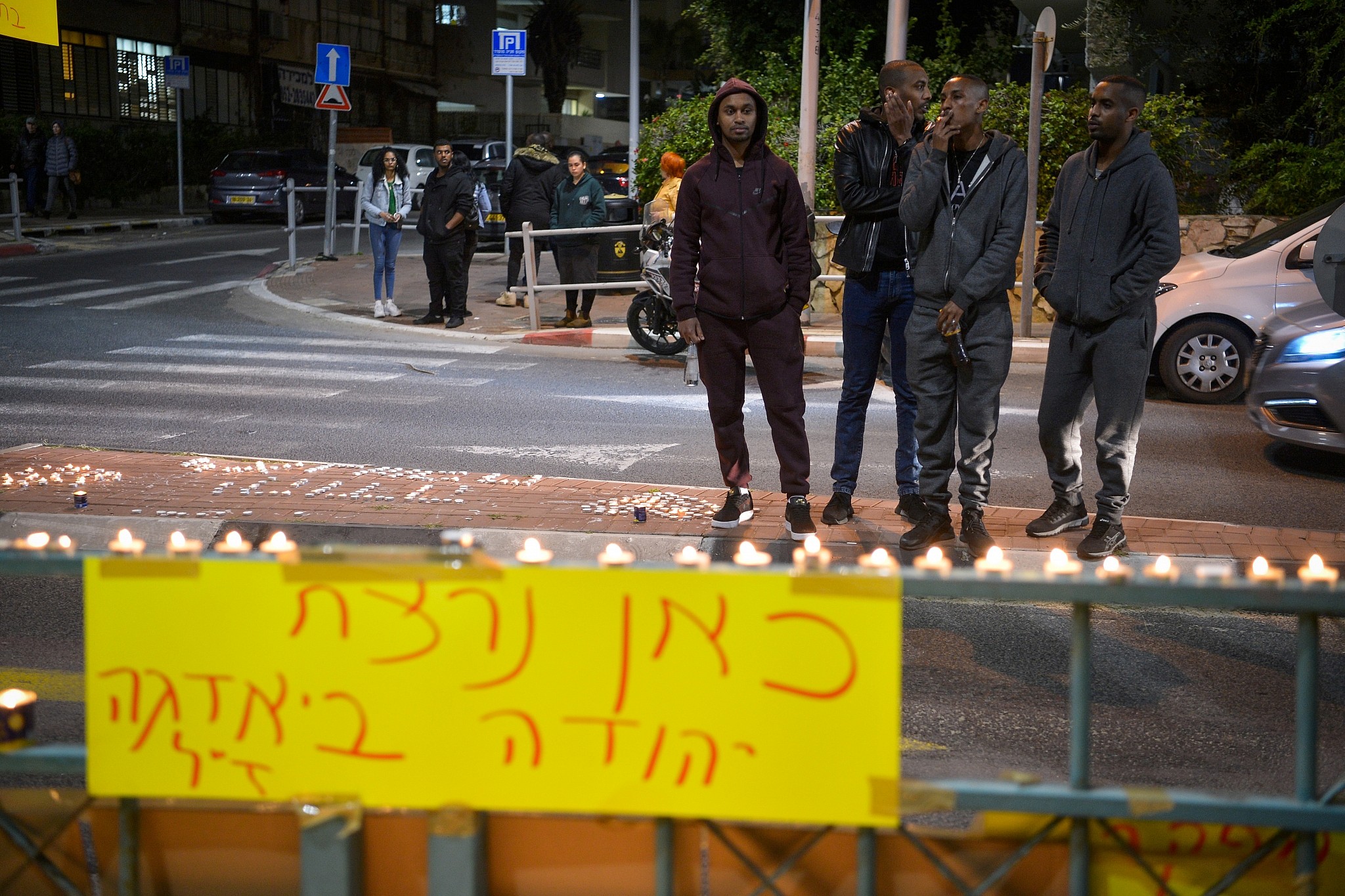
An eyewitness to the recent shooting of an Israeli man of Ethiopian descent, who was killed as he ran at a policeman while holding a knife, rejected claims that the officer was too quick to use his weapon due to underlying racial bias.
Speaking to the Haaretz daily newspaper on Sunday, the witness, 50, who lives in the central region of the country, said that the officer involved had only moments to open fire before the suspected attacker would have stabbed him.
“If the cop had waited another half a second he would have been stabbed with the knife,” he said. “It was clear he had to shoot. He was in immediate life-threatening danger. The whole thing happened really quickly, and he didn’t have time.”
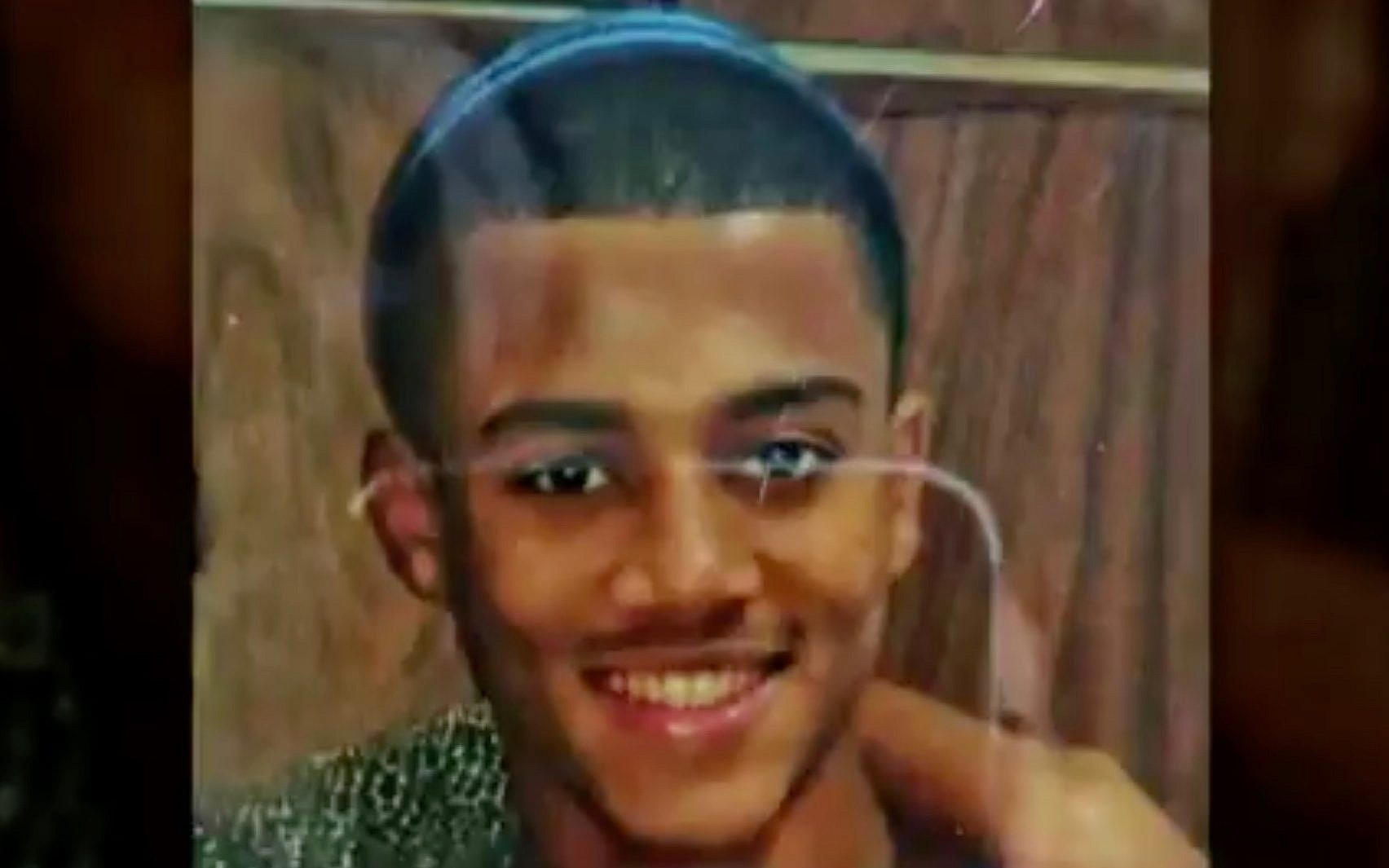
Yehuda Biadga, 24, was killed Friday in his hometown of Bat Yam, after police said he charged at an officer with a knife. Police have denied Biadga’s heritage was connected to the policeman’s decision to open fire, saying he felt a credible fear for his life. Relatives have accused police of using excessive force and said Biadga had mental health issues. Police have opened an investigation into the shooting.
The eyewitness, who was not named in the report, voluntarily contacted the Justice Ministry’s Police Internal Investigations Department to tell them what he had seen. On Sunday evening, officers came to his home to take his testimony, which backs up the version of events provided by the officer who opened fire, the report said.
גרסת השוטר שירה אתמול (ו') למוות בצעיר בבת- ים: "חשתי סכנת חיים מוחשית ומיידית, הירי בוצע כמוצא אחרון". משפחתו של ההרוג, יהודה ביאדגה בן ה-24, זועמת על המשטרה: "היד היתה קלה על ההדק". @ynetalerts https://t.co/X0wXpzpbeF pic.twitter.com/pvYlbuT4rm
— איתי בלומנטל ???????? Itay Blumental (@ItayBlumental) January 19, 2019
Recalling the events, the man told Haaretz that he was in the car with his daughter when he suddenly saw a officer on a motorcycle pass him by, heading against traffic.
“A few moments later, he stopped the motorcycle on a crosswalk, got off, drew a pistol and shouted, ‘Drop the knife.'”
Looking in the direction that the officer was pointing his gun, he said he noticed “a guy who started to run in [the cop’s] direction waving a knife in the air.
“He was on the sidewalk and then came off it in the direction of the policeman. It looked like he was charging [him], and the policeman immediately fired two shots.
“The guy fell over and within a short time more officers came to the scene. In my estimation the shooting was from a distance of five meters,” he added.
The witness said that when on Sunday he saw that the shooting was being characterized as racially motivated, he felt he had to speak out.
Police said Saturday they had received reports of a young man with a knife in the stairwell of his apartment building who was feared to pose a threat to people in the vicinity. When officers arrived at the building, they were told the suspect had fled on foot to a nearby street.
During searches for the suspect, police said one of the officers saw Biadga approaching with a knife and ordered him to stop, but he ignored his calls. Feeling a threat to his life, the officer then fired at Biadga, police said.
Biadga was brought by paramedics to a hospital, where he succumbed to his wounds. He was buried Sunday.
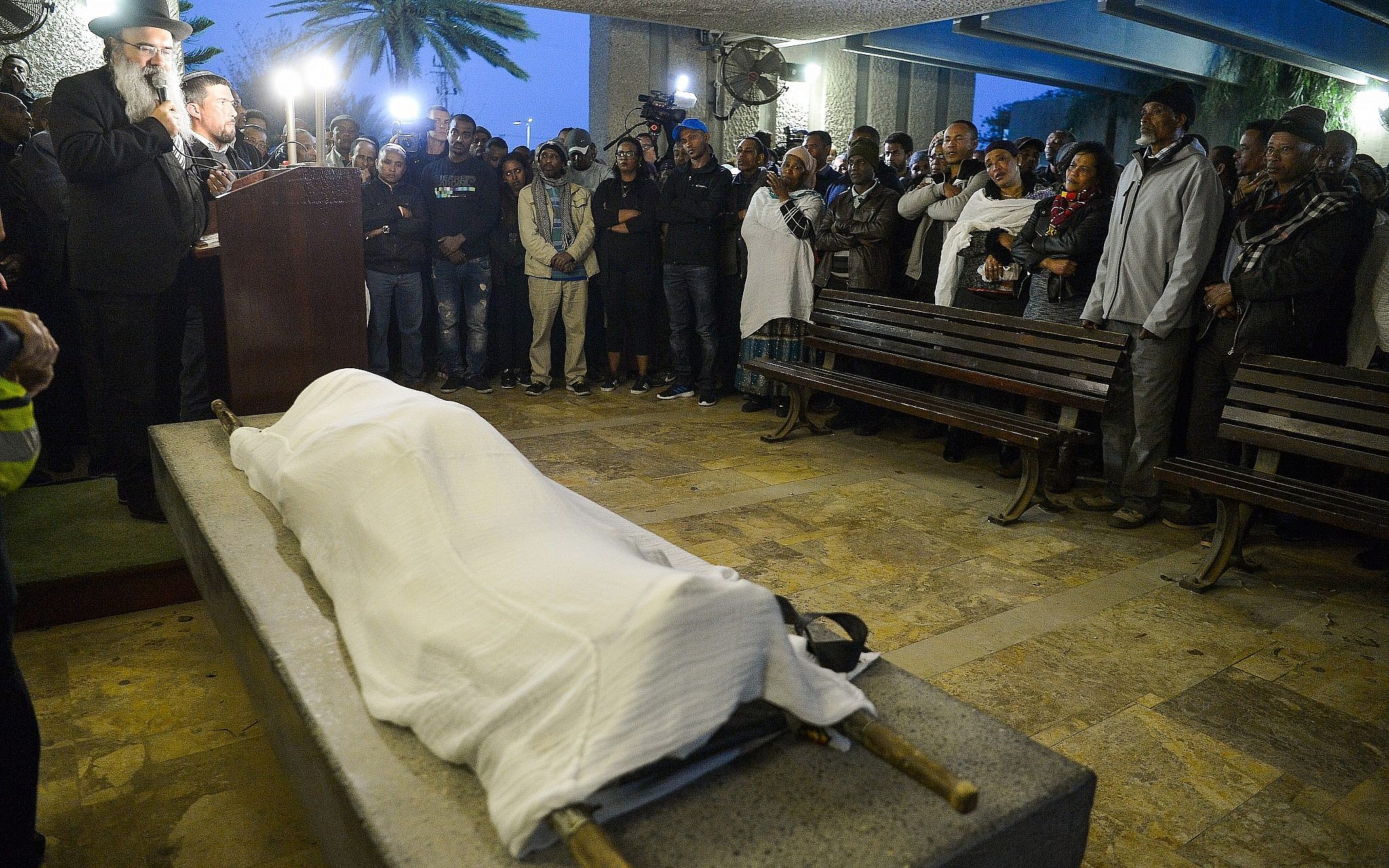
Biadga’s family members have said they called police after he threatened his parents with a knife, and police on Sunday released a transcript of the call to an emergency dispatcher.
“At 45 Balfour Street in Bat Yam there is an incident. A 22-year-old is going wild with a knife, he wants to kill his parents,” the caller was quoted as saying by Hebrew media.
“He took a kitchen knife. He wants to kill his mother,” the caller added.
The police officer involved in the shooting, who has not been named in media reports, returned to duty on Sunday morning.
More than 135,000 Ethiopian Jews live in Israel, most of them having immigrated in two waves in 1984 and 1991. But many have struggled to integrate into Israeli society amid lingering accusations of discrimination.
Community leaders and others have said there is a pattern of racism and abuse by police toward Ethiopian-Israelis, despite promises from on high to root out the problem.






The Times of Israel Community.