

2 sentenced in plot to ship aircraft parts to Iran
Hamid Asefi and Behzad Karimian violated national security by trying to ‘skirt the embargo,’ US district court judge concludes
 Add ToI as a Preferred Source on Google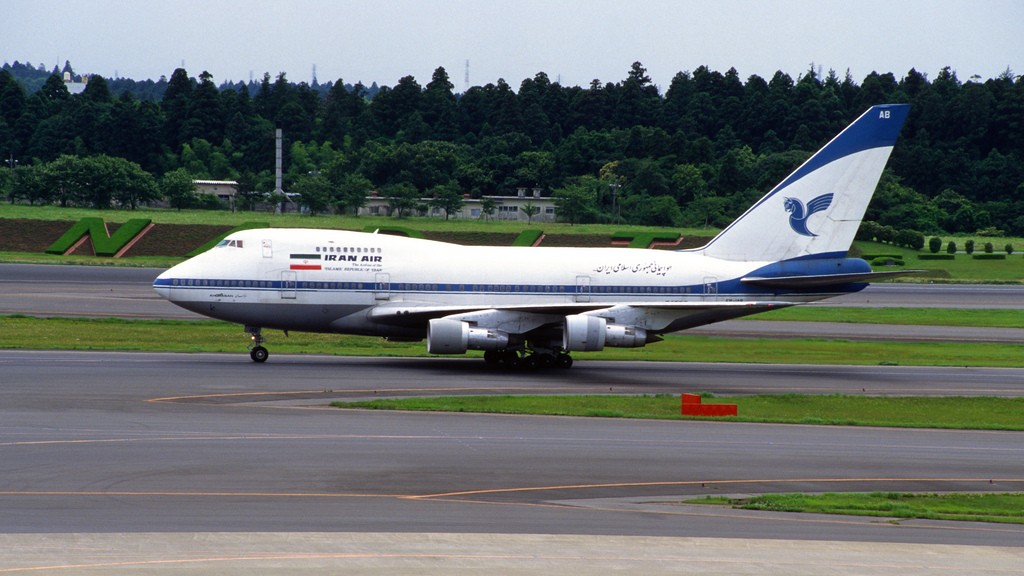
LOUISVILLE, Kentucky (AP) — An Iranian national has been sentenced to 23 months in federal prison and an American who worked as an airline pilot received a 46-month sentence for their roles in a plot to ship helicopters and aircraft parts to Iran’s state-run civilian airline in violation of the US trade embargo.
US District Judge Joseph McKinley concluded Monday that Hamid Asefi, 68, an Iranian citizen, and Behzad “Tony” Karimian, 53, a US citizen living in Louisville who holds an Iranian passport, violated the national security provisions of a US embargo against Iran during the scheme.
“They were trying to skirt the embargo,” McKinley said.
The pair pleaded guilty in December to violating and conspiring to violate the International Emergency Economic Powers Act for exporting, selling, or causing the export or sale of aircraft and aircraft parts in violation of the US trade sanctions on Iran. That law allows the president to impose economic sanctions against another country.
Their scheme, hatched in 2007 and continued until 2011, was foiled before the defendants arranged any deliveries, federal authorities said. The men had hoped to make millions by selling the parts to Iran Air, which is owned by the country’s government, authorities said. Several of Iran Air’s planes are made by US -based Boeing, according to the airline’s website.
None of the parts or aircraft was intended for the military, prosecutors said.
Last year, the US Treasury Department imposed sanctions on Iran Air for providing material support and services to Iran’s Islamic Revolutionary Guard Corps. Asefi sent requests on behalf of Iranian entities to Karimian for the purchase of aircraft and parts located in the US or owned by American citizens. Karimian then made inquiries, placed orders and tried to facilitate those purchases.
Attorneys for both men argued that the crimes were not national security-related, but rather economic offenses aimed at getting them rich. Public defender Scott Wendelsdorf, who represented Karimian, said the government of Iran, the target of the embargo, had no role in the scheme.
“This was not a financial transaction with the government of Iran,” Wendelsdorf said. “At worst … this was an attempt to obtain a jet engine for Iran Air.”
Calhoun said the scheme went on for almost five years and the defendants knew it was illegal to try to ship parts to Iran.
“Both were trying to enrich themselves at the expense of the embargo,” Calhoun said.
Asefi, speaking at times in heavily accented English and also using an interpreter for part of his statement, told McKinley he has family in Iran, including a very ill daughter he may never see again because of a lengthy prison sentence. Asefi asked for leniency and admitted to breaking the embargo.
“I understand the mistakes I have made,” Asefi said.
Karimian, who became a US citizen in 1980, made a similar plea to McKinley, saying one son no longer speaks with him and another needs help socially and academically. His arrest and guilty plea means he can no longer work as a pilot, Karimian said.
“I’ve lost my freedom,” said Karimian, who once worked for the now-defunct Mesaba Airlines that had been based in Minneapolis.
Calhoun noted that Karimian used his American citizenship to travel in and out of the country as part of the scheme, as well as using his contacts in the aviation community to try to find an engine and helicopters to ship to Iran.
Copyright 2013 The Associated Press






The Times of Israel Community.