

Battle of the bay
Papers differ over whether Haifa’s factories are making the city’s kids sick and what the mayor and government should do about it
 Add ToI as a Preferred Source on Google
Joshua Davidovich is The Times of Israel's Deputy Editor

Israel’s news organizations train their eyes inward Monday morning, casting a leery eye on the silent killer stalking the polluted city of Haifa and a jaundiced eye on the research showing its existence.
The firestorm over the bay city’s pollution and increased rates of cancer found there from a number of factories spewing toxic fumes makes headlines across all three major dailies Monday morning, though the papers find little to agree on over the research behind the numbers and what the city is and should be doing to combat it.
Populist Yedoth is the only paper to lead off with the Haifa story, which it calls a “cancer failure,” as pressure built in the wake of a Health Ministry report finding 16% of area cancer cases were linked to heavily polluting factories in the city, which is hemmed in by mountains that keep toxic materials concentrated over the city, unable to disperse eastward.
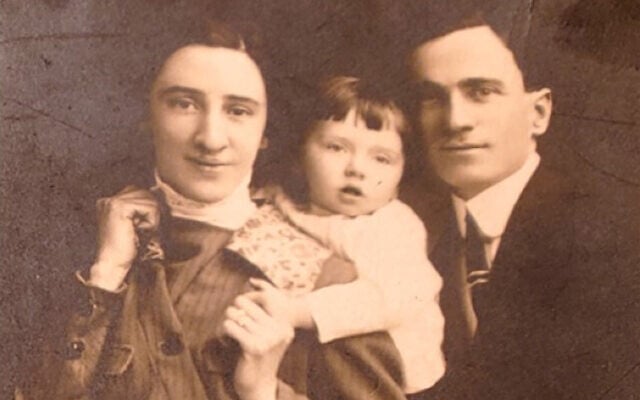
Yedioth’s first few pages are plastered with pictures of 3-year-old Yaheli, who is suffering from leukemia, though the paper admits that it’s not clear if there is any connection between pollutants in the air and Yaheli’s cancer.
But that matters little to his parents.
“It makes me angry that they are not taking care of the polluting plants,” father Zion Chen-Chanuka is quoted telling the paper. “The time has come for a city like Haifa, which has developed and grown so much, to be without these polluting factories next to it.”
Haaretz, aiming for the brain and not the heart, leads off with a picture of trucks sent by Haifa Mayor Yona Yahav Sunday to block off access to the most offending plants, though the paper reports that operations continued pretty much unabated despite the symbolic move.
Environmental activists were similarly unimpressed by the trucks.
“The mayor is staging a media stunt,” activist Hanna Kuperman is quoted telling the paper. “It’s 2015 and they’re still polluting the city. A media whiz, is the mayor. It’s simply an act designed to confuse public opinion.”
Correspondent Zafrir Rinat writes that Yahav’s vow to close the factories has little to it as well.
“If the plants are violating their business licenses, the municipality can launch a procedure that could result in their closure,” he writes. “Yahav on Sunday did not present any evidence that the plants were violating their licenses, so there is no legal significance to his declaration that he plans to close polluting factories.”
The broadsheet also reports that the cancer rate among children in the bay city is actually lower than other places like Tel Aviv, though among adults it is higher.
And the experts say there is no proof that there is a link between polluting refineries and cancer.
“Pollution in the air is bad and needs to be fought, but there is no proof in the scientific medical literature of a link between pollution and cancer in children,” pediatric oncology expert Prof. Yitzhak Yaniv from Schneider Children’s Hospital tells the paper. “We see as unfortunate that the public storm is based on incomplete data that has caused unneeded damage to many parents.”
But in Israel Hayom, medical correspondent Ran Reznick writes that action needs to be taken even before the dust has settled in the scientific battle over the evidence between the Health Ministry and other researchers over the data.
“There is a moral and public obligation by the Health and Environmental Protection ministries to lead an emergency national program to reduce environmental pollution so all the country’s citizens and residents of Haifa especially will be able to breathe clean air and live in surroundings clean, as much as possible, from cancerous pollutants and materials,” he writes. “The creation of a government over the next coming weeks is an excellent opportunity for the new ministers of health and environmental protection to demand the government act on and budget for a plan like this.”
Religious (affairs) war
As far as that new coalition is going, though, there’s not much to it yet.
As the time initially granted to Likud to form a government expires (the party got an extension), Yedioth reports that while Kulanu and ultra-Orthodox Shas seem ready to come aboard, Jewish Home head Naftali Bennett is making control of the Religious Affairs ministry a make-or-break demand for him joining up or even continuing talks.
“Yesterday, the argument between Likud and Jewish Home grew worse, after Bennett announced that he was putting forward an ultimatum to Netanyahu: If he takes the Religious Affairs ministry from Jewish Home unilaterally, that’s the end of talks. Jewish Home explained that transferring the portfolio to Shas will deeply affect the character of the religious institutions over the coming years and they won’t agree to it,” the paper reports.
Despite the fight, Jewish Home should be pleased with Haaretz’s lead story, which reports that Likud will demand coalition discipline on bills being pushed by Jewish Home and Likud that will weaken the High Court.
“If we start giving different parties freedom to vote on certain issues, it will never end,” a senior Likud source is quoted telling the paper.
“Without the support of everyone, we won’t have a majority for the bills, and the whole idea of a coalition will be lost.”
Israel Hayom reports, without citing a source for the information, that the number of ministers will jump from 18 to 22, with 11 or 12 of them coming from Likud.
Remembering the fallen
With Memorial Day coming up Tuesday night, papers also get a jump on remembering the nation’s fallen, with large packages in both Yedioth and Israel Hayom honoring the dead.
Yedioth features snippets of various living army brass writing on people they remember who were killed in Israel’s many fights.
“Goni didn’t have to be there, in the battle for Beaufort,” former IDF chief Gabi Ashkenazi writes about Goni Harnack, killed in 1982 at the start of the Lebanon war even though he had recently been let out of his elite Golani unit. “But like his mother Raya said, if Goni wasn’t with his comrades and commanders in the unit during that tough battle on June 6, 1982, he wouldn’t be Goni.”
Israel Hayom reports on a ceremony held at the military cemetery at Mount Herzl in Jerusalem with troops placing flags on soldiers’ graves. The paper’s Haim Shine pulls out his most purple pen to write that the world needs to understand that though Israel smarts from its losses, it won’t shrink away from the fight.
“It’s important for the whole world, friends and enemies alike, to know that the sounding of the revival of Israel in its land will not stop,” he writes. “We will bite our lips in pain, and in our determination will continue to build and strengthen. The flame of freedom that always shines for our people will not be put out. In these days of remembrance and mourning it’s on us to do everything so that State of Israel will fix its ways and prove itself worthy of the sacrifice and memory of the fallen.”





The Times of Israel Community.