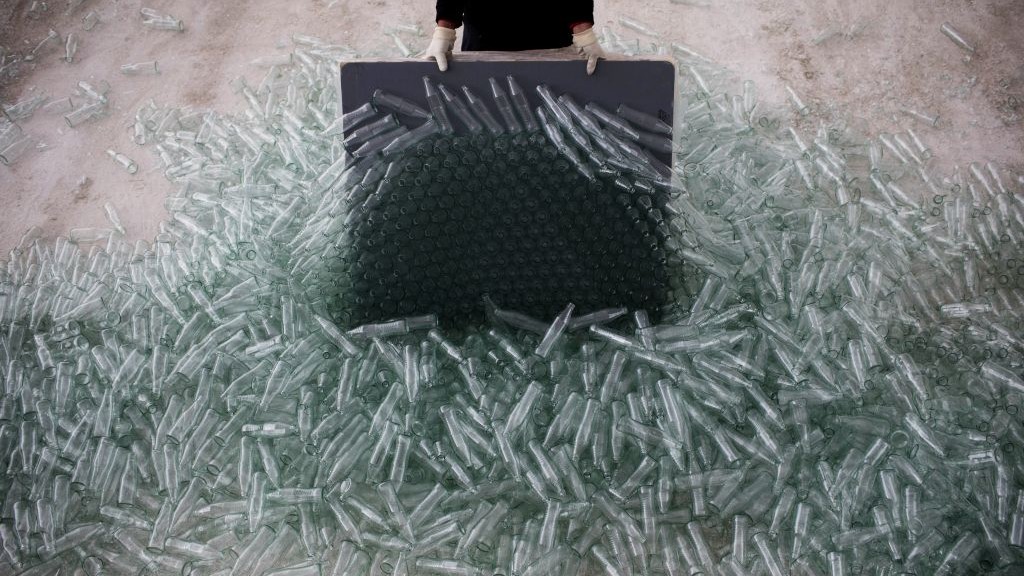
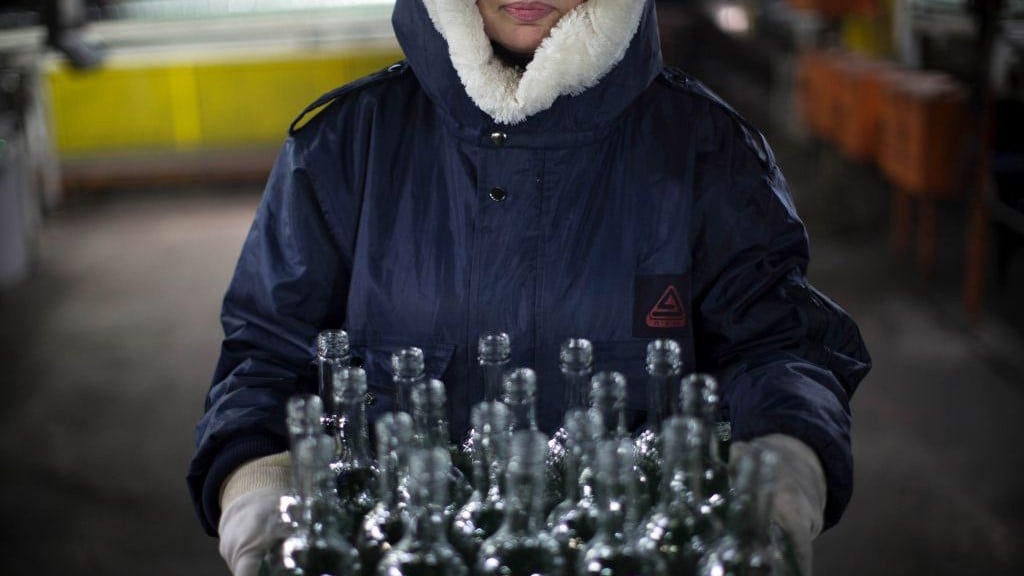
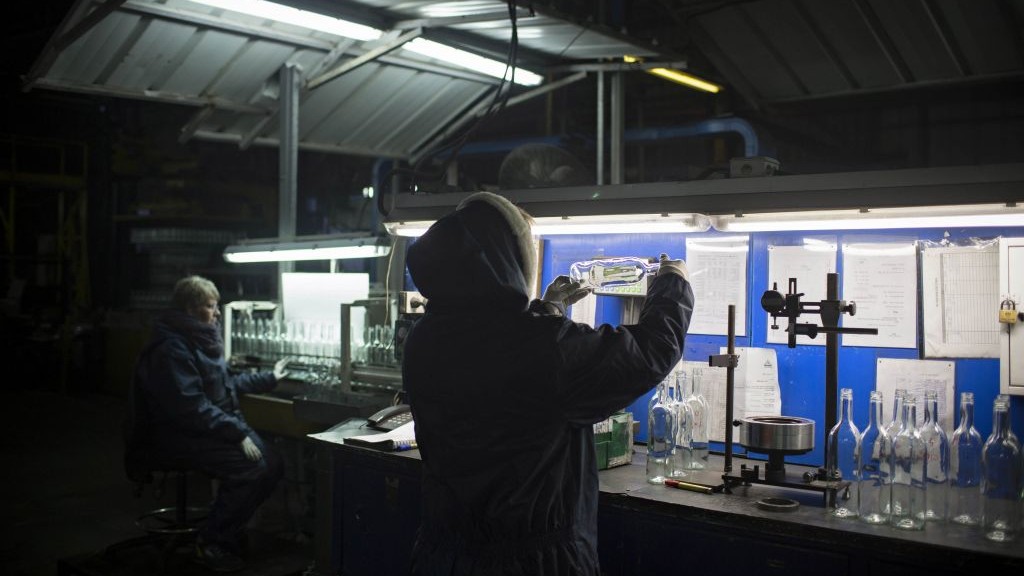
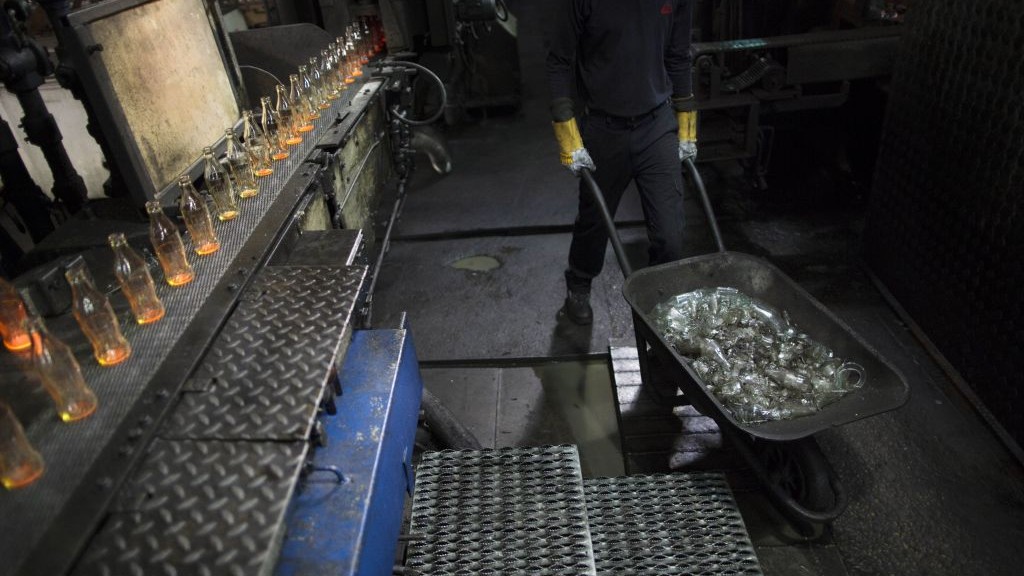
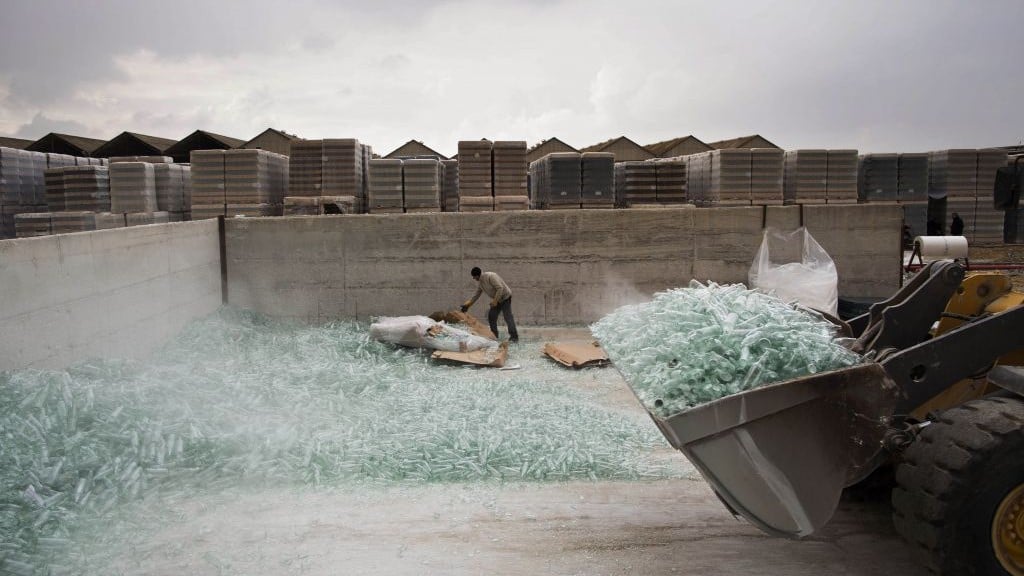
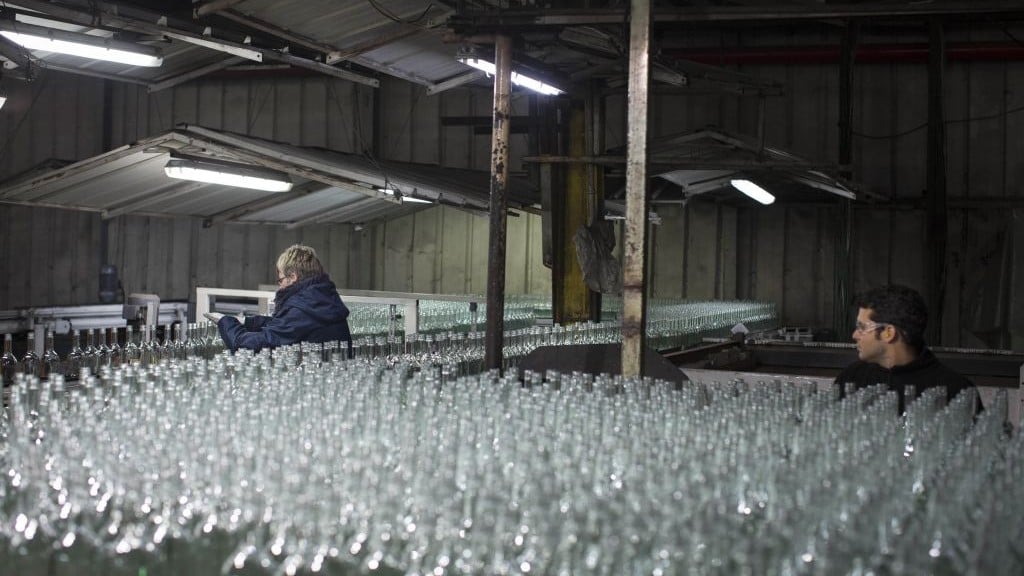
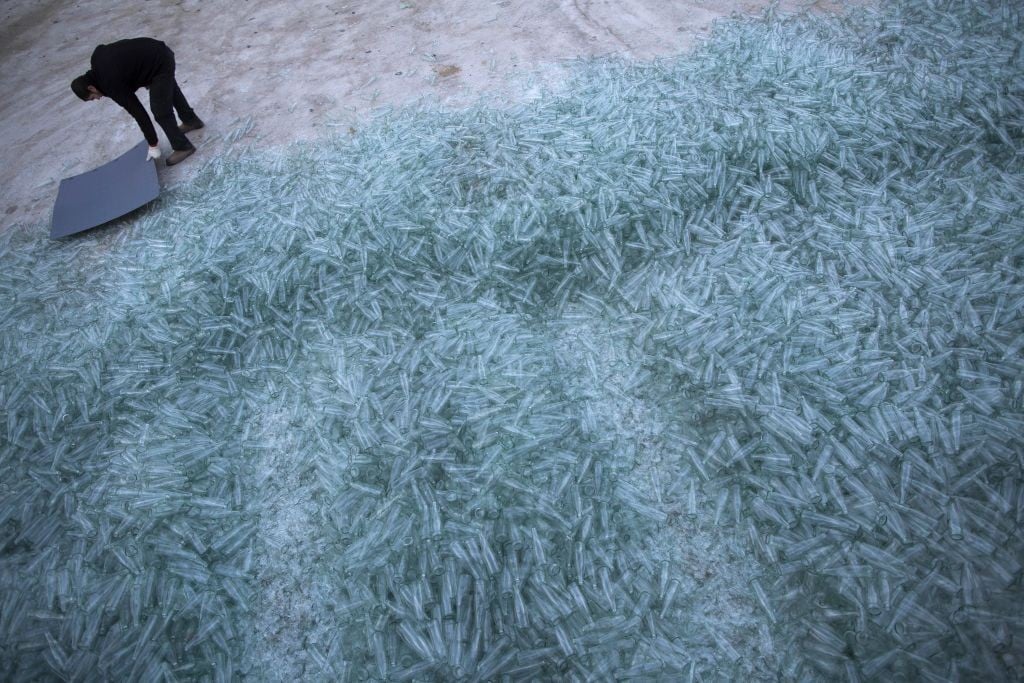
In this Jan. 27, 2016 photo, a worker breaks defective glass bottles to be recycled at the Phoenicia Glass Works Ltd. factory in the southern Israeli town of Yeruham. (AP Photo/Oded Balilty)
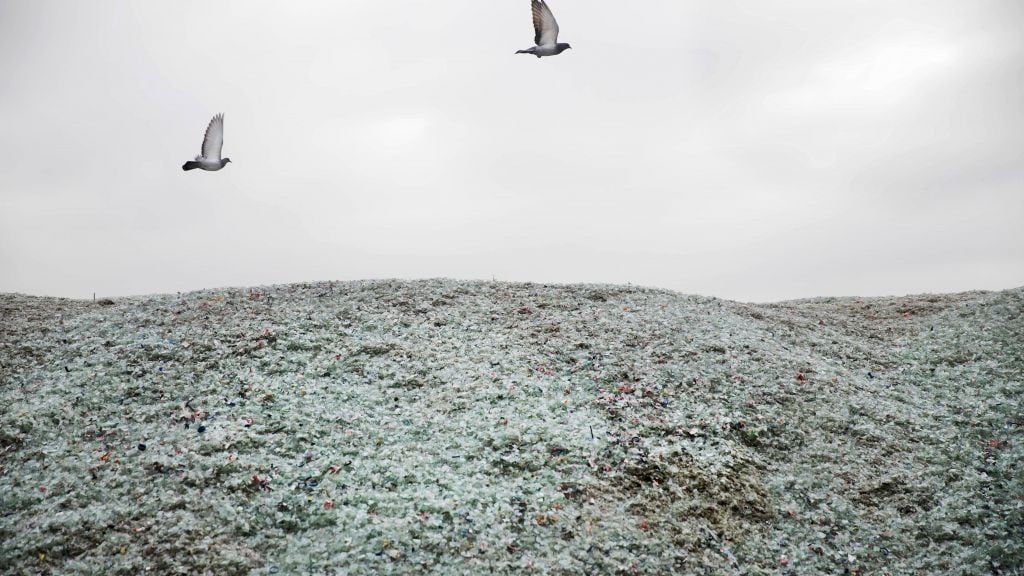
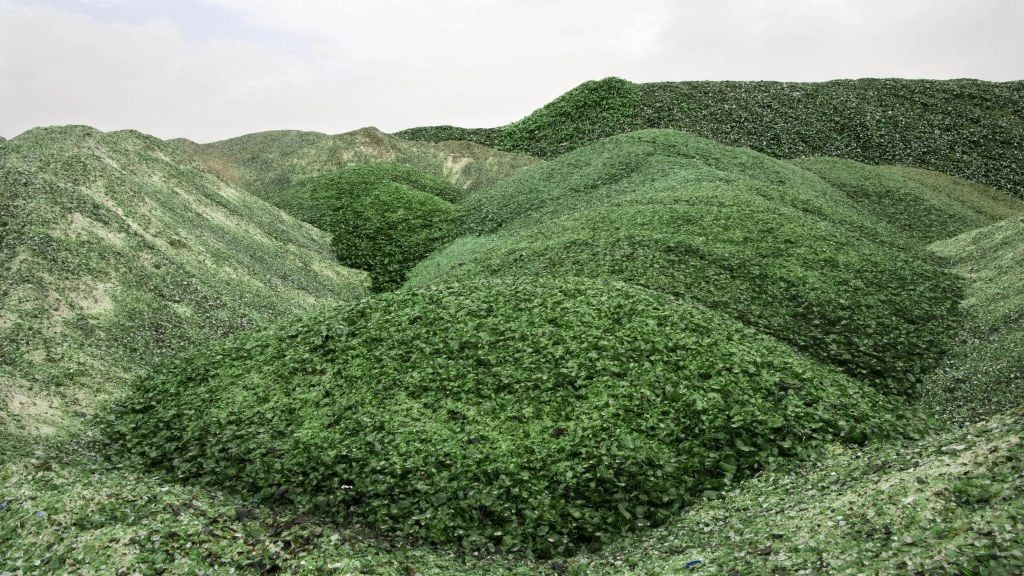
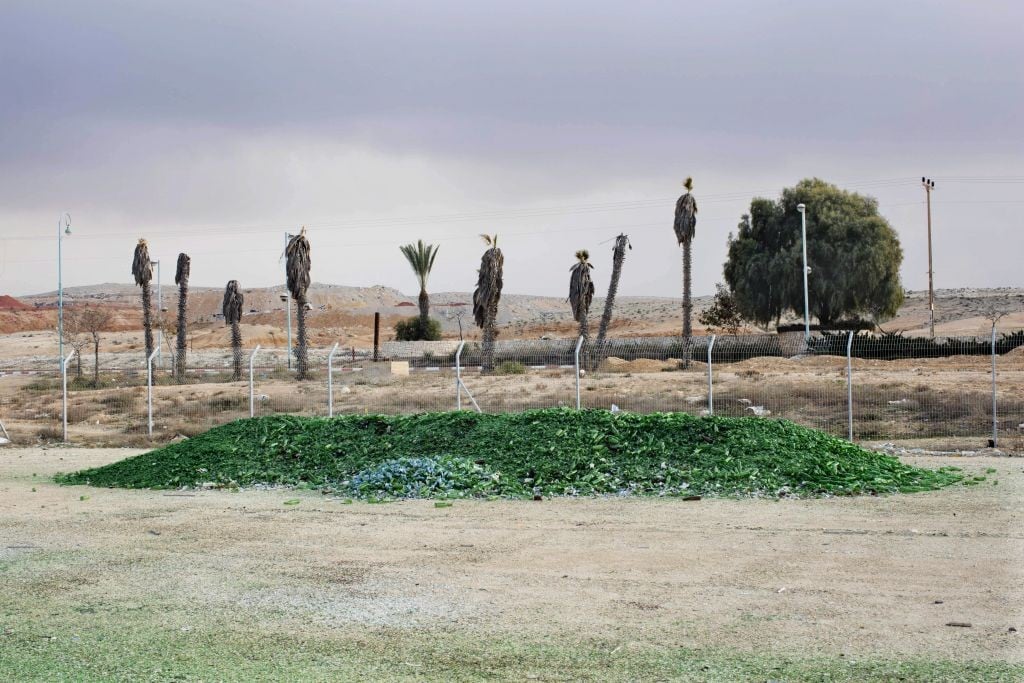
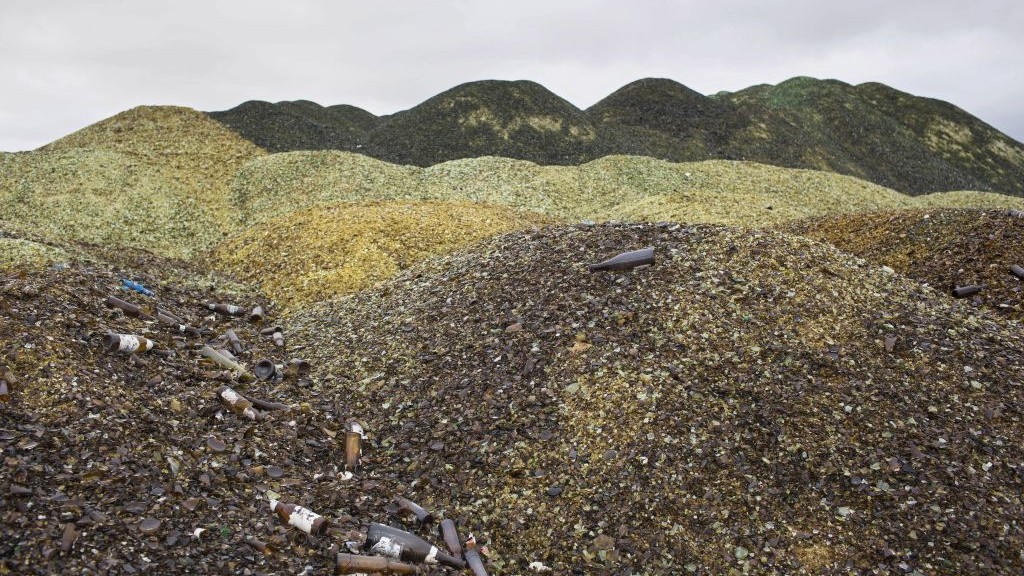
YERUHAM (AP) — Deep in the heart of Israel’s desert, shimmering mountains of glass dominate the landscape.
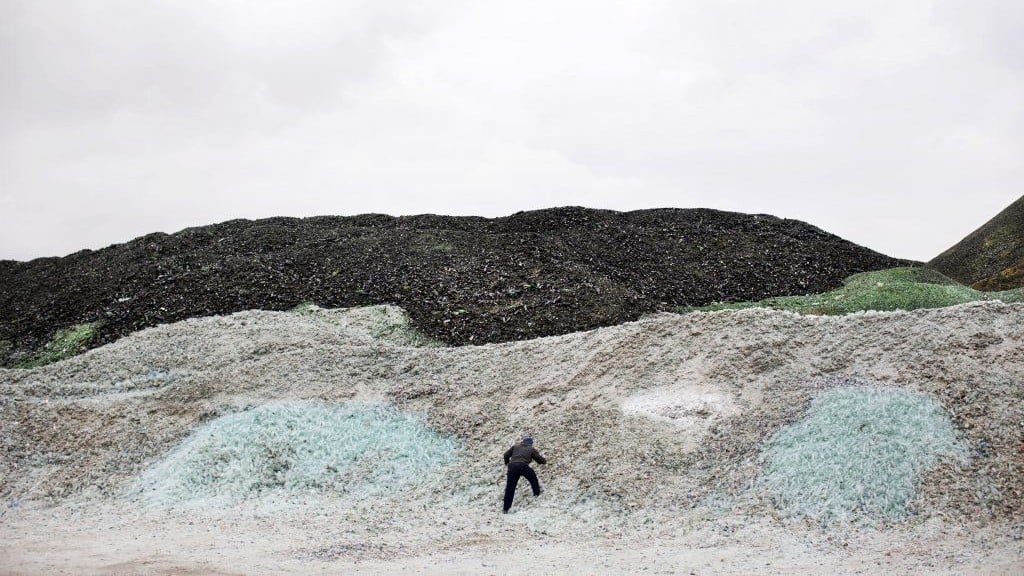
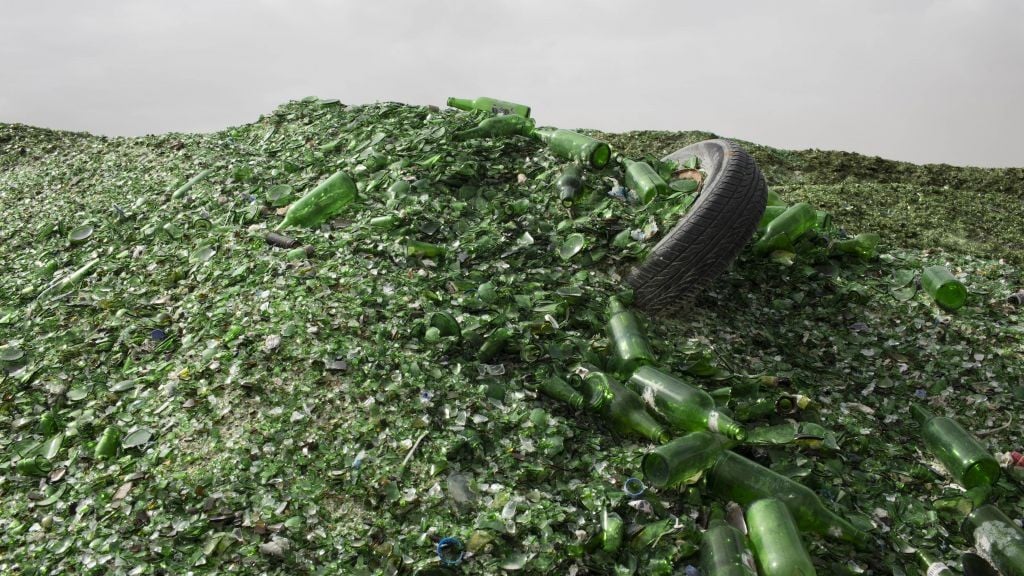
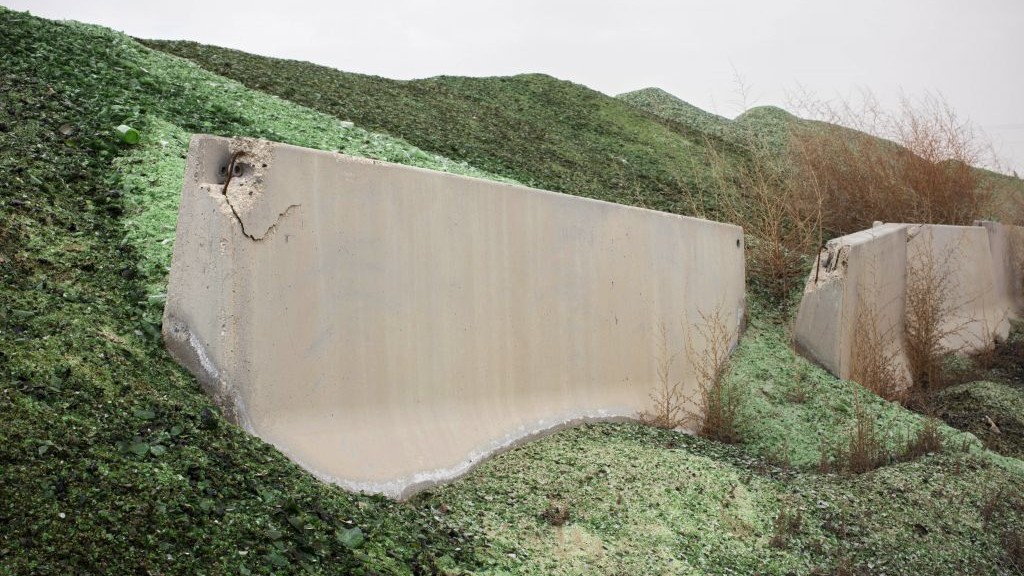
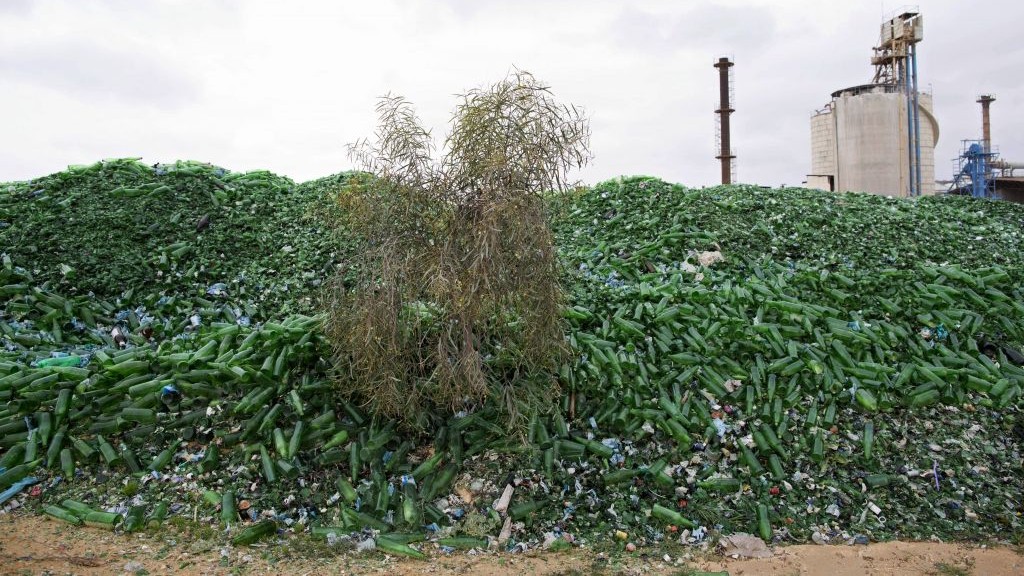
Tiny shards, millions of them, are piled into rolling hills of green and brown. They are 50 feet high and span the length of a few soccer fields.
This is the junkyard at Israel’s only glass container factory, where broken glass awaits a new life.
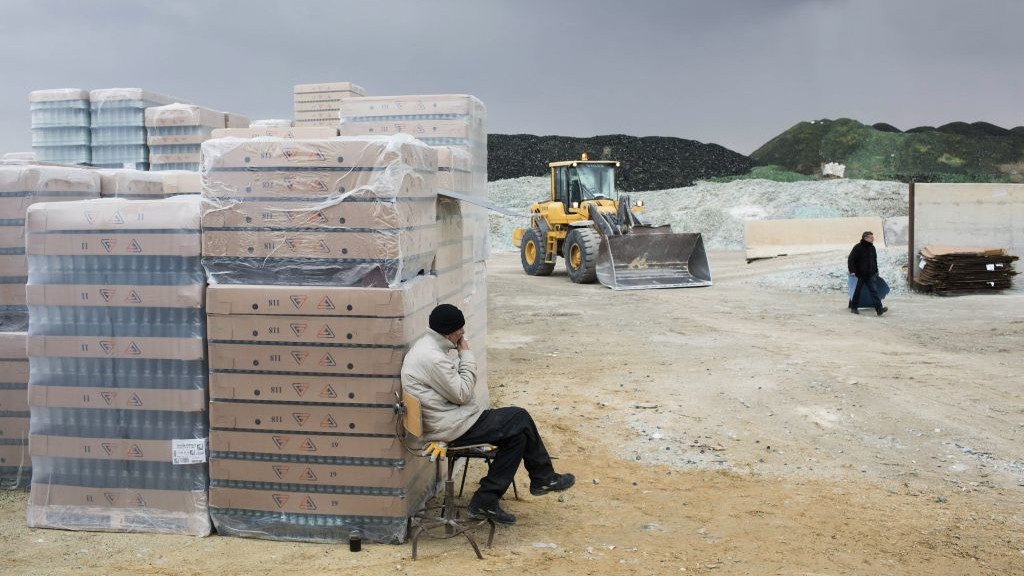
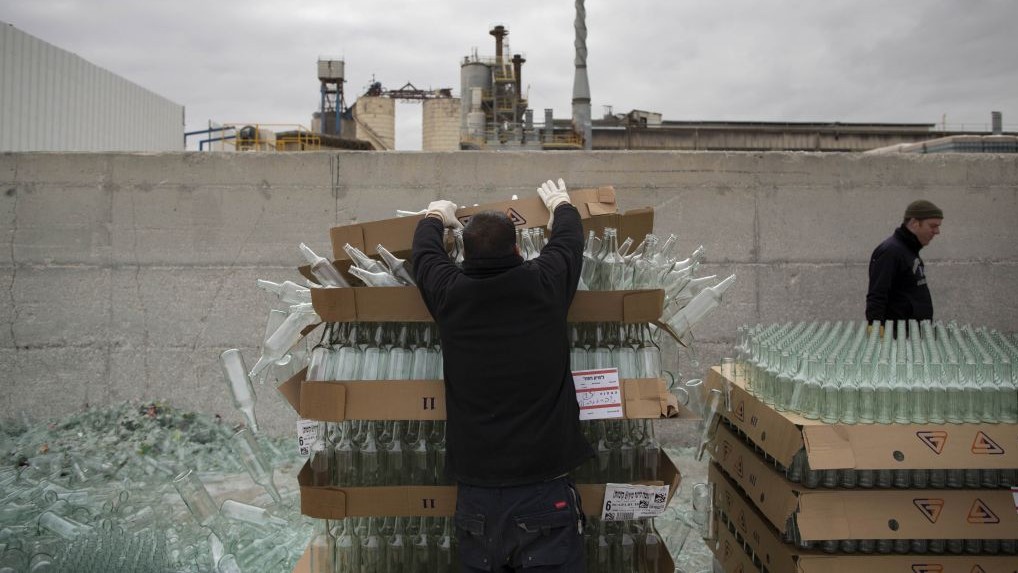
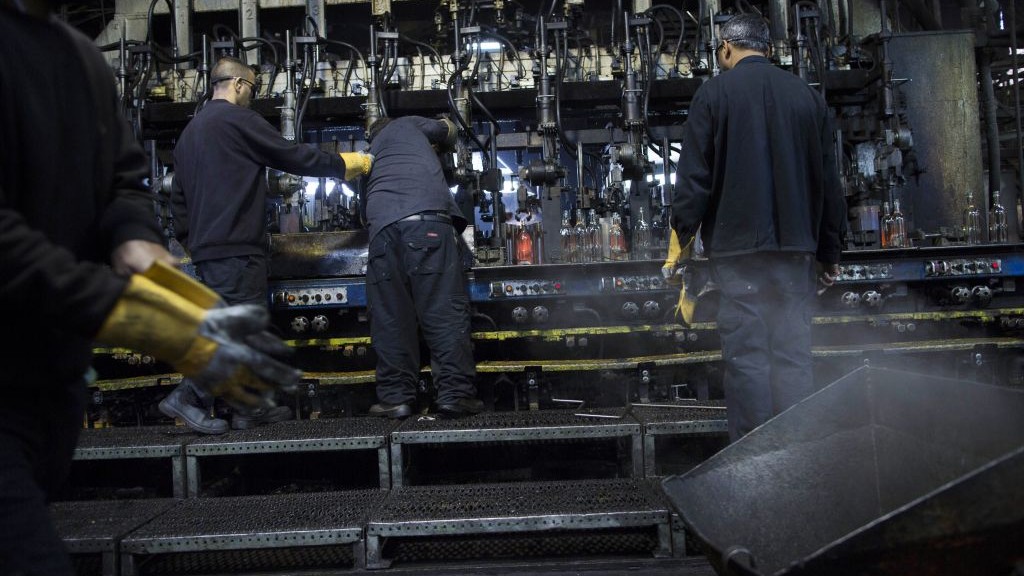
Phoenicia Glass Works Ltd. produces a million bottles and containers a day for beverage giants Coca Cola, Pepsi, and Heineken, as well as Israeli wineries and olive oil companies. Every day, about 300,000 bottles come out of the ovens with defects.
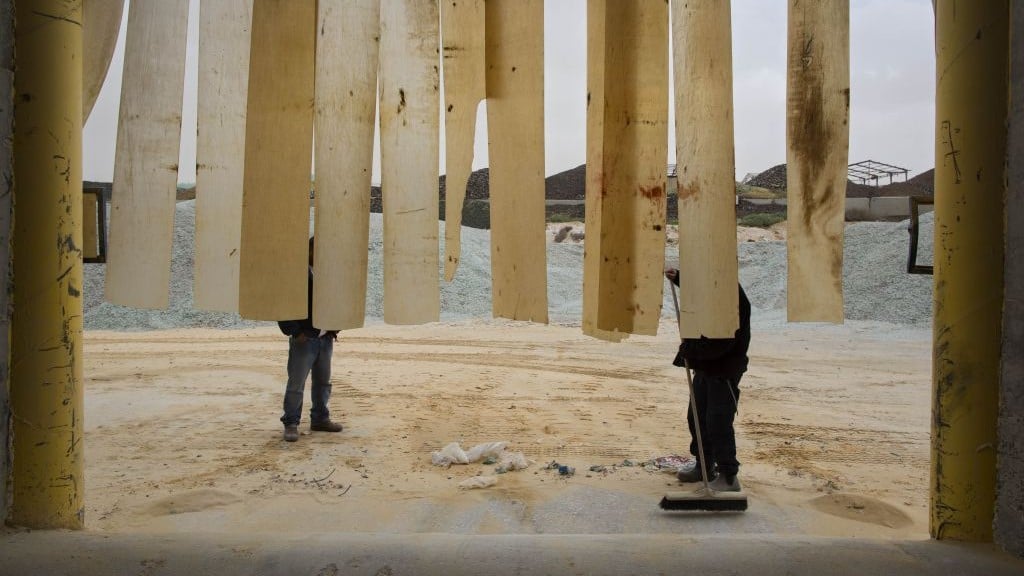
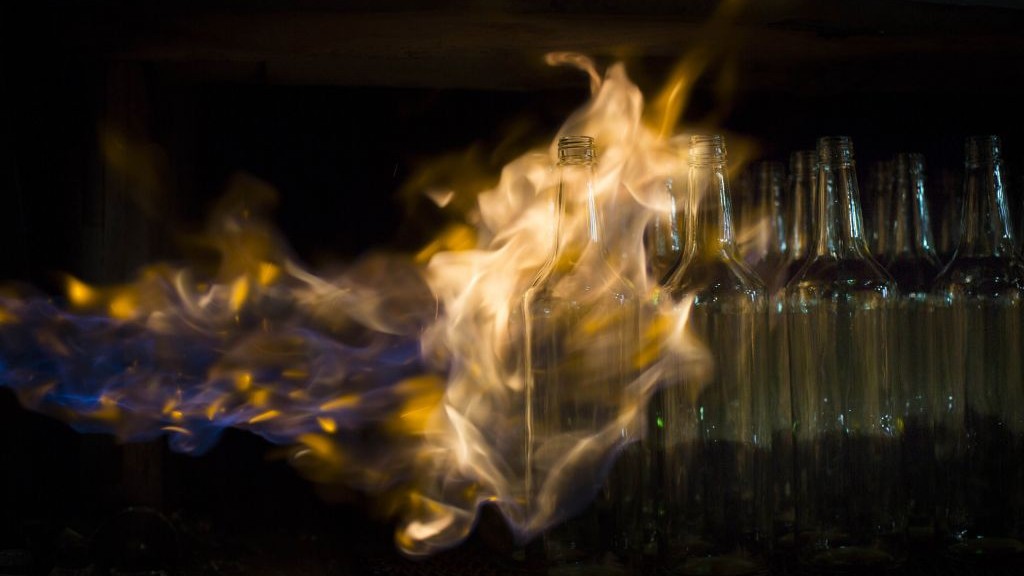
Factory workers grind these rejects into shards and pile them outside. Recycled glass bottles from across the country are sent here and ground up, too. The glass pieces are shoveled into the ovens to be fired into new glass bottles. Sand, the basic ingredient of glass, is hauled in from a nearby desert quarry.
Get The Times of Israel's Daily Editionby email and never miss our top stories
The factory is located in one of Israel’s most remote desert towns. It’s been there for the last 50 years, but has suffered financially. Morton Mandel, the American industrialist and philanthropist for Israeli and Jewish causes, bought the factory a number of years ago to keep it afloat.
About 250 employees keep the factory running 24 hours a day, every day of the year. They even work on Yom Kippur, Judaism’s holiest day, when everything else in the country grinds to a halt. They can’t turn off the ovens, because the molten glass lava will harden and clog them.
Outside the factory, heaps of olive green sit next to mounds of brown, light green, and clear glass. The piles are kept separate by concrete slabs made by a factory next door, which also produces the concrete pieces for Israel’s West Bank separation barrier.
Advertisement
In the monotonous desert sands, the colorful hills are like a surreal nature reserve.
“We are here so much,” said factory employee Oron Haliva, “we hardly notice.”
Here’s a gallery of images by AP photographer Oded Balilty.
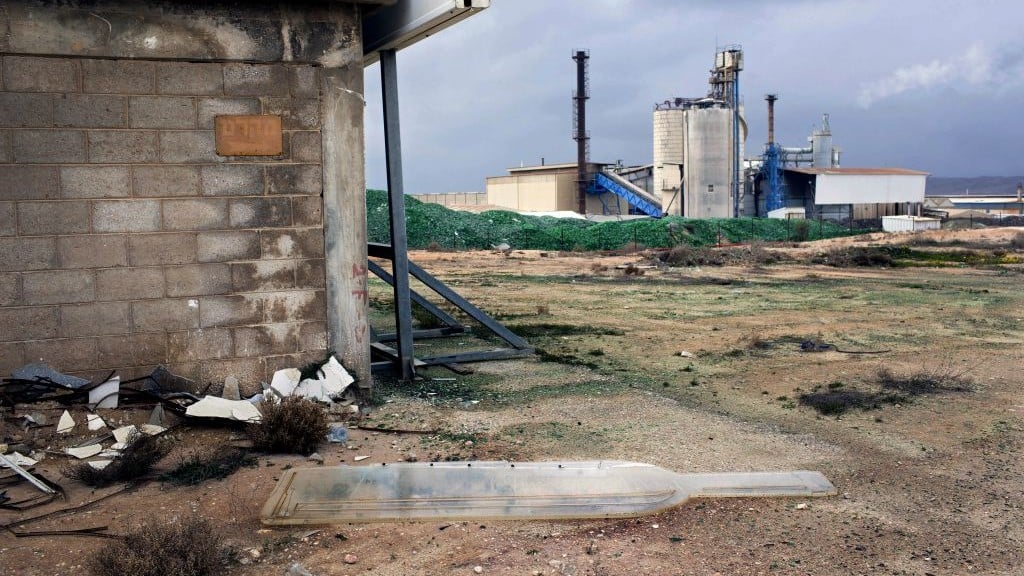
In this Sunday, Jan. 24, 2016 photo, birds fly above broken glass later to be recycled at the Phoenicia Glass Works Ltd. factory in the southern Israeli town of Yeruham. (AP Photo/Oded Balilty)In this Wednesday, Jan. 27, 2016 photo, a worker collects plastic bottles among piles of broken glass, later to be recycled at the Phoenicia Glass Works Ltd. factory in the southern Israeli town of Yeruham. (AP Photo/Oded Balilty)In this Sunday, Jan. 24, 2016 photo, broken glass bottles are piled up to be recycled at the Phoenicia Glass Works Ltd. factory in the southern Israeli town of Yeruham. (AP Photo/Oded Balilty)In this Wednesday, Jan. 27, 2016 photo, an employee carries a box of defective glass bottles to be recycled at the Phoenicia Glass Works Ltd. factory in the southern Israeli town of Yeruham. (AP Photo/Oded Balilty)In this Sunday, Jan. 24, 2016 photo, broken glass bottles later to be recycled at the Phoenicia Glass Works Ltd. factory in the southern Israeli town of Yeruham. (AP Photo/Oded Balilty)In this Sunday, Jan. 24, 2016 photo, a worker sweeps sand used to manufacture glass bottles at the Phoenicia Glass Works Ltd. factory in the southern Israeli town of Yeruham.(AP Photo/Oded Balilty)In this Tuesday, Jan. 26, 2016 photo, glass bottles move on the production line at the Phoenicia Glass Works Ltd. factory in the southern Israeli town of Yeruham. (AP Photo/Oded Balilty)In this Wednesday, Jan. 27, 2016 photo, broken glass bottles are piled up to be recycled at the Phoenicia Glass Works Ltd. factory in the southern Israeli town of Yeruham. (AP Photo/Oded Balilty)In this Wednesday, Jan. 27, 2016 photo, an employee checks the quality of glass bottles on the production line at Phoenicia Glass Works Ltd. factory in the southern Israeli town of Yeruham. (AP Photo/Oded Balilty)In this Wednesday, Jan. 27, 2016 photo, a worker smokes a cigarette at the Phoenicia Glass Works Ltd. factory in the southern Israeli town of Yeruham. (AP Photo/Oded Balilty)In this Sunday, Jan. 24, 2016 photo, broken glass from bottles are piled up later to be recycled at the Phoenicia Glass Works Ltd. in the southern Israeli town of Yeruham. (AP Photo/Oded Balilty)In this Tuesday, Jan. 26, 2016 photo, broken glass bottles are piled up later to be recycled at the Phoenicia Glass Works Ltd. factory in the southern Israeli town of Yeruham. (AP Photo/Oded Balilty)In this Jan. 27, 2016 photo, workers unload defective glass bottles to be recycled at the Phoenicia Glass Works Ltd. factory in the southern Israeli town of Yeruham. (AP Photo/Oded Balilty)In this Wednesday, Jan. 27, 2016 photo, glass bottles move on the line of production at the Phoenicia Glass Works Ltd. factory in the southern Israeli town of Yeruham. (AP Photo/Oded Balilty)In this Jan. 26, 2016 photo, broken glass bottles are piled up later to be recycled at the Phoenicia Glass Works Ltd. factory in the southern Israeli town of Yeruham. (AP Photo/Oded Balilty)In this Jan. 26, 2016 photo, a worker pushes a wheelbarrow with broken glass bottles at the Phoenicia Glass Works Ltd. factory in the southern Israeli town of Yeruham. (AP Photo/Oded Balilty)In this Jan. 27, 2016 photo, a worker breaks defective glass bottles to be recycled at the Phoenicia Glass Works Ltd. factory in the southern Israeli town of Yeruham. (AP Photo/Oded Balilty)In this Jan. 27, 2016 photo, glass bottles move on the production line at the Phoenicia Glass Works Ltd. factory in the southern Israeli town of Yeruham. (AP Photo/Oded Balilty)In this Wednesday, Jan. 27, 2016 photo, a worker breaks defective glass bottles to be recycled at the Phoenicia Glass Works Ltd. factory in the southern Israeli town of Yeruham. (AP Photo/Oded Balilty)In this Jan. 26, 2016 photo, a broken sign lies on the ground at the Phoenicia Glass Works Ltd. factory in the southern Israeli town of Yeruham. (AP Photo/Oded Balilty)
Help us report truthfully on social media
As a multimedia journalist, my job is to take the quality, fact-based journalism produced by The Times of Israel newsroom and make it accessible across every platform — from Instagram posts to podcasts to short-form videos.
This is how many, especially young people, consume news these days. But misinformation is rampant on social media. Our team at ToI produces accurate, responsible short-form reporting on Israel and the Jewish world.
If you believe in the importance of factual social media journalism, please consider joining our reader support group, The Times of Israel Community. Your financial support is essential to sustain responsible multimedia reporting.
We’re really pleased that you’ve read X Times of Israel articles in the past month.
That’s why we started the Times of Israel - to provide discerning readers like you with must-read coverage of Israel and the Jewish world.
So now we have a request. Unlike other news outlets, we haven’t put up a paywall. But as the journalism we do is costly, we invite readers for whom The Times of Israel has become important to help support our work by joining The Times of Israel Community.
For as little as $6 a month you can help support our quality journalism while enjoying The Times of Israel AD-FREE, as well as accessing exclusive content available only to Times of Israel Community members.
Thank you, David Horovitz, Founding Editor of The Times of Israel


 Add ToI as a Preferred Source on Google