

EU to decide on blacklisting Hezbollah today
Council of foreign ministers said to be close to declaring military wing of Lebanese Islamist group a terrorist organization
 Add ToI as a Preferred Source on Google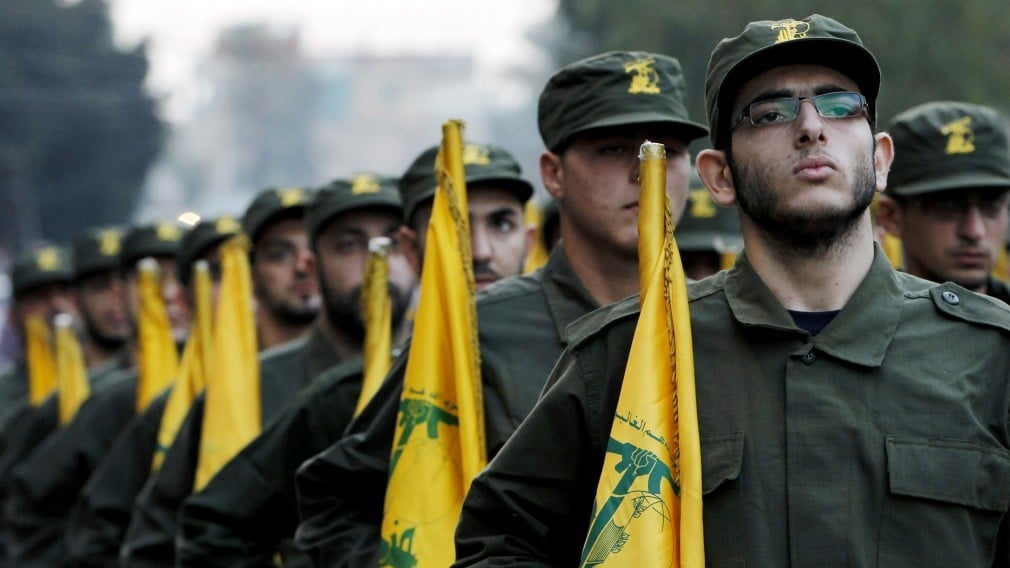
The European Union was set to vote Monday on whether to declare the military wing of Lebanese political party Hezbollah a terrorist organization, which could have far-reaching implications for European-Lebanese relations.
A council of EU foreign ministers was to reach a decision at their monthly meeting Monday. Putting an organization on the terrorist blacklist requires a unanimous vote from the 28 member nations.
British Foreign Secretary William Hague said that “the great majority” of the 28 EU member states supported the plan, and hoped for the necessary unanimity.
The EU has long avoided a vote to declare Hezbollah’s military wing a terrorist organization, despite US pressure, for fears that such a move would destabilize Lebanon and its neighbors.
“There are still some reservations … but we are moving towards a decision on listing Hezbollah’s military wing,” a senior EU official told the AFP on Friday, adding that the vote would “not impact current EU policy and engagement with Lebanon” because it would not target the political arm of the Islamic group, which holds a powerful position in Lebanese politics.
Observers say there has been a steady change of heart within the EU, particularly in Germany, which has in the past resisted calls to list the Islamist group.
German Foreign Minister Guido Westerwelle said that evidence from last year’s attack in the Black Sea resort of Burgas in Bulgaria, which killed five Israeli tourists and one Bulgarian, should give enough impetus for the move. Westerwelle said that “we have to answer this, and the answer is” blacklisting Hezbollah’s military wing.
The attack on EU territory plus a Cyprus criminal court decision in March finding a Hezbollah member guilty of helping to plan attacks on Israelis on the Mediterranean island has galvanized EU diplomacy in moving toward action.
“We should name names because time comes to tell the truth,” said Lithuanian Foreign Minister Linas Antanas Linkevicius, who chaired Monday’s meeting. “What was done by the military wing in the region and elsewhere I would say, there should be some reaction.”
In February, an official Bulgarian report said investigators had “well-grounded reasons” to suggest that two men suspected in the attack belonged to the militant wing of Hezbollah, and on Wednesday, Bulgaria’s prime minister said that new evidence has bolstered its case implicating Hezbollah in the deadly bombing, which targeted a group of Israeli tourists arriving at the Burgas airport.
Hezbollah has denied involvement in the Burgas attack.
On Thursday, Lebanon said that it will formally request that the EU not name Hezbollah a terrorist organization. A statement released by President Michel Suleiman’s office said Hezbollah is a “main component of Lebanese society.”
The Iranian-backed group plays a pivotal role in Lebanese politics, dominating the government since 2011, and has since sent its members to bolster Syria’s President Bashar Assad forces in their assault of rebel-held areas.
While some EU officials have said that a decision to blacklist Hezbollah’s military wing would be solely based on concerns over terrorism on European soil, several EU nations also have pointed to Hezbollah’s involvement in Syria as a reason for the move.
The blacklisting would mean imposing visa bans on individuals and asset freezes on organizations associated with the group. But the implementation would be complicated since officials would have to unravel the links between the different wings within Hezbollah’s organizational network and see who could be targeted for belonging to the military wing.
Hague said that blacklisting Hezbollah’s military wing would not “destabilize Lebanon or have serious adverse consequences.”
“It is important for us to show that we are united and strong in facing terrorism,” Hague said.






The Times of Israel Community.