

Investigating the investigator, boycotting the boycotters
Israeli media jumps at the opportunity to cover the latest sex scandal, and outlets opine on the PM’s latest retaliation to EU labeling
 Add ToI as a Preferred Source on Google
Raoul Wootliff is a former Times of Israel political correspondent and Daily Briefing podcast producer.
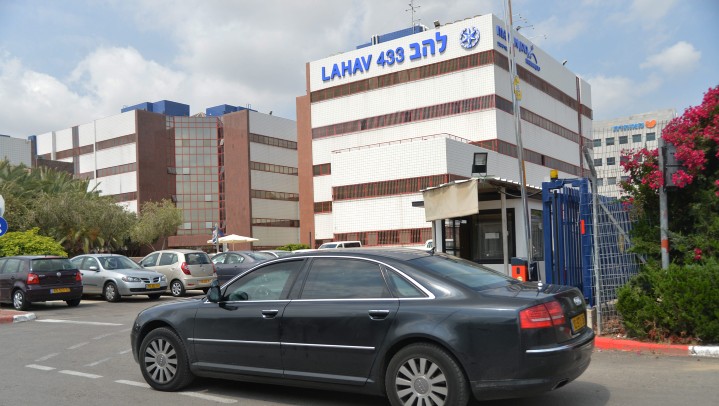
When Israel uncovers a first-class scandal, involving either bulging pockets or libidos of public officials, you can be sure that two institutions will be on the case fast: the Israeli media, and Lahav 433, the police’s high-level task force.
Whether state funds have been siphoned off to the coffers of MKs, chief rabbis, municipal mayors and other public officials, or any of the above have been accused of something to which “sexual” can be prefixed, Israeli newspapers are sure to dedicate significant column space to every eyebrow-raising detail. Next to the gormless face of the former or current so-and-so staring out from the pages of the dailies is normally the go-to stock photo of the building where these details are to be pored over and investigated, the headquarters of Lahav 433.
So when news broke Tuesday that latest public figure accused of sexual harassment is none other than the head of the Lahav 433 unit, the Hebrew media seemed to have no choice but to turn its focus from the other sex scandal filling pages in recent days – Jewish Home MK Yinon Magal resigned Monday after allegations of sexual misconduct – to the man normally tasked with investigating such allegations.
“From the investigator to the investigated,” the tabloid Israel Hayom seems to shout from its front page alongside a photo of Maj. Gen. Roni Rittman as he leaves a hearing in the Justice Ministry.
In the paper a double page spread tells of the latest of the ongoing woes facing the scandal-ridden police with photos of eight commissioners forced to resign in the last two years alone. And the paper doesn’t hold out particularly high hopes for Rittman.
“It seems clear,” the opening article reads, “Commissioner Roni Rittman will not return to his position in the near future.”
Rittman, 51, denies the allegations against him and said that a senior officer in the Israel Police’s intelligence was framing him.
Columnist Dan Margalit praises the police for taking serious steps to investigate its own officers, even the head of “the Israeli FBI,” but suggests a trend has developed in the force whereby allegations are tactically used by certain officers to stain those they want to damage.
“The conduct of senior officers in blue uniform borders on behavior patterns prevalent in the mafia, along with serious elements of blackmail. Putting so many officers on trial for sexual harassment and other charges is worthy and welcome, but the circumstances in which allegations are revealed are too often shady and dark. Anyone caught ends up denouncing a colleague in return.”
Yedioth Ahronoth also gives center stage to the story but similarly questions the motives of those behind the allegations.
In an exclusive, the paper reveals the results of a polygraph Rittman took suggesting his denial of the allegations to be truthful. Without rejecting the allegations outright, Yedioth suggests that Rittman is being unfairly targeted.
“The first question in the polygraph was, ‘Did you try to kiss an officer against her will at a police event five years ago?’ He answered in the negative and the physiological signs did not point to a lie, i.e., he was telling the truth,” the paper said. “Rittman’s layers claim the allegations are revenge for his part in establishing a committee to investigate another commissioner for allegations of sexual misconduct, which brought about the end of his career.”
In an apparent rejection of the hype and scandal plastered unceremoniously across the front pages of the tabloids, Haaretz, a broadsheet for sure, relegates the story to a small front page box which then sends readers deep into the paper’s later pages.
Instead, the paper gives more focus to Prime Minister Benjamin Netanyahu’s order to suspend contact with European Union institutions over issues related to the peace process in response to the EU’s decision to label products made in the West Bank.
Despite a bold announcement by the Foreign Ministry, the paper’s diplomatic correspondent Barak Ravid says the move holds little significance for long-term relations with the Continent.
“Netanyahu’s decision to suspend dialogue with EU institutions is symbolic. De facto, Netanyahu has rebuffed a string of much harsher responses suggested by the Foreign Ministry in recent weeks, eventually choosing the most moderate response which included a public statement devoid of any practical ramifications,” he writes. “This decision is almost completely devoid of any real significance,” Ravid quotes an EU official as saying.
In a Haaretz op-ed, historian Yechiam Weitz blasts Netanyahu for recent comments he made comparing the labeling move to the labeling of Jews in the Holocaust, calling the claims of anti-Semitism “blasphemous.”
“Marking products of the occupation is not “an anti-Semitic step,” but rather a legitimate and necessary tool in the struggle against the occupation, which devours everything good in our society and our soul. The comparison the prime minister made is blasphemous, another denial of the Holocaust, like his statement that the mufti was supposedly the author of the “final solution.”
Yisrael Hayom also features the decision on its front page with a headline quoting the prime minister: “Suspend relations with the European Union.”
The paper, often criticized as espousing overtly pro-Netanyahu positions, explains the justification for the decision, and even Israelis’ view on the move, with another verbatim quote from the premier.
“Israelis view the EU’s decision as immoral. Netanyahu said at the time, ‘It is riddled with double standards and hypocrisy. Out of 200 conflicts around the world they have chosen to specifically single out Israel. We are not prepared to accept the fact that Europe labels the victims’ side in acts of terrorism.’ The EU should be ashamed,” writes diplomatic correspondent Shlomo Cesana.








The Times of Israel Community.