

J.D. Salinger asked publishers to remove mention of Jewish-Irish heritage, letters show
Request was made by acclaimed author ahead of 1951 publication of ‘The Catcher in the Rye’: ‘Don’t know that I’d like to have that Jewish-Irish business slapped on the jacket’
 Add ToI as a Preferred Source on Google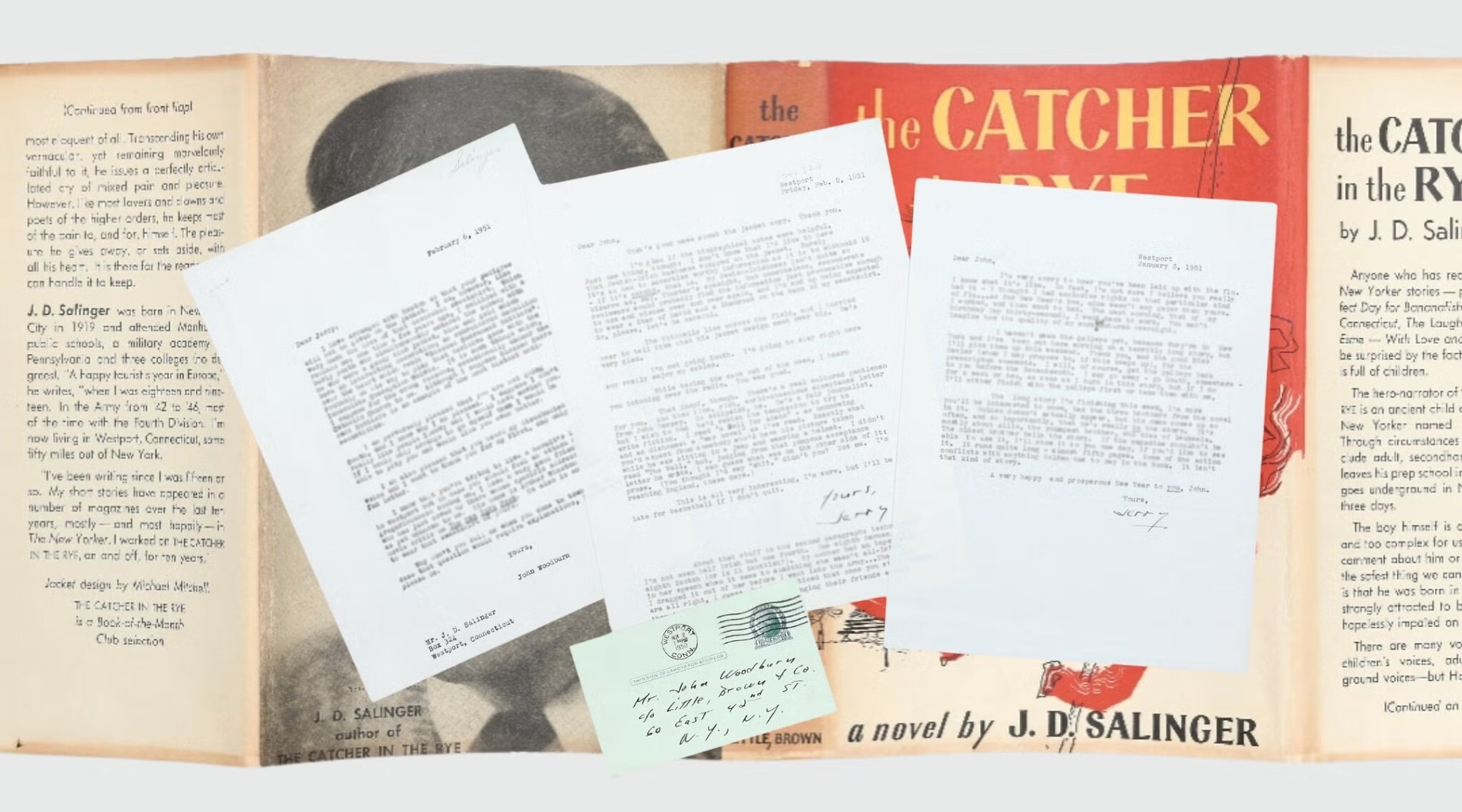
JTA — Acclaimed author J.D. Salinger asked his publisher to remove references to his Jewish heritage in the book jacket of “The Catcher in the Rye,” newly surfaced letters from 1951 reveal.
The request came in a letter from Salinger, a notoriously private man, and his editor John Woodburn at publisher Little, Brown and Co. The correspondence, which took place in early 1951, predates the first publication of “The Catcher in the Rye,” Salinger’s hit coming-of-age novel.
“I don’t know that I’d like to have that Jewish-Irish business slapped on the jacket,” Salinger wrote. “Surely if it’s catchy, that is.”
The letter has come to light because Peter Harrington Rare Books, a bookseller based in London, has listed it as part of a package for sale in the New York International Antiquarian Book Fair, which begins on Thursday.
“The Catcher in the Rye,” a contemporary classic following the life of angsty boarding school student Holden Caulfield, is one of the best-selling books of all time.
Caulfield’s character is of Irish heritage, like Salinger’s mother. But Salinger was the son of Sol, a cheese salesman (whose wares might have been kosher) and the grandson of a rabbi on his father’s side. His mother, Marie Jillich, went by Miriam to appease her in-laws, who disapproved of the mixed marriage. He learned his mother’s real name only around the time of his bar mitzvah.
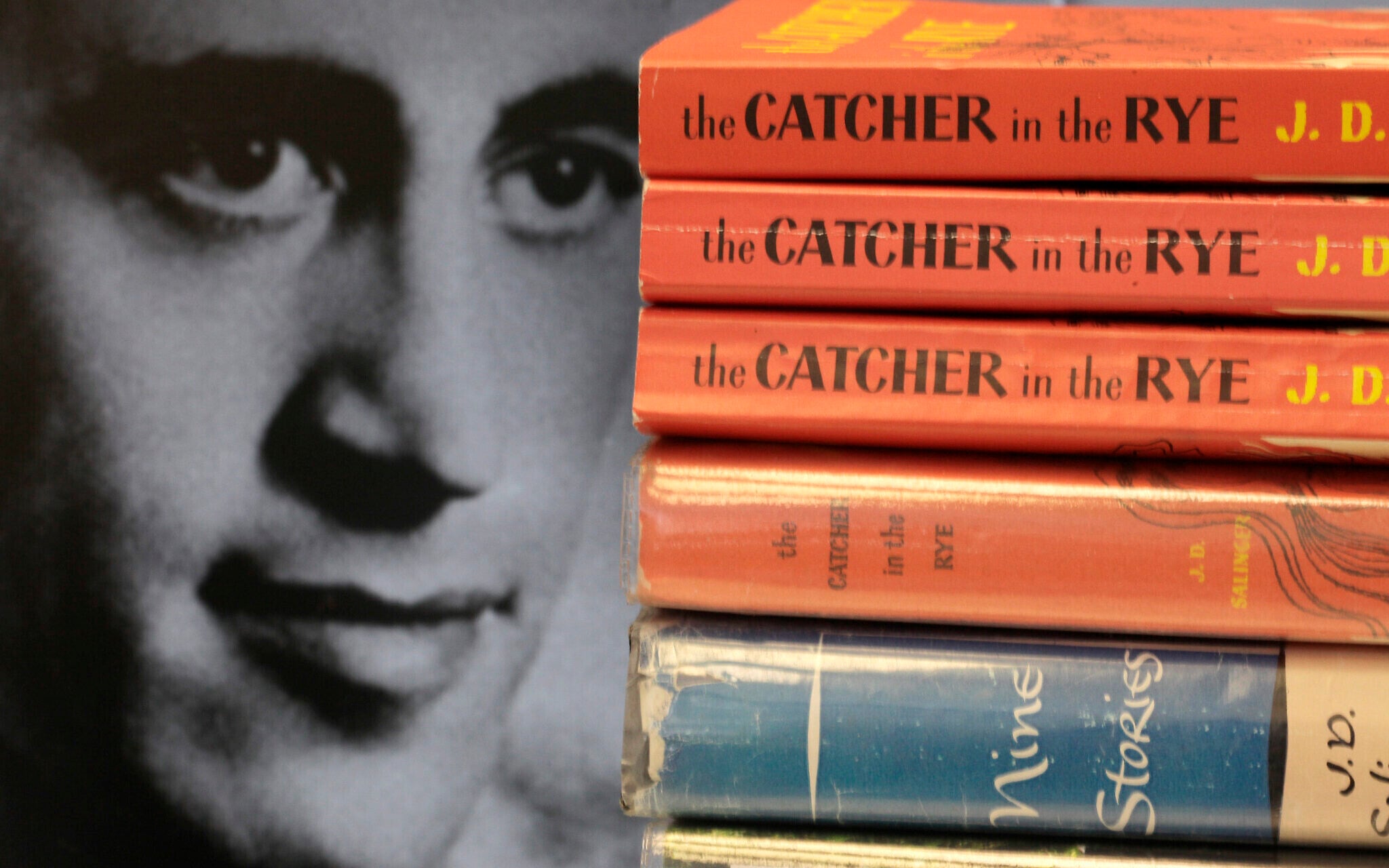
To Woodburn, Salinger wrote that he worried about being pigeonholed as a Jewish-Irish writer if the book broadcast that information.
“My Jewish-Irishness isn’t quite so bizarre, as, say, [James] Thurber’s eyesight,” Salinger wrote, referring to the American author and cartoonist who was legally blind by that time. “But nonetheless, second-rate reviewers would probably find the information just provocative enough to use and misuse over and over again, and I’d end up being expected to wear a Star of David and a Shamrock on the back of my sweatshirt. So, please, let’s be careful.”
Salinger’s other famous works include the 1948 short story “A Perfect Day for a Bananafish,” which follows the Irish Catholic-Jewish Glass family, who also make appearances in “Franny and Zooey.”
The letters, previously unpublished, were acquired from a private collector and will be on view at the New York International Antiquarian Book Fair at the Park Avenue Armory from Thursday to May 3.
The bookseller is also currently offering a first edition of the script of
West Side Story,” inscribed by all four writers of the play, book, and music: Leonard Bernstein, Jerome Robbins, Arthur Laurents, and Stephen Sondheim. Peter Harrington has also sold a rare, first-print edition of “De Bello Judaico” by Josephus Flavius, the first-century Roman-Jewish historian.
The triad of letters is currently offered at a set price of $47,500 and includes two typed letters by Salinger, with his signature, and a carbon copy of Woodburn’s reply. It also includes a reference to one of Salinger’s “lost stories,” a prequel to “The Catcher in the Rye” that was not to be published until 50 years after his death.
Salinger died in 2010 at the age of 91. The “lost story,” “The Ocean Full of Bowling Balls,” was set to be published in 2060, but in 2013, it was pirated and leaked online.










The Times of Israel Community.