

The death that’s provoking a storm in Amman
Hostility on the street and fears in the palace are overshadowing, but not yet overwhelming, mutual Israeli-Jordanian interests

 Add ToI as a Preferred Source on Google
Avi Issacharoff, The Times of Israel's Middle East analyst, fills the same role for Walla, the leading portal in Israel. He is also a guest commentator on many different radio shows and current affairs programs on television. Until 2012, he was a reporter and commentator on Arab affairs for the Haaretz newspaper. He also lectures on modern Palestinian history at Tel Aviv University, and is currently writing a script for an action-drama series for the Israeli satellite Television "YES." Born in Jerusalem, he graduated cum laude from Ben Gurion University with a B.A. in Middle Eastern studies and then earned his M.A. from Tel Aviv University on the same subject, also cum laude. A fluent Arabic speaker, Avi was the Middle East Affairs correspondent for Israeli Public Radio covering the Israeli-Palestinian conflict, the war in Iraq and the Arab countries between the years 2003-2006. Avi directed and edited short documentary films on Israeli television programs dealing with the Middle East. In 2002 he won the "best reporter" award for the "Israel Radio” for his coverage of the second intifada. In 2004, together with Amos Harel, he wrote "The Seventh War - How we won and why we lost the war with the Palestinians." A year later the book won an award from the Institute for Strategic Studies for containing the best research on security affairs in Israel. In 2008, Issacharoff and Harel published their second book, entitled "34 Days - The Story of the Second Lebanon War," which won the same prize.
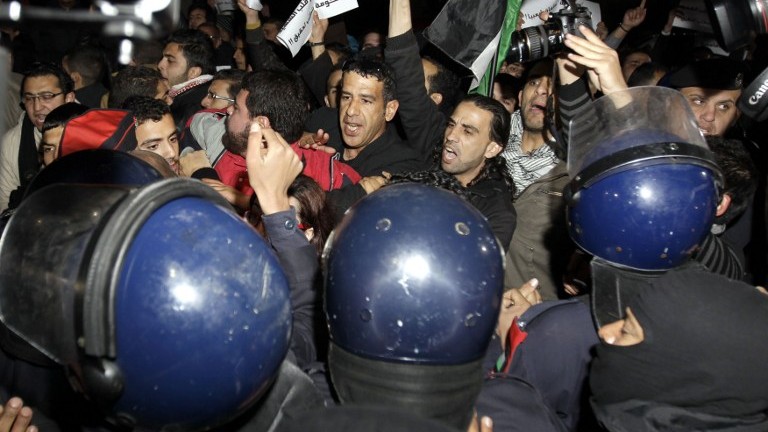
On the heels of the death of a Jordanian citizen Monday morning from Israeli fire on the Allenby Bridge, a complex storm brewed, not unexpectedly, in Amman.
The level of hostility towards Israel is constantly on the increase in Jordan, and Monday’s incident allowed locals to let off some steam by marching towards the Israeli Embassy and attempting to break into it.
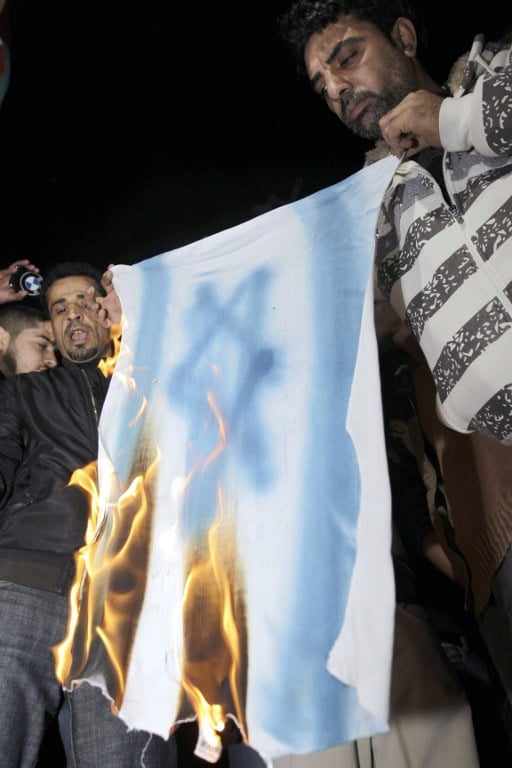
The protesters demanded that the Israeli ambassador be expelled from Jordan and that the embassy be closed. Some of them burned Israeli flags. However, Jordanian security forces managed to maintain control.
The official Israeli account of events at the border crossing Monday morning states that the Jordanian who was shot to death, Raed Zeiter, tried to steal a border guard’s rifle while shouting “Allahu Akbar,” the Arabic expression meaning “God is great.”

This claim hasn’t made much of an impression on the Jordanians, who refuse to buy it – possibly with good reason. It’s hard to fathom what could have led a 38-year-old judge at the magistrate’s court in Amman to try to attack an armed Israeli security guard at the border crossing? It can’t be easily explained. Perhaps it won’t be possible to understand exactly what transpired there without looking at footage from the security cameras at the crossing.
The demonstrations that followed Zeiter’s death are only the latest expression of the unfavorable public opinion toward Israel in Jordan.
Israel tends to ignore developments on the Jordanian street, but reports about the ascent of Israeli politicians to the Temple Mount (the al-Aqsa Mosque), settlement construction, deaths of Palestinians (like the one on Monday evening near Ramallah, when an 18-year-old youth was shot while hurling rocks at cars) all incite hatred toward anything that is even remotely associated with Israel.
In the background lurk the fears — of the Jordanian regime and the original trans-Jordanian population — that US-mediated negotiations for a peace agreement will harm Jordanian interests.
For example, if the Palestinian Authority relinquishes its demand for a Palestinian “right of return” to pre-1967 Israel, those refugees might remain in Jordan and upset the delicate demographic balance between the trans-Jordanians and Palestinians in the country.
And still, despite the hostility, there are positive aspects to Israeli-Jordanian relations.
On the political leadership level, ties between Prime Minister Benjamin Netanyahu’s office and the palace of Jordanian King Abdullah II have recently grown closer. In the field of security, Israel and Jordan, like Israel and Egypt, have demonstrated unprecedented cooperation of late — not only between both countries’ militaries, but also between their intelligence forces, which are sharing information and working together to thwart terrorist attacks by both Hamas- and al-Qaeda-esque Islamist groups.
For now, mutual security interests overpower those raucous voices asking to nullify peace agreements. Israel’s profound hope is that this remains the case.







The Times of Israel Community.