

The ‘trickle intifada’ that just won’t stop
While attacks are not as numerous, or devastating, as those of the 1987 and 2000 uprisings, they are unlikely to subside anytime soon

 Add ToI as a Preferred Source on Google
Avi Issacharoff, The Times of Israel's Middle East analyst, fills the same role for Walla, the leading portal in Israel. He is also a guest commentator on many different radio shows and current affairs programs on television. Until 2012, he was a reporter and commentator on Arab affairs for the Haaretz newspaper. He also lectures on modern Palestinian history at Tel Aviv University, and is currently writing a script for an action-drama series for the Israeli satellite Television "YES." Born in Jerusalem, he graduated cum laude from Ben Gurion University with a B.A. in Middle Eastern studies and then earned his M.A. from Tel Aviv University on the same subject, also cum laude. A fluent Arabic speaker, Avi was the Middle East Affairs correspondent for Israeli Public Radio covering the Israeli-Palestinian conflict, the war in Iraq and the Arab countries between the years 2003-2006. Avi directed and edited short documentary films on Israeli television programs dealing with the Middle East. In 2002 he won the "best reporter" award for the "Israel Radio” for his coverage of the second intifada. In 2004, together with Amos Harel, he wrote "The Seventh War - How we won and why we lost the war with the Palestinians." A year later the book won an award from the Institute for Strategic Studies for containing the best research on security affairs in Israel. In 2008, Issacharoff and Harel published their second book, entitled "34 Days - The Story of the Second Lebanon War," which won the same prize.
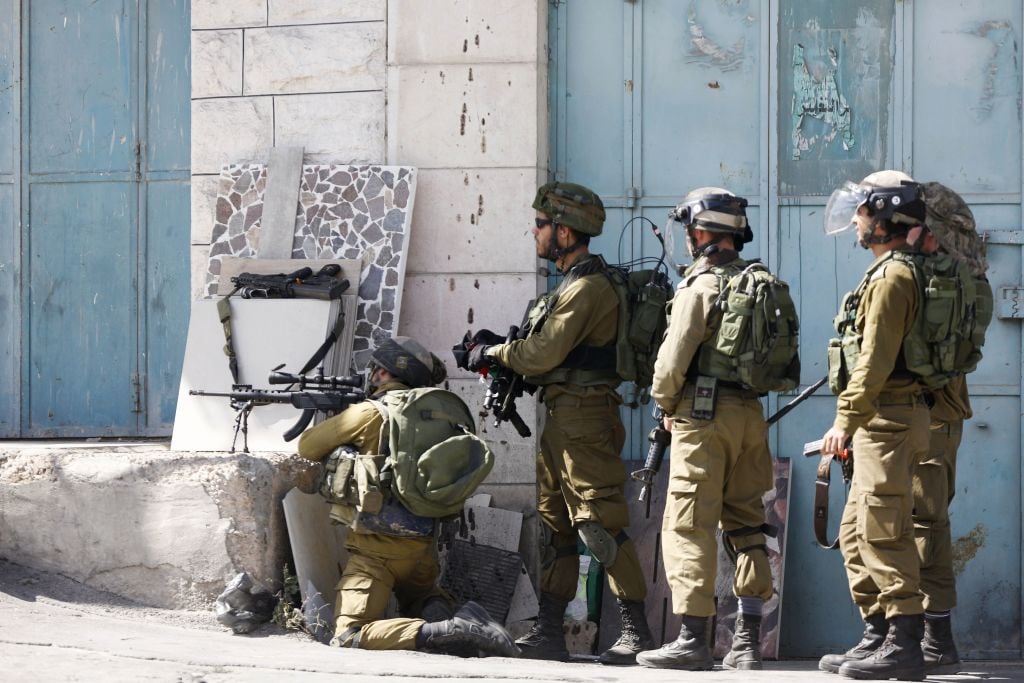
If Israelis thought for a moment that the recent wave of terror attacks was weakening and may even cease, Saturday’s events were a rude wake-up call. This is no run-of-the-mill spate of attacks, and sadly it may be a while before it subsides. It is no longer a “trickle” of sporadic attacks. Over 17 consecutive days, there has been only one day with no terror attacks or attempted attacks. The “trickle” isn’t stopping, and the Palestinians are calling it the Al Quds Intifada, or the Jerusalem Intifada.
Of course there’ll be those who say the current situation doesn’t even come close to the bleakness of 2000’s Second Intifada, or the First Intifada of 1987, and they will probably be right. There may be a popular dimension to this intifada, but it is still marginal. Even during Friday’s “Day of Rage,” only a few thousand people took to the streets of the West Bank. The turnout was so meager, in fact, that users on Hamas-affiliated internet forums accused West Bank Palestinians of being spoiled and of no longer bothering to leave their homes to confront the occupation forces and support the struggle to liberate Jerusalem’s Al-Aqsa Mosque.
Instead, we are witnessing a new kind of intifada characterized by lone wolves, young knife-wielding Palestinians. Most are from East Jerusalem, but over the past few days they’ve received a significant boost from the younger generation in Hebron.
Why has Hebron now rallied to the cause? There are a number of reasons. But first, we must point out that it would have been possible to find explanations had suicidal attackers emerged from other cities. The fact that attackers are not coming from other West Bank cities is surprising. Indeed, the markedly halfhearted commitment displayed by West Bank Palestinians in this semi-intifada is one of the few positive trends that one can point to amid the events of the last few weeks.
Like Jerusalem, Hebron is an easy place to carry out attacks. The terrorists do not need to leave a West Bank town or village and infiltrate Israel through checkpoints in order to find victims. Both are mixed cities, and in Hebron, in Area 2H — as it is designated in the Oslo Accords — Palestinians and Israelis live side by side and intermix practically 24 hours a day.
The Temple Mount in Jerusalem and the Tomb of the Patriarchs in Hebron are both holy to both Judaism and Islam, and regretfully inspire sickening actions in the name of religion, or jihad. In addition, both cities contain a core of extremist ideologues who are prepared to take violent action against Jews.
Hebron has been known as a Hamas stronghold for dozens of years, and despite massive Israeli efforts in security and intelligence, and the Palestinian Authority’s attempts to intercept attackers coming from there (including arrests of Hebron residents last week), there is no shortage of extremists who are prepared to die in order to kill Jews.
The bad news from Hebron has a silver lining. First, as noted above, the rest of the West Bank is not rushing to join the melee. This stems from Palestinians’ lack of appetite for a full-blown intifada, but also from the efforts of Palestinian Authority President Mahmoud Abbas who, at least in terms of security coordination, continues to play by the rules. His security forces are making significant efforts to stop terror attacks that could lead to a full-scale conflagration in the West Bank; his troops have arrested Hamas operatives and even dispersed popular protests. Recently, for example, PA security forces quelled a demonstration that emanated from Bir Zeit University, near Ramallah. Protests near the settlement of Beit El have continued, but on a smaller scale. The bottom line is that security cooperation remains in place despite all of the stresses it’s experienced.
The problem, as ever, is that we are living on borrowed time. Abbas’s capacity to stem protests, including some by activists in his Fatah party, isn’t assured for long. Eventually, the members of Fatah and its violent Tanzim movement will join the fray.
Until now, this has been an intifada under at least partial control, but without some kind of diplomatic initiative or an effort to prevent escalation, it is only a matter of time before Israelis and Palestinians pass the point of no return.
The diplomatic initiatives that have already been pitched are unlikely to help. A French proposal to deploy international monitors at the Temple Mount is unlikely to pass muster at the UN’s Security Council. A meeting between Prime Minister Benjamin Netanyahu and US Secretary of State John Kerry in Europe probably won’t make any real difference either.
Since an Arab-Palestinian-Israeli summit is still not on the horizon, for the time being, Israelis don’t have much choice but to hunker down, prepare for more attacks, and hope things won’t spiral utterly out of control.






The Times of Israel Community.