

What? Me attribute?
For Purim, Hebrew media forgoes the usually required sources and proof in order to say ‘I told you so, Belgium!’
 Add ToI as a Preferred Source on Google
Judah Ari Gross is The Times of Israel's religions and Diaspora affairs correspondent.

Transportation Minister Yisrael Katz’s surprise reversal on his previously anti-Belgian chocolate stance shocks the Hebrew media on Thursday.
Katz, who on Wednesday said the people of Belgium should stop “eating chocolate and enjoying the good life” if they wanted to defeat terror, went back on his statement, reportedly after tasting one of Pierre Marcolini’s Pralines Anciens D’Aujourd’hui.
“Forget what I said yesterday. I get it now. Oh God, I toootally get it now,” the Haaretz daily reports Katz as saying in its top story.
A nearly half-page photo of Katz, apparently moaning and with chocolate stains around the corners of his mouth, accompanies the story.

Meanwhile, anonymous sources tell Yedioth Aharonoth that Katz’s original anti-Belgian chocolate comments were a mere ploy to distract attention from his failed venture into European candy market with an organic carob-flavored candy called “Kit Katz.”
According to an unnamed former employee of Katz’s candy company, the carob-based sweet treat failed in Europe, not because of how delicious Belgian chocolate is, but rather because Kit Katz tasted “like human excrement.”
Israel Hayom, the mouthpiece for Prime Minister Benjamin Netanyahu, distances itself from Katz, relegating his reversal on the Belgian chocolate issue to the eighth page of the tabloid.
Just kidding, folks!
For today is Purim, the merry Jewish holiday of costumes, gags and gift-giving to celebrate the foiled slaughter of the Jews in ancient Persia.
Unfortunately, despite the festivities, the Hebrew media deals more with Islamic State terror attacks in Europe and Israeli politics than with Transportation Minister Yisrael Katz’s hate for Belgian chocolate.
Haaretz, however, does take the time on Purim to celebrate… itself.
Two front-page stories feature “Haaretz” in the headline, one on a Haaretz poll — more on that later — and the other questioning, “Did a Haaretz cartoon toughen the US position during the nuclear talks?”
To answer that, I defer to Betteridge’s law: “Any headline that ends in a question mark can be answered by the word no.”
The paper’s top story, meanwhile, is an entirely unsourced article about Belgium’s failures to prevent the Brussels attacks.
“The Belgian security services, as well as other Western intelligence agencies, had advance and precise intelligence warnings regarding the terrorist attacks in Belgium on Tuesday,” Amos Harel writes.

“The attacks were planned, as far as is known, by the headquarters of the Islamic State in Raqqa, Syria, which it has pronounced as the capital of its Islamic caliphate,” Harel claims
Um, says who? Where did the intelligence warnings come from? Was it a reputable source? When did they get this information?
None of that matters, apparently. Really, who needs sourcing?
The broadsheet’s English edition boasts the non-specific, unattributed information is “Exclusive to Haaretz,” though the Hebrew edition forgoes that extra self-aggrandizement. Presumably, three stories with the newspaper’s name in the headline would have been overkill.
The free Israel Hayom tabloid also jumps on the “serves you right, Belgium” bandwagon.
“The Belgian failure: They received warning of an attack and ignored it,” the headline of the paper’s top story reads.
Yoav Limor claims — also sans attribution — that Belgian intelligence had been warned of an impending attack at the Brussels airport and metro. (Maybe Haaretz’s story wasn’t as exclusive as they claimed, though it’s hard to tell without knowing the sources of the two articles.)
Israel Hayom commentator Dan Margalit praises Israel and Netanyahu in the struggle against Islamic extremists in his article, “In Israel we are fighting terror — in the right way.”
“A democracy does not have the power to extinguish the fire, rather to lower the flame to a level that allows you to live with it for a long time until the exhaust does its part and the Palestinian terrorists are discouraged,” Margalit writes. “That is what the IDF, police and Shin Bet security service do well.”
Yedioth Ahronoth deals with the aftermath of the Brussels terror attacks in a slightly more nuanced fashion, with a first-person, on-the-scene report by veteran journalist Nahum Barnea.
Barnea discusses the failures of the Belgian intelligence service with less of a sense of “I told you so” and more with a sense of disappointment.
“The fact is many of those who carried out Islamic State attacks in Paris and Brussels had been arrested and brought in for investigation. They knew about them, but the knowledge did not lead to prevention,” Barnea writes.
“The failure was serious. It is even more serious because anyone who lives here knows that it will not be the last failure,” he writes.
Ska parties, the musical hacker and crying princesses
Haaretz reveals in a front-page article that, according to a new poll, a nonexistent political party could beat Netanyahu’s Likud party by one vote in elections that are scheduled for 2019.
If former minister Gideon Sa’ar, Finance Minister Moshe Kahlon and former IDF chief of staff Gabi Ashkenazi joined forces and created a new center-right political party they could win 23 seats in the Knesset, while the Likud party would only receive 22, Yossi Verter writes.
How thrilling.
Netanyahu, Verter claims, would not be able to form a coalition.
However, he glosses over the possibility that the Sa’ar-Kahlon-Ashkenazi party — let’s call them SKA, for short — would join a coalition with Netanyahu.

He also neglects to discuss how the SKA party (not the kind I went to in high school) would form a coalition if elected in those future elections.
Of course, Sa’ar, Kahlon and Ashkenzai would actually have to form such a party first. And before that Ashkenazi would also have to announce a political affiliation. And presumably nothing would have to happen to change the political atmosphere in Israel over the next three years for such a poll to be meaningful. But, pish-posh, those are mere details.
Yedioth Ahronoth, meanwhile, dedicates nearly a two-page spread to a Palestinian Islamic Jihad tech-guy-cum-television personality who allegedly hacked into IDF drone footage and other Israeli systems for the terrorist group in Gaza beginning in 2011.
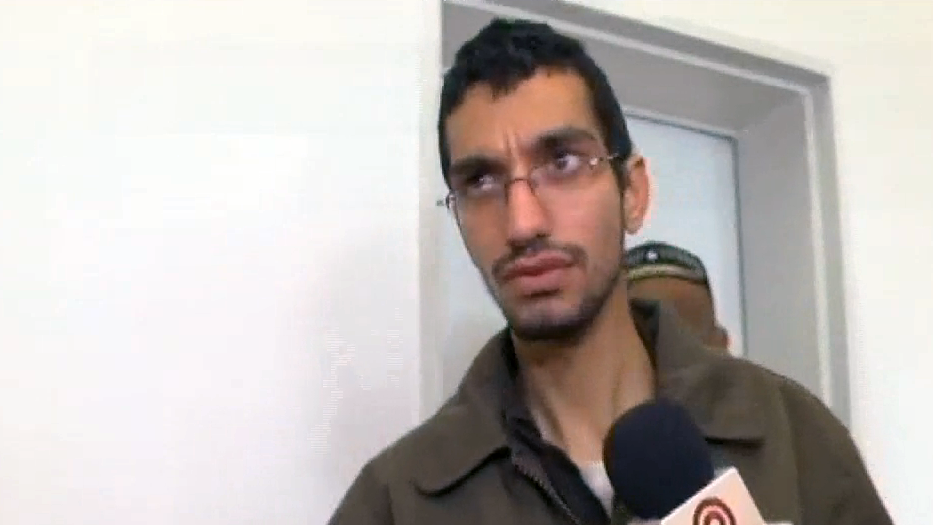
The paper’s article, “Auditions by day, espionage by night,” lays out the indictment against the alleged terrorist, Majd Ouida.
“Palestinians knew him as a talent scout for a singing competition, but Majd Ouida’s talent was entirely different: The computer engineer from Gaza was a hacker for the Islamic Jihad,” the paper writes.
Ouida, who was arrested last month, has been charged with espionage, computer hacking and conspiracy to commit a crime.
“This is only the beginning,” Yossi Yehoshua writes in a cautionary analysis on the case.
“Every day attacks are carried out on civilian, security and military infrastructure in Israel,” he says.
“The vast majority of incidents are being exposed and don’t cause damage. According to assessments, even the damage done by Ouida’s actions was marginal. But still, we must take into account that these attacks are taking place — and there are likely worse ones that have not yet been discovered,” Yehoshua writes.
In honor of Purim, Israel Hayom publishes an anti-feminist cartoon in its editorial section alongside a feminist editorial. Fair and balanced, I guess.

The cartoon, titled “Purim 2016,” shows a little boy in costume admiring a little girl’s Wonder Woman outfit — “Wow… Wonder Woman,” the cartoon reads — while a princess stands, cast to the side, looking depressed.
Wonder Woman, it stands to reason, represents the Amazonian, outspoken and strong vision of femininity, which 2016 Israel now prefers over the princess, the dainty, delicate and lady-like concept of women. (Presumably the cartoonist, Shlomo Cohen, didn’t much care for Gal Gadot in Batman vs. Superman. Sorry, Gal.)
Just next to the anti-strong women cartoon, however, the tabloid publishes a supposedly pro-women editorial by Liora Minka.
The story of Purim, told in the Book of Esther, begins with Queen Vashti refusing to debase herself in front of the king and his drunken cohorts, Minka writes.
King Ahashverosh then finds a new queen: Esther, a Jewess.
Esther is at first apprehensive of her position, but “slowly she becomes more assertive and active,” Minka writes. “Suddenly it seems natural that an educated woman should run things and also know how to protect her dignity and position.”
Go tell that to Shlomo Cohen’s crying princess.








The Times of Israel Community.