

White House: Netanyahu speech won’t harm Iran talks
US says it’s hopeful of advancing agreement with Islamic Republic on the regime’s nuclear capabilities
 Add ToI as a Preferred Source on Google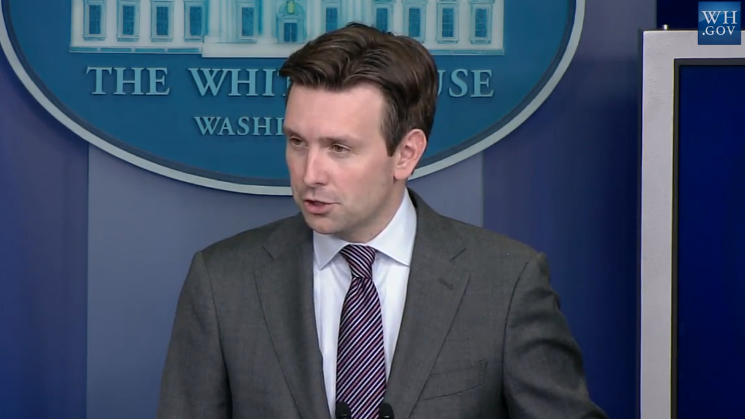
The Obama Administration will not change its position on nuclear talks with Iran regardless of Prime Minister Benjamin Netanyahu’s upcoming speech to Congress on March 3, White House spokesman Josh Earnest indicated Friday, adding that the Israeli leader’s address to US legislators would not harm the ongoing negotiations with the Islamic Republic.
According to Reuters, Earnest also said the United States is hopeful it can advance an agreement between the P5+1 world powers and Iran regarding the latter’s nuclear capabilities.
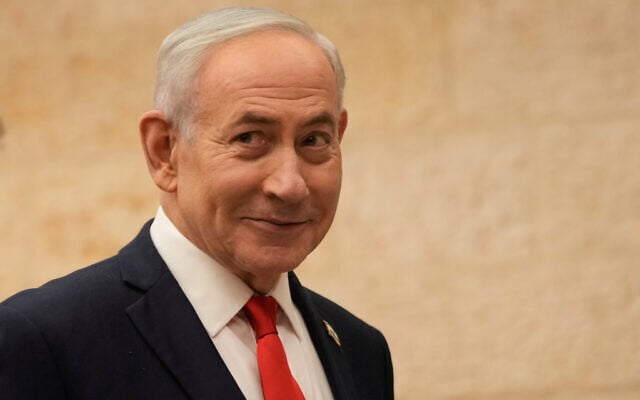
The prime minister said earlier Friday that he was determined to go to Washington next week to try to stop the emerging nuclear deal between Iran and the P5+1 world powers. His office later released a clip of him working on the text of the address. Netanyahu considers the deal, which he fears will leave Tehran with threshold nuclear powers, an existential threat to Israel
The prime minister’s planned speech to a joint session of Congress on March 3 has angered the Obama administration and some US lawmakers, who charged that the Republican invitation to address Congress disregarded diplomatic protocol and was an attempt by Netanyahu to derail the US-brokered nuclear negotiations with Iran, US President Barack Obama’s signature foreign policy objective.
Netanyahu’s speech is controversial because it puts Israel on a collision course with the Obama administration as it negotiates with Iran over its nuclear program. The prime minister intends to argue that the international community should increase its pressure on Iran, rather than ease sanctions against it under the reported terms of the emerging nuclear deal.
The speech is also set just two weeks before the prime minister faces elections back home, and critics in Israel and the US have accused Netanyahu of using the address to drum up support for his Likud party.
“It is my duty as Israeli prime minister, and as one who looks out for the future of the Jewish people, to do everything possible to convince the sole body [Congress] capable of perhaps preventing such a deal,” Netanyahu said.
The speech is openly opposed by the White House, some Democratic legislators and many within the US Jewish community.
Netanyahu, acknowledging the opposition, said he “respected and appreciated the strategic ties between Israel and the US,” but said that it was necessary to stand against any existential threat to Israel, even if that means standing against the US.
“When the issue at hand is our very existence, what is expected of a prime minister? Should he bow down and accept the danger for the sake of a relationship?” he asked.
A nuclear Iran is much more dangerous to Israel than disagreements with the United States, added Netanyahu.
He also reiterated past remarks as to the strength of Israel-US ties and expressed confidence that the differences would be overcome, as they have in the past when Israeli leaders and American presidents were at odds. He cited David Ben-Gurion’s insistence to declare independence in 1948 despite fierce opposition by the then-US secretary of state, Levi Eshkol’s decision to launch the Six Day War in 1967 despite Lyndon Johnson’s objections, and Menachem Begin’s decision to attack Iraq’s nuclear reactor in 1981 despite Ronald Reagan’s opposition to the operation.
Netanyahu said it was “legitimate” for Obama to “see things differently” than he did on Iran and remained convinced that most of the American public held concerns similar to Israel’s about the emerging nuclear deal.
Netanyahu has been widely criticized by US officials since the speech was announced, most recently by US National Security Adviser Susan Rice, who said in an interview this week that the manner in which Netanyahu’s speech was arranged — and his insistence on going ahead with it — had become a partisan issue that was “destructive of the fabric of the relationship” between Israel and the US.
Secretary of State John Kerry on Wednesday called Netanyahu’s judgment into question, pointing to the Israeli premier’s support for the US Iraq war (Netanyahu was a private citizen at the time, and Kerry had in the past backed the war).
The address has also drawn criticism at home, and from US Jewish groups, including the Anti-Defamation League.
Kerry and Vice President Joe Biden will not attend Netanyahu’s speech, citing overseas travels during his trip.
Obama long ago indicated he would not meet with the Israeli leader during his visit next week.








The Times of Israel Community.