

7 European countries condemn latest Israeli laws targeting UNRWA, NGOs
Statement slams law barring water and power companies from supplying UNWRA facilities, as well as delisting of 37 aid orgs, as violation of international law; calls for reversal
 Add ToI as a Preferred Source on Google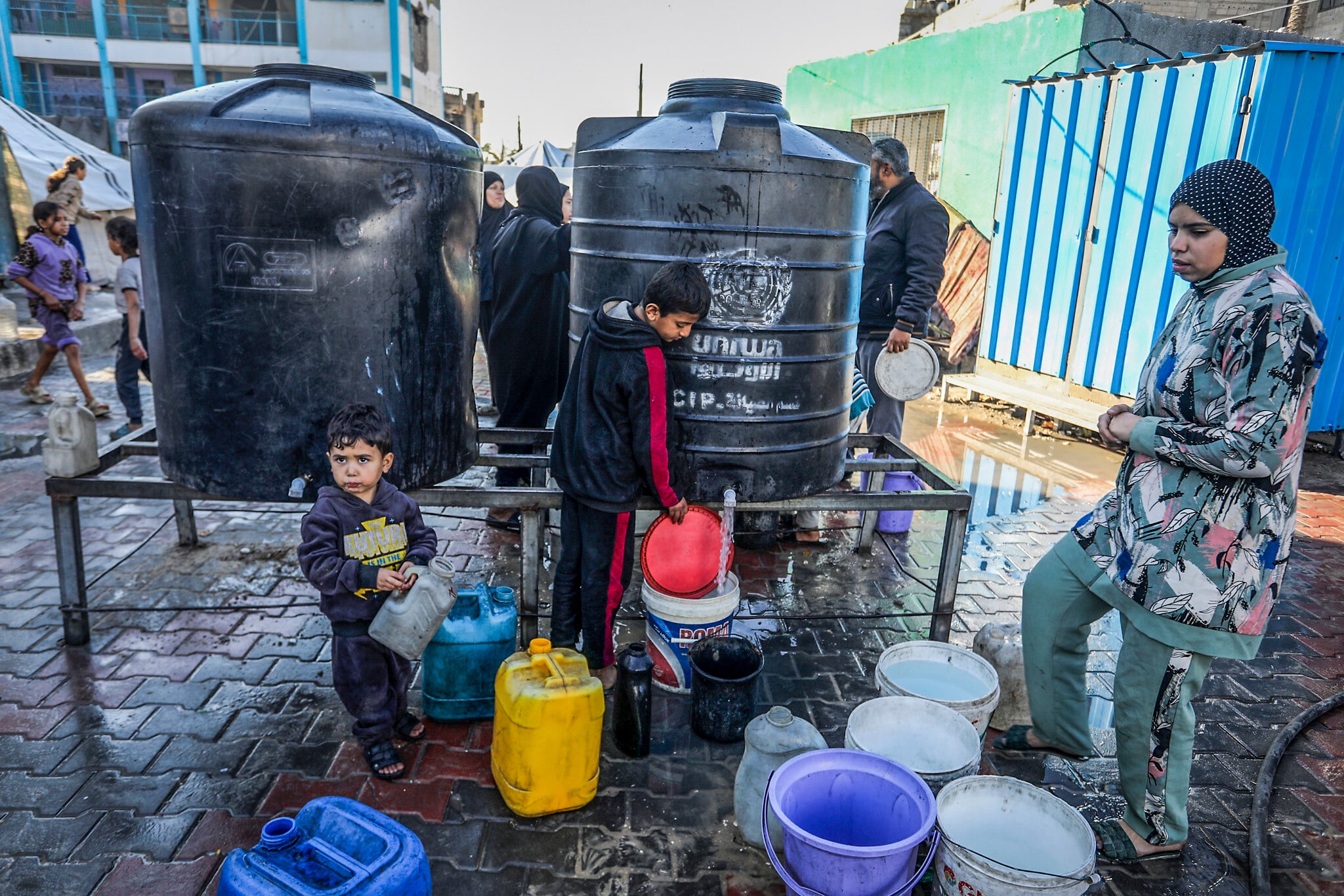
Several European countries on Monday condemned Israel’s latest legislative efforts against UNRWA, the UN agency for Palestinian refugees, saying that the law passed by the Knesset to prohibit electricity or water companies from supplying the agency’s facilities is a violation of international law and risks “grave humanitarian consequences.”
In a joint statement, Spain, Ireland, Norway, Luxembourg, Malta, Slovenia and Iceland called on Israel to reverse the legislation, which passed its third and final reading last Monday by a vote of 59-7. The law requires electricity and water providers to withhold or disconnect service from the agency’s facilities, as well as block the provision of communications and banking or financial services to the agency.
UNRWA — the United Nations Relief and Works Agency for Palestine Refugees in the Near East — provides education, health care and aid to millions of Palestinians in Gaza, the West Bank, Jordan, Lebanon and Syria. Israel has alleged that more than 10 percent of UNRWA’s staff in Gaza have ties to terror groups, and that educational facilities under the organization’s auspices consistently incite hatred of Israel and glorify terror.
The recent measure is an amendment to two bills passed by lawmakers in October 2024, barring the agency from operating in Israeli territory and curtailing its activities in the Gaza Strip and the West Bank by banning state authorities from having any contact with it.
In the joint statement, the seven European nations said the measures “undermine the UN mandate, violate international law and run counter to the findings of the International Court of Justice, while risking grave humanitarian consequences for the Palestinian civilian population and refugees.”
The countries also called on Israel to roll back its other recent decision to deregister some three dozen humanitarian organizations from being able to operate in Israel or the Palestinian territories, calling those groups “essential to confront the catastrophic humanitarian situation” in Gaza and the West Bank.
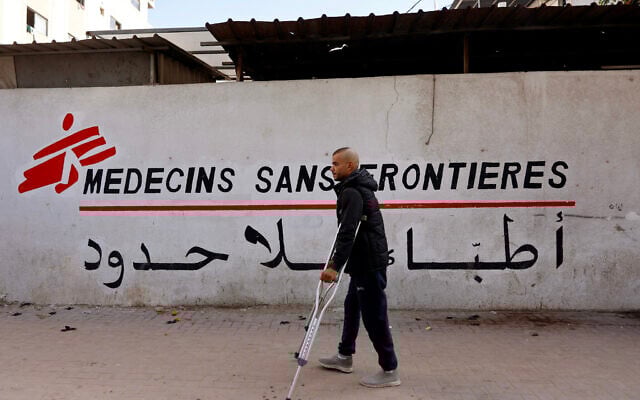
Israel last week moved to revoke the licenses of 37 humanitarian organizations, including Doctors Without Borders, the Norwegian Refugee Council, Oxfam and Medical Aid for Palestinians, saying the groups did not comply with stringent new requirements to register with the government.
The groups will be required to cease their operations by March 1, which the United Nations has warned will exacerbate the humanitarian crisis in the enclave.
In their statement, the European countries said the banned NGOs “constitute a significant part of all humanitarian and especially health services in Gaza and the West Bank.”
“The work of the UN, in particular UNRWA, together with other humanitarian organizations and NGOs, is essential to confront the catastrophic humanitarian situation and to deliver life-saving assistance and essential services to the civilian population in Gaza, the Occupied Palestinian Territory and the wider region,” the statement read.
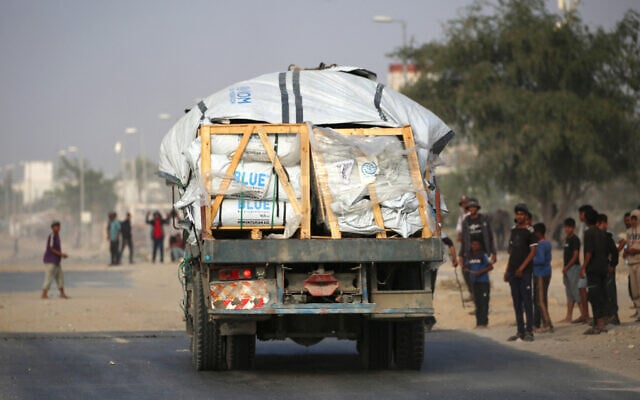
“We underline the obligation to ensure full, safe and unhindered humanitarian access and to enable the continued functioning of UN humanitarian operations and their partners, in line with International Humanitarian Law and relevant international legal obligations,” it continued.
“Respect for the privileges and immunities of the United Nations and for international humanitarian law is imperative,” the statement concluded.
In March, Israel gave a 10-month deadline to NGOs to comply with the new rules, which demand the “full disclosure of personnel, funding sources, and operational structures.” The deadline expired on Wednesday.
Some of the targeted NGOs have said the requirements flout, or at least erode, international humanitarian law, and Israel has faced international criticism in the run-up to the deadline.
Israel has bucked the criticism, arguing the new regulations aim to prevent organizations it accuses of supporting terrorism from operating in Gaza and the West Bank.
Sam Sokol and Jeremy Sharon contributed to this report.






The Times of Israel Community.