

Activists say attempts to keep left-wing protesters in jail aim at stifling dissent
Police asked to keep demonstrators arrested at an anti-war rally this month behind bars for a week, while right-wing protesters against aid to Gaza were questioned and let go

 Add ToI as a Preferred Source on Google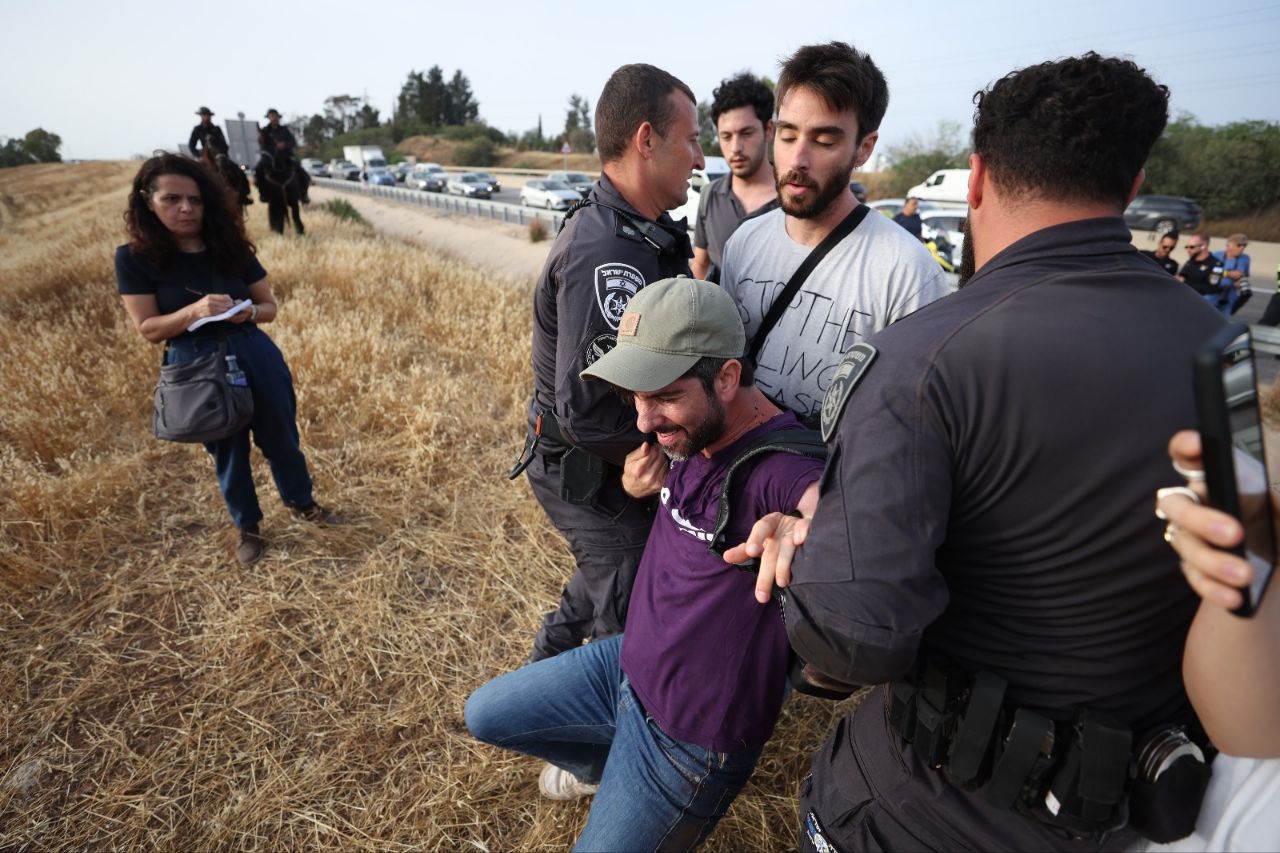
ِِِAs the IDF ramped up its Gaza offensive, hundreds of anti-war demonstrators marched from Sderot to Israel’s border with the enclave Sunday evening last week, walking alongside the highway while chanting for a hostage-ceasefire deal.
A route had been cleared in advance with police and the army, but the march soon took a chaotic turn, with some demonstrators bursting onto Route 34 and blocking traffic as others continued along the designated route.
Police declared the demonstration illegal and officers forcefully arrested protesters, taking nine to a nearby police station for questioning.
Arrests during demonstrations gone awry are no rare occurrence. But in an unusual move, police held some of the detainees in custody for several nights, prompting worry among activists that they may be using the threat of extended detention to stifle left-wing opposition to the government.
“What usually happens when you are arrested [at a protest] is they interrogate you and then they release you from the police station,” said protest organizer Alon Lee Green, who was among those arrested. “But this time, they brought us to five separate detention facilities,” including one bona fide prison.
After cops arrested the protesters, they questioned them at the Ashdod police station and held them there overnight, according to Green.
He accused police of conducting “very political interrogation.”
“They were really cracking down on us,” he said, recalling that an officer asked him if he was aware that he had been demonstrating against the government during wartime.
Police also reportedly asked him where he was on October 7, if he had been on reserve duty, and other questions that bore no relation to the stated reason for his arrest — attacking an officer, an accusation which he stridently denies.
תראו את האלימות המוטרפת שבה עוצרים את @AlonLeeGreen בזמן הצעדה לגבול עזה. אנחנו לא מתייאשיים, לא מוותרים ולא מפסיקים להיאבק על עתיד של שלום וביטחון שמגיע לכולנו. להצטרפות לקבוצת העדכונים: https://t.co/3b9GWH4fBJ pic.twitter.com/AdXDDiS7HI
— עומדים ביחד نقف معًا Standing Together???? (@omdimbeyachad) May 18, 2025
An Israel Police spokesman declined to address questions about the arrests or other allegations, saying he does “not deal with ongoing investigations.”
After spending a night in lock-up, Green and the eight others were brought before the Ashkelon Magistrate’s Court, where police requested a judge’s permission to hold them in custody for seven more days.
Gonen Ben Yitzhak, a lawyer and former Shin Bet agent who represented those arrested at Sunday’s protest, said he was shocked by the police’s request.
Police cannot use detention punitively, he said. If a suspect has not yet been indicted, they can only be detained if the court determines they could obstruct the investigation, or pose a danger to the public, Ben Yitzhak explained.
In their official request to extend the detainees’ remand, police checked off both boxes, defining the protesters as both liable to interfere in the investigation and as a public safety risk.
But activists in the Jewish-Arab Standing Together movement, which organized Sunday’s march, insisted their demonstration was peaceful, emphasizing the nine detainees, most of them university students, had no criminal history.
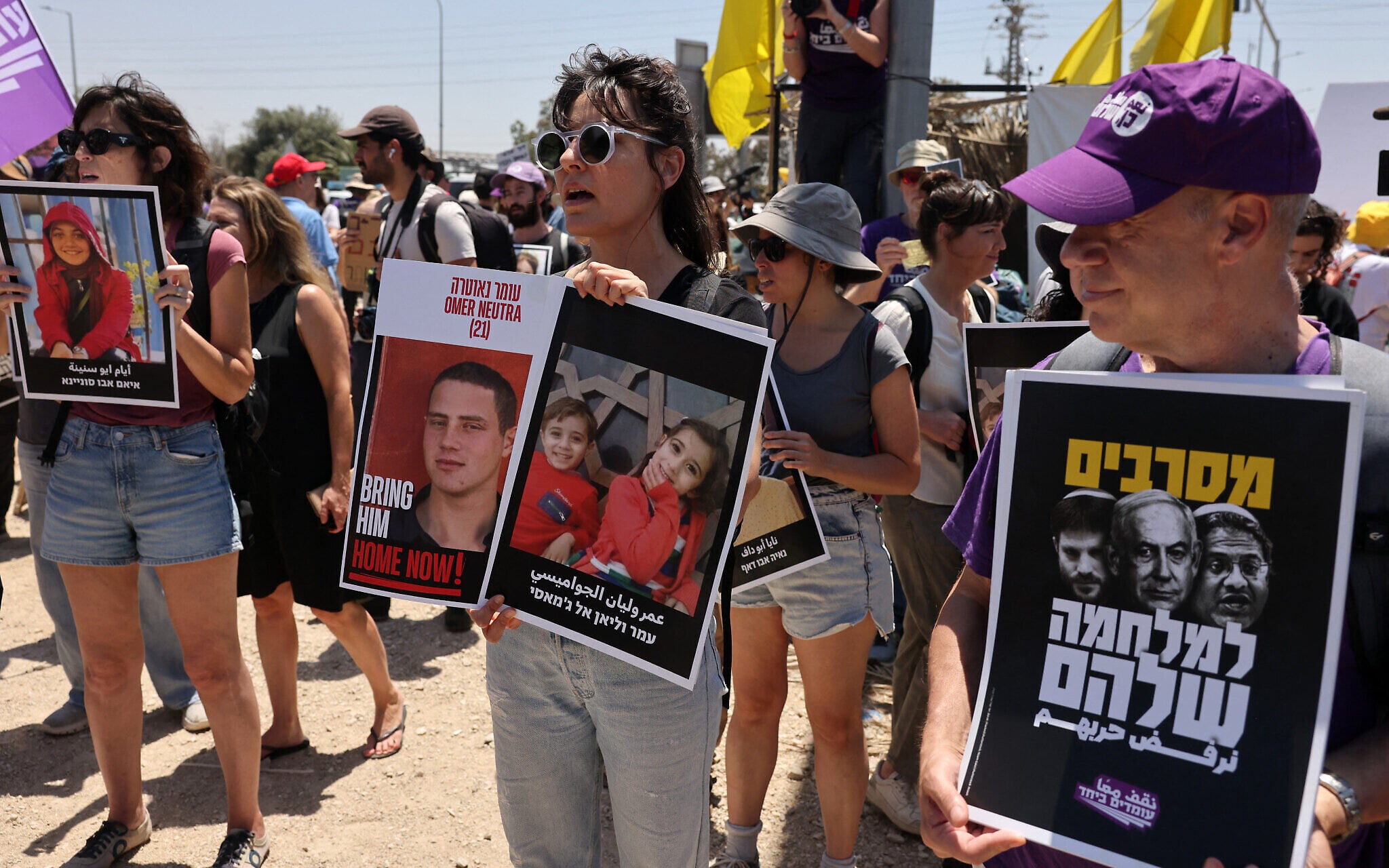
“The activists released to house arrest are not dangerous and not criminals. They are only dangerous to one thing — the continuation of the war,” the group said in a statement.
The judge declined to grant police an extra week of custody, but agreed to extend the detention of four detainees by two days, including Green. Rather than hold them in jail, police brought the four to Ashkelon’s Shikma prison.
“I cannot recall a time in recent years that protest detainees have been brought to a prison for blocking a road or disturbing public order,” Green said.
The detainees were assigned to separate cells, some with violent convicts, Green said.
“It all felt very hallucinatory, we really didn’t understand what was happening,” said Omer Ovadia, who was also arrested Sunday and held overnight.
Though lawyers appealed to overturn the decision in the Beersheba District Court, the detainees spent the night in prison awaiting their appeal hearing.
The appeal was granted the next day, and they were released to house arrest.
‘Law for right-wingers, law for left-wingers’
Ben Yitzhak, a prominent anti-government protester who represents detained demonstrators pro bono, said that when it comes to the arrest of left-wingers, the police “try to dress it in charges such as assaulting an officer, contempt of cop, all sorts of things to thicken the case so that there will be a reason to keep them in custody.”
In a conversation with The Times of Israel on Wednesday, Ben Yitzhak called the practice of extending demonstrators’ remand the “best way to thwart the [anti-government] protest movement.”
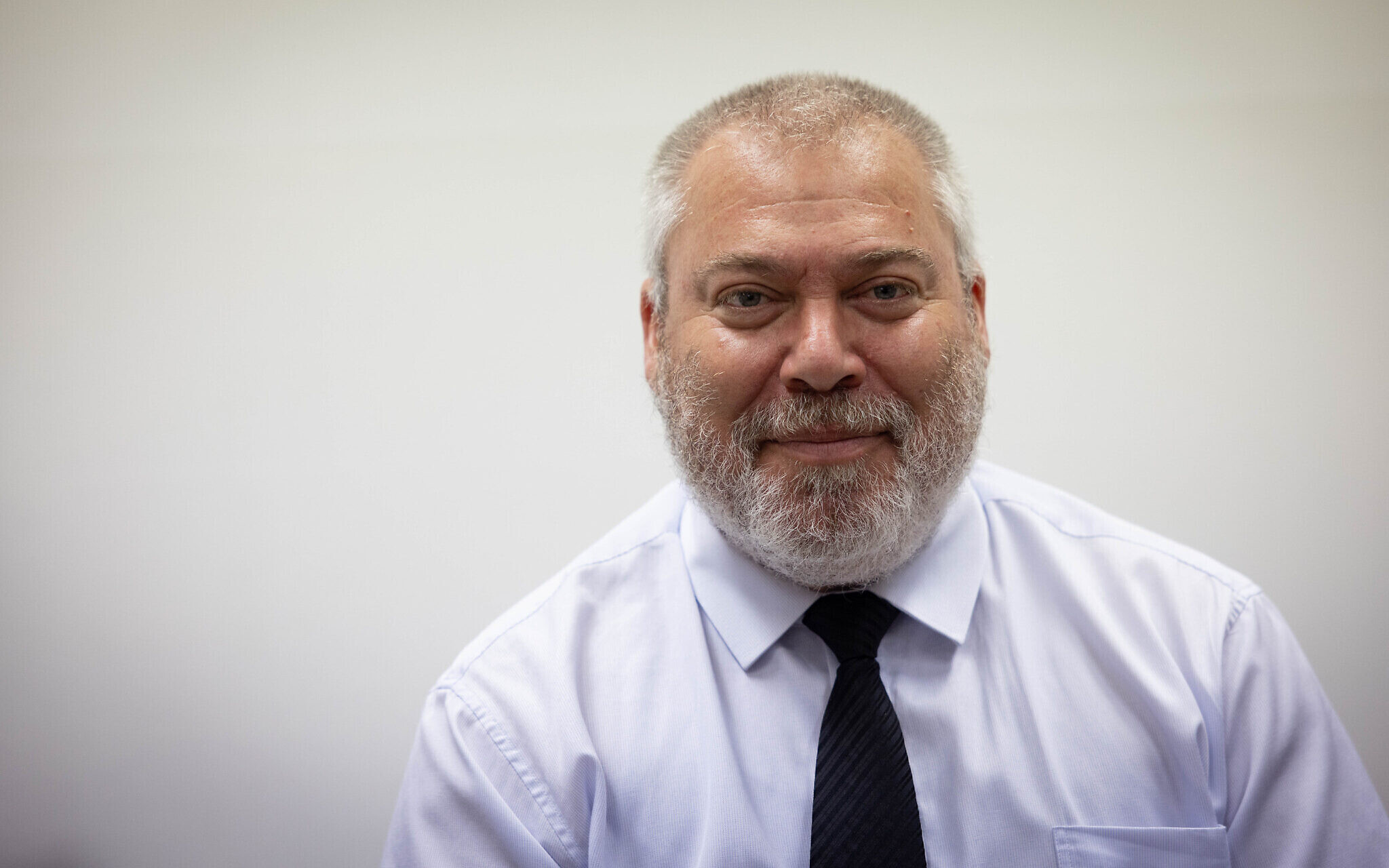
He alleged that police employed a double standard, treating right-wing activists with more sympathy and rarely holding them overnight.
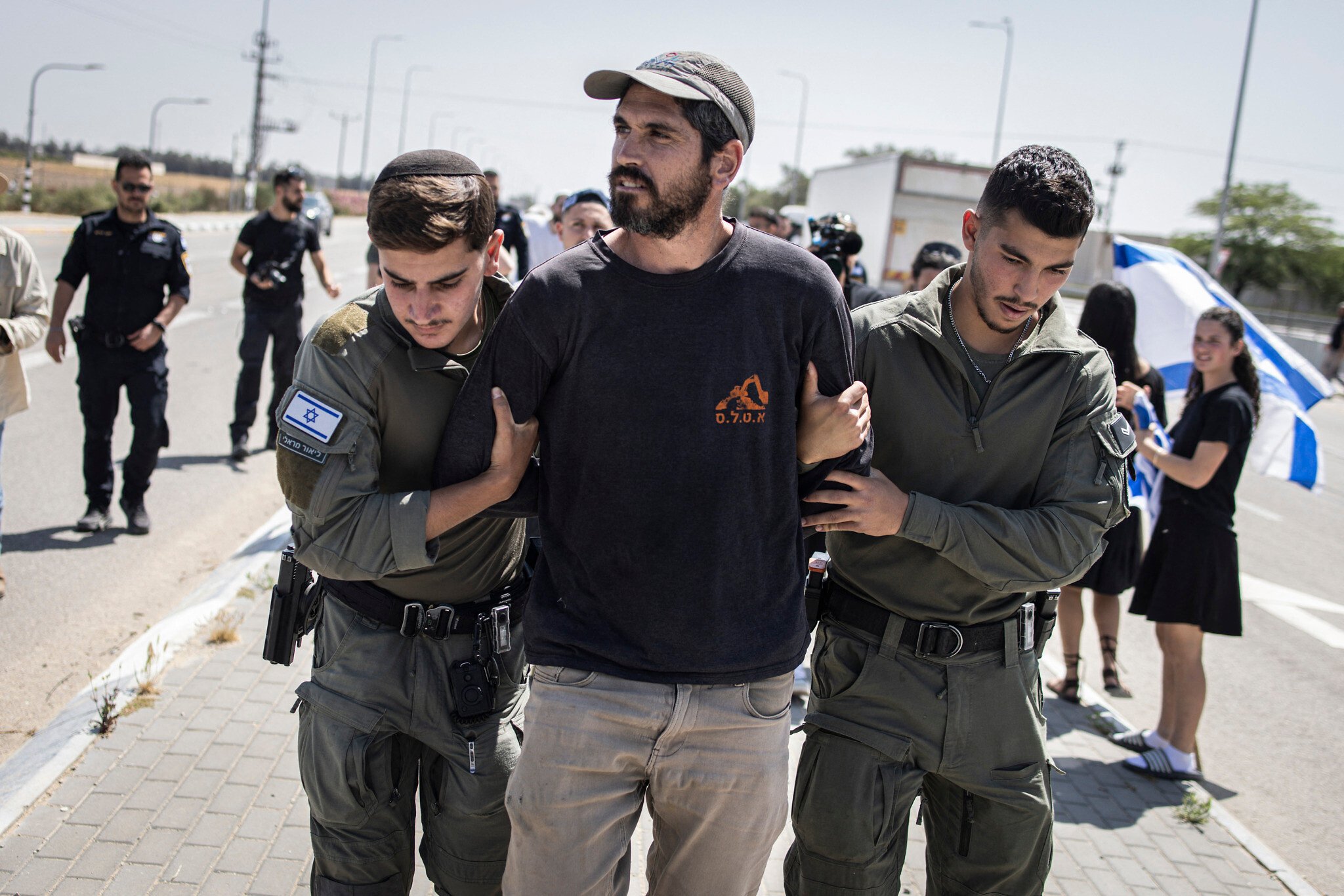
Earlier that day, activists with the Tzav 9 pressure group had traveled south to protest the government’s decision to begin allowing humanitarian aid to flow into Gaza again.
One activist was arrested, and another was detained when trying to stop trucks from hauling aid to Gaza near the Kerem Shalom crossing. Rather than being brought before a judge, both were freed after being questioned by police, according to law enforcement.
A lawyer for Honenu, a right-wing legal aid group that represents right-wing activists arrested at protests or accused of nationalistic crimes, including the detained Tzav 9 protesters, argued that police actually implement “selective enforcement” against right-wingers.
The arrests at Kerem Shalom were “very difficult to justify — especially in light of the many large-scale protests happening across the country where no such arrests are made in similar circumstances,” the lawyer, Nati Rom, told The Times of Israel.
The large anti-government protests held regularly in Tel Aviv, Jerusalem and other cities frequently see the arrests of demonstrators who block roads to traffic.
But Ben Yitzhak rattled off a litany of other instances in which he said right-wing demonstrators, even when allegedly violent, had been freed after questioning.
“Is there a law for left-wingers and a law for right-wingers? Without a doubt, yes,” he said.
On May 17, anti-government protests held weekly across the country saw five separate instances of right-wing agitators beating demonstrators, according to the protest violence watchdog Alimut Israel.
In Rehovot, four young men were recorded filming protesters while chanting pro-Netanyahu slogans. They then began scuffling with demonstrators, slapping them and trying to tear away their protest gear.
“They were recorded hitting, cursing, all that, but they went through questioning and were sent home without being brought before a judge,” Ben Yitzhak claimed.
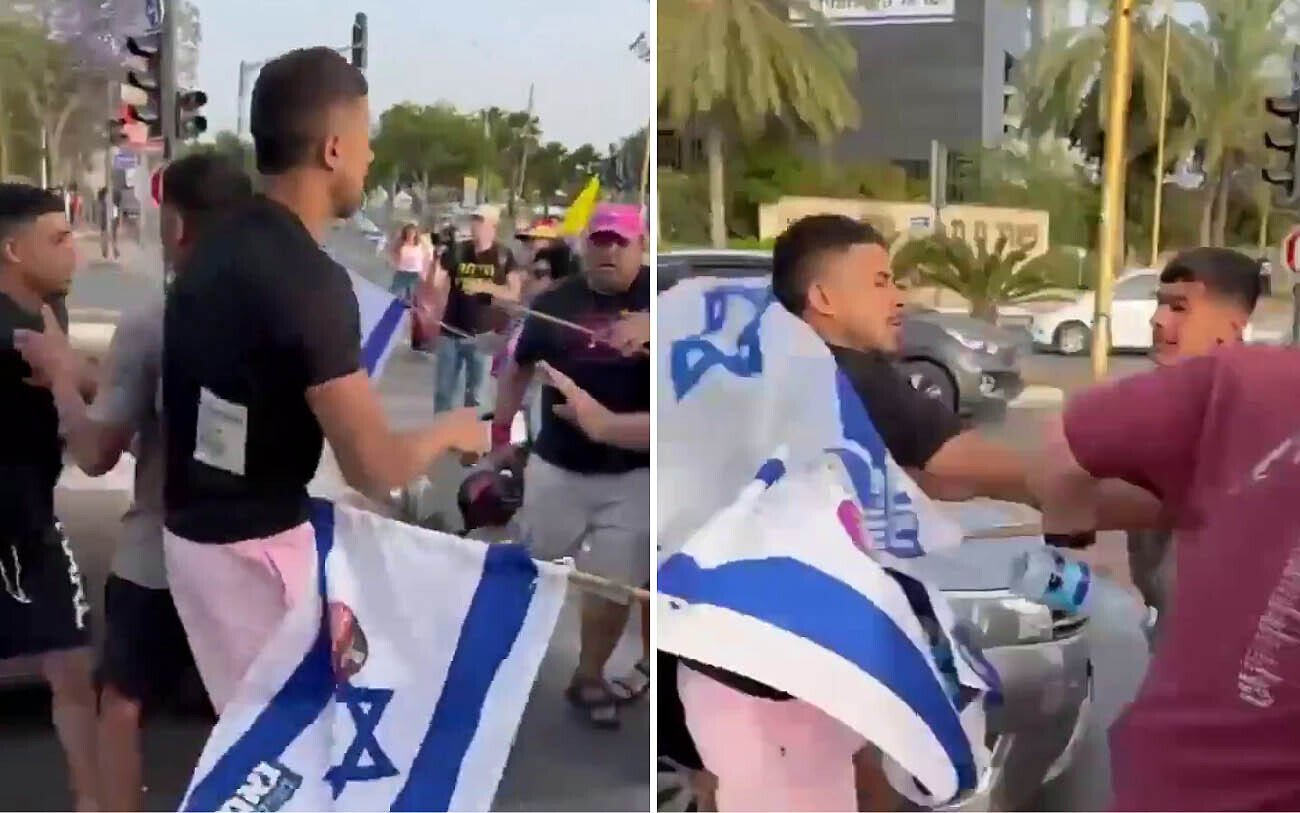
He blamed law enforcement’s nonchalant attitude toward harassment by right-winger agitators on the influence of National Security Minister Itamar Ben Gvir, a far-right politician who has been accused of attempting to politicize the force.
Ben Gvir has sought to exert more control over operational police matters than his predecessors, and has repeatedly denigrated anti-government demonstrators as “anarchists,” calling for police to disperse them using harsher methods of crowd control.
A spokesperson for Ben Gvir did not respond to a request for comment.





The Times of Israel Community.