

Amid COVID and other challenges, hoping for a year of energy, humility, health
The coalition took a calculated risk in sending our kids back to school. We’ll know soon if the decision was correct, but the approach and the implementation give room for optimism

 Add ToI as a Preferred Source on Google
David Horovitz is the founding editor of The Times of Israel. He is the author of "Still Life with Bombers" (2004) and "A Little Too Close to God" (2000), and co-author of "Shalom Friend: The Life and Legacy of Yitzhak Rabin" (1996). He previously edited The Jerusalem Post (2004-2011) and The Jerusalem Report (1998-2004).
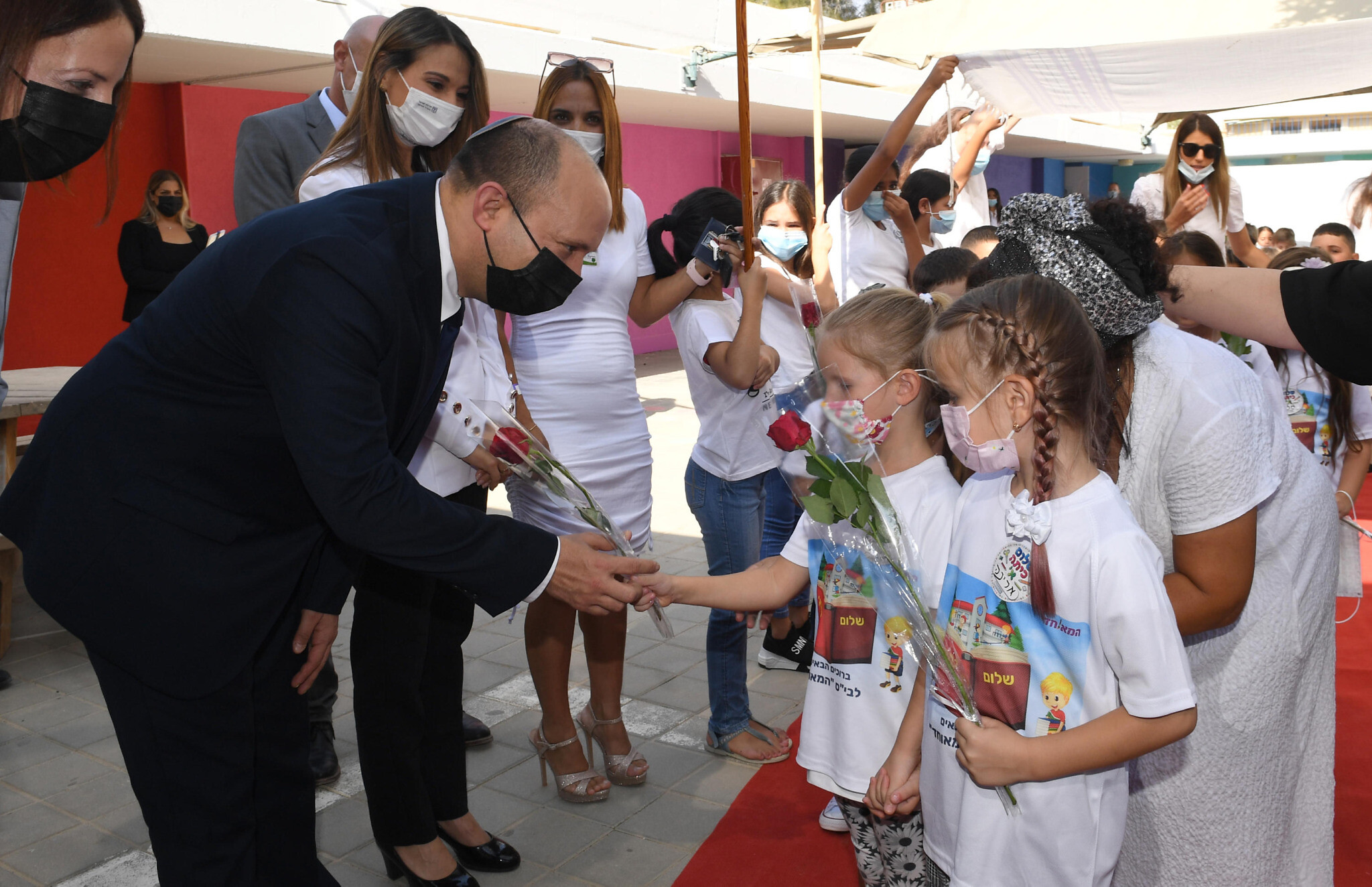
In the deadly shadow of COVID-19, Israel sent its children back to school on Wednesday morning.
Contagion levels for the virus are at a record high, with over 11,000 new cases recorded on Monday, and a narrow statistical analysis showing Israel to be an unenviable world leader in daily new cases per capita of late. Death rates have been accelerating too, with over 550 fatalities in August — compared, for example, to seven in June. Fewer than 2.2 million Israelis have had their third booster shots, without which our antibodies are falling away. And 18,000 teachers, as well as about the same number of assistants and other education staff, have not been vaccinated at all, our education minister, Dr. Yifat Shasha-Biton, revealed on Tuesday night.
Yet the director-general of the Health Ministry, Prof. Nachman Ash, denies that starting the new school year with in-class learning is irresponsible. “I don’t think it is a gamble,” Ash said in a TV interview, even as he predicted a temporary spike in new cases. “I think we are making an educated decision.”
And the fact is that the big picture, as has been the case so often during this pernicious pandemic, can legitimately be viewed with at least a little less alarm and pessimism than the statistics above would suggest.
For a start, Israel is currently a world leader in daily new cases in large part because it has been carrying out unprecedentedly high numbers of COVID tests ahead of the return to school. Meanwhile, the number of serious cases, at 666 on Thursday morning, is more than double what it was a month ago — but the rise appears to be slowing as the third shot kicks in, with vulnerable Israelis having rushed to receive the booster.
Facing the ongoing challenges of COVID and its variants, maintaining at least a partially functioning economy and keeping the public sane and cooperative, the strategy of our newish government is avowedly to keep us living, studying and working as best as we can. Time will definitively tell whether its approach, and the process by which it reaches and enforces its decisions, are more effective than those of its predecessor.
Amid no little initial chaos, it managed to set up mass testing procedures for students and opted to go ahead with a return to classrooms this week — even though September is so full of Jewish festivals that there are barely any schooldays anyway this month — because after pooling expertise from health, education and other professionals, it concluded that this was the least bad option. One major factor was that our children have suffered so long in Zoom classrooms, damagingly kept away from their peers.
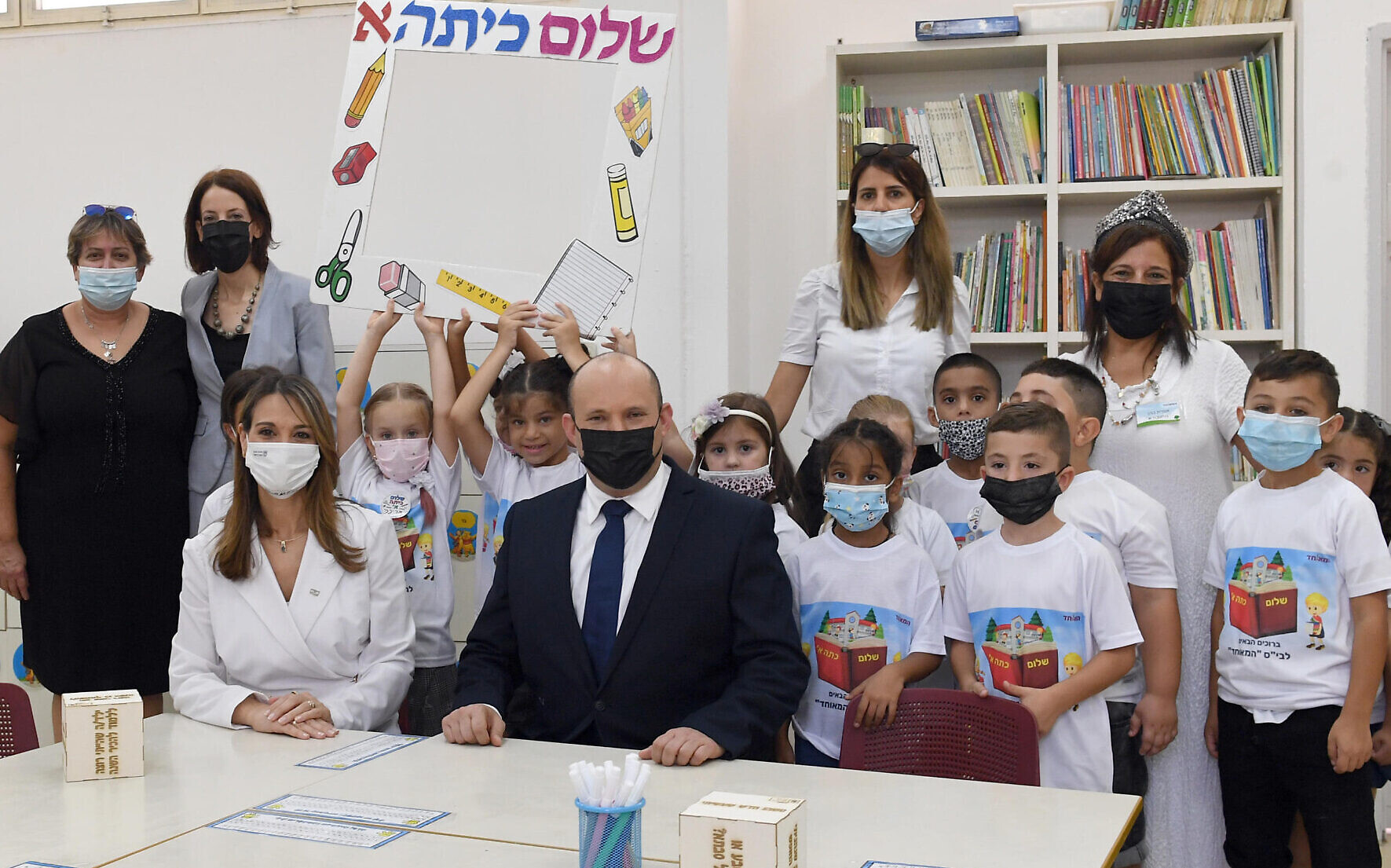
Attending class in Yeroham on Wedesday morning, Prime Minister Naftali Bennett offered a rare and necessary quality in his remarks to the kids and the TV cameras: humility. He promised that his government would do its very best to keep the country open and our children in school, and went on. “We can’t predict the result, because there are things that are bigger than us, but we can promise maximal effort.”
We are about to enter a new Jewish year, in a world overheating; a world recalibrating in the aftermath of America’s bloody withdrawal from Afghanistan and an emboldening of Islamic extremist terrorism 20 years after 9/11; a world battered by a pandemic. Plainly, the year ahead will not be tranquil. In meeting its challenges, a first-day-of-school promise to the younger generation of maximal effort, combined with a modicum of humility, seems like a decent place to start.
I wish a Shanah Tovah to all Times of Israel readers, and indeed to all good people everywhere — a year (thank you prime minister) of maximal effort and of humility, a year of fulfillment, a year of good health.
—
** An earlier version of this Editor’s Note was sent out Wednesday in ToI’s weekly update email to members of the Times of Israel Community. To receive these Editor’s Notes as they’re released, join the ToI Community here.






The Times of Israel Community.