

Archaeologists unearth 1,500-year-old synagogue below abandoned Syrian village in Golan
A team from the University of Haifa and Kinneret College identifies an ancient wall facing Jerusalem and 150 synagogue items, including a stone engraved with a menorah
 Add ToI as a Preferred Source on Google
Rossella Tercatin is The Times of Israel's archaeology and religions reporter.
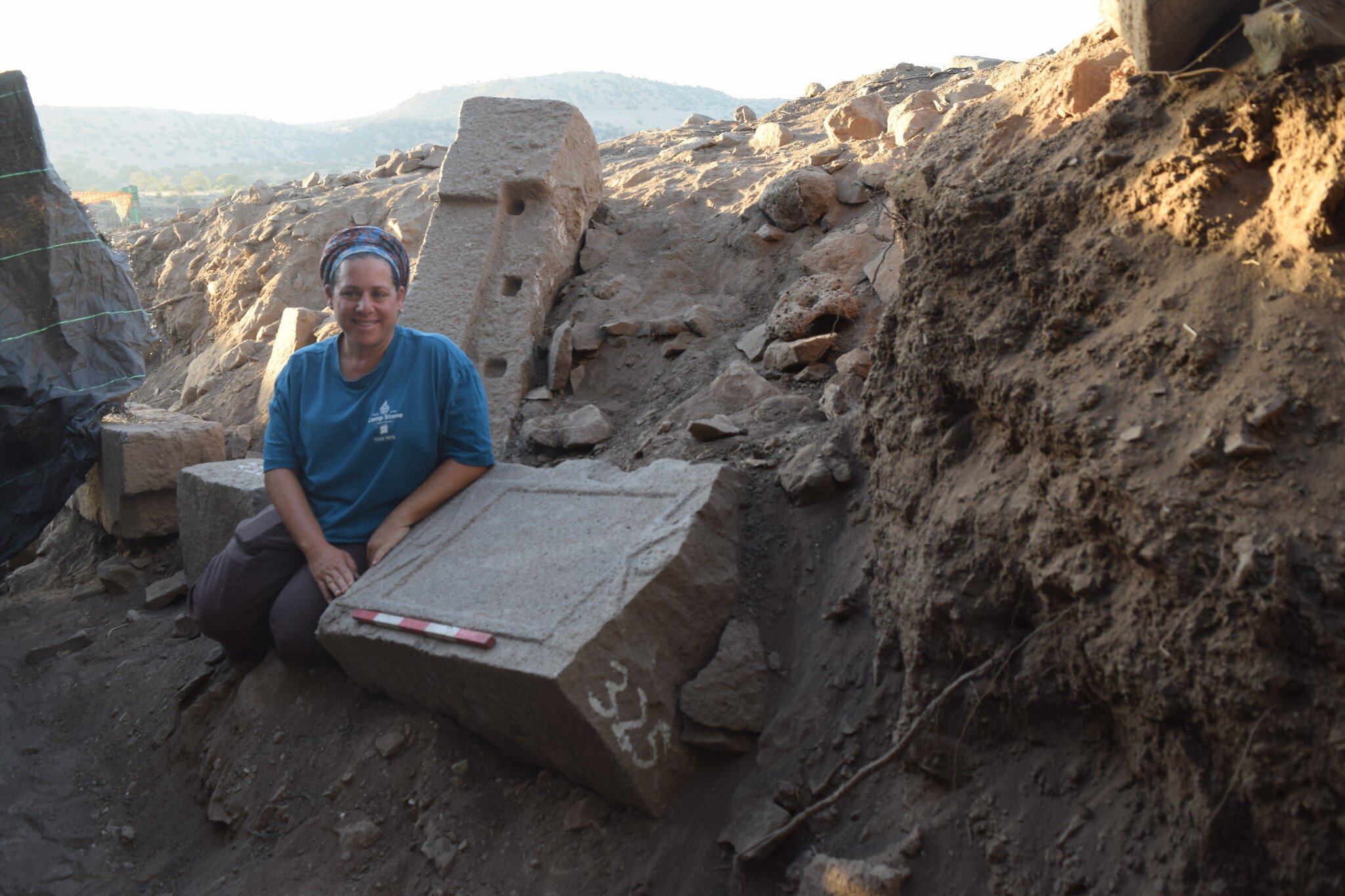
A team of Israeli archaeologists has unearthed the remains of a synagogue in the Golan Heights, roughly dating to 1,500 years ago, the Israel Nature and Parks Authority and the University of Haifa said on Sunday.
The Yehudiya Nature Reserve, known for its streams, canyons, and waterfalls, is named after the Syrian village of Yehudiya, which was inhabited until Israel captured the area from Syria in 1967. The town likely preserved the name of an ancient settlement that might have had a Jewish population.
For decades, Israeli researchers had surveyed the village, which contains several stones and architectural elements from the synagogue incorporated into its houses. However, the synagogue’s exact location remained a mystery.
“The abandoned Syrian village is built on top of ancient remains,” said Dr. Mechael Osband from the Zinman Institute of Archaeology at the University of Haifa and the Department of Land of Israel Studies at the Kinneret Academic College. “You’d walk into a house and see a pillar in the middle used as a support for the roof, or a Doric capital underneath an archway.”
Overall, some 150 items from the synagogue have been documented across the ruins of the village, including a stone engraved with a menorah.
Four years ago, Osband and his partner, Prof. Haim Ben-David, also from Kinneret College, began a systematic survey of the site. They mapped out the remains of the synagogue and the exact locations where they had been found.
“After we mapped out the remains, we told ourselves that we would do two probes and see if we could figure out where the synagogue was,” Osband told The Times of Israel over a phone interview. “I’ll be honest, I didn’t think we would find anything.”
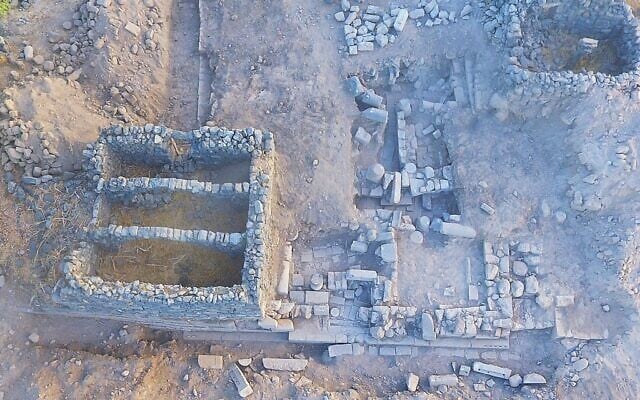
Osband explained that the finds in secondary use were scattered across the village, and no researcher had managed to pinpoint the actual building.
The archaeologists first excavated below a house that had been suggested as a possible location for the synagogue already 30 years ago, but did not uncover anything.
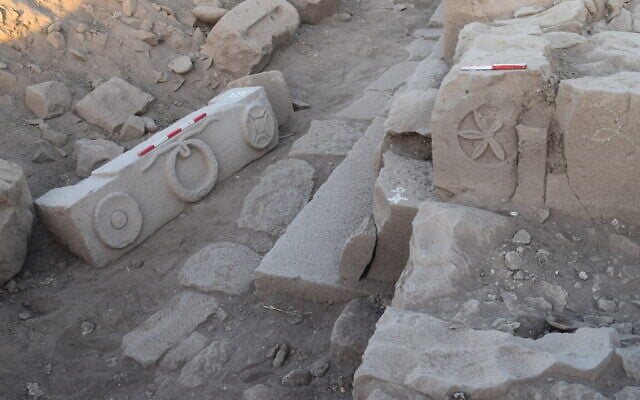
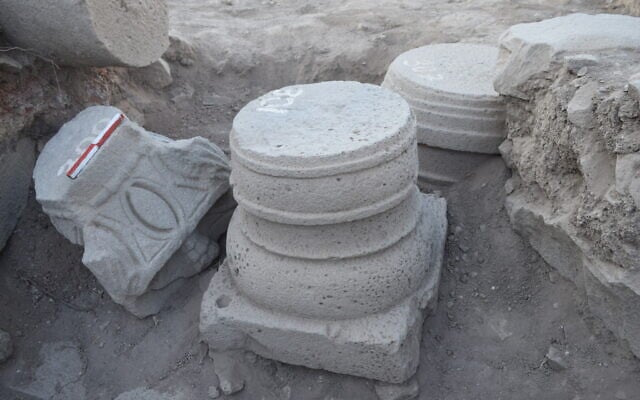
“Then we checked another place, where three columns had been discovered that were not in secondary use,” explained Osband. “It was December 2024, and we opened a 3×3 meter survey area. There, we unearthed the base of a column and a stone floor.”
In July, Osband and Ben-David returned to Yehudiya for a larger excavation, accompanied by students and volunteers.
“We found the southern wall of the building with three entrance ways, and different architectural elements, so it was clear that we found the spot,” Osband said. “We are really just beginning the excavation. We have not even uncovered the northern wall yet. I look forward to seeing what else is there.”
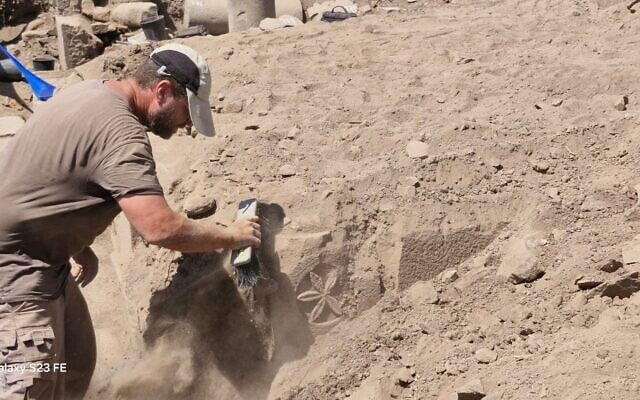
The researchers estimate that the building was approximately 13 meters wide and at least 17 meters long. It was constructed in a basilica style, featuring a rectangular structure with two rows of columns and benches along the walls, a common layout in ancient synagogues in Israel.
Among the remains uncovered was a “tabula ansata,” or a large rectangular stone tablet with dovetail handles.
“In Roman and Greek architecture, they usually carry some writing, but here there is nothing,” Osband said.
The archaeologist noted that the study of the artifact is ongoing, and it is possible that, with the aid of new technologies that can highlight faded inscriptions invisible to the naked eye, some writing might still be identified.
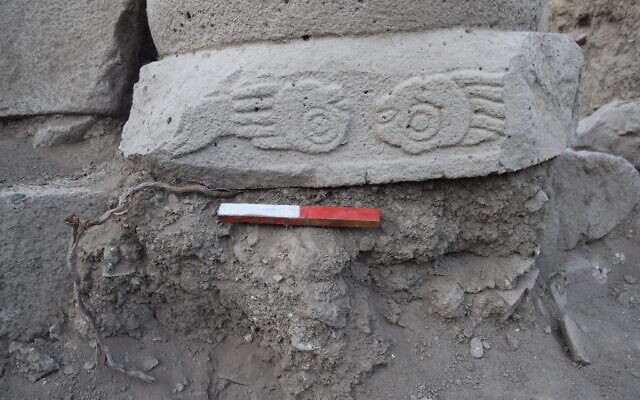
The team also found several stone benches.
“The benches were not in their original place, but in secondary use, or in other words, someone went into the building and reused it for a different purpose at a later time,” Osband said.
According to Osband, the dating of the synagogue remains preliminary, as it is based on stylistic considerations of the architectural elements, which do not allow for precision.
“Stylistically, [the building] is very similar to other synagogues in the area which date mainly from the late 3rd century to the 7th, 8th centuries [CE],” the archaeologist explained.
“As is the case in many synagogue buildings, there were probably different stages, possibly beginning in the late Roman period, and continuing through the Byzantine period, and maybe a bit later,” he added. “We don’t know yet.”
So far, archaeologists have uncovered the remains of approximately 130 ancient synagogues in the Land of Israel, with about 30 of them located in the Golan.
Osband explained that two factors likely contributed to the abundance of finds in the region.
“It’s an area where there was continuous Jewish presence from the Hasmonean period [2nd century BCE] up until the late Byzantine, early Islamic periods [6th-8th centuries CE],” he said. “In addition, the Golan has not been as intensely settled over time as other areas such as the Galilee, so [ancient remains] are preserved better.”
The team plans to return to excavating next summer, hoping to uncover more of the building and answer additional questions about those who once prayed there.
“Every synagogue has its own story,” Osband noted.
He explained that ancient synagogues in Israel were built in a variety of styles, especially in the Golan Heights. Therefore, it will be essential for archaeologists to gain a deeper understanding of the specific features of the structure in the Yehudiya Reserve.
“When was it built? In what ways is it similar [to other synagogues]? Is it unique? And what does it say about the community that built it?” he said. “Those are research questions we hope to address as we uncover more.”










The Times of Israel Community.