

Could nations angry over Gaza war close their skies to Israeli planes?
Some fear Israel could face more isolation, including bans on local carriers, as even Western allies threaten repercussions if the war and humanitarian crisis in Gaza don’t end

 Add ToI as a Preferred Source on Google
Sharon Wrobel is a tech reporter for The Times of Israel
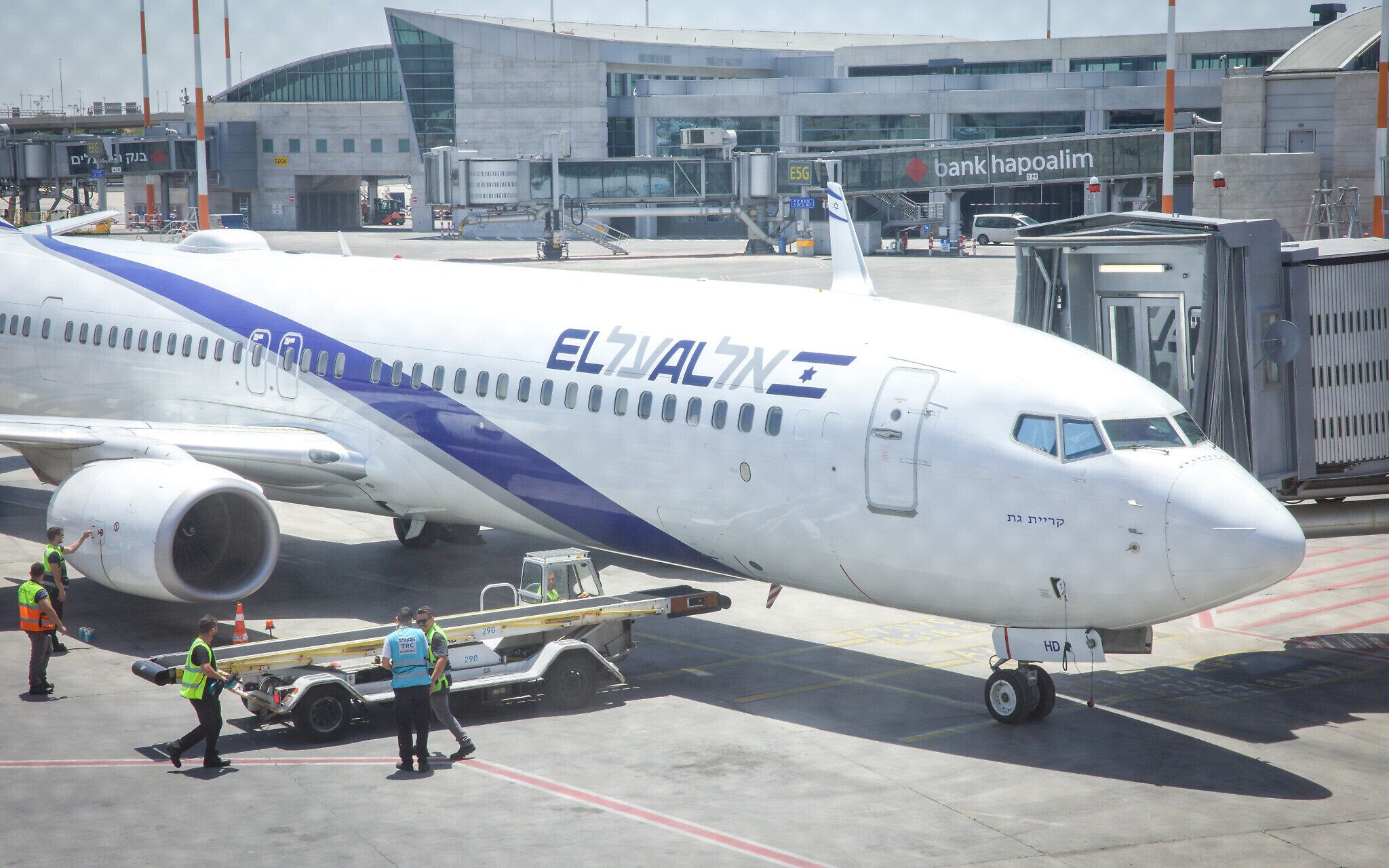
Israel’s wartime aviation crisis is feared by some to become more than a travel and tourism issue, evolving into a severe economic and political concern and greater isolation, should countries follow through on threats of sanctions over the war in Gaza.
Many foreign airlines have extended flight suspensions to Tel Aviv due to the security situation following a Houthi missile strike that recently hit the grounds of Ben Gurion airport, leaving Israel’s connection to the outside world largely in the hands of its own carriers.
But some fear that these could also be endangered as major Western European allies review bilateral trade ties with Israel amid peak levels of criticism over its conduct of the war with the Hamas terror group in Gaza.
The dwindling support for Israel by European leaders raises questions about the threat of further punitive measures that could affect the country’s key bilateral pacts, such as Israel’s Open Skies aviation agreements, which enable Israeli airlines to connect local travelers with the rest of the world at more competitive prices and without restrictions.
In 2022, following Russia’s invasion of Ukraine, European countries banned all planes registered in Russia from traversing their airspace. In response, Russia closed its own airspace to flights operated by carriers from countries that announced bans.
“Israel is in a very dire position in Europe right now and the big question is if there will be kind of an avalanche of reactions with threats of sanctions and the like, and how further they can deteriorate,” said Yossi Shain, a former MK and current professor at Tel Aviv University’s School of Political Science, Government and International Affairs.
“In Europe, there is very hostile and angry language toward Israel, but whether that translates into imposing sanctions on barring Israeli airlines — I hope not, but you never know. Much of it depends on what will happen in Gaza, and if there is a fiasco pending greater than we see now,” Shain told The Times of Israel.
“To make such a move is to define Israel as a pariah state and isolate the country in the most acute fashion, because this would be a statement or policy toward Israel that would be unprecedented,” he said.
Gali Ingber, head of finance studies at the College of Management Academic Studies in Rishon Lezion, said that although criticism of the government’s conduct in Gaza was mounting, barring Israeli airlines from international airspace would be a drastic and unlikely move, as it would likely hurt many countries that have key defense and other commercial deals with Israel.

“We are not in a situation in which European leaders are viewing Israel and its leadership eye-to-eye with Russia and its leader, Putin, who invaded Ukraine,” said Ingber. “There is still an understanding that Israel was attacked on October 7 and had no choice but to defend itself and is fighting to bring back the remaining hostages held in Gaza.”
Canceling the EU-Israel Open Skies agreement outright would also require unanimity among its 27 state signatories, something that is unlikely with Israel retaining the support of several EU nations.
But any steps could have drastic consequences for Israel and the airlines.
A boycott of Israeli flagship carrier El Al and smaller local carriers Israir and Arkia would dent their earnings and force them to cut their workforce and take other drastic cost-cutting measures, said Ingber.
“It would isolate Israelis from Europe and other destinations, as many foreign airlines have not resumed flight services to Israel during the war period,” said Ingber. “Such a move would disrupt supply chains, logistics, air delivery of medical technology and equipment, as well as hurt exports and many other sectors of the local economy, which in turn would lead to higher prices and inflation, to name a few of the catastrophic repercussions.”
Israel’s Foreign Ministry and El Al did not immediately respond to requests for comment. The Transportation Ministry said it was not aware of any immediate threat to Israel’s aviation agreements.
The ongoing hiatus of most foreign airlines during the ongoing war, which has seen rocket and drone attacks from Lebanon, Gaza, Yemen and Iraq, plus two large missile barrages from Iran, has led to Israeli airlines, chiefly El Al, operating with a near-monopoly on some routes.
Trade relation woes
Last week, Israel’s top trading partner and ally, the European Union, decided to review its binding political and commercial association agreement with Jerusalem over alleged human rights abuses amid Israel’s continued offensive in Gaza.
Israel’s Ambassador to the European Union Haim Regev said diplomatic efforts by the Foreign Ministry had succeeded in stopping the bloc from suspending the pact and agreeing instead to reexamine it after Jerusalem enlisted the support of 10 out of the EU’s 27 member states.
“We cannot speculate on the outcomes of the review before we have looked into the issues,” an EU official told The Times of Israel.
In another economic blow, the UK last Tuesday declared that it was suspending negotiations on upgraded trade ties with Israel, a day after joining with France and Canada in a strongly worded statement against Israel’s military actions in Gaza and its blockade on humanitarian aid, with all three threatening to take “concrete steps” against Israel.
The EU has called on Israel to halt its war with Hamas in Gaza and demanded a lifting of restrictions on the entry of humanitarian aid into the enclave. After an 11-week blockade on aid entering Gaza, Israel began allowing trucks of humanitarian assistance to enter the Strip last week, with Prime Minister Benjamin Netanyahu citing international pressure as driving the move.
Israel has argued that sufficient humanitarian assistance entered the Strip during a six-week ceasefire earlier this year and that Hamas has been stealing much of that aid to replenish the terror group’s supply stores. Israel also said the blockade was necessary to pressure Hamas to release the 57 remaining Israeli hostages it has been holding for over 600 days, about a third of whom are believed to still be alive.

“The impact of [the UK] pausing trade talks with Israel is uncertain. It appears to be more of a gesture,” said Joan Ryan, CEO of ELNET-UK, a nonprofit dedicated to strengthening Europe-Israel relations. “On its own as one single measure, it’s unlikely to have a significant impact on Israeli decision making — nor will it secure the UK government’s stated aim of bringing the conflict in Gaza to an end.”
“When the UK government announced a pause in trade talks, it was welcomed by Hamas, and the terror group would certainly welcome a cessation of the Open Skies policy. We must be very careful not to make gestures that open the door to more serious measures,” said Ryan, adding that a loss of Open Skies would be a “very serious measure,” which she said she does not anticipate.
Israel may still have open skies agreements, but since a Houthi ballistic missile struck within the grounds of Ben Gurion Airport on May 4, and the Yemen-based terror group threatened to “blockade” Israel’s main international airport, most foreign airlines again halted their flight services to and from Tel Aviv, with only very few resuming their operations after the attack, Ryan noted.
Since the collapse of Israel’s latest ceasefire with Hamas on March 18, the Iran-backed group has launched 42 missiles and at least 10 drones at Israel in what it calls acts of solidarity with Gaza’s Palestinians.
On Friday, Houthi officials indicated they would consider targeting Israeli civilian airlines.
“By their aggressive terrorist actions, the Houthis are trying to precipitate a situation where, in practice, nobody is flying to Israel,” said Ryan. “All democratic governments must be very careful not to take actions that, instead of achieving their stated aims of a ceasefire and the release of hostages, further entrench and embolden Hamas in their terrorist activities.”
Shain said that the horrific images from war-torn Gaza were influencing European public opinion and pressuring local leaders to become impatient and take action.
Earlier this month, Spanish Prime Minister Pedro Sanchez called Israel a “genocidal state,” while French President Emmanuel Macron deemed Israeli activity in Gaza “unacceptable” and “shameful.” French Foreign Minister Jean-Noel Barrot accused Israel of blocking humanitarian aid and “turning Gaza into a dying ground, if not a cemetery.”

“The mood and European public opinion shifted over recent weeks after we had an incredible receptive ear in Europe following the October 7 atrocities, which is no longer there,” said Shain, who formerly served as head of the Knesset’s delegation for relations with the European Parliament. “The fact that the war is lingering without any end in sight, alongside the reports on humanitarian disasters and casualties in Gaza, puts Israel in a very dangerous place.”
“The danger for Israel is that even friends in Italy, in France and other places, like in Holland, are becoming completely impatient, because they see Israel’s inability to end the war,” he cautioned.
What is even more worrying, said Shain, is that there is a perception in Europe that there are “bloodthirsty crazies” running Israel, which he said was very pervasive in many European capitals.

Shain pointed to remarks by both far-right Finance Minister Bezalel Smotrich, who has vowed to “totally destroy” Gaza, and left-wing head of The Democrat party, Yair Golan, who claimed this week that the government is “killing babies as a hobby,” an allegation he later walked back.
“The incredibly irresponsible articulation by some right-wing Israeli politicians is putting a dangerous dent in Israel’s moral claims,” warned Shain. “Israel’s claim to victimhood has been reduced so significantly, not only because of the war in Gaza, but also because of the poisonous rhetoric of some of its stupid politicians, who are giving ammunition to those who are calling for sanctions against Israel.”
“Already due to the Houthi threat of missile attacks, there is a lack of foreign airlines flying to and from Israel because of security reasons, and if this slowly becomes the norm then Israel is becoming less and less interesting. That’s a huge danger when put into the perspective of not even being perceived as an attractive, but a destructive place,” said Shain.
Times of Israel staff contributed to this report.





The Times of Israel Community.