

Ben Gvir unveils ‘voluntary emigration’ plan to remove most Palestinians from Gaza
Far-right minister’s plan, which he hopes to advance under next government, aims at removing 1.86 million of Strip’s residents within 7 years, as he promises ‘absorption package’ to assist those settling in new countries
 Add ToI as a Preferred Source on Google
Ariela Karmel is a political correspondent at The Times of Israel. She previously reported for Calcalist and Haaretz. She holds an MA in Middle Eastern and African History from Tel Aviv University and a BA in Political Science from the University of British Columbia.

Far-right National Security Minister Itamar Ben Gvir on Thursday unveiled a plan he said he hoped to advance if the coalition maintains control of power in the coming October 27 election. It is aimed at removing the vast majority of Gaza’s Palestinian population from the territory through what he termed “voluntary emigration,” including by establishing a dedicated government ministry.
The plan, which comes as parties ramp up their campaigning, is highly unlikely to get off the ground, and would face massive international pushback.
Ben Gvir dubbed the scheme “Disengagement 710” — a reference to both Israel’s 2005 disengagement from Gaza and the October 7, 2023, Hamas-led massacre, for which many on the Israeli right have partly blamed the withdrawal. It seeks the removal of 250,000 Gazans in its first year, 1.11 million within three years and 1.86 million within seven. Gaza’s population is estimated at some 2.3 million.
“Instead of illusions of peace now, we need actions of emigration now,” Ben Gvir said. “Instead of [Gazans] digging tunnels, it’s time to pack suitcases.”
The establishment and leadership of an “Emigration Ministry” will be among Otzma Yehudit’s top demands for joining the next government, he added.
“What a shame they didn’t listen to Gandhi,” Ben Gvir said, using the nickname of assassinated far-right minister Rehavam Ze’evi, who advocated ethnic cleansing and population transfers of Palestinians from the West Bank and Gaza. “It’s time to admit it: Gandhi was right!”
He said emigrants would receive an “absorption package” including “assistance with travel, initial housing, vocational training, employment and support for up to 24 months,” as well as payments to host countries based on the number of Gazans they take in. Turkey, Ethiopia, the Congo and unspecified Arab countries are being considered as potential destinations, according to Otzma Yehudit.
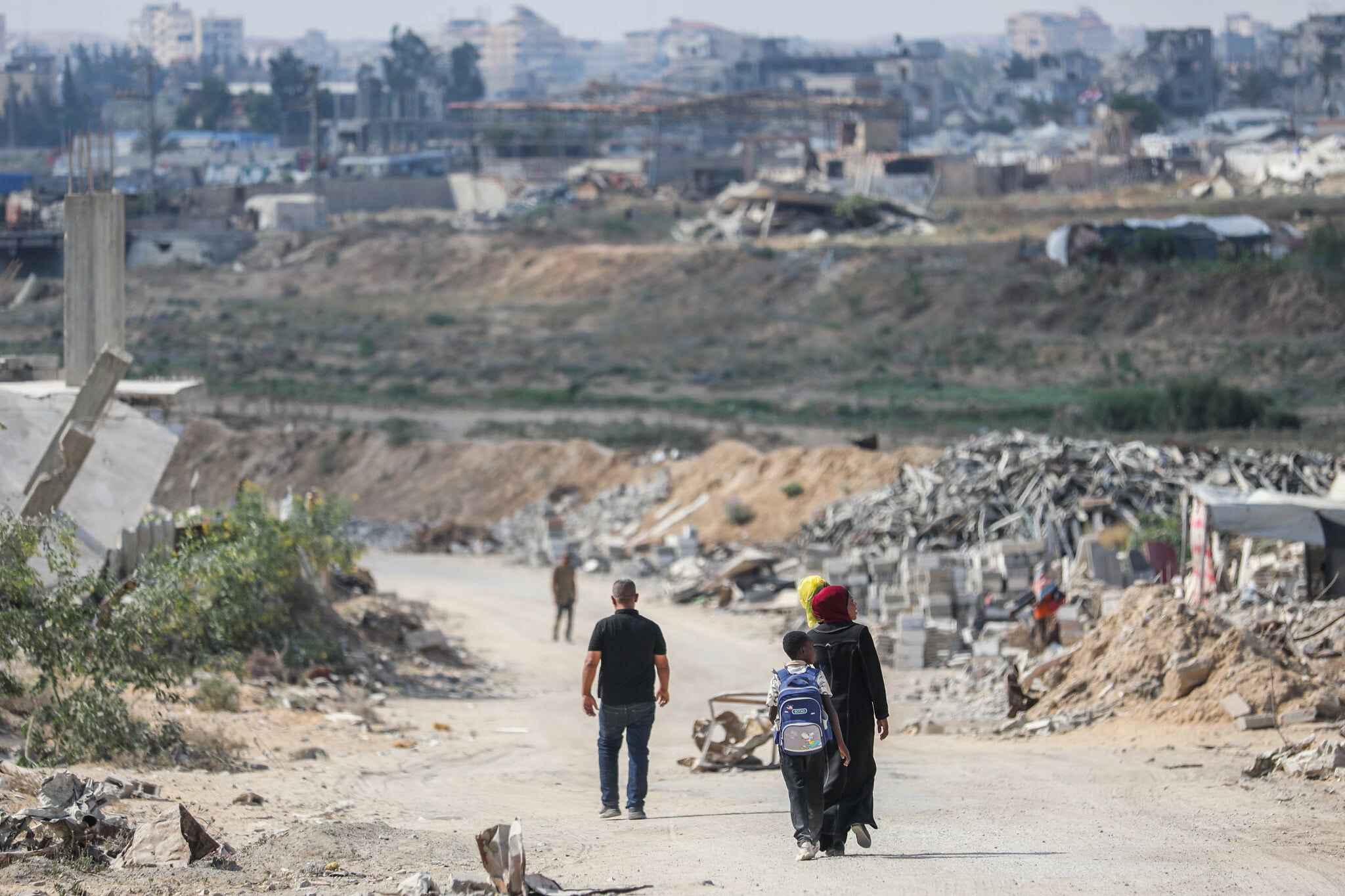
Otzma Yehudit said the proposal requires an initial Israeli investment of NIS 10 billion ($3 billion), followed by up to NIS 50 billion ($15.2 billion) in matching funds, based on international participation.
“At first, I was treated as a delusional extremist,” he said. “Then, one day, everything changed: President Trump publicly declared that encouraging emigration was a solution to the Gaza issue. Suddenly, Ben Gvir’s plan became legitimate. Suddenly, everyone became Ben Gvir.”
The proposal came a day after Defense Minister Israel Katz said plans to facilitate mass emigration from Gaza remain under discussion and were merely “frozen” by Trump, who had initially proposed relocating Gaza’s roughly 2.3 million residents in February 2025, prompting Israel to establish a Defense Ministry directorate tasked with facilitating what officials termed “voluntary emigration.”
The possibility sparked strong pushback, including from Egypt, and was condemned by Palestinians themselves. Trump later abandoned the proposal amid the international opposition and a lack of willing destination countries.
Trump also spoke at one time of developing the coastal territory, devastated by the two-year war between Israel and Hamas, into a luxury resort destination.
In his October 2025 Gaza peace plan, Trump appeared to walk away from it entirely, pledging instead to “encourage people to stay and offer them the opportunity to build a better Gaza.”
In June, Israeli security officials were reported to be seeking to revive the moribund plan and to have rebranded it in an effort to soften international opposition.
Katz insisted Wednesday the plan “is being discussed all the time.”
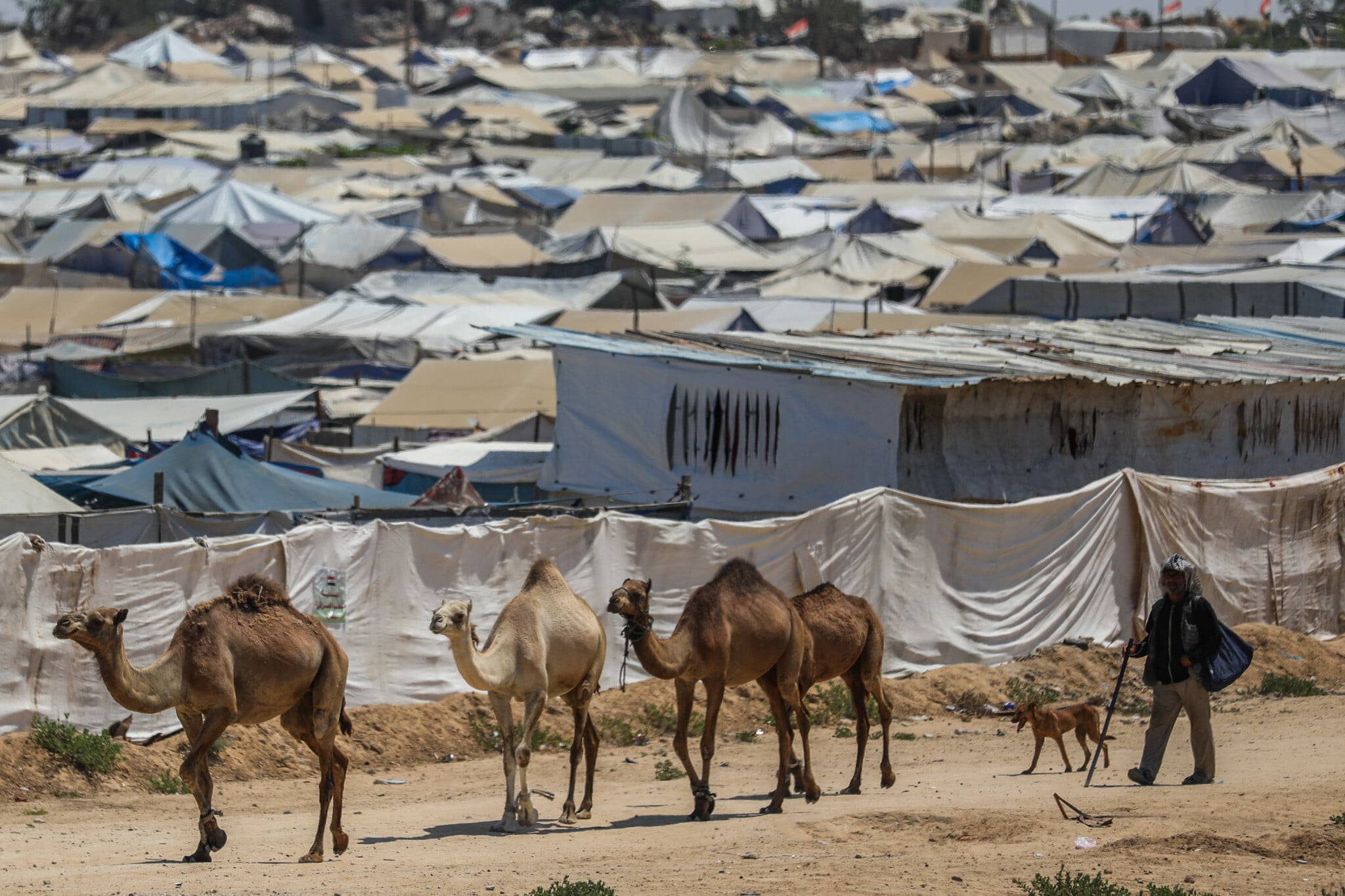
The war has already internally displaced the vast majority of Gaza’s people following the October 7 Hamas attack on southern Israel, in which some 1,200 people were killed and 251 were taken hostage.
Israel’s subsequent offensive has killed over 73,400 people in Gaza, including more than 1,330 since the October 2025 ceasefire, according to the Hamas-run health ministry in the enclave, although the toll does not differentiate between combatants and civilians.
The Israel Defense Forces believes that Hamas’s overall toll is largely accurate, with IDF officials estimating that two to three civilians were killed for every dead terror operative.
While the October 2025 US-backed ceasefire halted major fighting in the shattered territory, it hasn’t ended strikes by the IDF, which the military says are meant to thwart attacks by Gaza terrorists.
Gaza remains bisected into Israeli- and Hamas-controlled areas, and talks to bring about Hamas’s disarmament and the territory’s reconstruction have made only limited progress.
Last week, the Board of Peace’s Gaza envoy briefed the UN Security Council on the status of the US-run body’s efforts to rebuild Gaza, touting Hamas’s acceptance of a disarmament plan while effectively acknowledging that progress has since stalled amid Israel’s rejection of the proposal.
Israel has argued that the proposal accepted by Hamas on July 30 won’t actually lead to Hamas’s disarmament and declared that Jerusalem will therefore not adhere to its required phased pullouts from the Strip.
Nickolay Mladenov took particular issue with Israeli restrictions on shelter supplies for Palestinians living in squalid conditions in the Strip, while also calling out Jerusalem’s policy of continued strikes in Gaza, arguing that they have not led, and will not lead, to Hamas’s disarmament.
At the same time, he criticized the terror group for not fulfilling its own commitments under the disarmament plan, which required both sides to halt all military activities.
Mladenov told the Security Council that Israel is not being asked to accept the disarmament roadmap, but rather to reaffirm the commitments that it made as part of US President Donald Trump’s 20-point Gaza peace plan, which Prime Minister Benjamin Netanyahu accepted last September ahead of the ceasefire.








The Times of Israel Community.