

Yehuda Widawski, the oldest Holocaust survivor in Israel, dies at 107
Widawski, born in Poland, lost parents and all but one sibling during Holocaust; from 1978, he dedicated his life to restoring destroyed Jewish graves in Poland
 Add ToI as a Preferred Source on Google
Michael Horovitz is a breaking news editor at The Times of Israel
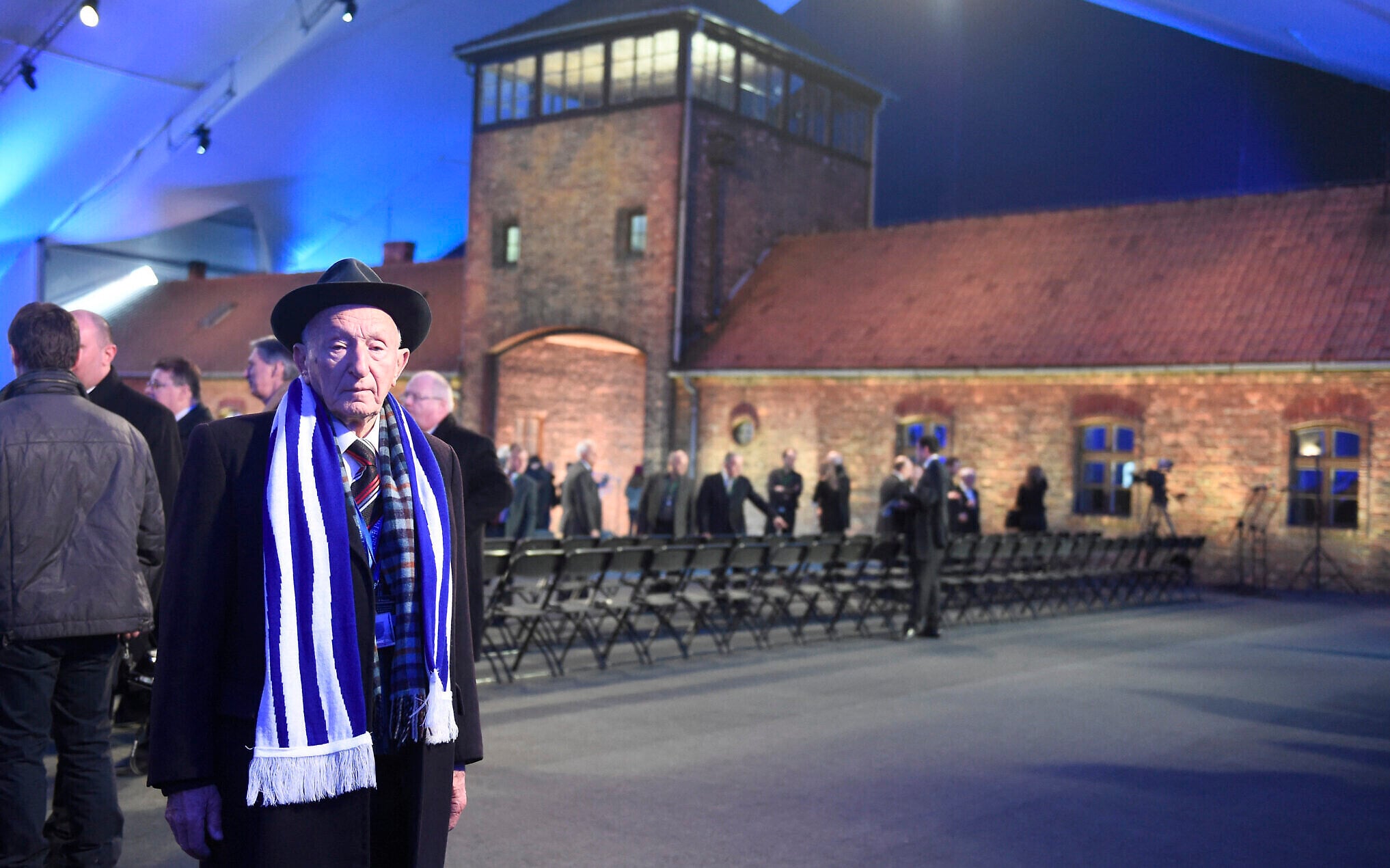
Yehuda Widawski, the oldest Holocaust survivor living in Israel, who dedicated his life to restoring Jewish cemeteries that were destroyed during the Nazi occupation, died at 107 years old on Sunday.
Widawski was born in the town of Turek in Poland in 1919, the second of four siblings. His family moved around the country until they settled in the city of Lodz in 1933. By 1936, he managed a textile business that sewed shirts and underwear for the Polish army.
After the Nazis occupied Poland in September 1939, the Widawskis managed to purchase an apartment within the limits of the Lodz Ghetto, where 15 family members lived together until the ghetto was liquidated on August 29, 1944.
During that time, the family continued to deal in textiles while also operating a soup kitchen in their home in the ghetto.
After they were deported to Auschwitz, Widawski’s parents Abraham and Leah, and his eldest brother, Gabriel, were murdered immediately. His younger brother Haim Moshe died in Buchenwald, while his sister Yocheved was murdered in the Stutthof concentration camp.
“When our family was sent to Auschwitz, an uncle was with us in the cattle car. We saw the crematorium, and the smoke. He said: ‘Yehuda, do you see that? It must be a bakery.’ The mind! All we could think about was bread,” Widawski told Yad Vashem in his testimony.
“I relive it, not just every day, but every hour; I see them all, before my eyes,” he said of his murdered relatives.
Widawski and his youngest brother, Jehoszua, were sent to work at the Friedland work camp, where he made airplane wings, and survived the war.
After they were liberated by the Red Army, the brothers returned to Lodz, where they discovered that together with their uncle, they were the only members of their family to survive the war.
Widawski established a new textile factory and married Lea Dobrysz, and played a role in smuggling arms to the Irgun, a pre-state militia in Mandatory Palestine.
In 1950, he moved to Israel and ran several businesses.
In 1978, he decided to return to Poland, where he was shocked by the state of the cemeteries amid his search for his grandmother’s grave. He decided to set out to locate, identify, and restore thousands of graves, among them those of prominent rabbis.
In an interview with the Ynet news site in 2019, Widawski said, “My revenge against the Nazis is that they lost, and we have the State of Israel. We are free and strong, and no one can destroy us any more.”
הצטערתי לשמוע על פטירתו של יהודה אהרן וידבסקי ז״ל, ניצול אושוויץ והמחנות הנאציים, בגיל 107.
כשהיה בן 104, זכיתי לארח את יהודה בבית הנשיא יחד עם משפחתו המפוארת. התרגשתי לשמוע ממנו על סיפור חייו ועל הבחירה שלו לחזור לפולין שנים אחרי שעלה לישראל כדי לחפש את קבר סבתו. החיפוש הזה הפך… pic.twitter.com/ZIAEGhmbbr
— יצחק הרצוג Isaac Herzog (@Isaac_Herzog) September 13, 2026
In a post on X eulogizing Widawski on Sunday, President Isaac Herzog recalled the “privilege” of hosting him three years ago.
“I was moved by his life story and by his decision to return to Poland years after he immigrated to Israel to search for his grandmother’s grave. That search became a lifelong mission — over the course of decades, Yehuda worked to locate and restore Jewish cemeteries and graves in Poland, and assisted in identifying more than 3,000 graves,” Herzog said.
“Yehuda once said that his revenge against the Nazis was that they lost — and that we have the State of Israel. Indeed, his life was a magnificent testament to the victory of life, memory, and revival,” he wrote.







The Times of Israel Community.