

US officer downed over Iran in April recalls beating odds to survive on the ground
Weapons-systems officer says seeing his rescuers approaching was ‘one of the greatest moments of my life’; describes ‘miracle’ of not dying when he hit the ground
 Add ToI as a Preferred Source on Google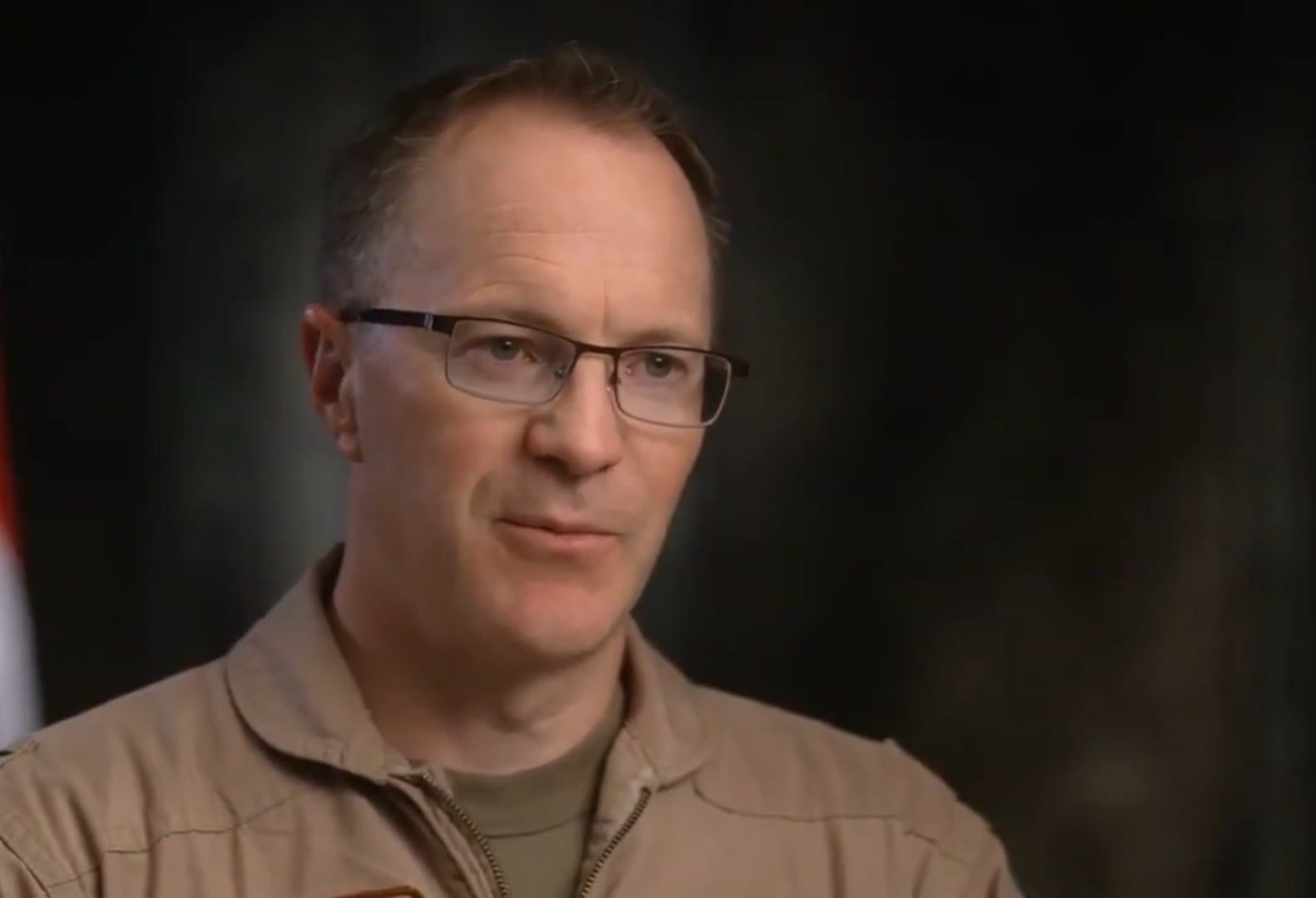
One of two US aircrew whose F-15E was shot down over Iran in April gave his first public account of the ordeal and rescue in a Sunday broadcast that featured newly declassified footage.
The crew member who took part in a CBS “60 Minutes” interview was identified only as “Bravo,” the jet’s weapons-systems officer, who spent roughly two days alone in the Iranian mountains after the plane was shot down on April 3 near a mountainous area south of the city of Isfahan.
CNN reported Saturday that US Defense Secretary Pete Hegseth and other political officials at the Pentagon had pushed both crew members to give the interview, but the pilot did not, due to security considerations as he is back on flying operations.
Adm. Brad Cooper, who heads US Central Command, also spoke with the network about the incident, as did Hegseth and Gen. Dan Caine, chairman of the Joint Chiefs of Staff.
The F-15 was hit by a shoulder-launched missile, and the crew quickly assessed that the $30 million jet could not be saved, so they ejected.
Alpha, the pilot, was rescued a few hours later, but Bravo did not fare as well.
Dramatic video, obtained first by 60 Minutes, shows the rescue of two Air Force officers shot down over a mountainous desert region of Iran back in April. https://t.co/MMeYIaZvfu pic.twitter.com/37AR1xc9bj
— 60 Minutes (@60Minutes) September 14, 2026
According to CBS, the officer fell to the ground at around 112-160 kph (70-100 mph) because his parachute was damaged when the plane was hit.
“At one point when I looked up and saw no parachute, that was the most terrifying thing I’ve ever seen,” he told the broadcaster, and described praying for divine intervention and claimed that a “modern-day miracle” prevented him from dying.
Bravo still broke an arm, his back, and a shoulder in the impact.
“I had injuries, but we all train to adapt and overcome the things that we’re faced with,” he said. “I moved as quickly as I could, despite the injuries, away from the place that I landed.”
Though he was eventually able to communicate with US forces, and his position was pinpointed using still-secret technology, Bravo was forced to wait another day and a half before a complex rescue operation could be launched.
Cooper told CBS News that there were over 90 US service members on the ground in the rescue operation, which saw US military boots in Iranian territory for the first time in 46 years.
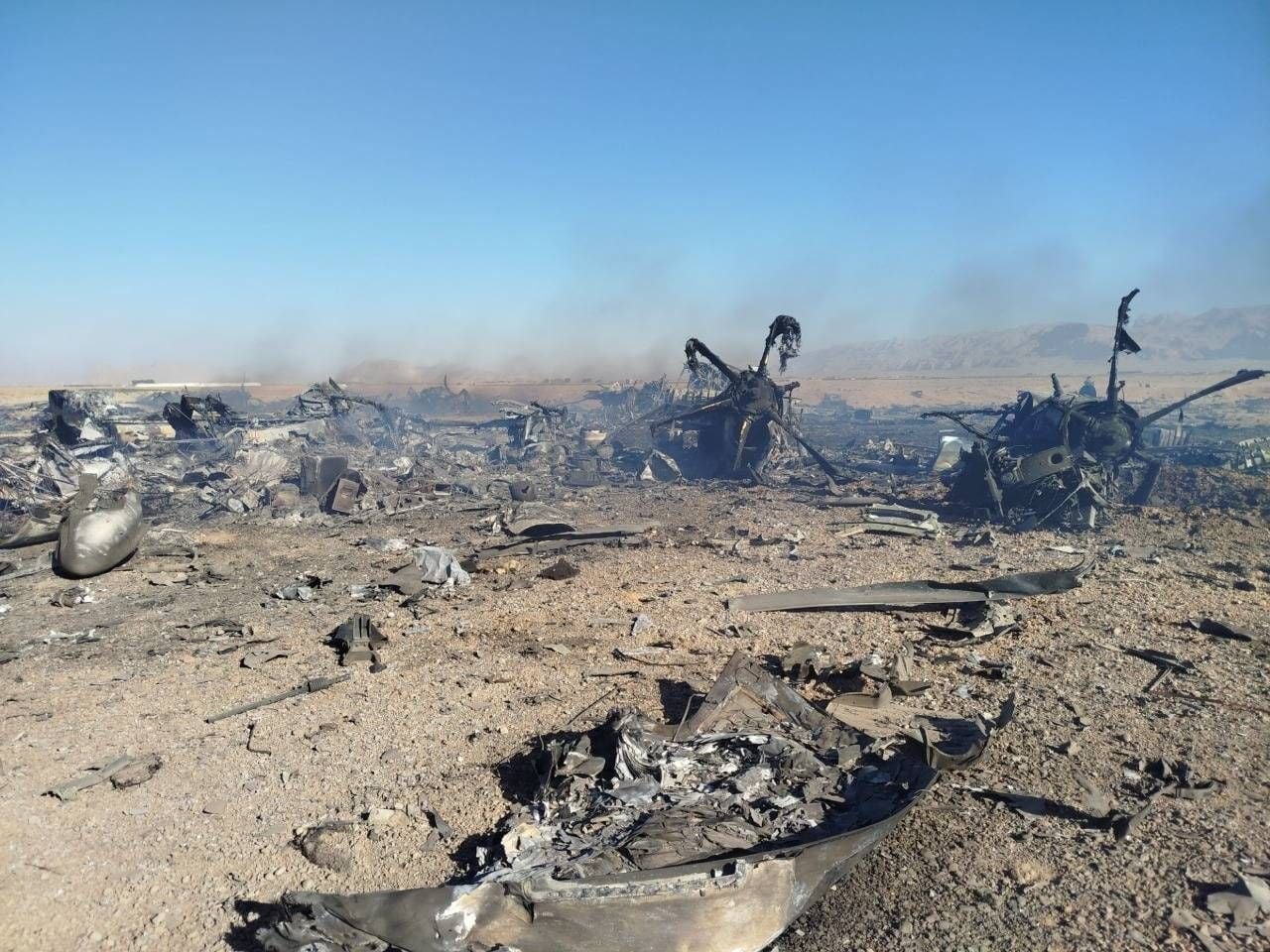
US special forces eventually reached the wounded officer after roughly 36 hours, in an operation backed by extensive air power. US President Donald Trump said at the time that the Iranian military had been searching for the airman “in big numbers” and was closing in when US forces reached him.
Bravo said seeing his rescuers was “one of the greatest moments of my life.”
The mission nearly suffered another major setback when two US transport aircraft intended to carry the airman and rescuers out of Iran were stuck at a remote airstrip. US forces destroyed the aircraft to prevent them from falling into Iranian hands and brought in replacement planes to complete the rescue mission.
Some 50 hours after being shot down, Bravo was eventually back to safety and able to speak with his wife.
Bravo told CBS that the operation was “a story of the teamwork, the training, of the faith, of the decisions and the leadership to do something that will live in history as an example of what America’s willing to do, in order to uphold our promise and leave no man behind.”
The shooting down of the airmen marked the first time Iran had downed a US fighter jet since the US and Israel launched their war on February 28 with the stated goals of eliminating Iran’s nuclear and ballistic missile threats and weakening its network of regional proxies.






The Times of Israel Community.