

Diplomacy stumbles as meeting on Hormuz between Iran and Gulf states is postponed
Oman cites need for ‘consensus’ as Iran says countries will coordinate future date for planned Monday meeting; Trump again predicts war will end around midterms
 Add ToI as a Preferred Source on Google
ADEN/DUBAI — Middle East diplomacy appeared to falter heading into Monday with the postponement of a meeting between Iran and other Persian Gulf powers, while fresh attacks around the region’s two most important oil transit routes deepened concern over global energy supplies.
Oil prices jumped as markets reopened on Monday, following developments that threaten supplies from the world’s biggest exporter, Saudi Arabia, which kept a key 1,200-km (745-mile) east-west pipeline closed throughout the weekend after it was damaged in drone strikes on Friday.
Iran’s foreign ministry had said there would be a meeting hosted by Oman where the future of the Strait of Hormuz, vital for global oil and gas flows, would be negotiated.
Tehran said Iraq and Gulf countries would take part, without specifying which states, but no country in the region had confirmed its participation while Bahrain ruled out attending.
“It has been decided to postpone to a later date the regional meeting that was to be held on Monday in Salalah, in order to create conditions conducive to a constructive dialogue,” the Oman News Agency said on Sunday.
Omani Foreign Minister Badr Albusaidi said on X that “we remain determined to promote dialogue that contributes to stability and lasting cooperation in our region.”
Iran’s Fars news agency cited an Iranian foreign ministry official as saying that the Oman meeting was postponed at the request of some regional countries in a decision jointly made by Tehran and Muscat. The official said Iran would coordinate with Oman to determine a suitable date for holding the meeting.
The Strait of Hormuz has been subjected to an Iranian and later a US blockade since February 28, when the US and Israel launched strikes on Iran, prompting a wider war across the region.
A June accord between Washington and Tehran faltered on disagreements over Hormuz, and a blistering offensive in recent days by Yemen’s Houthi rebels has given the Tehran-allied group leverage over a second critical waterway, the Bab al-Mandeb.
Oman and Iran have been discussing for several weeks how to manage Hormuz.
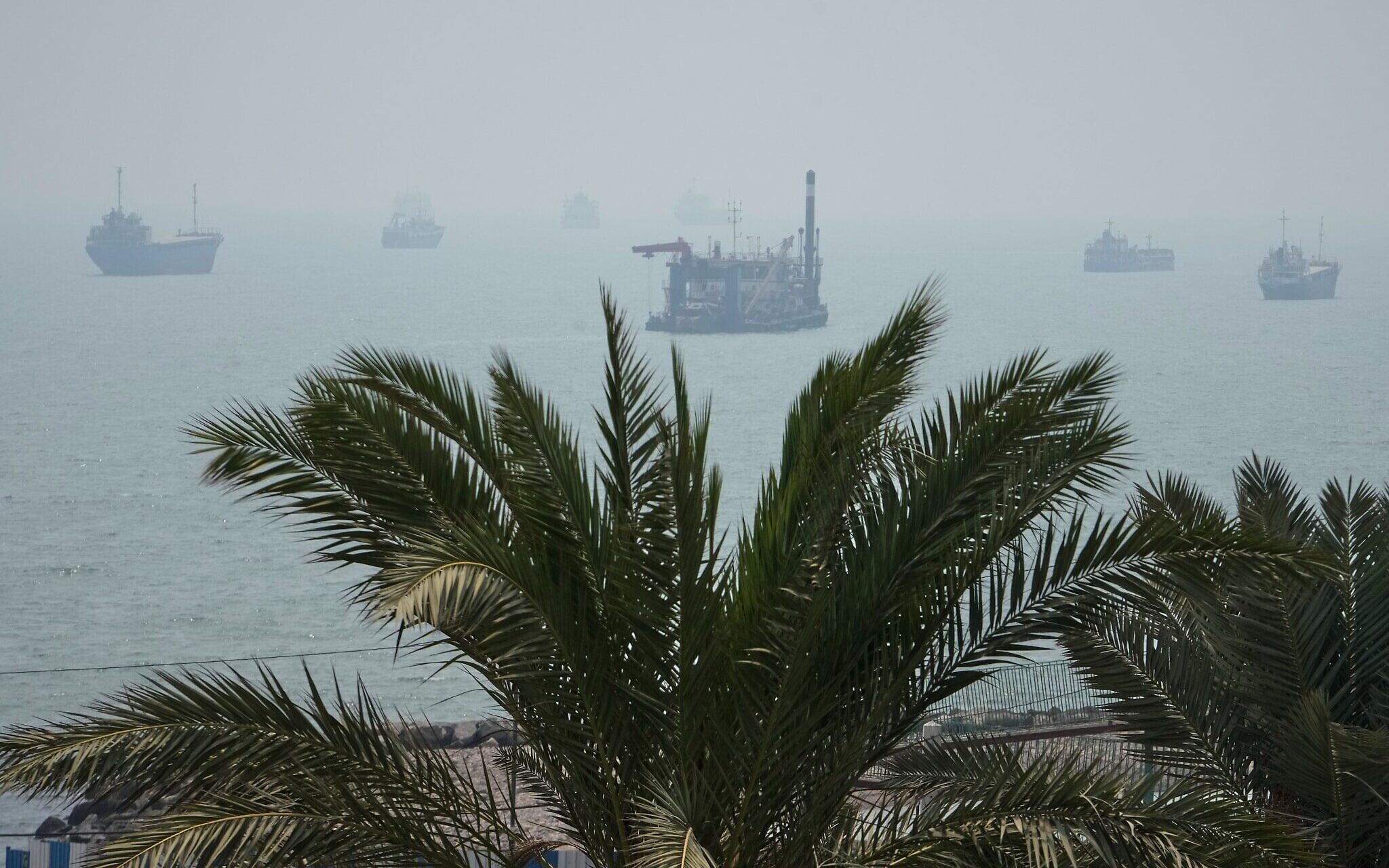
The strait was free to transit before the war, but Iran now requires vessels to obtain permission and is considering a mechanism to impose service fees.
Ships that do not comply are regularly targeted by Iranian strikes, while the United States periodically bombs the Iranian coastline to challenge the Islamic Republic’s control of the strait.
Preliminary ship-tracking data showed Monday that commodity vessel transits through the strait had fallen to a single digit per day at the weekend, well below a 10-day average of 14. Over the weekend, a total of four vessels exited the Gulf via the strait and 10 entered it, according to the data. The figures exclude any vessels that might have crossed the strait with their Automatic Identification System transponders turned off to avoid detection.
The meeting’s postponement came on the heels of Saudi Arabia’s decision to shut down, at least for now, its pipeline that has served as the main route for Middle East oil bypassing the Strait of Hormuz.
Meanwhile, the strait continued to pose risks for oil shipping, with the British maritime security agency UKMTO saying on Sunday that a vessel had been struck by a projectile as it moved through the Strait of Hormuz, causing a fire and forcing the crew to be evacuated.
Iran, for its part, said one person was killed and four crew wounded aboard an Iranian commercial vessel struck off its coast.
US diesel hits another record
Oil prices surged above $100 last week for the first time since July. The politically sensitive retail price of diesel fuel in the United States rose on Sunday to another all-time high above $6.20 a gallon.
Traders and Saudi oil buyers told Reuters on Sunday that Riyadh has enough oil stored at its Red Sea port of Yanbu to maintain exports for just five to seven days if the pipeline struck on Friday remains shut.
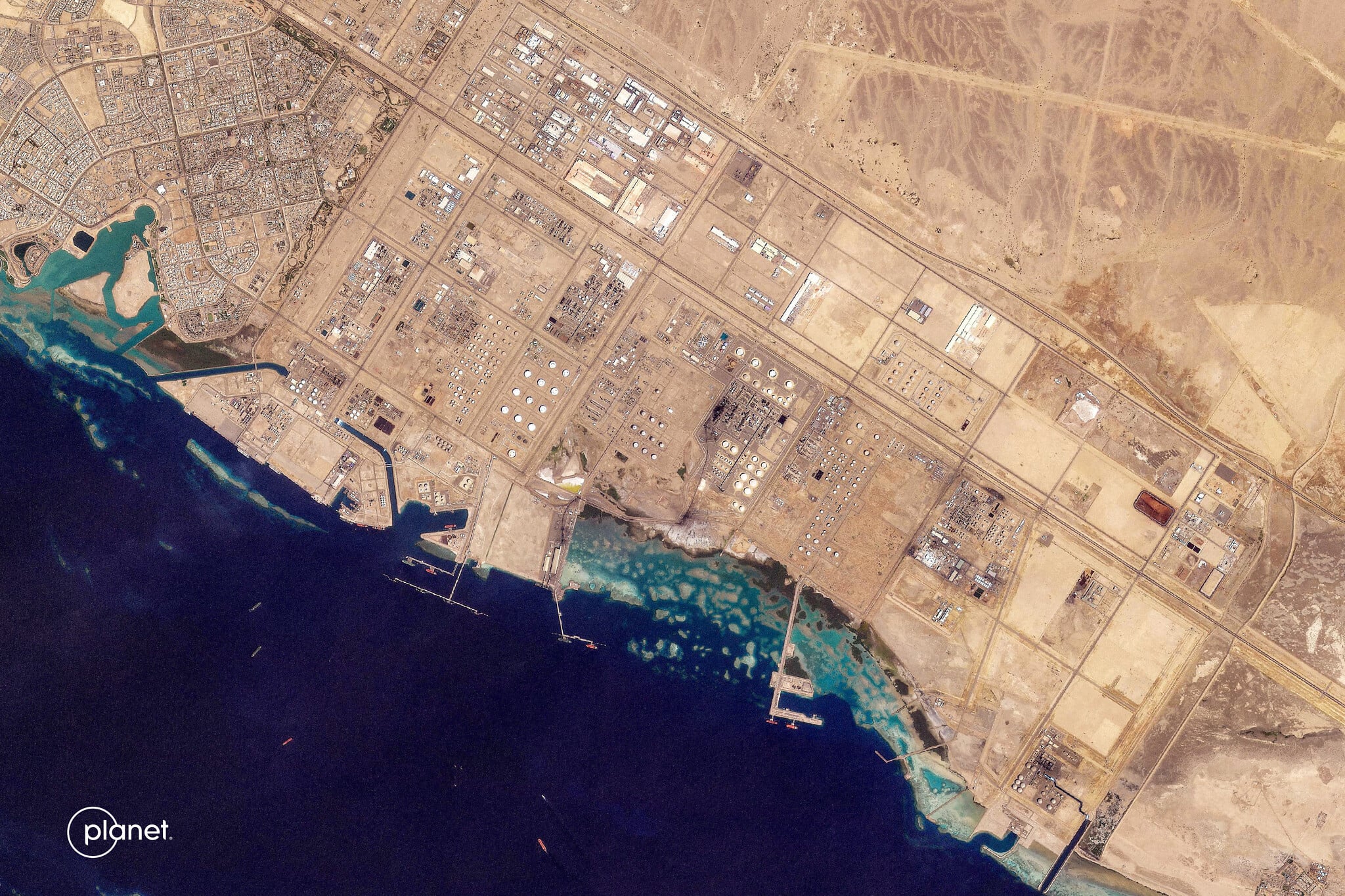
After that, as much as 4 percent of global oil supply could be jeopardized, on top of the millions of barrels a day already lost to the disruption to traffic through the Strait of Hormuz.
Saudi Arabia has not given full details of the extent of damage to its pipeline or said how long it will remain offline. Sources who spoke to Reuters have given conflicting estimates for the time needed to fix it, ranging from days to weeks. Satellite images have shown huge columns of smoke from locations along the pipeline.
The recent uptick in violence tied to the war that the United States and Israel launched six months ago follows a quiet August in which flows of Middle East oil had trickled back up.
In an interview with London-based pan-Arab news outlet Al-Arabi Al-Jadeed, Iran’s Foreign Minister Abbas Araghchi said that despite any agreement with Oman, Iran would not reopen the strait until the United States satisfies Tehran’s demands.
The US has so far failed to achieve the objectives President Donald Trump set out when he launched “Operation Epic Fury” in February: to end Iran’s nuclear program, prevent it from being able to attack its neighbors, and create conditions for its people to topple their rulers.
On a weekend trip to Ireland that included attending the Irish Open golf tournament, Trump reiterated that he still expected the Iran war to end this year, possibly just after US midterm elections in November, and then the price of gasoline would “drop like a rock.”
Trump also said he didn’t care about the proposed meeting between Iran and the Gulf states to discuss the Strait of Hormuz.
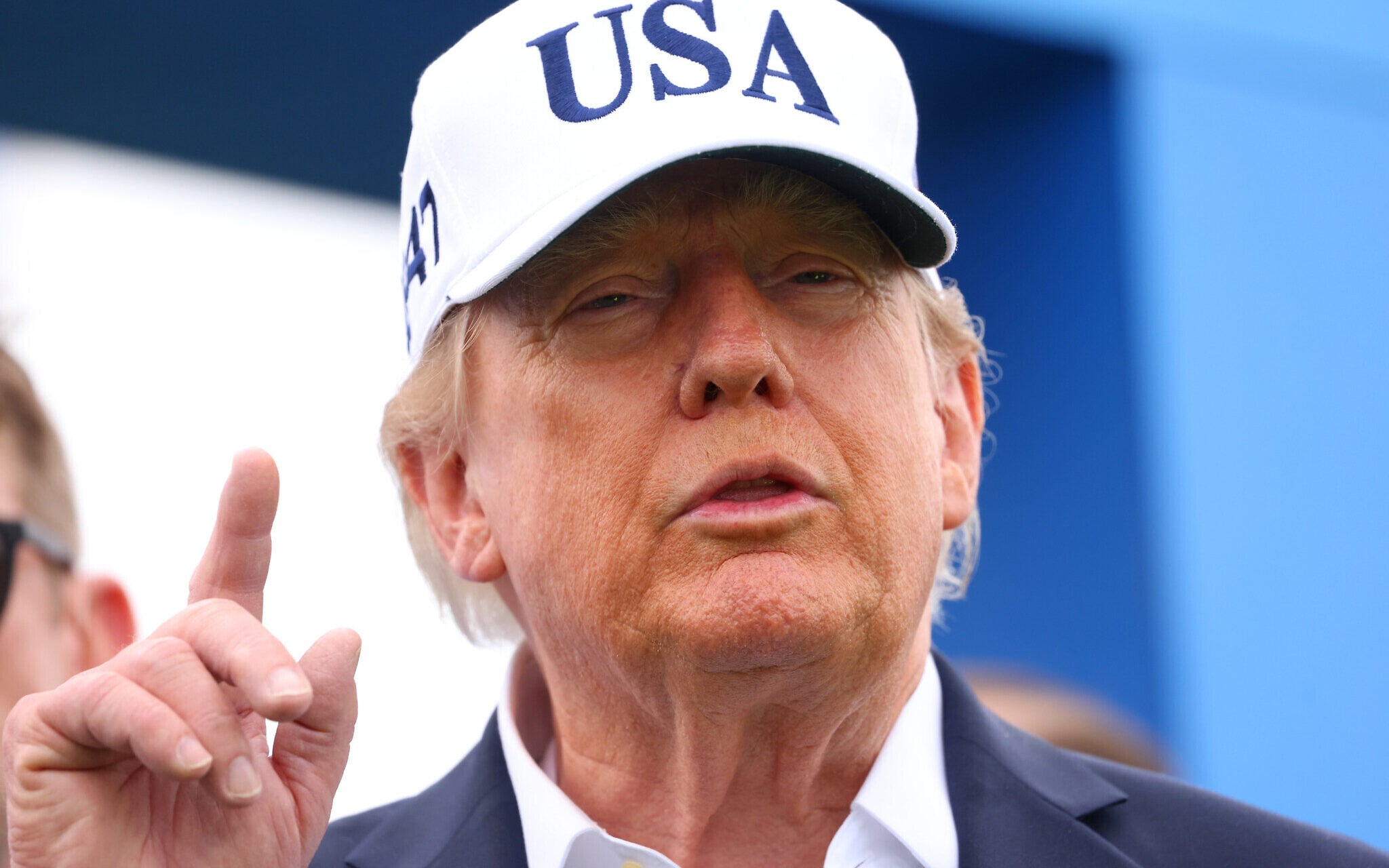
“I don’t care. That’s up to them,” the US leader told reporters during a visit to Ireland when asked about Monday’s planned meeting in Oman, before it was pushed off.
“I will tell you this: Iran wants to make a deal so bad. They are calling constantly. They want to make a deal. They’ve got to make the right deal. I’m not going to make a deal that’s no good,” he added.
Houthi attacks continue
In Saudi Arabia, state media released video of damage to homes and a mosque from the latest purported cross-border attack by Yemen’s Iran-aligned Houthi rebels in Jazan province in the south. The Houthis claimed separately to have struck a Saudi military base in a neighboring province following their capture of Perim Island in the Bab el-Mandeb, the “Gate of Tears” strait that controls the mouth of the Red Sea.
Early Monday, the Saudi Civil Defense issued alerts for potential danger in four southern cities — Najran, Khamis Mushait, Jazan and Abha — before sending an all-clear.
The Houthi advance along the Red Sea coast is part of the biggest eruption of fighting in Yemen in years.
Their advance and their attacks on Saudi Arabia pose a new dilemma for Washington, which wants to support its Saudi allies and protect shipping but is wary of joining war on another front. The Houthi attacks have also left Gulf states with a difficult choice: accept growing economic pain or engage with Iran.
The United States bombed the Houthis for two months in 2025, but Trump halted that campaign after announcing the group had lifted a threat to attack Red Sea shipping.
Three sources told Reuters that Saudi Arabia’s de facto leader, Crown Prince Mohammed bin Salman, phoned Trump on Thursday asking for military aid to fight the Houthis, but was offered only intelligence support for now.
Trump acknowledged on Saturday that he had spoken to the crown prince, and said the Houthis had also phoned the US administration, asking Washington to keep out of the Yemen war.






The Times of Israel Community.