

Bush Sr. slams Cheney and Rumsfeld, ‘iron-ass’ hawks who harmed US
In new biography, former president launches scathing attack on key officials in his son’s administration
 Add ToI as a Preferred Source on Google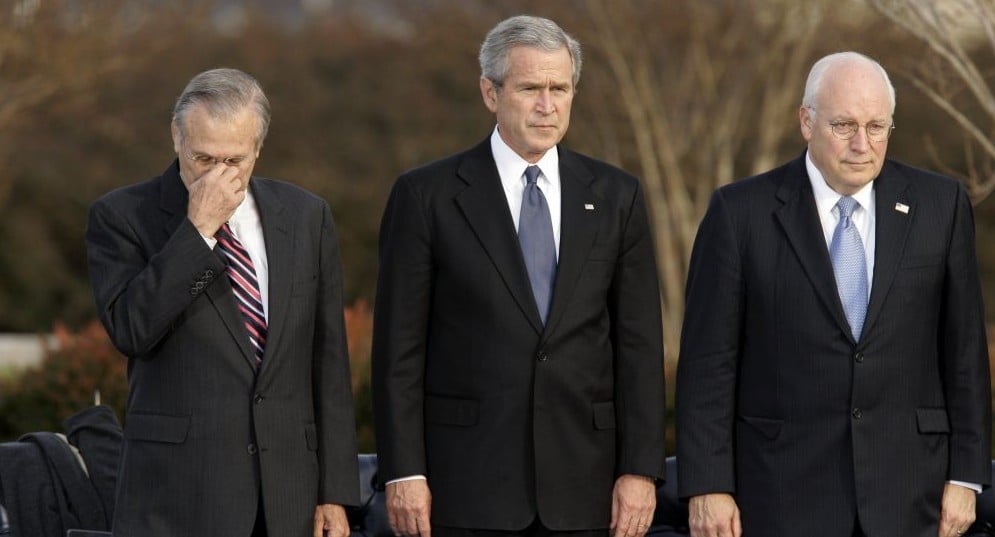
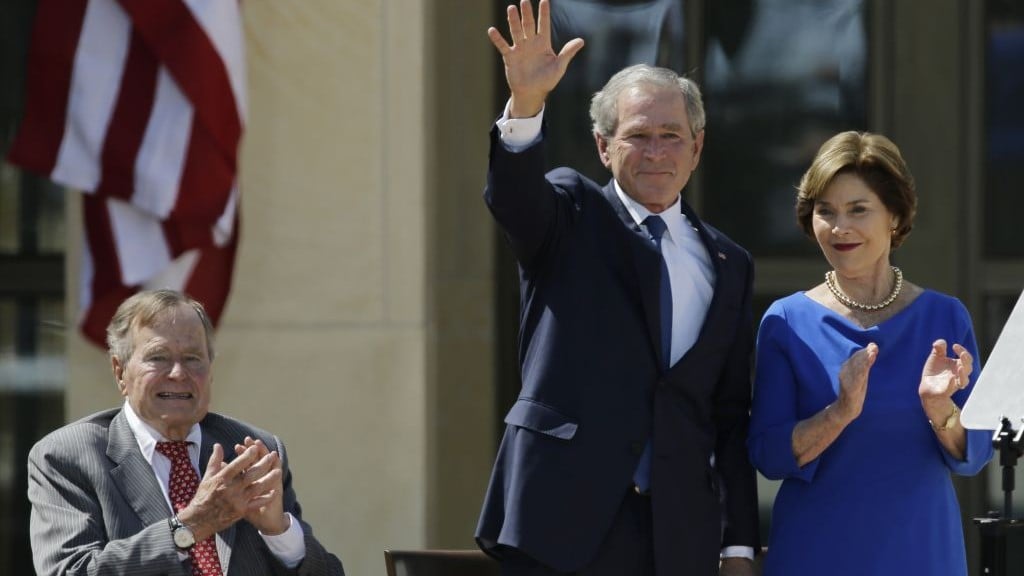
Former US president George H.W. Bush is publicly criticizing for the first time key members of his son’s administration.
A biography of the nation’s 41st president to be published next week contains his sharply critical assessments of former Vice President Dick Cheney and Defense Secretary Donald Rumsfeld, The New York Times reported Wednesday.
In interviews with biographer Jon Meacham, Bush, now 91, said that Cheney acted too independently and asserted too much “hard-line” influence within George W. Bush’s administration, especially after the September 11 attacks. He had even harsher words for Rumsfeld, saying he “served the president badly.”
The book, “Destiny and Power: The American Odyssey of George Herbert Walker Bush,” also contains the elder Bush’s ruminations about his son, whom he praised but also called responsible for empowering Cheney and Rumsfeld.
Of Cheney, who was a member of the elder Bush’s cabinet, Bush said, “He just became very hard-line (after 9/11) and very different from the Dick Cheney I knew and worked with.”
Bush said he thinks the September 11 attacks changed the vice president, making him more hawkish about the use of US military force abroad.
“The reaction (to 9/11), what to do about the Middle East. Just iron-ass. His seeming knuckling under to the real hard-charging guys who want to fight about everything, use force to get our way in the Middle East.”
Talking about Rumsfeld, the elder Bush used stronger, more personal criticism, the newspaper reported.
“I think he served the president badly. I don’t like what he did, and I think it hurt the president having his iron-ass view of everything,” Bush said.
He described Rumsfeld as “an arrogant fellow,” and wrote: “I’ve never been that close to him anyway. There’s a lack of humility, a lack of seeing what the other guy thinks. He’s more kick-ass and take names, take numbers. I think he paid a price for that.”
The elder Bush did not suggest in the book that he disagreed with his son about the invasion of Iraq.
Iraqi dictator Saddam Hussein “is gone, and with him went a lot of brutality and nastiness and awfulness,” Bush said.
He said he worried that the younger Bush used rhetoric that was at times too strong, citing as an example the 43rd president’s 2002 State of the Union address, during which he described an “axis of evil.”
“You go back to the ‘axis of evil’ and these things and I think that might be historically proved to be not benefiting anything,” he said.



The Times of Israel Community.