

But is it good for the Jews?
With Iran talks extended, Chuck Hagel pink-slipped and the Jewish state bill making waves at home and abroad, the press is less concerned with news value than Jews value
 Add ToI as a Preferred Source on Google
Joshua Davidovich is The Times of Israel's Deputy Editor
In case you thought everybody and their mother had already weighed in on the controversial “Jewish state” bill supposed to be making its way through the Knesset, Washington decided to remind Israel Monday that it also had an opinion: Don’t do it.
With several America-centric stories already making top news, like the extension of talks with Iran and the booting of Defense Secretary Chuck Hagel, the entrance of America into the nation-state fray turns the legislative flavor of the week into one big newsy clusterjumble of a stew in Tuesday’s papers.
Yedioth for instance, leads off on Page 1 with the headline “The US against the nationality bill,” but readers looking for some exegesis would need to gambol past news of Chuck Hagel, past the Iran talks extensions, all the way to the last paragraph of a story on Page 6 which laconically records the US State Department quote.
Haaretz also leads off its paper with a headline heralding the US’s opposition, but its story on the matter is almost exclusively concerned with coalition bickering around the legislation, including a decision to push off a Knesset vote on the measure by a week.
And Israel Hayom, which leads off with the vote’s extension, somehow connects the whole mess to an attack on two yeshiva students in the Old City. The tabloid is the only paper to give any more than cursory coverage to the American statement, though it devotes much of its real estate to the long, rambling sarcastic response of wily coalition head Ze’ev Elkin.
“I thank our allies in the US State Department, who exactly in these days found time to get away from the business of stopping Iran’s nuclear program, from fighting the Islamic extremists, to devote attention to the most ‘acute’ problem in the Middle East and the world: to teach the Israeli public a bit about democracy,” he is quoted saying.
Elkin might have words for former defense minister Moshe Arens as well, who comes out against the “Jewish state” bill in a Haaretz op-ed, calling it inflammatory and unnecessary: “A quarter of the population of Israel isn’t Jewish, and it seems the most important mission of the state today is to integrate them into the society and economy, a mission that means giving them the feeling that this is their home, that they are equal citizens, who enjoy access to all the opportunities the country provides. If they feel alienated, rejected or discriminated against, it will cause damage not only to them, but also to the state’s Jewish citizens.”
Israeli officials may not be happy about Washington sticking its nose in internal business, but some are more than happy to jab their sniffer into the decision to boot Hagel, which is covered through the lens of “is it good for the Jews.” The answer, according to Yedioth’s Alex Fishman, is yes, seeing as top pick Michele Flournoy is best buds with Israel’s flyboys.
“The Israeli defense establishment was not surprised by Hagel’s departure. … But not to worry. Flournoy is very good friends with the heads of the [IDF] planning division, generals Nimrod Shefer and Amir Eshel (today air force head) and Military Intelligence head Amos Gilad is close to her work. When Flournoy came two years ago for the Herzliya Conference with her kids, she was given a royal and personal welcome by her friends in the air force.”
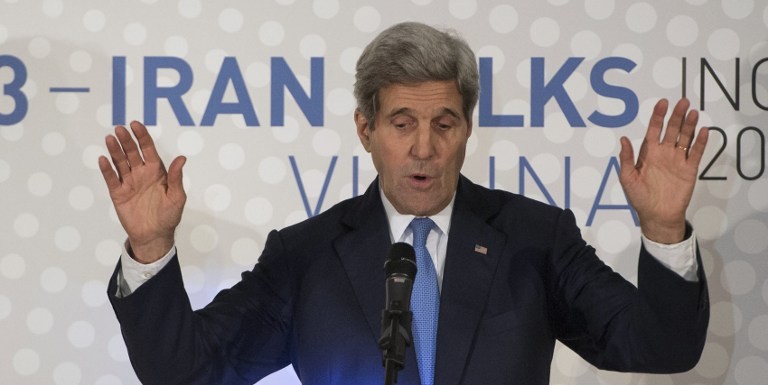
In Vienna, Haaretz reports on the extension of nuclear talks, writing that Israel had pushed for the talks to be extended, which Prime Minister Benjamin Netanyahu confirmed at a Likud faction meeting Monday. Jerusalem’s lobbying for the world powers to keep talking rather than rush into a “bad deal” paid off, according to the paper, which points to a statement from German Foreign Minister Frank-Walter Steinmeier that “we bear responsibility not just for us six but for many states in the world … that have legitimate security concerns about the development of the Iranian nuclear program.”
In Israel Hayom, Boaz Bismuth has a rare word of half-praise for the international community for agreeing to extend talks rather than sign a deal:
“Jerusalem feared Vienna would bring something evil and were happily surprised (no bad deal). The world may be naïve, but not so much. Iran needs a lot more than a smiling president to erase years of secrets and lies.”
Haaretz’s Zvi Bar’el commentates that the sides are likely close to an agreement already, but are still working out how to sell that deal back home and in allied capitals: “The administration doesn’t only have to appease Congress. Israel is an ally whose positions must be taken into account – if not for diplomatic reasons, then for domestic political reasons. Saudi Arabia, an even more important ally in the region, is concerned not just with the possibility that Iran will have nuclear weapons, but that an agreement with Iran – and a change in the way the United States relates to it – will shake up the strategic status quo in which Saudi Arabia has primacy.”
In Yedioth, though, Eitan Haber gives a much more pessimistic take on the talks, writing that they are not about whether Iran will be able to build a nuclear weapon, but only about how long it will take it to do so.
“Big and strong America, which found itself internationally flaccid during the presidency of Barack Obama, is liable to cheaply buy the deception. It is liable in the next round to make big concessions to the Iranians, who will continue working toward their nuclear dream,” he writes. “The sanctions indeed proved themselves, but the US is sick of being the world’s cop. In this case, not a small amount of the burden will fall on Israel and other countries in the region to hope to hurt the Iranian regime and its terrorist leaders.”







The Times of Israel Community.