

Confusion during Gaza op shows risk Netanyahu takes by not designating deputy
With the PM abroad in the middle of a major national security crisis, the Prime Minister’s Office couldn’t confirm who was in charge

 Add ToI as a Preferred Source on Google
Raoul Wootliff is a former Times of Israel political correspondent and Daily Briefing podcast producer.
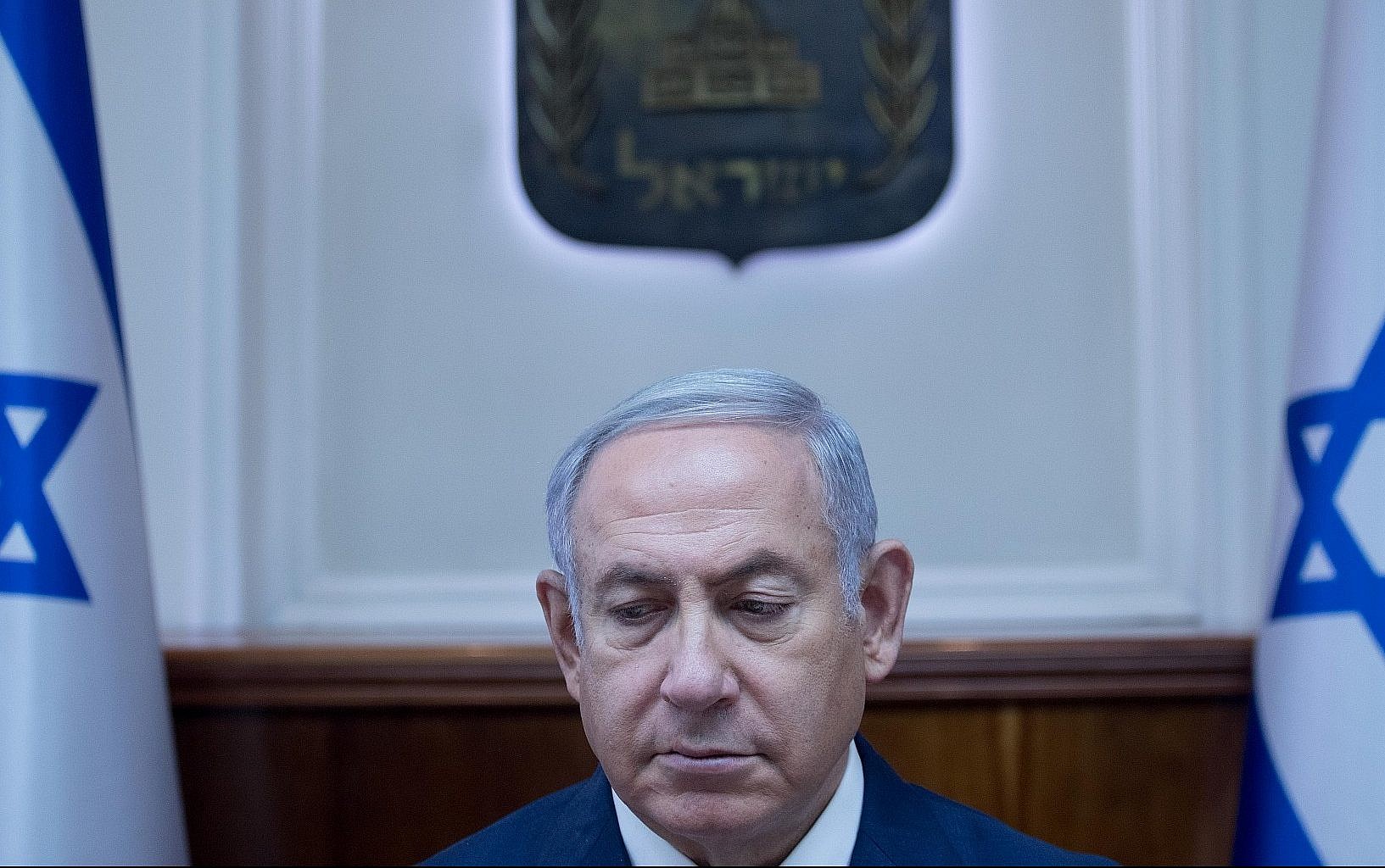
Hours before Sunday night’s clash in Gaza, in which a senior IDF special forces officer and seven Palestinian gunmen were killed, Channel 10 news reported that Prime Minister Benjamin Netanyahu had recently told a former senior official that he would be willing to step down — if only there were a worthy successor.
“I am willing to leave my job as prime minister tomorrow, only I don’t have anyone to whom to entrust the keys,” the prime minister was quoted as telling the unnamed senior official, referring to calls that he resign over a series of corruption scandals in which he is embroiled.
When initial details of the Gaza violence began to emerge late Sunday, with the prime minister out of the country, Netanyahu’s reported distrust of potential successors translated into questions and confusion over who was in charge of managing the developing security situation.
“I shudder at thought that on the night when it was known in advance that such an operation was about to take place, the person in charge of the country, by the personal decision of the prime minister, was [Culture Minister] Miri Regev,” wrote former prime minister Ehud Barak on Twitter Monday morning.
“One has to wonder about Netanyahu’s judgment,” he charged.
Regev, who has frequently stirred controversy in recent months by her attempts to put her stamp on Israel’s culture scene, had indeed been appointed acting deputy prime minister for the duration of Netanyahu’s trip abroad, tasked with calling and chairing cabinet meetings in case of an emergency.
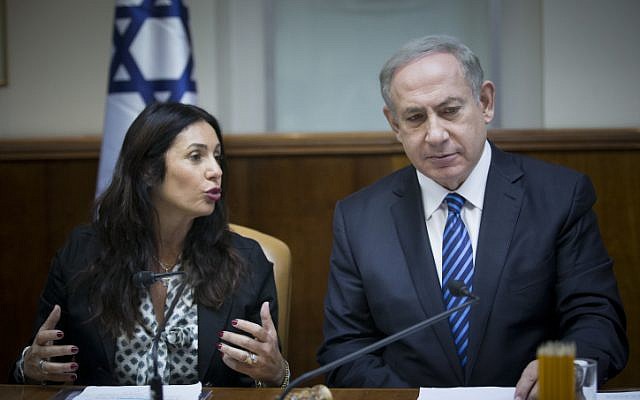
But she is not a member of the security cabinet and is therefore unable to call a meeting of the high-level forum, which is responsible for launching major military operations, declaring war and managing national security crises.
So when the IDF special forces unit came under fire and at least seven Palestinians were killed in the firefight and airstrikes that followed the Israeli raid, it was Defense Minister Avigdor Liberman, who had been specifically designated by Netanyahu before he left as responsible for convening the security cabinet, who instead took charge.
Liberman’s office put out a series of statements on his operational consultations with IDF generals and the various developments of the night. Regev remained quiet.
The apparent polycephalous command even led to confusion within the Prime Minister’s Office, with Netanyahu’s spokesman unable to confirm for over half an hour who had been appointed as designated deputy and why Liberman was leading the security cabinet.
The bewildering situation, which came at a time when the Gaza clashes seemed to threaten to escalate into a full-blown war, is, however, not unprecedented under the current prime minister.

Since coming to power in 2009, Netanyahu has never named a permanent designated deputy who would automatically take over leadership of the country if the prime minister were unexpectedly indisposed or removed from office by impeachment.
Instead, each time he travels abroad or undergoes a medical procedure under sedation, Netanyahu names a different senior Likud minister as his temporary stand-in.
According to the quasi-constitutional Basic Law: The Government, if an emergency is called while the prime minister is incapacitated and he has failed to appoint a permanent or temporary deputy, the cabinet secretary would convene a cabinet meeting and government ministers would vote on who should take over.
When Ariel Sharon suffered a stroke in 2006, Ehud Olmert assumed the prime minister’s authority immediately, having been appointed as a potential replacement three years earlier.
If the prime minister is still incapacitated after 100 days, he will be “deemed permanently unable to exercise his office,” states paragraph 16(b) of Basic Law: The Government. The temporary replacement would then automatically take the permanent role of prime minister.
Since the position of designated replacement was first instituted into law (as part of the 1984 rotation agreement for Labor’s Shimon Peres and Likud’s Yitzhak Shamir to each serve two years as prime minister), not every premier has filled it.
When Yitzhak Rabin was assassinated in 1995, there was no designated replacement and Shimon Peres only became the interim prime minister after a cabinet vote.
Unlike then, however, Netanyahu’s government has no obvious replacement for its all-powerful head.

In the last two years alone, Tourism Minister Yariv Levin, Transportation Minister Yisrael Katz, Public Security Minister Gilad Erdan, Energy Minister Yuval Steinitz, Jerusalem Minister Zeev Elkin and Culture Minister Miri Regev have each been given the prized role, for various short periods of time.
In addition to refraining from naming a deputy, Netanyahu has also forgone his former practice of filling the honorary positions of deputy prime minister and vice prime minister.
The deputy and vice PM have no official executive power, and are no more entitled to replace an incapacitated prime minister than other cabinet members, but Netanyahu bestowed the title upon a slew of ministers — both during his first term from 1996 to 1999 and between 2009 and 2015.
Perhaps due to the fear of creating a potential challenger within his own party, Netanyahu has prevented the emergence of any heir apparent by constantly rotating the position of temporary prime minister and avoiding the appearance of any favorite, even among his closest allies.
On Sunday night, with both Regev and Liberman potentially at the helm — or neither of them — Netanyahu found another solution to the problem by cutting short his time in Paris and flying back to Israel immediately, remaining the one and only prime minister at home and abroad.









The Times of Israel Community.