

Cornell president rejects students’ anti-Israel resolutions, citing ‘political bias’
Michael Kotlikoff says measures demanding halt to cooperation with Technion and condemning Tzipi Livni’s campus visit ‘imperil our academic principles’
 Add ToI as a Preferred Source on Google
Luke Tress is The Times of Israel's New York correspondent.
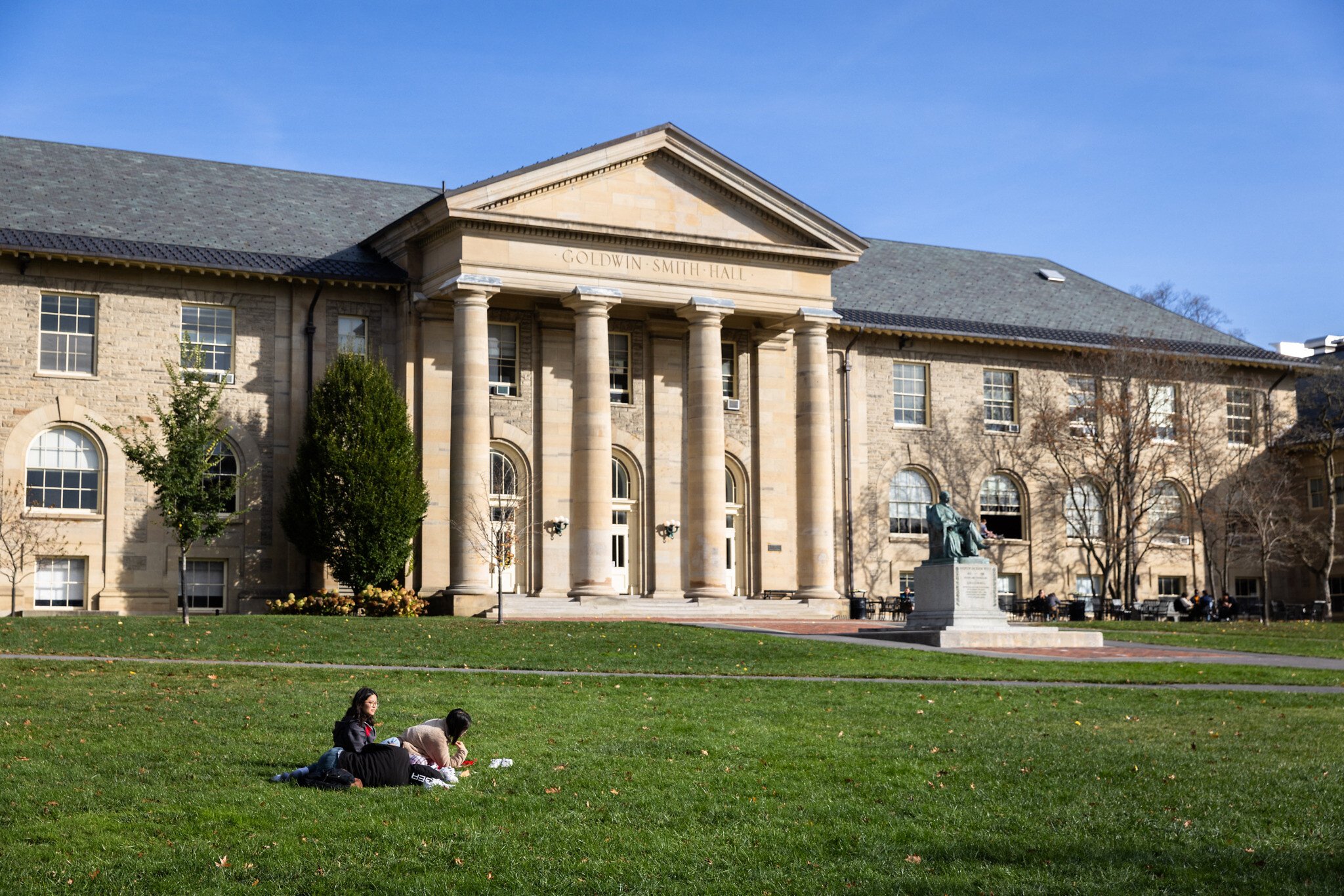
Cornell University’s president forcefully rejected two anti-Israel resolutions from the student government, one of the latest developments on the US campus battlefields.
Last week, Cornell’s Student Assembly voted to cut ties with Israel’s Technion University and condemned the university for hosting the center-left Israeli politician Tzipi Livni.
The Student Assembly represents Cornell’s undergraduate student body to the university administration and is meant to improve student life on campus through issues like transportation. Resolutions approved by the assembly are brought to the university president, who can accept or reject the measures.
Cornell president Michael Kotlikoff wrote Wednesday to the head of the student assembly that the resolution to cut off the Technion “fundamentally conflicts with Cornell’s principles of academic collaboration and our core commitment to academic freedom.”
The resolution had called on Cornell to “terminate its institutional partnership” with the Israeli university, one of Israel’s leading institutions of higher education.
The measure cited “serious ethical concerns” and “complicity in genocide,” alleging that Technion’s involvement with the Israeli military violated international law. Israel has not been convicted of genocide in international legal courts.
Cornell operates a campus in New York City in partnership with the Technion and the city, called Cornell Tech.
Kotlikoff said that ending the Cornell-Technion collaboration for political purposes “would not only hinder our research, teaching and public engagement; it would imperil our academic principles,” such as academic freedom, institutional excellence and a commitment to public trust.
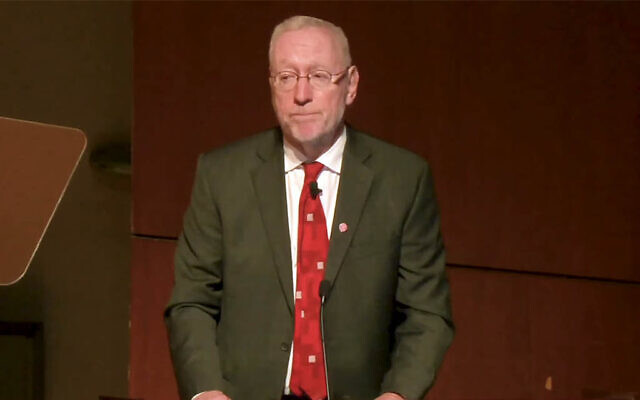
He added that the resolution falsely stated that Cornell could operate the New York City campus without the Technion. Cornell Tech is a three-way partnership between the two universities and New York City, and none can claim full control of the campus, Kotlikoff said in a statement a Cornell spokesperson sent to The Times of Israel.
New York City Mayor Zohran Mamdani, an anti-Zionist who supports a boycott against Israel, has also floated a boycott against Technion’s involvement with Cornell Tech.
Kotlikoff said he was “deeply troubled” that the resolution singled out the Technion, pointing out that Cornell partners with 159 institutions in 59 locations, including countries with governments accused of human rights violations.
“None of these publicly available facts are mentioned in the resolution; only our partnership with an Israeli institution is targeted for erasure. The political bias evident in this selective approach is deeply disturbing,” he wrote. “I reject it fully and forcefully.”
The second assembly resolution stood out because Livni is a critic of Prime Minister Benjamin Netanyahu, a supporter of a two-state solution who at one point headed peace talks with the Palestinians, and was at Cornell to speak at an event called “Pathways to Peace.”

Kotlikoff said the anti-Livni resolution “unacceptably seeks to curtail freedom of speech on Cornell’s campus,” and that the event with Livni “fell firmly within the bounds of protected speech.”
“Exposure to controversial ideas and individuals does not ‘create a hostile and coercive academic environment,’” he said, quoting from the resolution, which, he said, “includes not only logical fallacies and unsubstantiated assertions, but also clear indications of political bias.”
The attempt to set bounds for acceptable speech and the idea that controversial speech endangers students “reflect a fundamental misunderstanding of both the purpose of a university education and the role of free speech in a democracy,” he said.
The Cornell assembly’s resolutions are part of a broader, ongoing assault by activist US university students and faculty against any connections to Israel. Jewish students and federal authorities have said the activism veers into discrimination against Jews.

Student unions and governing bodies have played a role in stigmatizing Israel, as do unions representing other industries that are nominally dedicated to improving worker conditions.
Columbia University’s administration is feuding with its graduate student union over the union’s anti-Israel demands.
Late last year, Cornell’s graduate student union adopted a boycott resolution targeting Israel that supported Palestinian resistance “by any means necessary,” a slogan seen as endorsing violence. The university distanced itself from the union and condemned antisemitism.
Cornell also agreed to pay $30 million, invest another $30 million in agricultural research, and comply with federal civil rights laws to restore federal funding and end investigations into the school.
On Thursday, Cornell said some university employees had received a survey from the federal Equal Employment Opportunity Commission as “part of an ongoing bias inquiry,” indicating that the federal investigation was ongoing.
The Foundation for Individual Rights and Expression (FIRE), a free speech group, placed Cornell at 227 out of 257 US universities in its free speech rankings.
In an example of collaboration between Cornell and the Technion, scientists said in a study this week that they had used an ancient Middle Eastern method of cooling down a room to develop an eco-friendly method for making quick, low-cost hollow ceramic pipes that cool their surroundings via the evaporation of water, without polluting or using a power grid.









The Times of Israel Community.