Cyprus cuts use of chloroquine, which it bought in joint consignment with Israel
Health ministry advises doctors to curtail use of malaria medications amid renewed concerns of side-effects; Nicosia and Jerusalem had bought 5 tons of drug from India
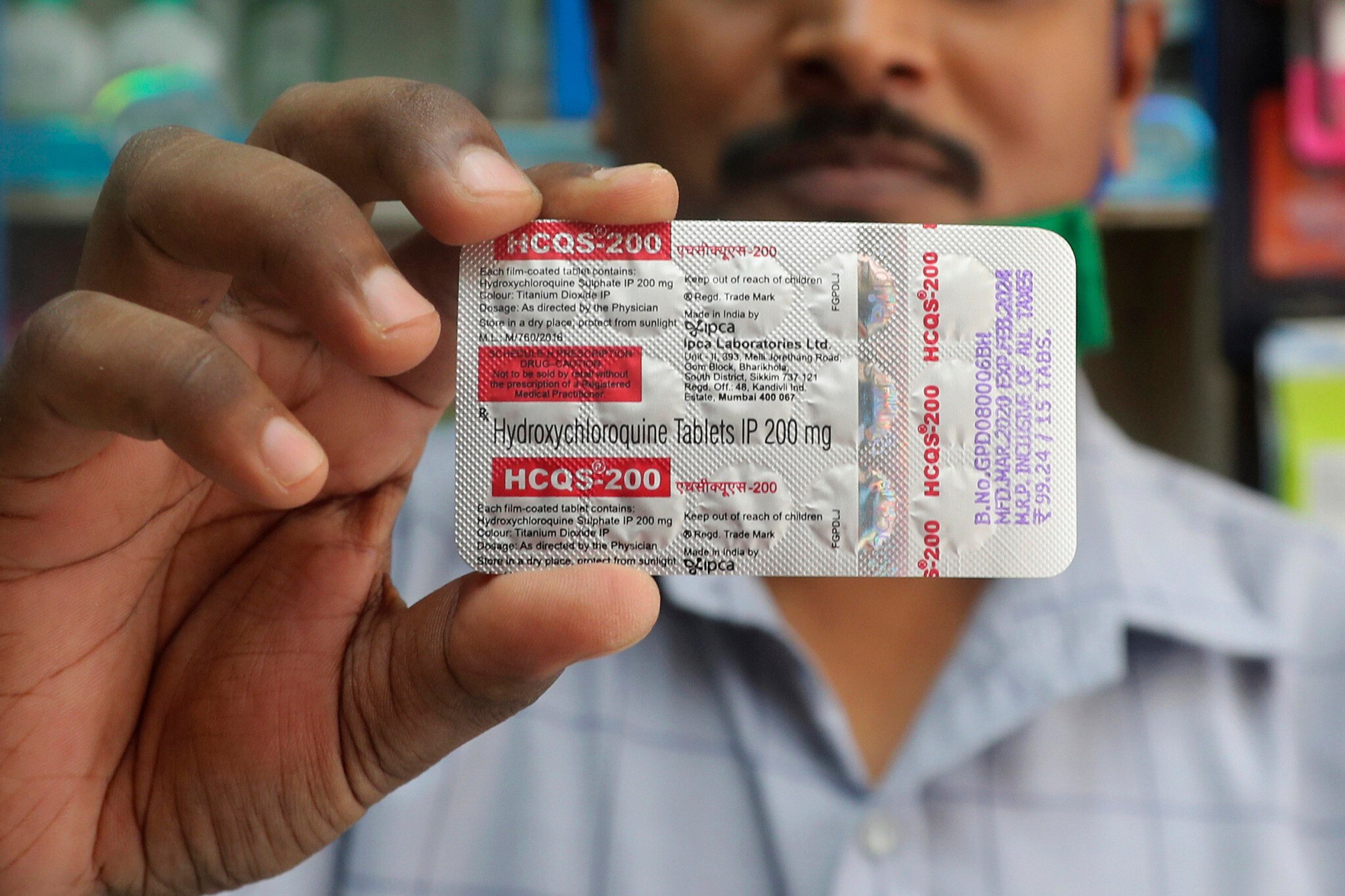
In this on May 19, 2020 file photo, a chemist holds a pack of hydroxychloroquine tablets in Mumbai, India. (AP/Rafiq Maqbool)
NICOSIA, Cyprus — Cyprus’ Health Ministry on Thursday advised doctors to curtail the use of chloroquine and hydroxychloroquine on some COVID-19 patients amid renewed concerns that the drugs could trigger heart problems and put lives at risk.
The ministry urged doctors on Thursday to be “particularly vigilant” and to even stop administering the two substances to COVID-19 patients with pre-existing heart conditions.
The ministry said an advisory body of medical experts is re-evaluating the use of the drugs and may revise its directives.
The announcement came after the World Health Organization said it would temporarily drop hydroxychloroquine from its global study into experimental COVID-19 treatments.
Medical officials collect samples from school children to test for the coronavirus at Engomi B primary school in capital Nicosia, Cyprus, May 21, 2020 (AP Photo/Petros Karadjias)
A paper published last week in the Lancet showed people taking hydroxychloroquine were at higher risk of death and heart problems than those that were not.
Get The Times of Israel's Daily Editionby email and never miss our top stories
Cyprus’ health minister said last month that the country was among the first nations to approve use of the anti-malaria drug to treat COVID-19 patients.
Cypriot authorities procured enough chloroquine to treat as many as 240,000 people — roughly a quarter of the island nation’s population — if they became infected.
It was part of a five-ton consignment of the drug that Cyprus and Israel jointly purchased from India.
Advertisement
Help us report truthfully on social media
As a multimedia journalist, my job is to take the quality, fact-based journalism produced by The Times of Israel newsroom and make it accessible across every platform — from Instagram posts to podcasts to short-form videos.
This is how many, especially young people, consume news these days. But misinformation is rampant on social media. Our team at ToI produces accurate, responsible short-form reporting on Israel and the Jewish world.
If you believe in the importance of factual social media journalism, please consider joining our reader support group, The Times of Israel Community. Your financial support is essential to sustain responsible multimedia reporting.
We’re really pleased that you’ve read X Times of Israel articles in the past month.
That’s why we started the Times of Israel - to provide discerning readers like you with must-read coverage of Israel and the Jewish world.
So now we have a request. Unlike other news outlets, we haven’t put up a paywall. But as the journalism we do is costly, we invite readers for whom The Times of Israel has become important to help support our work by joining The Times of Israel Community.
For as little as $6 a month you can help support our quality journalism while enjoying The Times of Israel AD-FREE, as well as accessing exclusive content available only to Times of Israel Community members.
Thank you, David Horovitz, Founding Editor of The Times of Israel


 Add ToI as a Preferred Source on Google