

Deaths in the final minutes of WWI highlighted the folly of war
Canadian Pvt. George Price was killed by a German sniper in Mons, Belgium, just two minutes before the ceasefire, encapsulating the senselessness of so much of the killing
 Add ToI as a Preferred Source on Google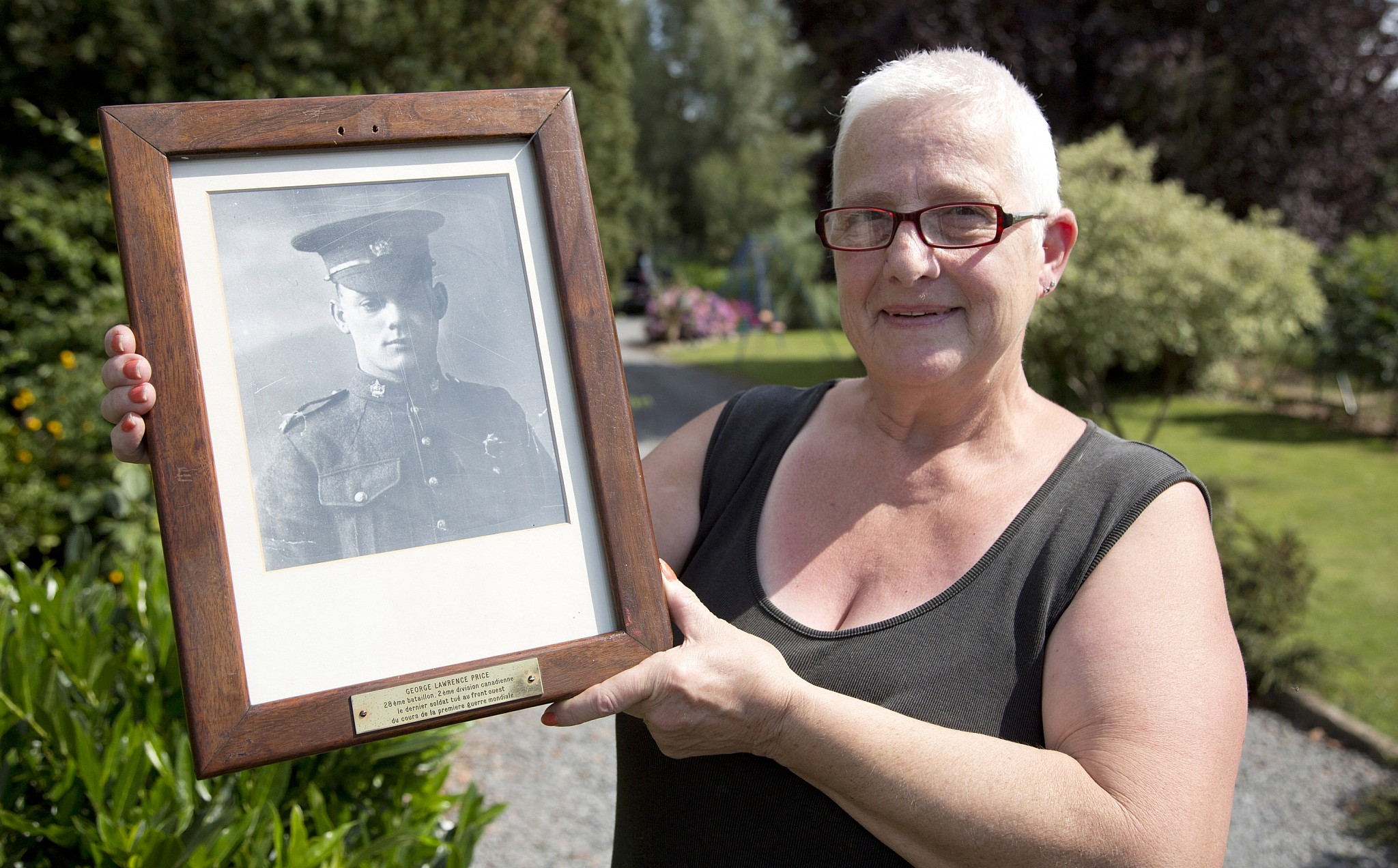
SAINT-SYMPHORIEN, Belgium — With the clock ticking down to mere seconds in a four-year conflict that had already killed millions, the folly of death and destruction in World War I became ever more incomprehensible. Yet, even then it could not be stopped.
With both sides in the war already knowing for hours a ceasefire would start at 11 a.m. on the 11th day of the 11th month in 1918, hundreds of good men kept falling that morning.
Fear the other side would not abide by the conditions of the armistice, a sheer hatred produced by four years of unprecedented slaughter, blind ambition of commanders who craved that last victory, the inane joy of killing, reason enough not to let humanity shine through a few minutes, hours early. Put together they trumped the lives of soldiers, many of whom were convinced they were on the brink of peace and survival.
With two minutes to go, Canadian Private George Lawrence Price was shot by a German sniper close to Mons in southern Belgium. Another life shattered in its prime at 25.
Some 250 kilometers (150 miles) away on the Western Front in France, an American soldier Henry Gunther, for reasons still hard to explain a century later, stormed a German post with only one minute left before the armistice and was mowed down by machine gun fire. He was 23.
“Gunther’s act is seen as almost a symbol of the futility of the larger war,” said US historian Alec Bennett. “He was the last American. I believe he may have been the last soldier on any side to die in World War I.”
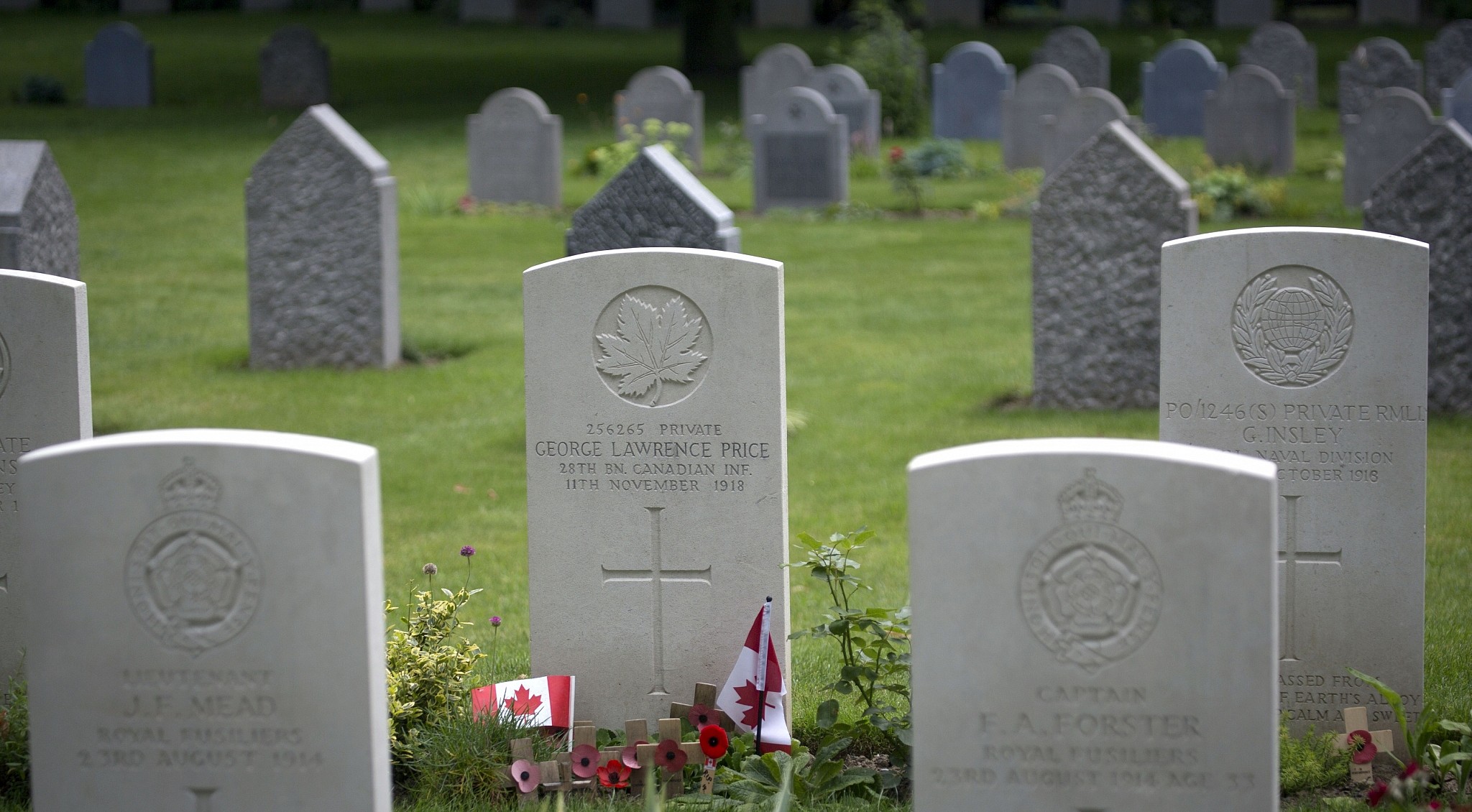
Any soldier who died that morning might well be an equal symbol of futility, and the mark of “Nov. 11, 1918” on any headstone at a World War I cemetery makes it especially poignant.
“It was a matter of minutes,” said Corentin Rousman, a Belgian historian working in Mons, where British empire soldiers had their first battle with the Germans in August 1914, and also their last over four years later, when Price perished.
For Commonwealth commanders it must have been especially sweet to retake the city, bringing the war to a full circle right where they lost their first soldier, English Private John Parr who had stumbled onto the Germans on August 21, 1914.
In between, World War I had claimed some 14 million lives, including 9 million soldiers, sailors and airmen from 28 countries. Early on, Germany came close to a quick victory before the conflict settled into hellish trench warfare. One battle, like the Somme in France could have up to a million casualties. Poison gas came to epitomize the cruel ruthlessness of a war the likes of which history had never seen.
When the old European powers were close to exhaustion in the war of attrition it came to nations like Gunther’s United States and Price’s Canada to make the difference.
Price had been a farm laborer in Saskatchewan when the swirl of history picked him off the land in 1917 as the allies sought ever more manpower to keep the Germans at bay on the Western Front.
The following summer he was part of the allied surge, and despite being gassed, he took city upon village upon city — right up to the morning of November 11.
News of the impending ceasefire was already known, still he decided to go check out some homes along the historic network of industrial canals while in the center of Mons citizens already broke out the wine and whisky they had hidden for years to celebrate the liberation of their ancient medieval city.
“Then it is unclear what happens,” said Rousman. Either Price runs out of a home to help someone or he thinks the war is over. What happened instead was that a shot rang out across a canal and Price dropped.
“There no longer was any massive artillery around. It really was one man, here and there, who was driven by vengeance, by a need to kill one last time,” Rousman said.
And minutes not only counted for the dead but also for the killers.
“There are rules in war,” Rousman said. “There is always the possibility to kill two minutes before a ceasefire. Two minutes after, the German would have had to stand before a judge. That’s the difference.”
The soldier who shot Price was never identified, swallowed up in a German retreat.
In senseless death, Price made the war come full circle at the level of soldiers.
With leaves falling on Saint Symphorien cemetery just outside Mons, Price, the last Commonwealth victim killed in the war, lies within a stone’s throw from Parr, the first one.
“He is not forgotten,” said Rousman. “It’s a soldier whose tomb is often draped in flowers, notes and Canadian flags.”





The Times of Israel Community.