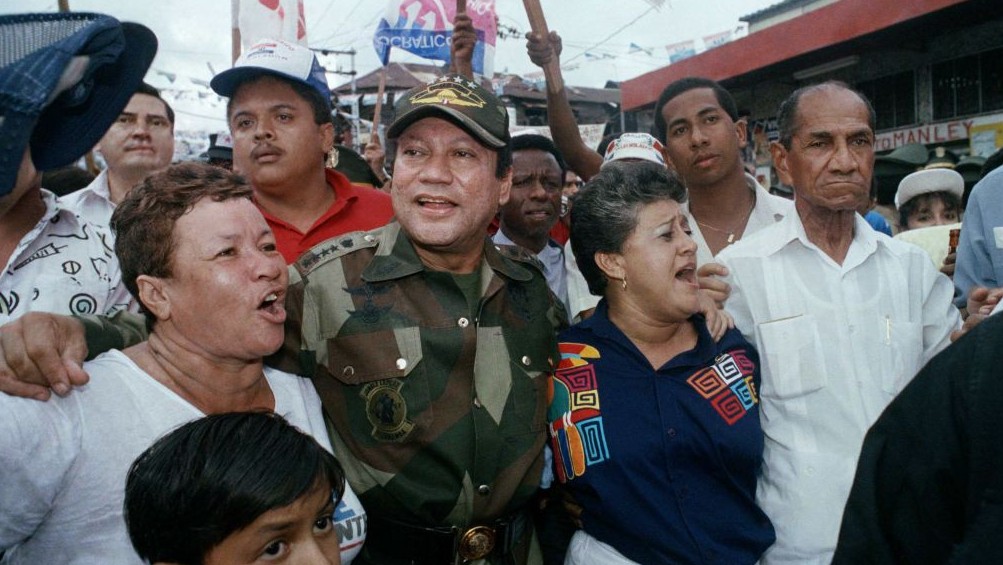
In this May 2, 1989 file photo, Gen. Manuel Antonio Noriega walks with supporters in the Chorrilo neighborhood, where he dedicated a new housing project, in Panama City. (AP/John Hopper, File)
PANAMA CITY (AP) — Former Panamanian dictator Manuel Noriega has died, a source close to his family said. He was 83.
The source was not authorized to be quoted by name. There was no immediate information on the cause of death, which occurred late Monday.
Panamanian President Juan Carlos Varela wrote in his Twitter account that “the death of Manuel A. Noriega closes a chapter in our history.”
The onetime US ally was ousted as Panama’s dictator by an American invasion in 1989.
Noriega later served a 17-year drug sentence in the United States.
Get The Times of Israel's Daily Editionby email and never miss our top stories
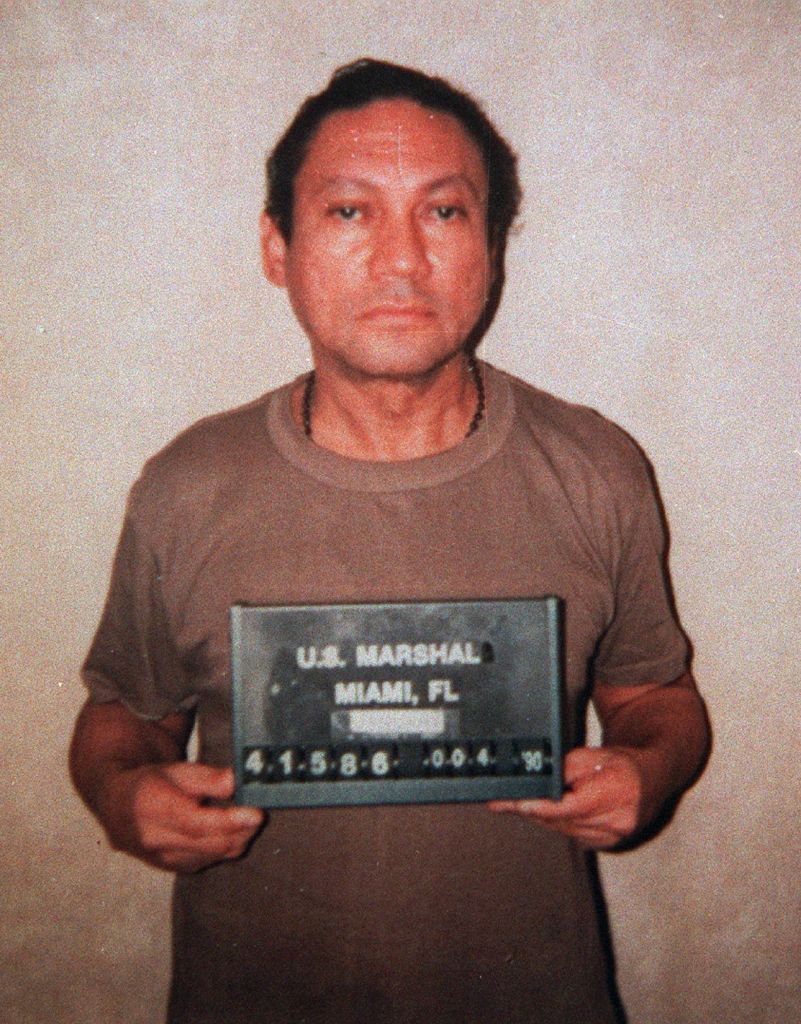
This Jan.1990, file photo shows deposed Panamanian Gen. Manuel Antonio Noriega, who is serving a 40-year sentence in Miami for drug trafficking. (AP, File)
He spent the first two decades after his ouster in US and French jails and the final years of his life in a Panamanian prison for murder of political opponents during his 1983-89 regime.
Noriega accused Washington of a “conspiracy” to keep him behind bars and tied his legal troubles to his refusal to cooperate with a US plan aimed at toppling Nicaragua’s leftist Sandinista government in the 1980s.
In recent years, Noriega had suffered various ailments, including high blood pressure and bronchitis.
Advertisement
In 2016, doctors detected the rapid growth of a benign brain tumor that had first been spotted four years earlier. In January of this year, a court granted him house arrest to prepare for surgery on the tumor.
Noriega is survived by his wife, Felicidad, and daughters Lorena, Thays and Sandra.
Copyright 2017 The Associated Press.
Help us report truthfully on social media
As a multimedia journalist, my job is to take the quality, fact-based journalism produced by The Times of Israel newsroom and make it accessible across every platform — from Instagram posts to podcasts to short-form videos.
This is how many, especially young people, consume news these days. But misinformation is rampant on social media. Our team at ToI produces accurate, responsible short-form reporting on Israel and the Jewish world.
If you believe in the importance of factual social media journalism, please consider joining our reader support group, The Times of Israel Community. Your financial support is essential to sustain responsible multimedia reporting.
We’re really pleased that you’ve read X Times of Israel articles in the past month.
That’s why we started the Times of Israel - to provide discerning readers like you with must-read coverage of Israel and the Jewish world.
So now we have a request. Unlike other news outlets, we haven’t put up a paywall. But as the journalism we do is costly, we invite readers for whom The Times of Israel has become important to help support our work by joining The Times of Israel Community.
For as little as $6 a month you can help support our quality journalism while enjoying The Times of Israel AD-FREE, as well as accessing exclusive content available only to Times of Israel Community members.
Thank you, David Horovitz, Founding Editor of The Times of Israel


 Add ToI as a Preferred Source on Google