

Genocide recognized? Netanyahu’s words stir old wounds in Jerusalem’s Armenian Quarter
As PM breaks precedent on Ottoman-era massacre, community members question his motives, and say his off-the-cuff comments fall short of official government recognition
 Add ToI as a Preferred Source on Google
Nava Freiberg is The Times of Israel's deputy diplomatic correspondent.
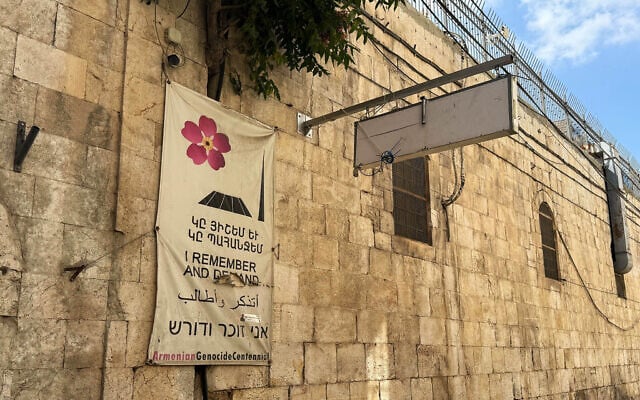
Visitors to Jerusalem’s Old City might notice a worn canvas sign on a wall just outside the Armenian Quarter— a call for recognition of the systematic murder of Armenians, Assyrians, and Greeks by the Ottoman Empire in the early 20th century.
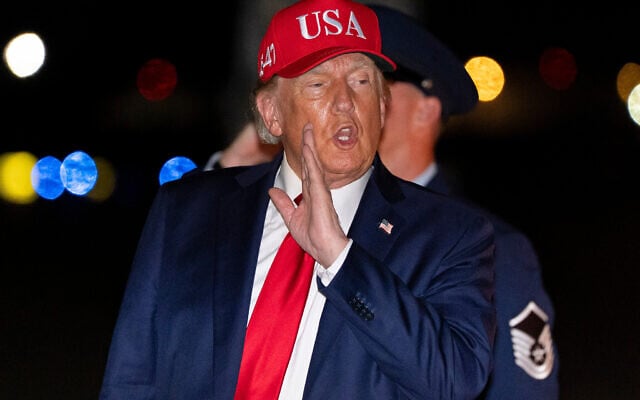
A quiet testament to a cause long unrealized, it took on new weight this week when Prime Minister Benjamin Netanyahu, for the first time, said he recognizes the Armenian genocide.
Asked on a podcast hosted by Patrick Bet-David — whose own family is Armenian-Assyrian Christian from Iran — why Israel doesn’t recognize the genocide, Netanyahu said, “I think we have. I think the Knesset passed a resolution to that effect.”
While no such resolution has passed into law, Bet-David pressed further on why the premier hasn’t personally recognized the genocide.
Netanyahu replied: “I just did. Here you go.”
Though unprecedented, his remarks left the small and historic Armenian community in Jerusalem’s Old City unconvinced.
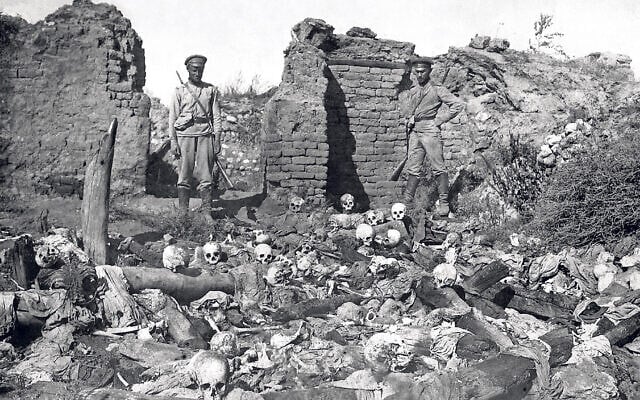
Armenians have long sought international recognition of the 1915–1917 killings by the Ottoman Empire — which left an estimated 1.5 million of their people dead — as genocide. (Estimates vary widely, but roughly 2 million Armenians lived across the Ottoman Empire before the genocide, and some 2.5 million lived elsewhere.) Turkey, the empire’s successor state, fiercely denies that the massacres, imprisonment, and forced deportation of Armenians amounted to genocide.
BREAKING!
Prime Minister @Netanyahu OFFICIALLY recognizes the Armenian, Assyrian & Greek genocide committed by the Ottoman Empire. pic.twitter.com/fLtsr41YRy
— Patrick Bet-David (@patrickbetdavid) August 26, 2025
Speaking to The Times of Israel from various corners of the Old City, Armenians said they are still waiting for formal, unequivocal recognition by Jerusalem — and doubted whether Netanyahu’s words marked real change.
Not enough — and politically convenient
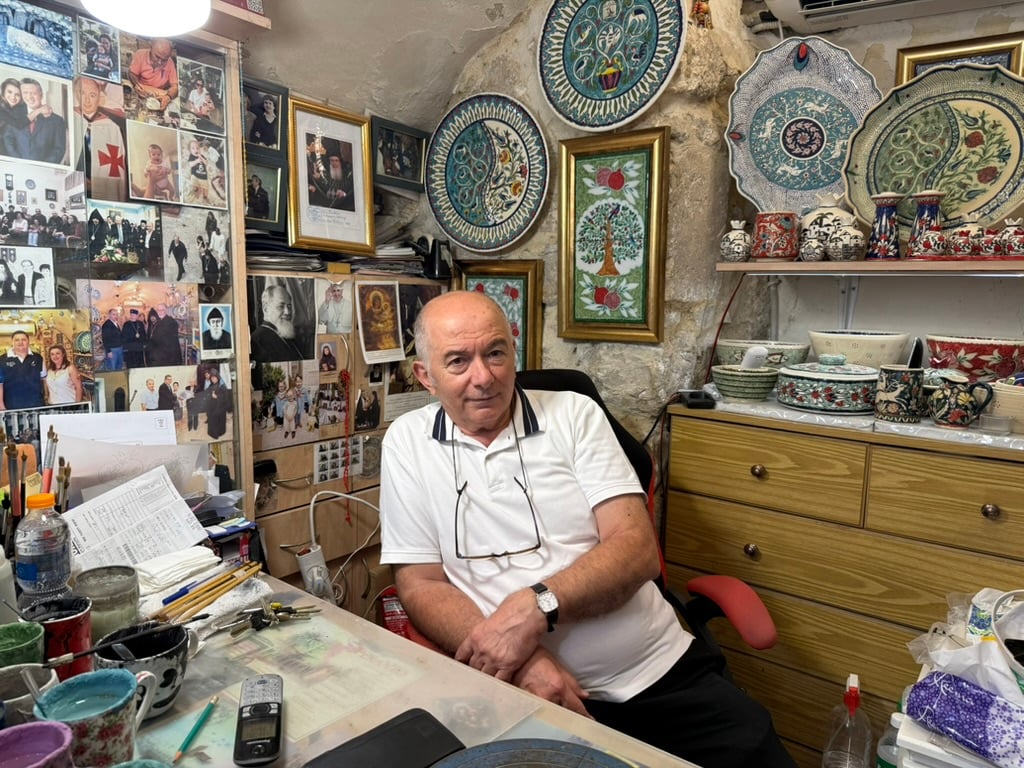
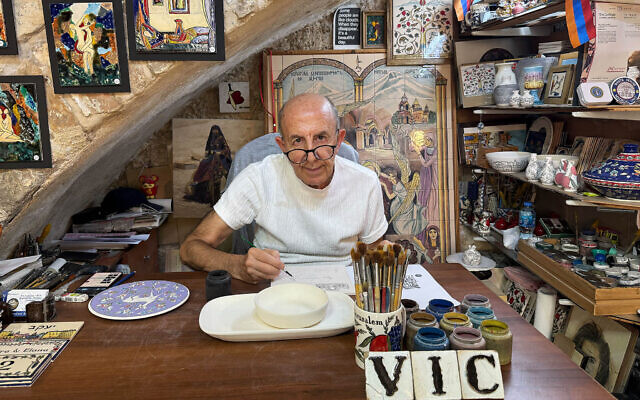
From behind the counter of his ceramics shop, artist Vic Lepejian wasn’t impressed by the premier’s comments.
“What about a signed document that the Israeli Knesset, the whole government, recognizes the genocide?” he asked as he sketched upon a ceramic piece he was commissioned to prepare for the Jerusalem headquarters of the United Nations Truce Supervision Organization.
He dismissed Netanyahu’s statement as hollow, saying, “It’s in the air. The whole community feels the same way. Nobody believes it.”
Yet even Netanyahu’s half-step was enough to provoke Turkey, which swiftly condemned the premier’s comments, accusing him of trying to “cover up the crimes committed by himself and his government” in the war against the Hamas terror group in Gaza.
Israel long avoided recognition of the Armenian genocide out of concern for its strategic relationship with Turkey — a relationship that has sharply deteriorated in recent years, and even more so since the war. That deterioration, Lepejian said, may explain Netanyahu’s sudden shift.
“It’s politics. It’s dirty politics. That’s my answer,” he said.
“When Israel’s ties with Turkey are bad, they suddenly remember the Armenian genocide,” he said, adding that US President Joe Biden “recognized it too — but the Senate, Congress, they didn’t. It’s the same thing.”
Even full recognition wouldn’t be enough, said Robert Karagozian, a security guard stationed outside the Armenian Cathedral of Saint James.
“It satisfies, of course,” he said of Netanyahu’s words, “but it’s not enough.”
“A lot of nations are recognizing the genocide, but nothing is happening. Nobody’s giving land. Nobody’s paying back things,” he continued, adding that members of the community lost “a lot” of farmland, ships, and livestock to the Ottoman Turks during the massacre.
He drew a comparison to post-Holocaust reparations: “The Jews, they get money from Germany. Armenia doesn’t get a penny. We don’t get any lands. The world should want to force the Turks to recognize it and to pay back some things — the United Nations or other superpowers should force them.”
A moral test
For artist Harut Sandrouni, the stakes are moral, not material.
“Sometimes people say, ‘Oh, we need retribution.’ Forget about all this. We want people to recognize the genocide for one simple reason: so that it doesn’t happen again — to me, to you, to our children. That’s the only reason.
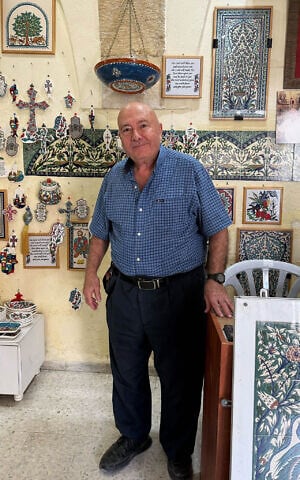
“Unfortunately, it’s continued to happen, look at Africa,” he added, pointing to the 1994 Rwandan genocide.
Though blunt about what he understood as Netanyahu’s motives, Sandrouni said he wasn’t bitter.
“Why do you think this came up now? Because [Israel has] a bad relationship with Turkey. Believe me, if the relationship between Israel and Turkey gets better — if they have common interests — [Israel will] forget about the massacre again.”
Still, he said, “It’s a good thing. I’m glad Netanyahu said what he did. But if he didn’t, I wouldn’t be upset with him. I know he’s under pressure. Political interests come first for a prime minister — Israeli, French, Italian, whatever. Who am I to decide? What do I know about politics?”
His brother, Garo, working just a few meters away, was less forgiving.
I would expect Israel to be the first country in the world to recognize the genocide.
In 2001, he said, “France recognized [the genocide] even though it risked its relationship with Turkey… During the war in Gaza, when the Americans said, ‘You should do this or that,’ Netanyahu responded, ‘We decide what’s right for our country.’ That should apply to Turkey, too.”
“It’s only moral,” he said. “Forget about strategy — that’s why I can understand Israel when they don’t recognize it, because strategically it’s a risk. But morally, as a person who was hurt, just like the Jews were hurt in the Holocaust — we were the first, they were the second — I would expect Israel to be the first country in the world to recognize the genocide.”
Still, he conceded, the remarks were “one step forward toward the complete declaration.”
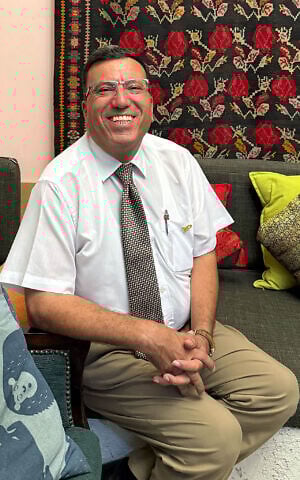
Sitting in his home, donning a yellow ribbon pin as a symbol of identification with the hostages held by Hamas in Gaza, Armenian lawyer and activist Kevork Nalbandian said that opposition to formal recognition of the Armenian genocide has long existed in the upper echelons of Israel’s establishment.
“There are directors in the Foreign Ministry and at [Holocaust memorial center] Yad Vashem who have consistently opposed recognition of the Armenian genocide,” he said.
He recalled a 2003 case in which Naomi Nalbandian—a nurse at Hadassah Hospital and a third‑generation survivor of the 1915 massacre—was slated to light a torch at Israel’s 55th Independence Day ceremony. Turkish officials, however, reportedly intervened to block any reference to her heritage or mention of the Armenian genocide.
“That’s how far Turkey has gone — interfering in the internal policy of the State of Israel. And Israel allowed it, because it was so afraid for its economic interests,” Nalbandian said.
Never Again
For Jerusalem’s Armenian community, living as a minority among Jews, the centrality of Holocaust memory in Israeli identity makes the silence on their own catastrophe feel all the more painful.
Recognition touches on the meaning of what “never again” means — whether as a vow to ensure Jews are never systematically slaughtered again, or as a call to lead the world in naming genocide and preventing its recurrence.
For Armenians, it is not a purely historical exercise. They are a small people, many driven from their historic homeland, still facing conflict with a large diaspora.
Garo emphasized that he felt this silence from official Israel, rather than the Israeli public: “The people in Israel are fantastic. Everybody knows about the Armenian genocide, everybody supports [recognition.]”
Nalbandian added, “Israel was established in the context of the Holocaust. It’s a people who experienced the horror firsthand, who know what genocide means. And the more you know, the more responsibility you have to recognize the pain of others who went through the same trauma, the same methods of extermination.”
As to whether official Israel will move beyond rhetoric, however, he said that only “time will tell.”






The Times of Israel Community.