

Heads of northern regional councils demand funding for civil defense
Many residents of towns within range of rockets from Lebanon lack access to shelters in case of war between Israel and Hebzollah
 Add ToI as a Preferred Source on Google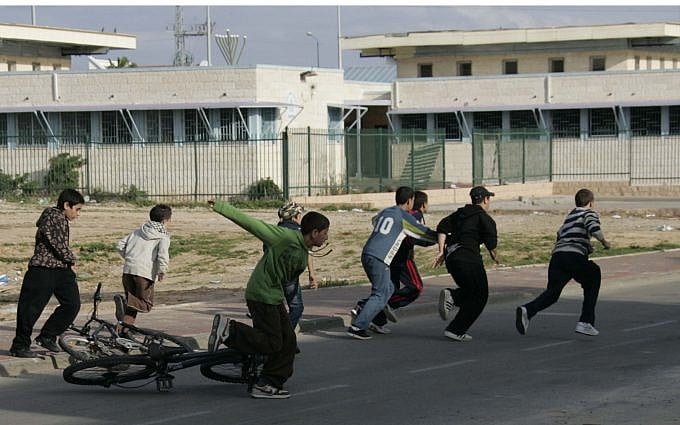
Amidst rising tensions between Israel and Hezbollah, residents of the north have demanded that the government immediately renew funding for a stalled program aimed at building hundreds of shelters and reinforcing existing structures in communities near the border.
The government approved the NIS 5 billion ($1.4 billion) plan last July, but has made no progress on its implementation. Hundreds of thousands of residents of the north currently live without access to a bomb shelter.
“We have been reminded of the importance of raising the level of preparedness,” Marom Hagalil regional council head Amit Sofer told a meeting of the Confrontation Line Forum, a gathering of northern regional council heads, during a meeting on Monday afternoon, according to Ynet. “The protection plan that has been formulated is a life-saving plan, and it’s time to implement it immediately.”
“Decisions must be made in the face of the Israeli government’s failure to protect the northern communities,” said Moshe Davidovich, head of the Mateh Asher Regional Council and chairman of the forum. “We have to protect our residents and call on the government to wake up.”
Galil Elyon regional council chief Giora Saltz criticized what he described as an “unimaginable gap” between the government’s statements and its priorities.
He added that around 50 percent of residents living in a strip of land 20-30 kilometers (some 12 to 18.5 miles) from the border do not have reinforced rooms in their homes where they can take shelter during a rocket attack.
“Think about what these days will look like when missiles fall in built-up areas,” he said.
According to the IDF, Hezbollah has an estimated 100,000 short-range rockets capable of striking northern Israel, several thousand missiles that can reach Tel Aviv and central Israel and hundreds more that can strike the entire country.
Last year, it was reported that the government intended to launch a multi-billion-shekel missile defense plan aimed at providing blanket coverage for the entire country against a massive rocket attack, in what would be the biggest program in the history of the Israel Defense Forces.
Tensions on the norther border have risen significantly in recent days.
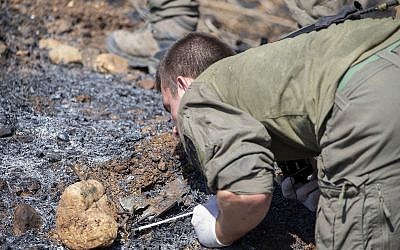
The Hezbollah terror group fired several anti-tank guided missiles at an army base and a military jeep just inside northern Israel’s border with Lebanon on Sunday afternoon. There were no casualties.
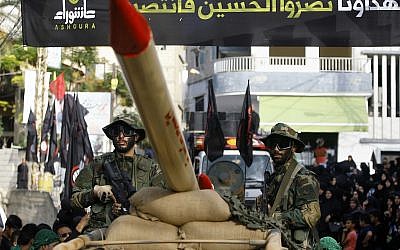
In response to the attack, the Israeli military said its artillery cannons and attack helicopters fired approximately 100 shells and bombs at Hezbollah targets in southern Lebanon.
Hezbollah indicated that the missile attack was in response to an airstrike by the IDF last Saturday night that targeted an Iranian-led plot to bomb northern Israel with armed drones, killing several Iranian operatives, including two Hezbollah members. The terror group said the cell that carried out the missile strike was named for its two fallen operatives: Hassan Zabeeb and Yasser Daher.
Further stoking the flames last week was a drone attack in Beirut — blamed on Israel — that reportedly destroyed key components of a joint Hezbollah-Iran project to manufacture precision-guided missiles in Lebanon.
After the strike, the Israeli military called on all communities within four kilometers (2.5 miles) of the Lebanese border to open their bomb shelters. In addition, the military called on residents to avoid approaching the security fence, including for farm work. The IDF also urged residents of the area not to travel on open roads near the border.
Judah Ari Gross contributed to this report.








The Times of Israel Community.