

Health Ministry ups opposition to kindergartens and daycares opening Sunday
Final decision to be made Friday; Israeli research presented to health officials shows children slightly less infectious than adults; teachers, daycare owners demand compensation
 Add ToI as a Preferred Source on Google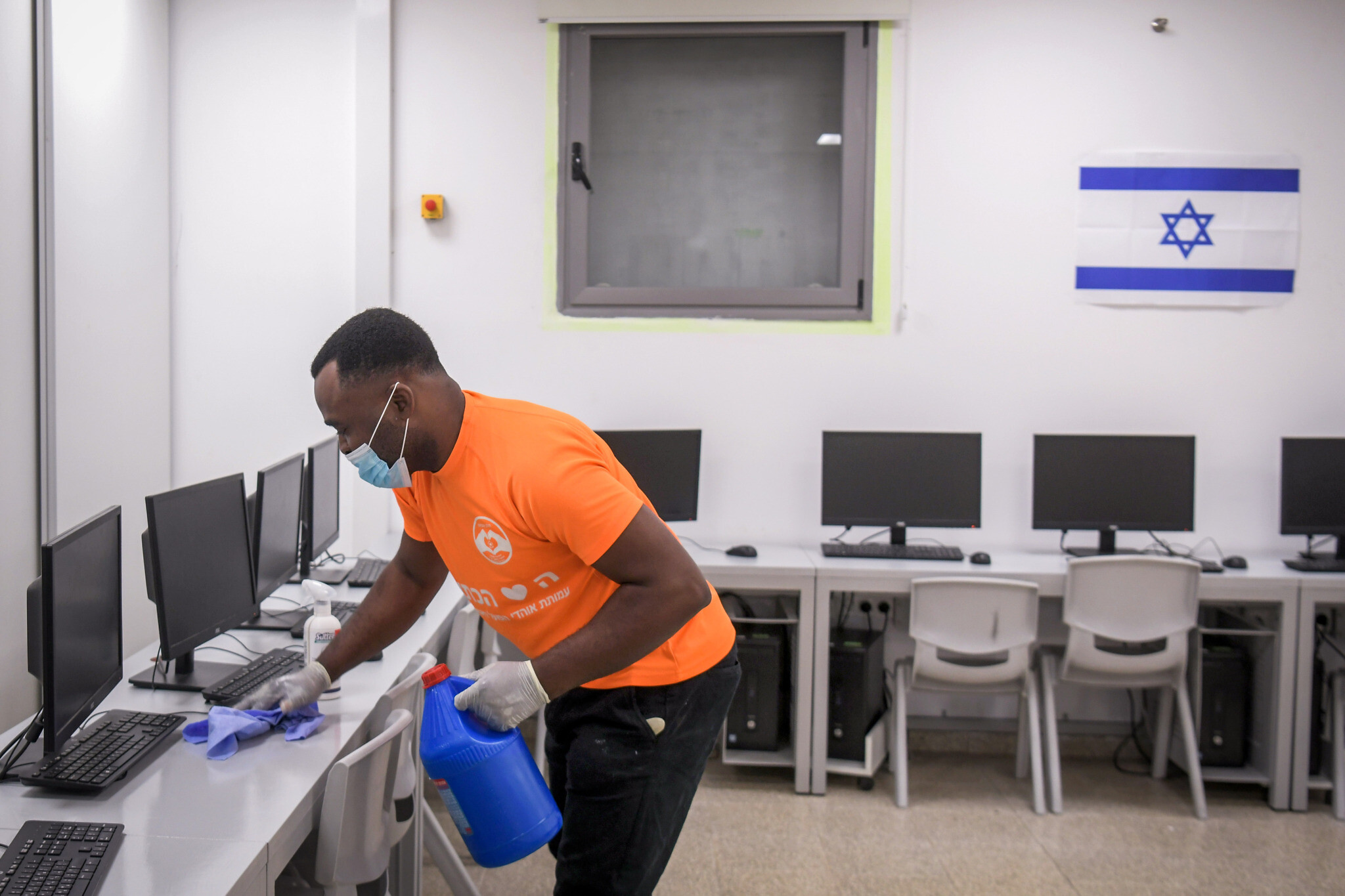
Officials in the Health Ministry on Thursday evening were pushing to postpone the reopening of kindergartens and preschools until later in May, as research guiding its policy-making indicated children with COVID-19 were less infectious than adults.
In a briefing with reporters, a senior Health Ministry official said kindergartens should not reopen for another week or two, but elementary schools up to third grade can begin bringing back students on Sunday.
“We’ve seen great results on the national infection map, and we can take this step and wait with kindergartens until the next round, when our [national] health will be a week or two along. The group that is safest to start with are first- to third-graders,” the official said.
Officials fear that young children will be unable to maintain necessary social distancing or hygiene standards, and keeping groups of 15 kids separate from each other, as ordered, will be difficult.
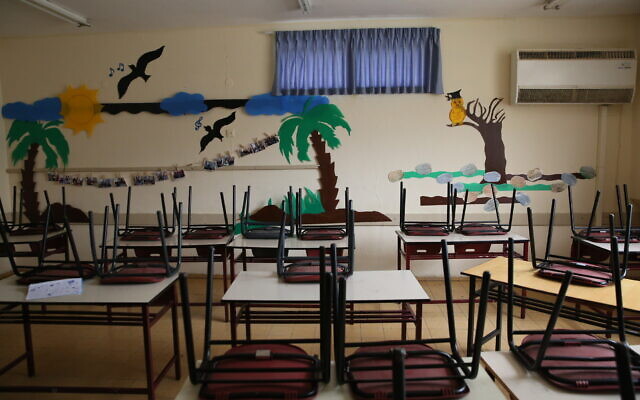
According to the Education Ministry’s plan — released earlier this week — for the resumption of studies on Sunday amid the pandemic, children in first through third grades would return to school five days a week, for five hours a day, with classes capped at 15 students.
Kindergartens and preschools would also reopen, but only for three days per week, with a limited number of children permitted at a time.
Ministers will meet Friday at 10 a.m. to make a final decision on what schools will reopen next week, and will likely favor the Health Ministry’s recommendation over those of the Education Ministry. Earlier this week, the cabinet gave tentative approval to reopening preschools, kindergartens and elementary schools up to third grade, with classes capped at 15 students.
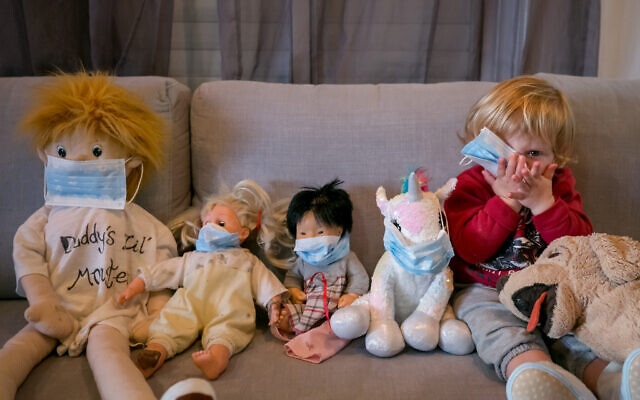
Referring to kindergartens, the Health Ministry official said Thursday: “We want them to be in groups of seven children. It’s obvious that whoever doesn’t go back [to school now] will return sometime in May.”
It was not immediately clear if that also referred to children in fourth grade and above, who are continuing remote studies online.
The health official favored a more gradual reopening of the education system, starting only with the lower grades in elementary schools and excluding preschools and kindergartens.
How infectious are kids?
The preliminary conclusions of a study by the Gertner Institute for Epidemiology and Health Policy Research were presented Thursday to the Health Ministry. The study of 563 families (2,823 people) in Bnei Brak, which saw a large outbreak last month, found that children in households where one family member had the coronavirus were 20-50 percent less susceptible than adults to contract it, and recommended a careful and gradual reopening of schools.
It also said children were apparently 20%-75% less likely than adults to infect others, but stressed the results were preliminary and require further research.
Israeli medical professionals are also closely following international research into children and the coronavirus. For example, The New South Wales Health Center for Immunization Research conducted a study on children, and concluded they are unlikely to transmit COVID-19 between each other or to adults. In New South Wales, Australia, a decision to reopen schools was said to have been influenced by that theory.
A study published this month in the US journal Clinical Infectious Diseases ascertained that a child in France, who only displayed mild symptoms, came into contact with 172 people while sick. All of those were placed in quarantine as a precaution, but none of them contracted COVID-19, not even the child’s two siblings.
For now, Israeli doctors tend to regard children as capable of contracting and transmitting the coronavirus, as does the Health Ministry.
The country’s first patient under 19 to suffer serious complications from the virus, an 11-year-old girl, is currently hospitalized at Rambam Hospital in Haifa.
Daycares not prepared to receive children
In addition to the Health Ministry’s opposition, there are a number of other factors preventing many parents from sending their young children to daycares and kindergartens and returning to work.
Both private and state-subsidized daycares are threatening to strike starting Sunday, saying their financial and health concerns have not been addressed in the Education Ministry’s plan.
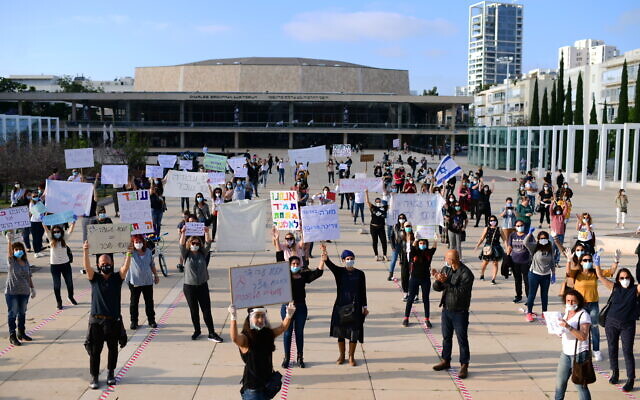
Hundreds of daycare owners and workers protested outside the Knesset and in Tel Aviv Thursday, demanding the treasury compensate them for loss of earnings in March and April before they reopen.
There is also no plan in place for after-school programs, meaning that many parents would still be unable to go back to work if schools and kindergartens finish at around 1-2 p.m.
Meanwhile, state-subsidized daycare centers will likely not be opened on Sunday after their operators asked for more time to prepare to receive the children, as well as more clarity on how to implement the stringent social distancing guidelines delineated in the Education Ministry’s plan.
According to Channel 12, Health Ministry Director-General Moshe Bar Siman-Tov is reluctant to sign off on the reopening of preschools and kindergartens, warning of another wave of infection. He told ministers that every day that the institutions remain closed means a day less of lockdown for the country over the summer.
Under the Education Ministry’s plan, in kindergartens and preschools, the children would be split into two groups of up to 17 children, with the first group coming in on Sunday to Tuesday and the second group on Wednesday to Friday.
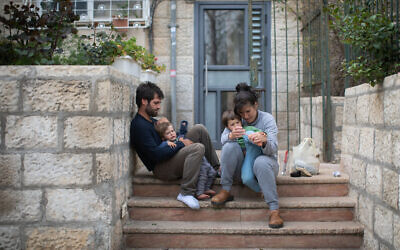
The move to reopen schools came as Israel took its biggest steps toward reopening the economy this week, allowing many nonessential businesses to operate for the first time in a month, as new virus cases and the numbers of seriously ill have steadily declined.
In Israel, where most parents both work full-time, reopening the economy necessitates a solution for younger children who cannot be left unsupervised. The Bank of Israel said last week that the shutdown of the education system was costing the economy around NIS 2.6 billion ($737 million) per week, as many households have had to keep one parent tending to children instead of working.
Schools have been shut since mid-March as the government began imposing wide restrictions on movement in a bid to stem the spread of the coronavirus. Most teachers have continued to teach via teleconferencing, though the program has been met with reports of only middling success.
Israel has seen the number of daily cases decline in the past week. As of Thursday evening, there have been 222 deaths and 15,946 total confirmed carriers of the virus, most of whom have recovered.
Nathan Jeffay and agencies contributed to this report.






The Times of Israel Community.