

High Court implores justice minister to appoint district court judges
Judge says he is ‘a bit saddened’ by Levin’s refusal to convene Judicial Selection Committee for 16 months despite mounting vacancies
 Add ToI as a Preferred Source on Google
Jeremy Sharon is The Times of Israel’s legal affairs and settlements reporter
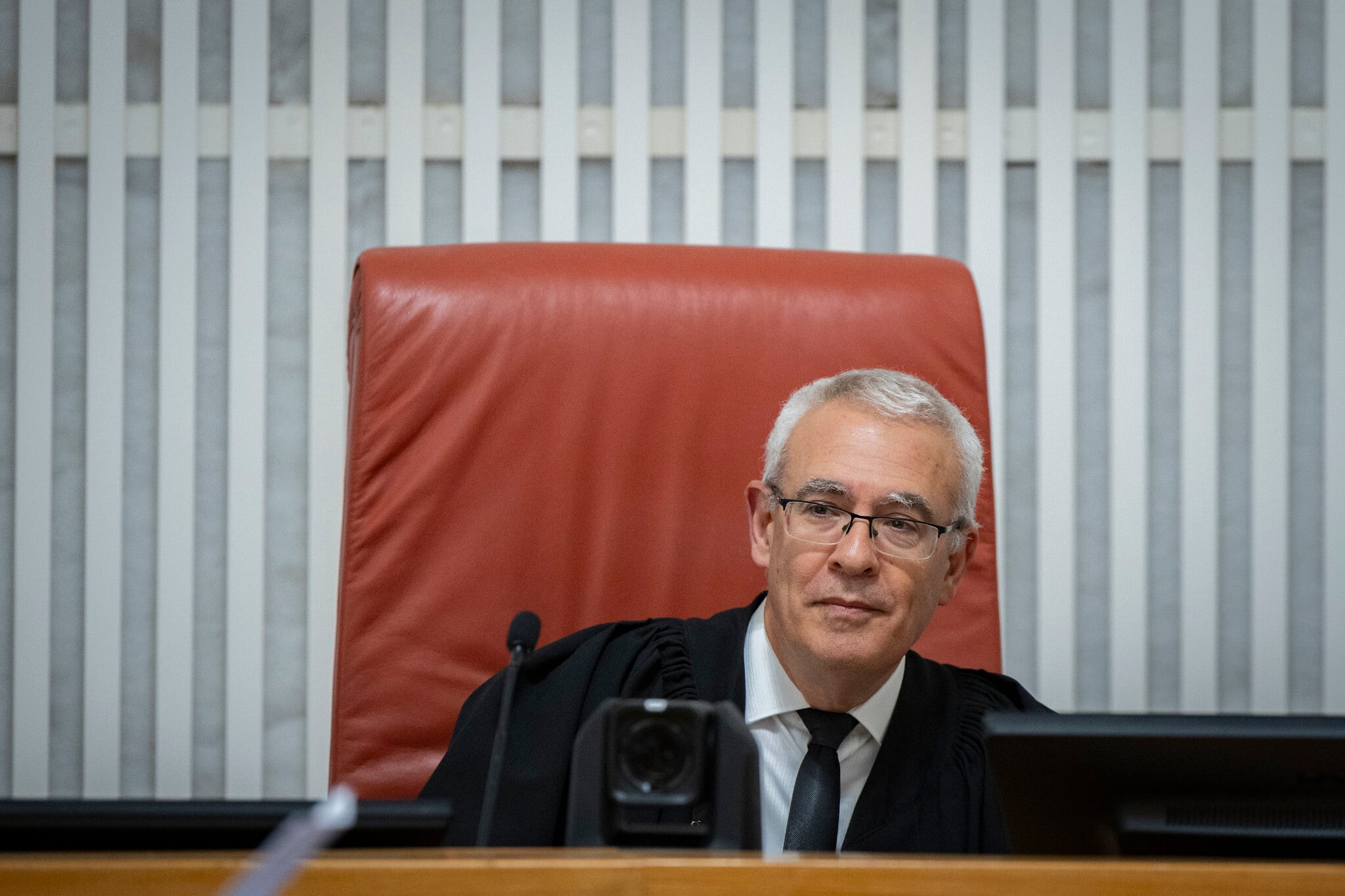
The High Court of Justice requested on Sunday that Justice Minister Yariv Levin consider filling judicial vacancies on the Beersheba and Haifa district courts in cooperation with the rest of the members of the Judicial Selection Committee.
Levin’s representative, Zion Amir, indicated cautious optimism over such a possibility, and the court gave Levin until the end of Tuesday to respond to the request.
The effort to reach a compromise over such appointments came at the end of a court hearing over petitions demanding that Levin convene the Judicial Selection Committee to fill dozens of vacancies on judicial benches around the country.
The justices were critical of Levin’s refusal to convene the committee, with Justice Ofer Grosskopf, who headed the three-judge panel, accusing Levin of creating the current dearth of judges by refusing to convene the selection committee for 16 months, and then claiming, in response to the petitions, that there is no longer enough time for the appointments process before elections are called.
But although the judges were critical of numerous aspects of Levin’s behavior, they appeared anxious to achieve a practical solution for the district courts where the lack of judges is most acute, Beersheba and Haifa, without having to issue a ruling.
Such a ruling would entail ordering Levin to take multiple bureaucratic steps that would give the justice minister room to evade in practice fulfilling the order and further worsen the ongoing, low-level constitutional crisis that has been brewing between the government and the judiciary.
Levin, who as justice minister heads the Judicial Selection Committee, has refused to convene the panel and make appointments since January 2025. As a result, there are currently 51 vacancies on the country’s various magistrates’ and district courts, a number that will rise to 67 by the end of the year.
Levin lacks a majority on the Judicial Selection Committee to guarantee his preferred candidates can get appointed to serve as judges on these courts, and he therefore has insisted on achieving “broad consensus,” meaning unanimity within the committee, over all appointments before moving ahead with the process.
This approach has seen Levin propose a deal to the six members of the committee who are not from the coalition. When that deal was rejected, he decided to stymie all further appointments.

The fight over judicial appointments comes against the backdrop of Levin’s broader campaign throughout the course of his tenure to diminish the powers of the judiciary and to remove legal checks on executive power, in particular that of the attorney general.
In March last year, the coalition passed legislation that greatly politicized the judicial selection process, and is currently in the process of legislating a bill that would gut the attorney general‘s position of all meaningful power to restrain the government.
Following a hearing on May 3, where the judges were highly critical of Levin’s refusal to convene the Judicial Selection Committee, he published in the state gazette a list of candidates for some but not all of the magistrate courts that have vacancies, and said the candidates could be discussed by the Judicial Selection Committee in another 45 days.
The committee can only deliberate and then vote on judicial candidates 45 days after their candidacies are published in the gazette.
Levin also proposed appointing acting judges who serve for six months to the district courts.
During the course of Sunday’s hearing, Grosskopf, together with justices Alex Stein and Gila Canfy-Steinitz, appeared most concerned with the lack of judges in the Beersheba and Haifa district courts, which are short five judges and three judges, respectively.
“I’m a bit saddened by the fact that the minister is proposing a solution for a problem he himself created,” Grosskopf said during the hearing.
The judge added that if Levin had simply convened the committee to address the needs of the judiciary in a timely manner, there would be no need for temporary appointments.
The judges also pointed out that the role of “acting judge” was designed to assist fully staffed courts with a heavy case load, not to fill vacancies caused by the Judicial Selection Committee failing to convene.
Grosskopf was also critical of Levin’s insistence on “broad consensus” to make the appointments, noting that the Judicial Selection Committee can and has made appointments by majority vote instead of unanimously in the past.
“The minister refused to bring new appointments to the committee because there is no consensus, and that is not the correct approach,” said the judge.








The Times of Israel Community.