

High Court rejects petition to stop private meetings between AG and Netanyahu
Movement for Quality Government had argued such conferences constituted a conflict of interest due to ongoing probes of PM
 Add ToI as a Preferred Source on Google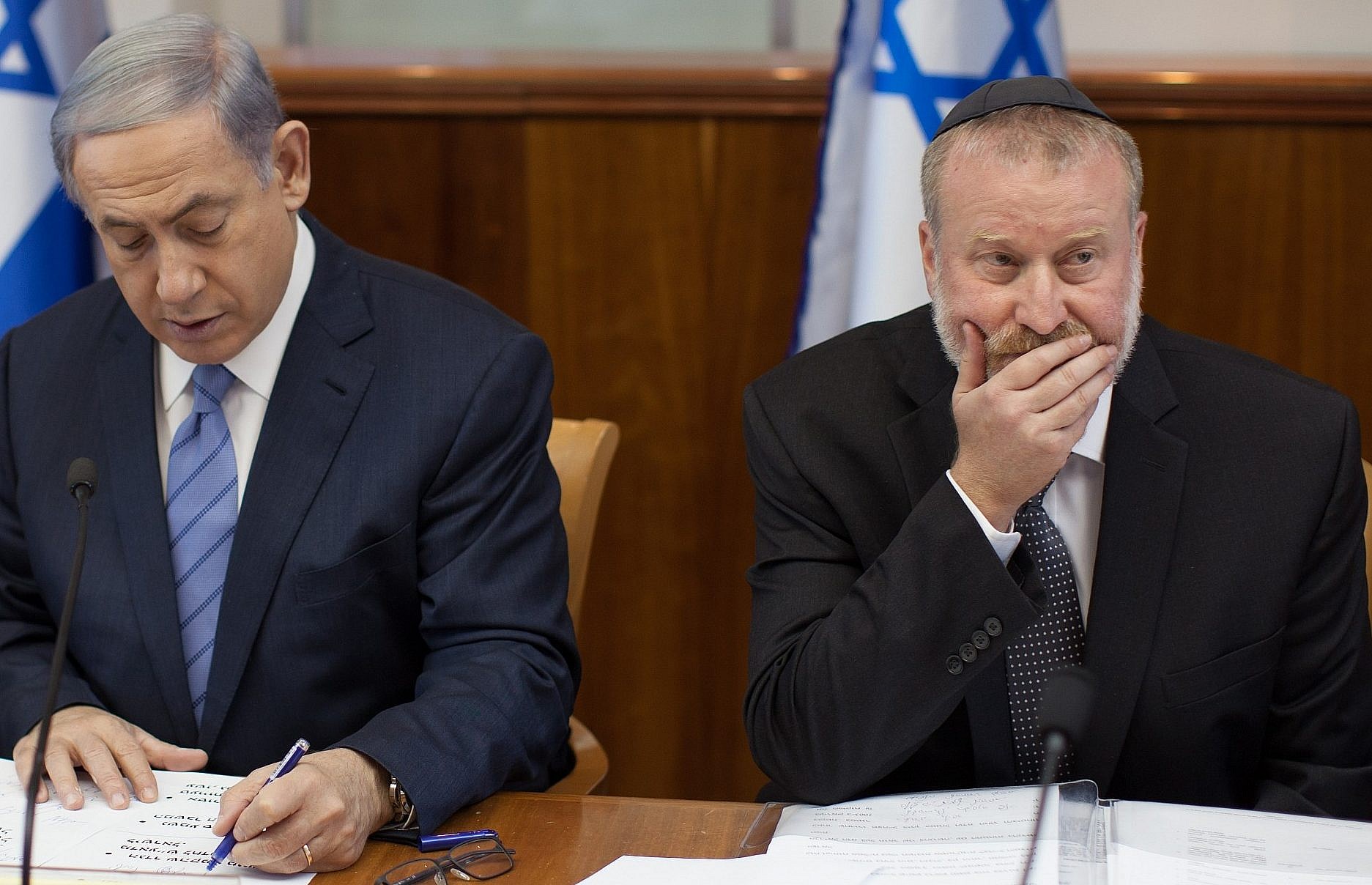
The High Court of Justice on Sunday rejected a petition by an advocacy group calling for a halt to all private meetings between Attorney General Avichai Mandelblit and Prime Minister Benjamin Netanyahu, due to the multiple criminal investigations into the prime minister that Mandelblit is overseeing.
The Movement for Quality Government in Israel asked the court on June 10 to instruct Mandelblit to explain why he continues to hold such meetings when they present concerns of “a serious conflict of interest” and the “contamination” of the investigation process, the organization said.
The prime minister is under investigation in three corruption cases.
The group asked for a conditional order demanding the attorney general explain why he is not refraining from private meetings without a third person present or, as an alternative, that the court demand Mandelblit explain why he is not appointing a replacement in the Netanyahu probes.
On Sunday, the court ruled against the petition, explaining that it was reasonable to assume the attorney general was not obstructing justice in those meetings.
“It is only appropriate to trust the attorney general’s judgment in cases where he believes carrying out his duties requires a one-on-one meeting with the prime minister,” the court said. “There is an assumption in the attorney general’s case that in such meetings he maintains a ‘Chinese wall’ between his various responsibilities.”
Mandelblit, a former cabinet secretary, was appointed by Netanyahu to the position of attorney general in February 2016. The petition noted that Mandelblit is the sole official who will ultimately decide whether or not to press charges against the prime minister.
“There is concern of serious harm and contamination of the criminal process when the person who has the sole authority to decide on opening an investigation and putting a person on trial is meeting alone with the person in question,” the petition said.
“There is also a sharp personal conflict of interest in which the attorney general finds himself, as long as he heads the prosecution system on the one hand and continues to meet privately with the prime minister who is suspected of criminal activity, on the other hand.”

According to Hadashot TV news, the two men have met privately more than 70 times since January 2017, when criminal investigations were launched into Netanyahu’s affairs.
“The attorney general continues to choose to knowingly put himself in a situation of serious conflict of interest,” the organization said, “while exposing himself and the prime minister to [the possibility of] obstruction of justice and the contamination of criminal procedure, and causing irreparable harm to the public’s faith in the entities entrusted with the investigations of the prime minister.”
Mandelblit has faced criticism over the investigations’ prolonged nature, while defending himself against claims of foot-dragging by saying the cases were complex and must be handled carefully.
In Case 1000, the so-called gifts scandal, Netanyahu is suspected of “systematically” demanding benefits worth about NIS 1 million ($282,000) from billionaire benefactors, including Arnon Milchan and Australian resort owner James Packer, in exchange for favors. Police handed the case over to the prosecution in February with recommendations for a bribery charge.
Prosecutors have yet to formulate an opinion on two other probes involving Netanyahu: Case 2000, in which police have also recommended an indictment but which was reopened earlier this month due to new evidence, and Case 4000, which is still an active investigation.
Case 2000 involves a suspected illicit quid-pro-quo deal between Netanyahu and Yedioth Ahronoth newspaper publisher Arnon Mozes that would have seen the prime minister weaken a rival daily, the Sheldon Adelson-backed Israel Hayom, in return for more favorable coverage from Yedioth.
Case 4000 involves suspicions that Netanyahu made regulatory decisions favoring the Bezeq telecom giant, and in exchange demanded favorable coverage from the popular Walla news site. Both Bezeq and Walla are majority-owned by the same man, Shaul Elovitch.
Netanyahu and his wife have denied wrongdoing in all of the cases.








The Times of Israel Community.