

‘I have no home anymore’: Two years later, Kfar Aza is forever changed by Oct. 7 attack
Return of all living hostages from Gaza sparks hope for border community, parts of which were decimated by Hamas invasion, but grief still fresh as bereaved kibbutz slowly rebuilds
 Add ToI as a Preferred Source on Google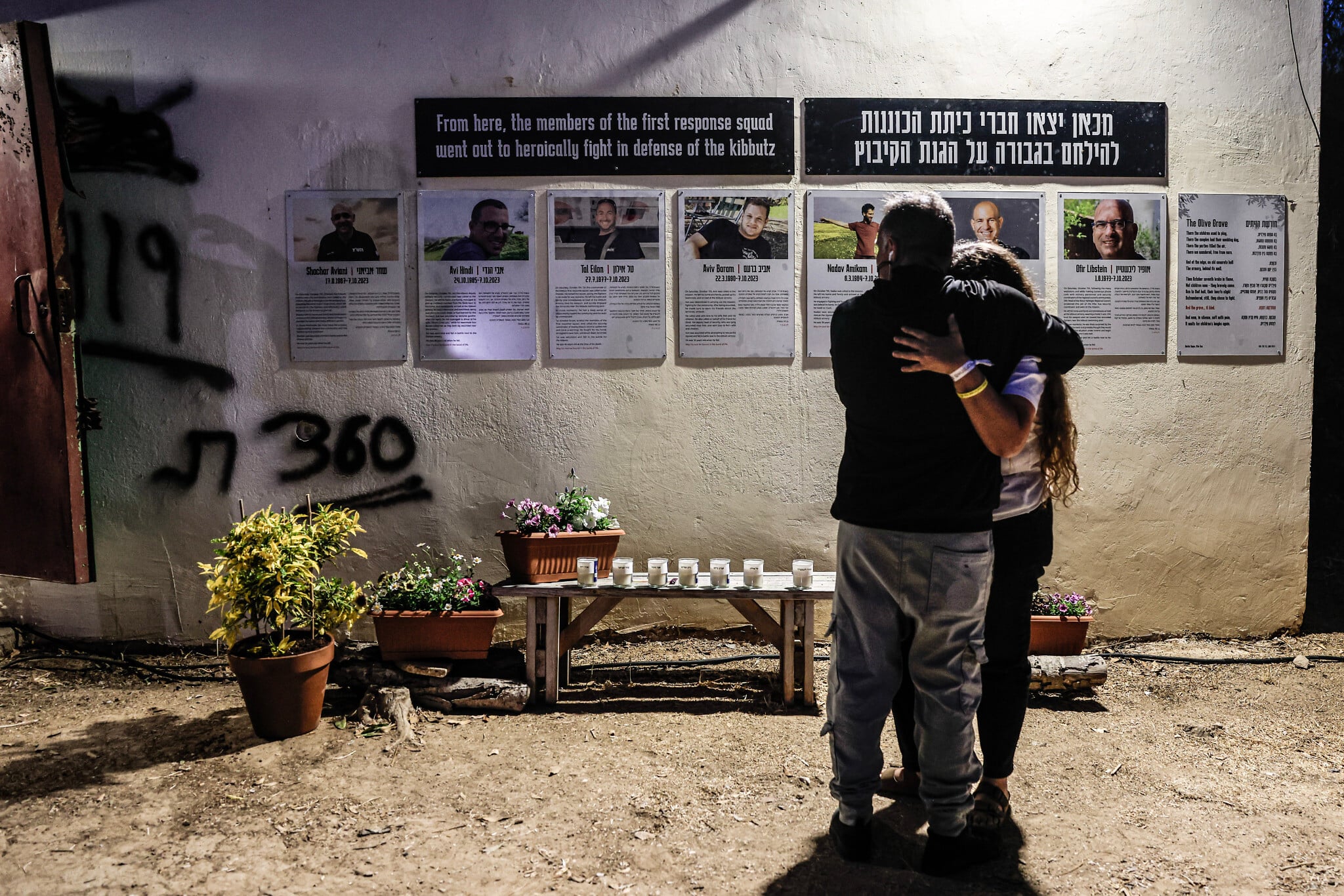
Two years after he survived Hamas’s October 7 attack, in which Palestinian terrorists killed some 1,200 people, 64 of whom were fellow residents of Kibbutz Kfar Aza, Avidor Schwartzman hopes his community can finally begin to overcome its pain.
“We can start the healing process,” Schwartzman told AFP, even if “we know that there are a lot of people who will not come back”.
On October 7, 2023, Hamas-led terrorists stormed over the barrier separating Gaza and Israel, around two kilometers (just over a mile) away from Schwartzman’s kibbutz.
The invaders set about burning down homes, looting and killing, before abducting 18 people from Kfar Aza and taking them hostage into the Gaza Strip, among 251 total abductees seized from Israel that day.
Two of the hostages from Kfar Aza died in captivity, while the last two to be released, Gali and Ziv Berman, were only returned by Hamas on Monday under a US-brokered deal to end the war in Gaza.
It took days for the army to regain control of the kibbutz following the October 7 attack, and 19 soldiers were killed battling the terrorists.
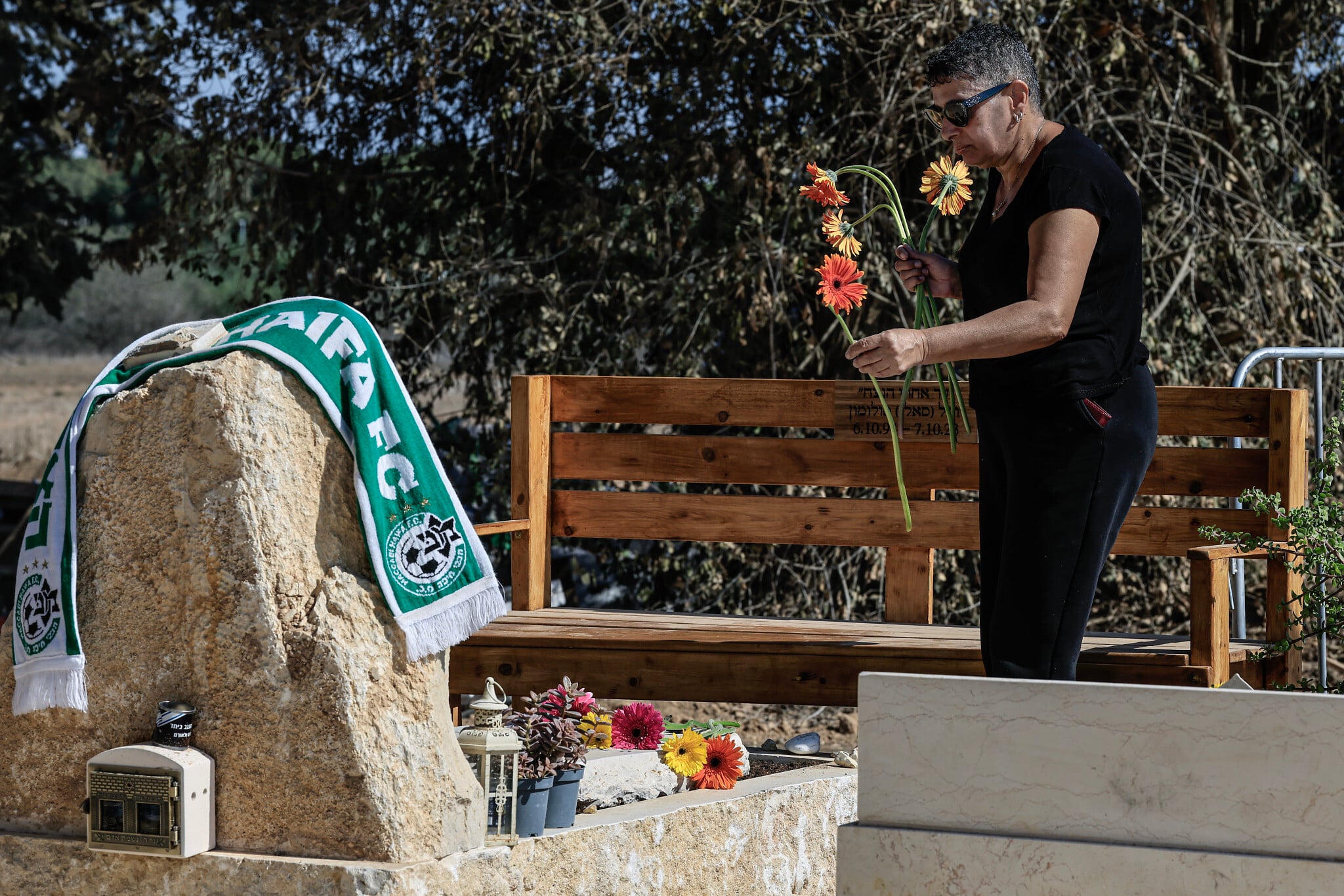
On Thursday, survivors of the attack in Kfar Aza gathered in the cemetery for a memorial to honor those killed that day.
At a state ceremony in Jerusalem to mark the second anniversary of the attack under the Jewish calendar, a torch was lit in memory of a young couple from the kibbutz, Sivan Elkabetz and Naor Hasidim, both killed by terrorists.
Members demand return of all dead hostages for burial
Elkabetz’s father, Shimon Elkabetz, told AFP that the return of the surviving hostages on Monday sparked hope.
But he was of the view that the army should not leave Gaza “until the last of the [dead] hostages is back to be buried in Israel.”
Israel has accused Hamas of violating the terms of the ceasefire agreement, under which the terror group had until noon Monday to hand over all the hostages it still held in Gaza.
While Hamas handed over all 20 living hostages by the deadline, the group has only handed over nine of the 28 bodies, arguing it would need specialist equipment to retrieve the rest from Gaza’s ruins, a claim doubted by Israel.
Defense Minister Israel Katz on Wednesday threatened to restart the offensive if Hamas does not honor the deal.
Elkabetz agreed.
“Our soldiers are deep inside the Strip, and that is a good thing,” he said.
’64 of my friends are gone, murdered.’
At the Kfar Aza memorial, people placed flowers on the tombs of victims of the Hamas attack. Others, as per Jewish custom, laid stones.
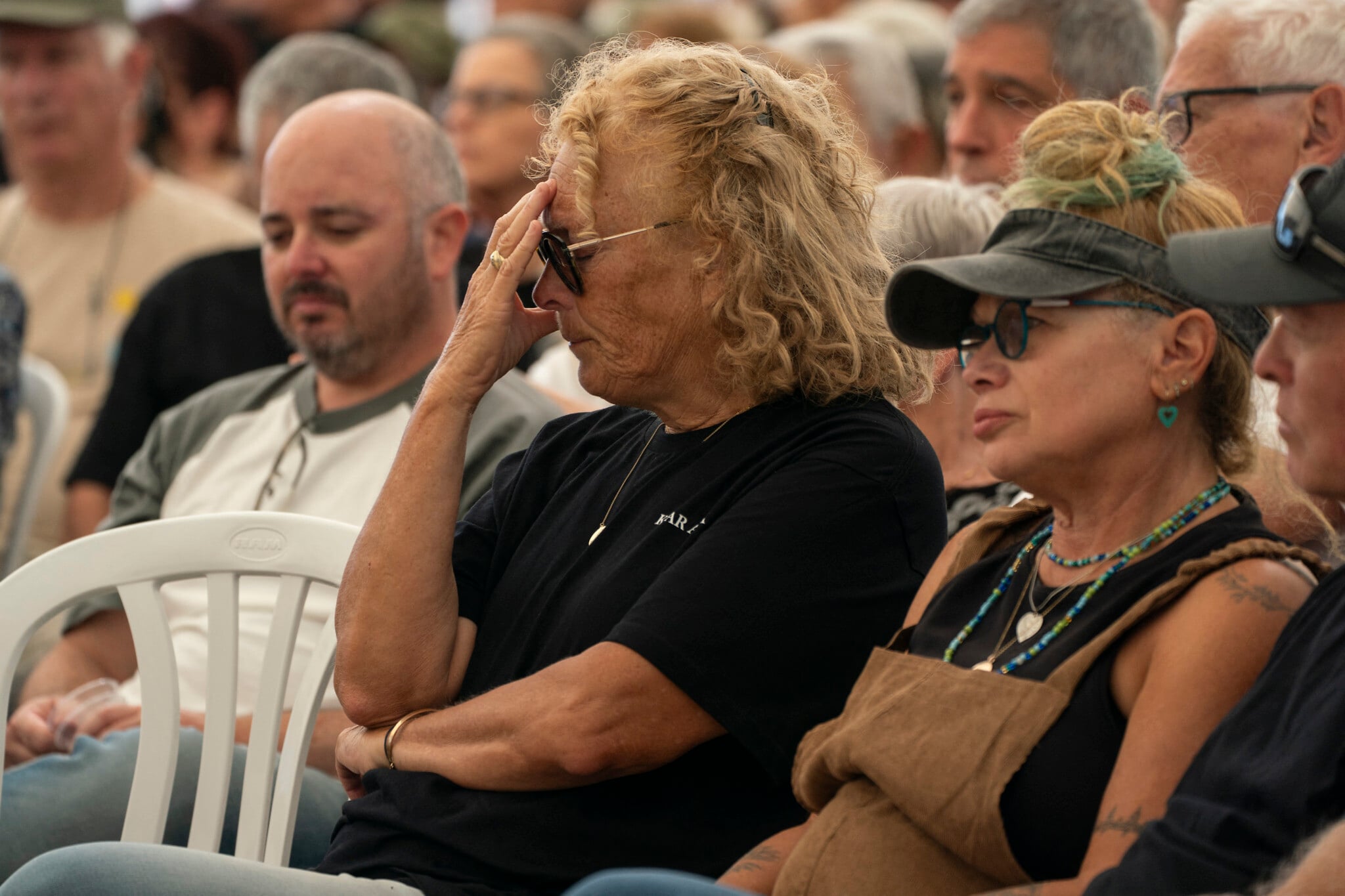
On stage, survivors read out the names of the 64 victims, the noise of helicopters and drones overhead at times drowning out their voices.
Batia Holin could not hide her pain for “64 of my friends are gone, murdered.”
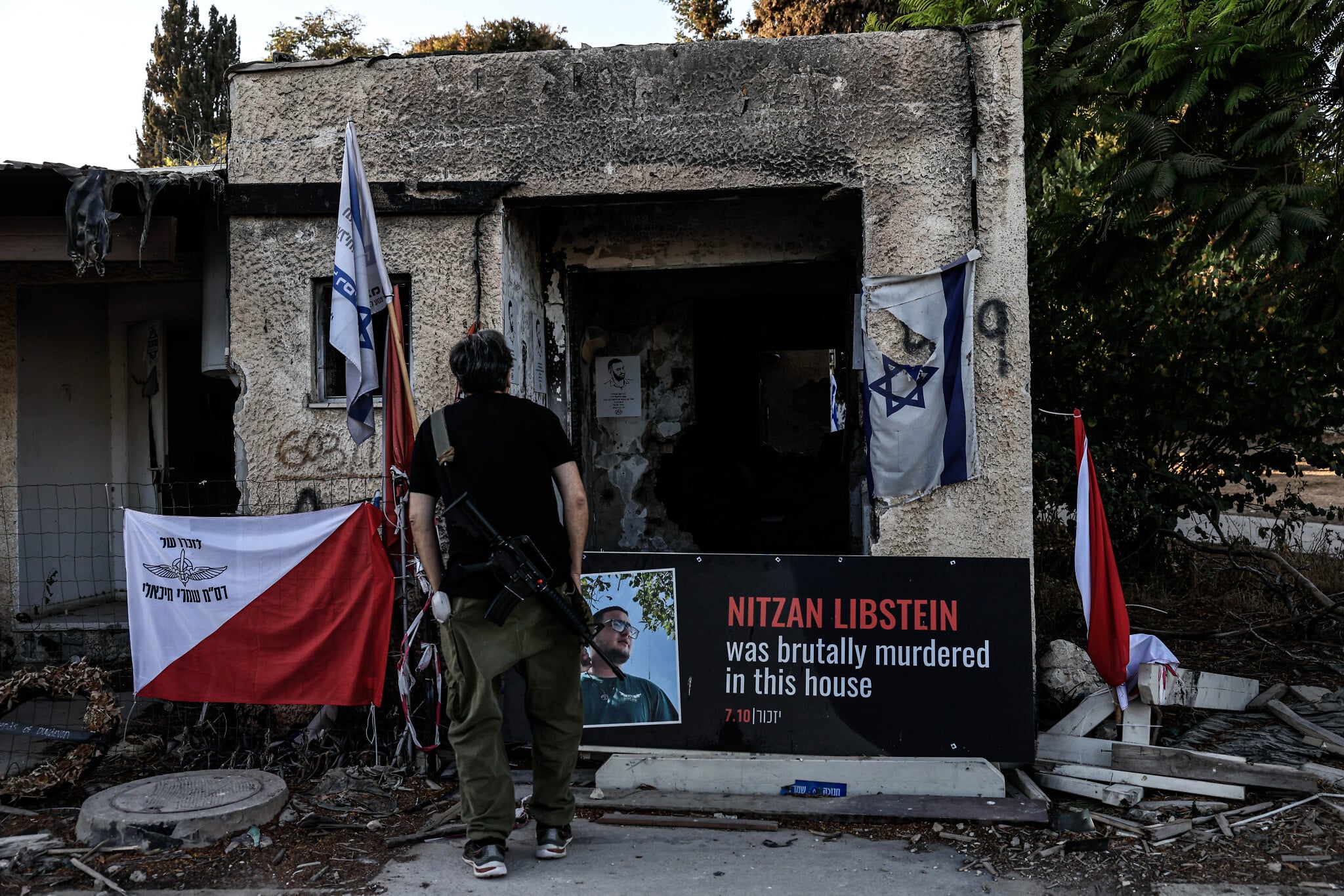
Reconstruction work has begun, though much of the kibbutz is still damaged and only a handful of residents have come back to live in Kfar Aza.
Holin, who has lived in Kfar Aza for 50 years, said she was struggling to imagine what the future might hold.
“I can’t go to my home because I have no home anymore. It will take two more years maybe, and it’s very difficult,” she told AFP.
In April, the kibbutz opened a new neighborhood of 16 housing units earmarked for younger people, to replace the old youth quarter destroyed in the attack.
Schwartzman, 40, a father of two, lives in the neighborhood. His wife lost both her parents in the October 7 attack.
While the road to recovery will be long, he says he is confident that others will follow and move back, like he has.
Several people he knew, Schwartzman said, had been “living here for several generations, three generations, maybe even four… So I guess this is the only place they can call home and that’s why they want to come back.”
Times of Israel staff contributed to this report.










The Times of Israel Community.