

US immigration judge rejects effort to deport pro-Palestinian student over ‘op-ed’
Court finds Department of Homeland Security did not prove that Rumeysa Ozturk was removable, terminates proceedings against her; DHS calls decision ‘judicial activism’
 Add ToI as a Preferred Source on Google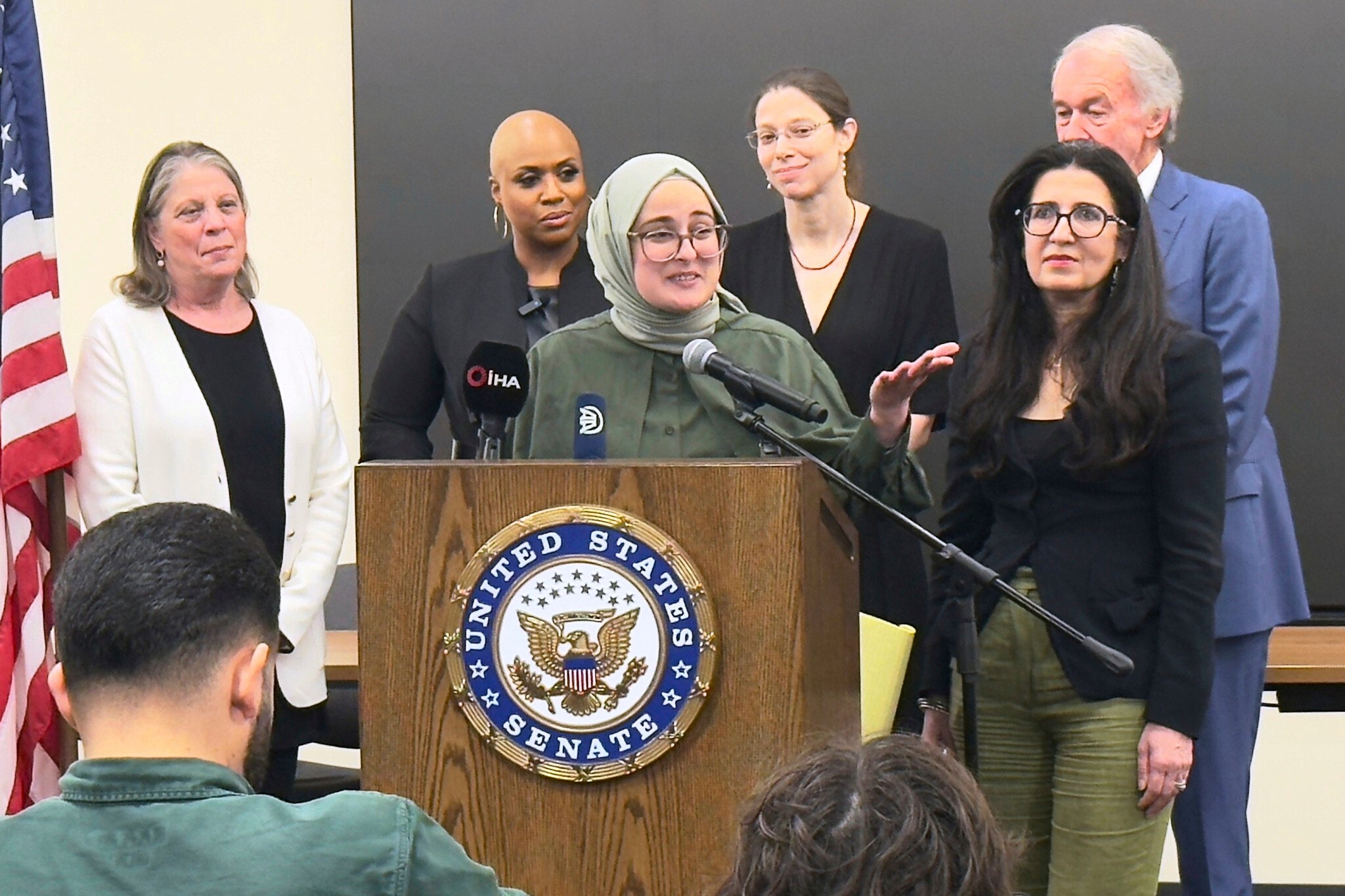
An immigration judge has rejected the Trump administration’s efforts to deport Tufts University PhD student Rumeysa Ozturk, who was arrested last year as part of its targeting of anti-Israel, pro-Palestinian campus activists, her lawyers said on Monday.
Lawyers for the Turkish student detailed the immigration judge’s decision in a filing with the New York-based 2nd US Circuit Court of Appeals, which had been reviewing a ruling that led to her release from immigration custody in May.
An immigration judge on January 29 concluded the US Department of Homeland Security had not met its burden of proving she was removable and terminated the proceedings against her, her lawyers at the American Civil Liberties Union wrote.
Her immigration lawyer, Mahsa Khanbabai, said the decision was issued by Immigration Judge Roopal Patel in Boston.
That ended, for now, proceedings that began with Ozturk’s arrest by immigration authorities in March on a street in Massachusetts after the US Department of State revoked her student visa.
The sole basis authorities provided for revoking her visa was an editorial she co-authored in Tufts’ student newspaper a year earlier, criticizing her school’s response to Israel’s war against Hamas in Gaza, and backing calls by students for it to divest from companies with ties to Israel and to “acknowledge the Palestinian genocide.”
“Today, I breathe a sigh of relief knowing that despite the justice system’s flaws, my case may give hope to those who have also been wronged by the US government,” Ozturk said in a statement.
A judge has unsealed the memo ordering the detention & deportation of Rümeysa Öztürk. It confirms the sole evidence against her was that she co-wrote an op-ed the government disliked.
Here she is being arrested by men in plainclothes. Over an op-ed. pic.twitter.com/VrN95XhTuE
— Billy Binion (@billybinion) January 23, 2026
The immigration judge’s decision is not itself public, and the administration could challenge it before the Board of Immigration Appeals, which is part of the US Department of Justice.
A spokesperson for DHS, which oversees US Immigration and Customs Enforcement, in a statement said the decision reflected “judicial activism.”
Homeland Security Secretary Kristi Noem “has made it clear that anyone who thinks they can come to America and hide behind the First Amendment to advocate for anti-American and anti-Semitic violence and terrorism – think again,” the spokesperson said.
The arrest of Ozturk, a child development researcher, in the Boston suburb of Somerville, was captured in a viral video that turned her case into one of the highest-profile instances of the effort by US President Donald Trump’s administration to deport non-citizen students with pro-Palestinian or anti-Israel views.
The former Fulbright scholar was held for 45 days in a detention facility in Louisiana until a federal judge in Vermont, where she had briefly been held, ordered her immediately released after finding she raised a substantial claim that her detention constituted unlawful retaliation in violation of her free speech rights.
A federal judge in Boston last month ruled that the administration had adopted an unlawful policy of detaining and deporting scholars like Ozturk that chilled the free speech of non-citizen academics at universities. The Justice Department on Monday moved to appeal that decision.

Last April, dozens of US Jewish groups filed an amicus brief in Ozturk’s legal case in federal court.
An amicus brief is a legal document filed by outside parties to a case who have an interest in its proceedings, often to offer arguments to the court.
The groups were compelled to weigh in on the case “because the arrest, detention, and potential deportation of Rumeysa Ozturk for her protected speech violate the most basic constitutional rights,” the brief said.










The Times of Israel Community.