

In Druze town of Majdal Shams, residents mourn one tragedy while fearing another
As hundreds pushed through the security fence separating the Israeli Golan Heights from Syria, locals fleetingly reunited with long-lost relatives threatened by sectarian violence
 Add ToI as a Preferred Source on Google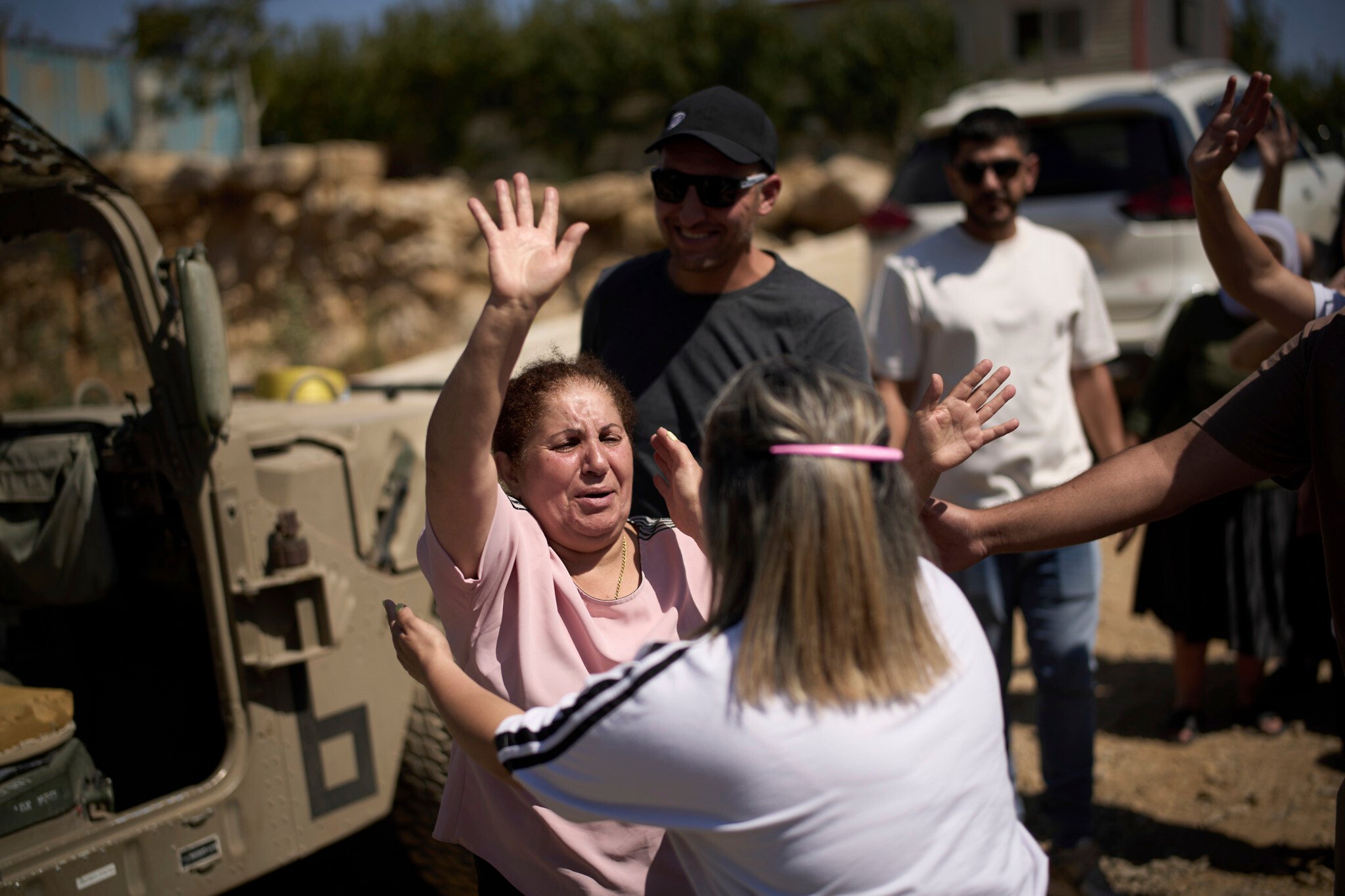
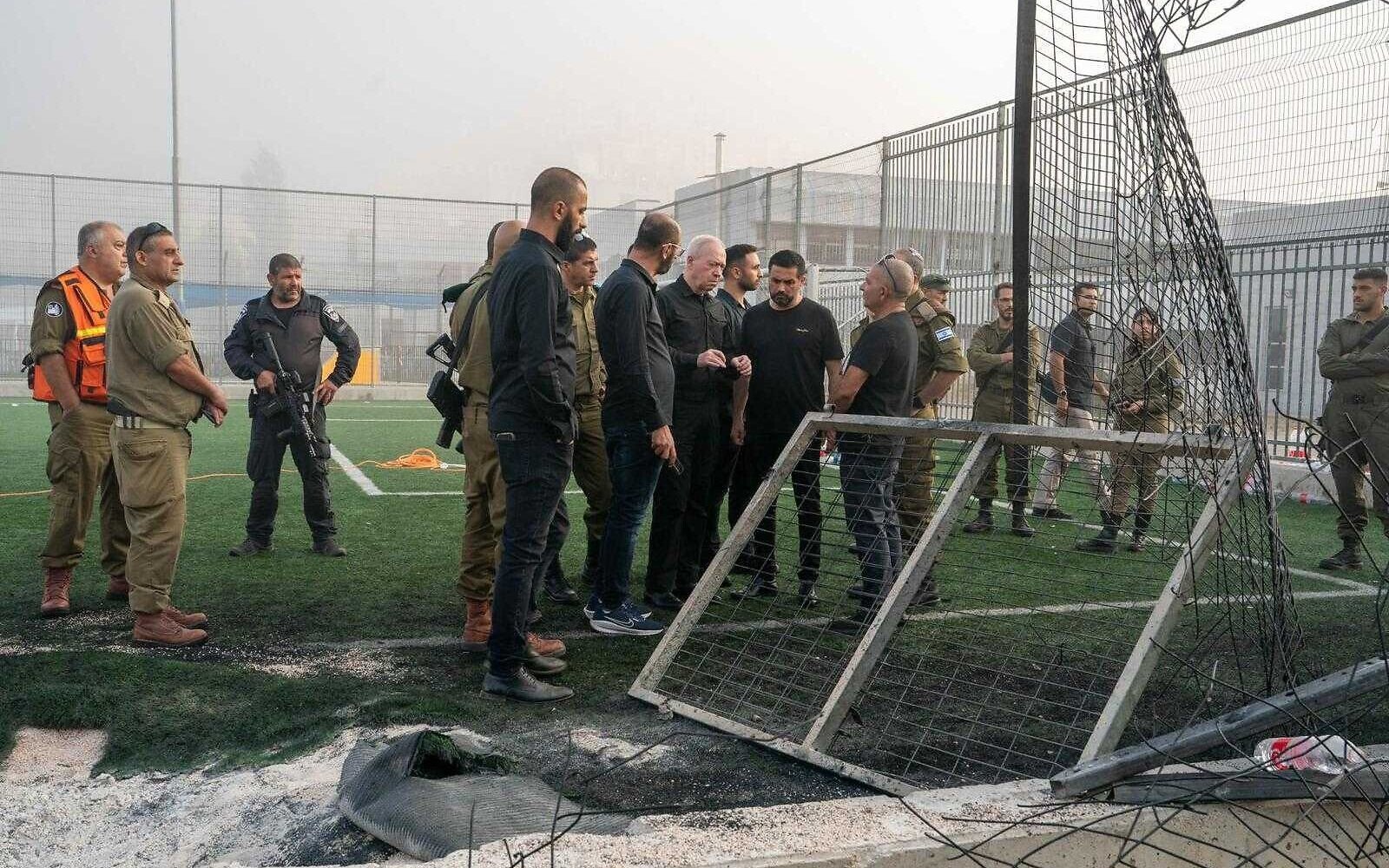
MAJDAL SHAMS (JTA) — A year after a Hezbollah missile slammed into a soccer field here, killing 12 children and turning the quiet Druze town near Israel’s northeastern border into a symbol of mourning, it was once again in the headlines — this time for an unplanned border breach.
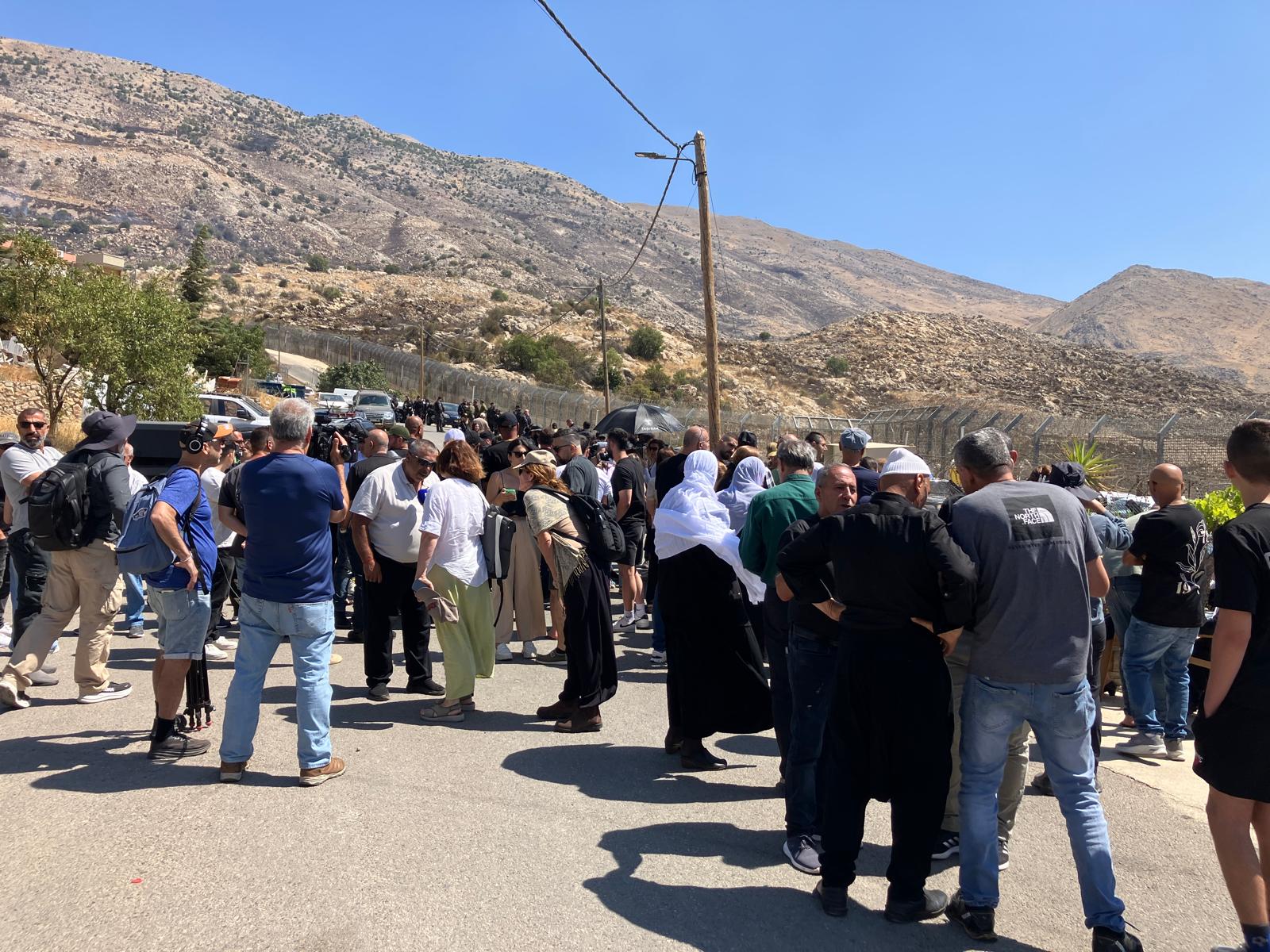
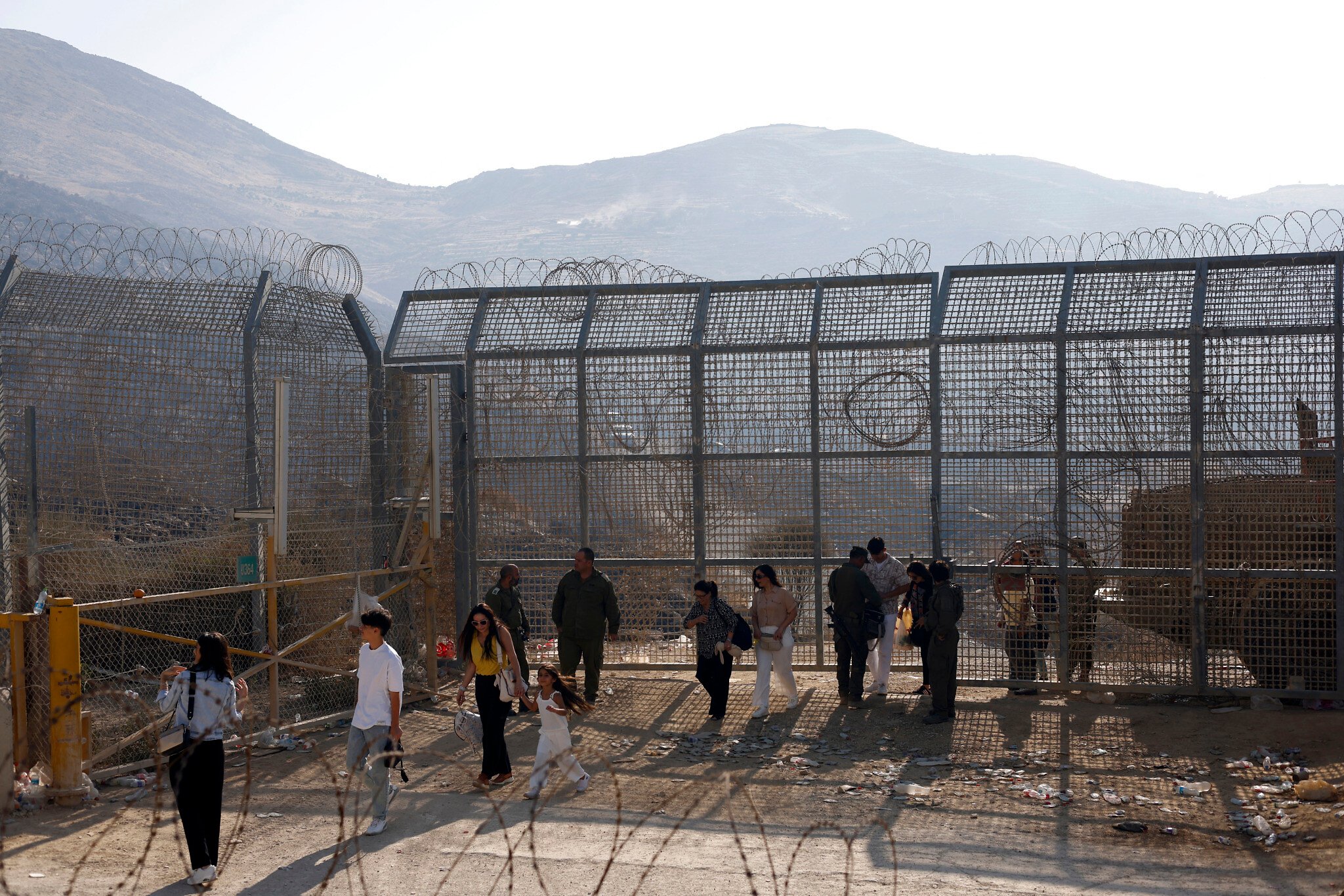
Hundreds of Druze residents pushed through the security fence separating the Israeli Golan Heights from Syria last week, rushing toward family members they had not seen in decades.
The breach followed days of fighting across southern Syria between the local Druze population and Bedouin militias backed by Syrian government forces, killing more than 1,100 people last week and displacing over 120,000, according to the United Nations and Syrian monitoring groups.
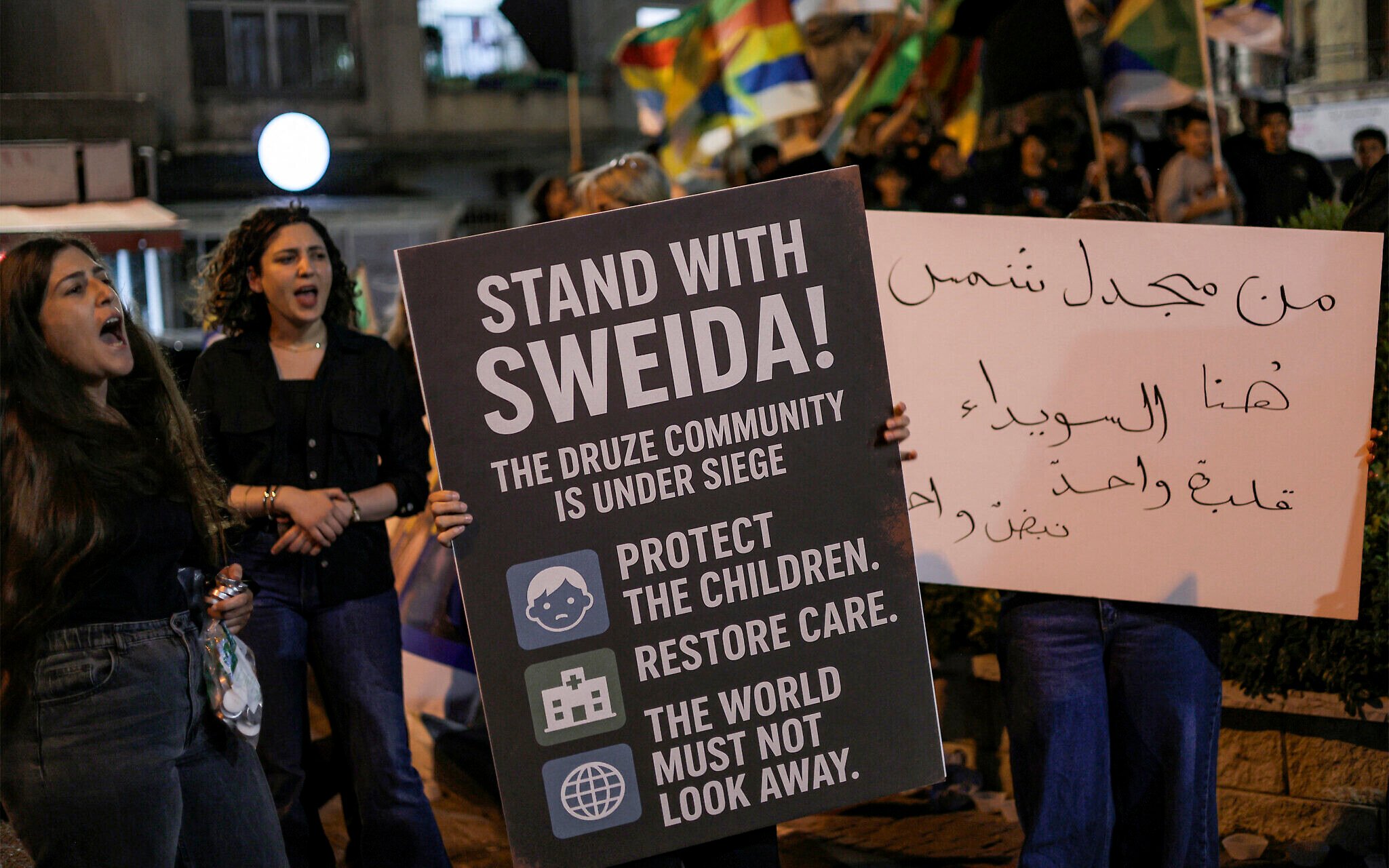
Many of those who stormed the fence said they were prepared to march all the way to Sweida — the Druze-majority Syrian region that is the epicenter of the bloodshed — to stop the killings themselves. Footage of the massacre of Druze civilians across the border that residents said had been filmed by the perpetrators began circulating on phones. Many in Majdal Shams said the scenes echoed the horror of Hamas’s October 7, 2023, onslaught on Israel — only this time, it was happening to their brethren in Syria.
Some accused the Israeli government of not doing enough to stop the violence, despite Israeli strikes against Syrian military targets in both Sweida and Damascus — a move Prime Minister Benjamin Netanyahu said was to protect the Syrian Druze and their “deep blood covenant” with their Israeli counterparts. Others praised the intervention.
Near the fence, men and women called out across the line while others held signs marked with the names of long-lost relatives, hoping someone would recognize them and step forward. Two sisters, separated for 30 years since one married a Syrian man in the 1990s, wept in each other’s arms in front of TV cameras. In another scene, a mother clutched her 48-year-old son, whom she hadn’t seen since he moved to Syria as a teenager.
Three days later, as a shaky ceasefire between the two sides held, a smattering of Majdal Shams residents lingered near the fence. Dalia Shams said that while she was moved to tears by the videos of reunions circulating on social media, she had instructed her children to stay away from the border area.
“I told them, you have a future here. What happens if they close the gate? You’ll be stuck there. There’s no life there,” she said.
Majdal Shams resident Hadi Sabra said the Israeli army’s decision not to intervene forcefully with those who stormed the fence was understood by many as a quiet show of solidarity.
“They allowed it to happen,” he said. “They knew people needed to let off steam and have a day to see their loved ones.”
A border soldier, identifying himself only as “A,” said watching the reunions was difficult.
“They cried, they hugged, and then they went back to opposite sides of the fence, in enemy states. No one knows if they’ll ever meet again,” he said.
Despite a public call by a Druze spiritual leader to cross the border to “assist our brothers being slaughtered in Syria,” not everyone in the community supported the breach.
“I understand the urge to help, they’re our brothers, and people are hurting,” Majdal Shams resident Heba Asaad said. “But it should have been done in an organized way. We need to act logically, not emotionally. Crossing like that into an enemy state endangers them and us.”
Asaad, head of the B’Yachad nonprofit and the Druze community’s liaison for humanitarian aid to Syria, has been involved in coordinating shipments of emergency contraception following reports of sexual violence. The IDF on Sunday transferred medical supplies, including trauma kits and life-saving medications, to the hospital in the Sweida region’s capital city of Sweida, the site of an alleged massacre by Syrian regime forces. That day also saw Druze and Jewish Israelis lining up to donate blood for the wounded.
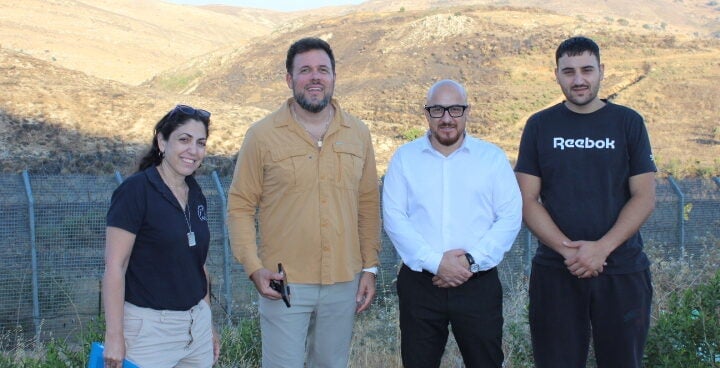
Jonathan Conricus, a former IDF spokesperson and senior fellow at the Foundation for Defense of Democracies think tank, which was touring the border area, said Israel’s strikes in Syria were aimed at stopping a broader escalation. He linked the regime’s assault on Sweida to the recent lifting of US sanctions on Syrian President Ahmed al-Sharaa.
“I struggle to explain the sudden change,” he said. “This is a centuries-old conflict between Druze and Bedouin. But for the first time, it was backed by the Syrian state and its armed forces.” The Israeli strikes, he added, “may not have been judicially supported, but they were the right thing to do — they likely saved thousands of lives.”
Sabra welcomed the IDF strikes in Syria but said they should have come earlier, as soon as military convoys began moving toward Sweida. “But of course, I’m happy the IDF assisted fighters in the field. It proved that there really is an alliance between us,” he said.
In the weeks before the flare-up, reports surfaced of Syria potentially joining the Abraham Accords — a prospect that now felt remote.
“The minute there’s peace, I’m the first to go,” Dalia Shams said.
Sabra was less forgiving. “You can’t make peace with jihadists. Once a jihadist, always a jihadist. If they aren’t stopped, they’ll do another October 7, over in Syria and here as well.”
Sarit Zehavi, an IDF reservist major and head of the Alma Research Center, which monitors security threats from Israel’s northern borders, was also touring the area. She shared Shams’s hope for peace, but warned that the West was too quick to buy into Sharaa’s illusions.
“If there’s ever normalization, I’m on the first bus over there,” she said, adding that her Jewish father was Syrian-born. “But we can’t trust [Sharaa]. All he knows is how to talk nicely.”
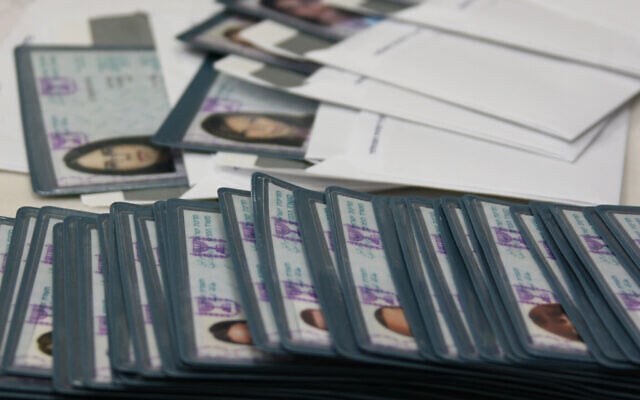
This year has seen a surge in Druze residents of the Golan — who until the Syrian civil war largely saw themselves as citizens of that country — formalizing their ties to Israel. In the first half of 2025, 1,050 applied for Israeli citizenship, nearly double the 572 who applied in all of 2024, according to figures published by the Population and Immigration Authority. About 6,000 Druze in the Golan — roughly 20% of the population — now hold Israeli passports, though many do so quietly.
With evacuees returning to Israel’s north in recent months as Hezbollah’s missile threat subsided, tourism began to pick up, with some visitors visiting damaged villages and new defense lines in a form of “war tourism.”
But that momentum unraveled for Druze communities in the wake of last week’s violence. The Bambook resort, perched above the volcanic lake at Birkat Ram, reminiscent of a quiet Alpine valley, had only just begun to see bookings return after 20 months of war.
“First Hezbollah, then Iran, and now Syria,” said the resort’s owner, Muchi Shams, who is related to Dalia. “Everything was finally booked. But overnight it all disappeared.”
Back in Majdal Shams, the sun dipped behind the hills. A strong breeze rolled through the town, at odds with the rest of the country, which was gripped by a summer heat reaching the mid-90s. A sculpture of a soccer ball with angel wings and a crown sits atop a traffic circle, commemorating the 12 victims of the Hezbollah missile attack.
Sabra said his friends who had lost loved ones in the attack still avoided celebrations. “It left too many scars.”
Asaad agreed, adding that the massacres in Syria had compounded the grief of families still reeling from the last tragedy. “They haven’t even had a chance to mark the anniversary of their children’s death. There’s been no closure — it’s just one blow after another,” she said.
“July,” she added, “will forever be a black month.”
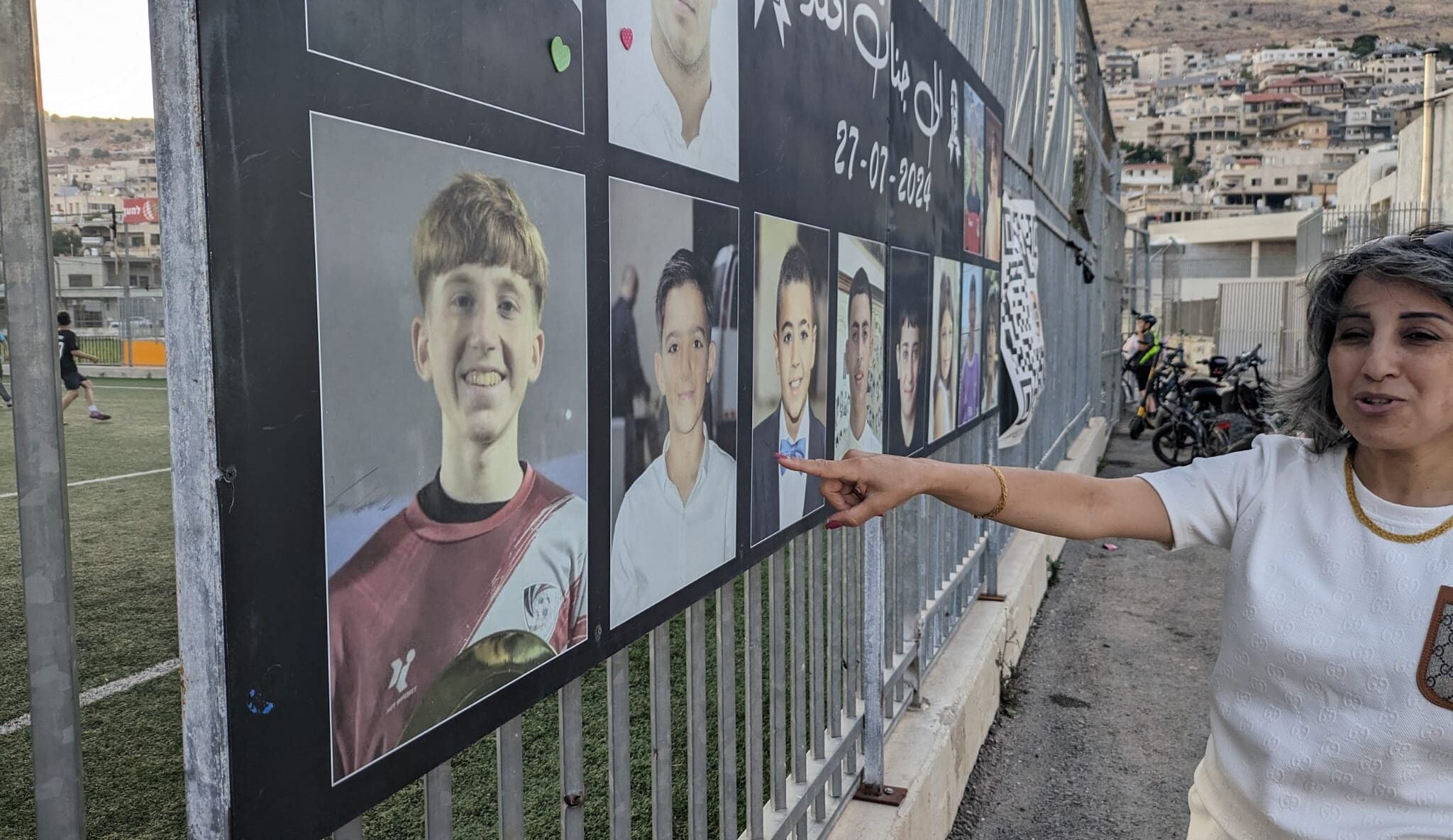
At the soccer field, dozens of children were laughing, chasing balls, shouting across the grass. The levity belied the weight of the space and the faces of the 12 young victims on a giant, sun-faded banner stretched across the fence, as well as the broken scooters littered along the side of the field exactly as they fell when the rocket slammed down last year.
Until last month, not a single child had returned to play there, Dalia Shams said. It was only after a community healing session on the pitch that they began to come back.
Shams’s husband, Adham, said Druze families had tried to find meaning through the religion’s core belief that the number of souls is fixed, cycling through the community in an endless loop. “It’s a small comfort knowing those souls are still with our community,” he said.





The Times of Israel Community.