

In Halamish, missed clues, lax security let terrorist in
Killer wore a white shirt, apparently to blend in with similarly clad settlers, left no trace when he broke in, settlement official says
 Add ToI as a Preferred Source on Google
Judah Ari Gross is The Times of Israel's religions and Diaspora affairs correspondent.
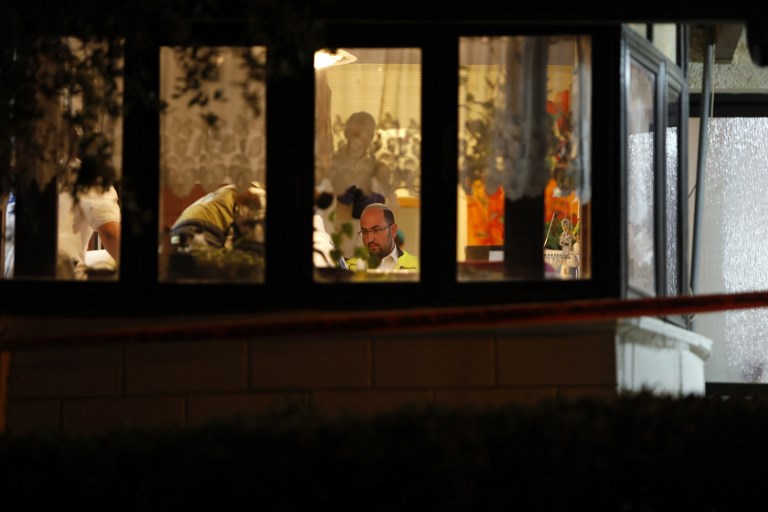
With a simple disguise, a butcher’s knife and bottles of water to perform ablutions, 19-year-old Omar al-Abed climbed over the fence of the Halamish settlement on Friday night, tripping its sensor but avoiding detection.
Once inside the settlement, the Palestinian teenager performed some kind of purification ceremony. He was wearing a white shirt, the common choice for many Shabbat-observant Jews in Israel.
“He knew that Jews wear white shirts on Shabbat. So that even if someone saw him, they wouldn’t pay him any mind,” said Victor Vaknin, the settlement’s security coordinator.
A few minutes later, he knocked on the door of the Salomon family’s house, knife in hand. The 10 members of the Salomon family in the house had already eaten Shabbat dinner. They were getting ready to raise a toast to the birth of a new grandchild when Abed arrived.
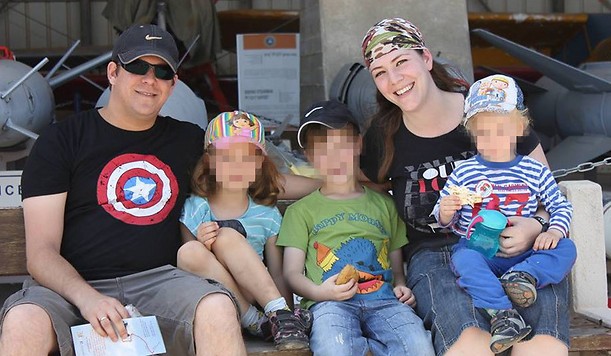
Expecting well-wishers, they opened the door to him. “But instead of a guest wishing them a ‘mazal tov,’ there was a massacre,” Vaknin said.
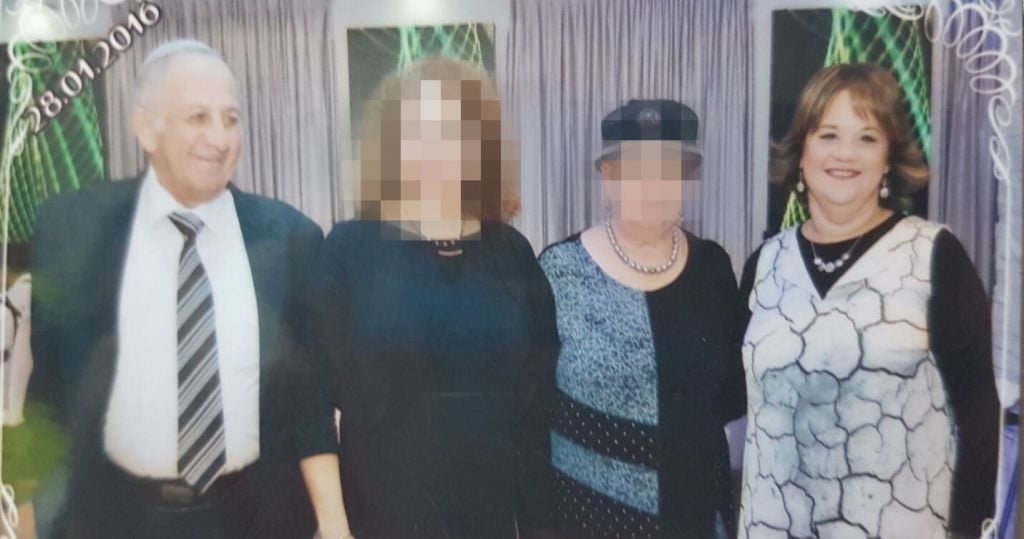
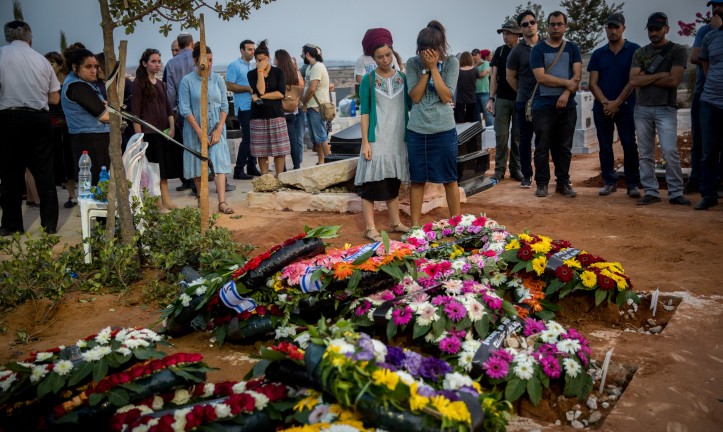
Abed, who came from the nearby village of Kobar, stabbed to death three members of the family, its patriarch Yosef Salomon, 70, and two of the children, Chaya, 46, and Elad, 36. The bloody rampage was cut short when a neighbor who happened to serve in an elite IDF unit heard the screams, grabbed his gun and shot the Palestinian terrorist in the gut, wounding him.
According to initial assessments, the settlement’s security team — known in Hebrew as a kitat konenut — responded to the break-in according to protocol, Vaknin told The Times of Israel.
Like most settlements, Halamish is surrounded by a fence covered in touch sensors, allowing settlement security personnel to know if the barrier has been breached and where. If they detect an infiltration, the volunteers contact the army and bring in soldiers to search the area. That didn’t happen on Friday night.
[mappress mapid=”6253″]
When Abed climbed the fence into the settlement, he did set off the sensors. A patrol unit in a jeep drove to the area and a member of the security team checked for signs of an infiltration, Vaknin said.
The patrol did not see any obvious signs of a breach and so the kitat konenut did not pass along a message to the IDF, assuming that the sensor had been tripped by an animal, he said.
“He went by, looked, didn’t see anything and drove on,” Vaknin said.
Since the side of Halamish where al-Abed entered abuts a forest, that segment of fencing is often falsely triggered by passing animals.
However, according to Channel 2 news, the army’s initial assessment of the attack found that the response team was slow to check the fence after the sensor was triggered, which may have given Abed more time to sneak inside.

It is unclear how much faster the patrol unit would have had to be in order to spot Abed along the fence.
Vaknin said the settlement has long been aware that the southeastern side of Halamish is vulnerable and warned multiple defense officials about the threat.
“We spoke to the defense minister, to the chief of staff, to the head of the [Central] Command, to every defense official possible,” he said.
Indeed, the area where Abed climbed the fence into Halamish was the same area where in November three Palestinian men allegedly started a fire that destroyed 17 homes and damaged 25 others, according to the security coordinator.
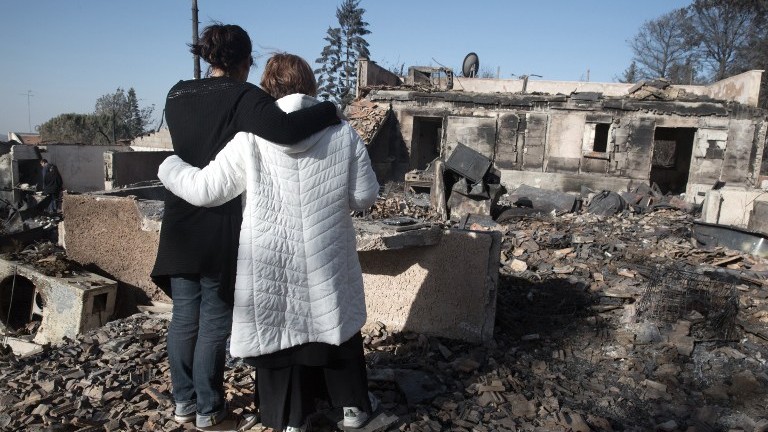
Vaknin said the settlement wanted additional cameras to monitor the area and eventually to close the road down the hill, from which came both the alleged arsonists and Friday night’s terrorist.
“We’ve been asking for it for seven months,” he said. “They’re taking advantage of this weak point and are managing to carry out terror attacks.”
On Monday, the military said it received the requests from Halamish and passed along its recommendations to the Defense Ministry for final approval, which it has yet to receive.










The Times of Israel Community.