

International Monetary Fund warns Trump tariffs will damage US, global economies
EU drawing up retaliatory measures to Washington’s import restrictions on steel and aluminum, with one official saying president still has a chance to avoid global trade war
 Add ToI as a Preferred Source on Google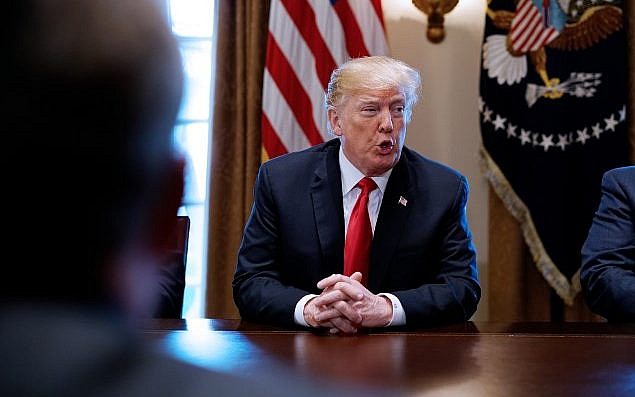
The International Monetary Fund warned Friday that the steel and aluminum tariffs announced by US President Donald Trump will harm the US and global economies.
“The import restrictions announced by the US President are likely to cause damage not only outside the US, but also to the US economy itself,” IMF spokesman Gerry Rice said in a statement.
He said the move raises fears other countries could use national security rationale “to justify broad-based import restrictions,” and urged countries to work to resolve trade disagreements without such extremes.
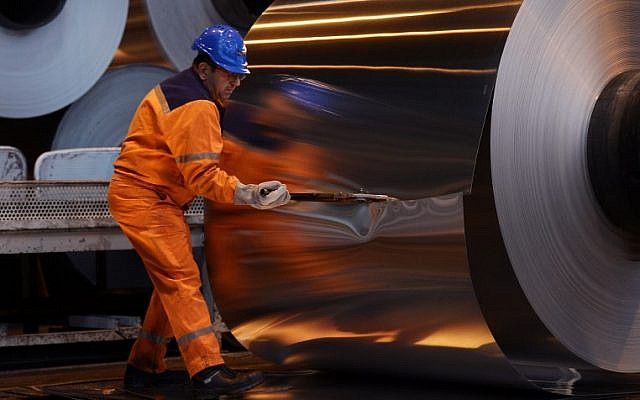
It was the latest international reaction to Trump’s announcement Thursday that he will impose 25 percent tariffs on steel imports and 10% on aluminum, raising fears of a trade war and sending global stock markets tumbling.
Those fears were exacerbated early Friday when Trump welcomed a trade war in a blistering series of tweets, saying they are “good and easy to win.”
When a country (USA) is losing many billions of dollars on trade with virtually every country it does business with, trade wars are good, and easy to win. Example, when we are down $100 billion with a certain country and they get cute, don’t trade anymore-we win big. It’s easy!
— Donald J. Trump (@realDonaldTrump) March 2, 2018
He raised the stakes saying he would seek to impose “reciprocal taxes” on all imports from trading partners that have duties on US exports.
Rice urged countries to step back from such harsh steps.
“We encourage the US and its trading partners to work constructively together to reduce trade barriers and to resolve trade disagreements without resort to such emergency measures.”
He noted that the steel and aluminum taxes would hurt the manufacturing and construction sectors, which are major users of aluminum and steel.
European Commission chief Jean-Claude Juncker said Friday the EU was drawing up retaliatory measures against leading US brands such as Levi’s and Harley Davidson.
But a top EU trade official said Trump still has a small chance to avoid a damaging global trade war and asked the US leader to reconsider his aims before he signed them into effect next week.
“We will not sit idly when European industry and jobs are threatened,” Juncker said on the sidelines of a conference in Hamburg, Germany.
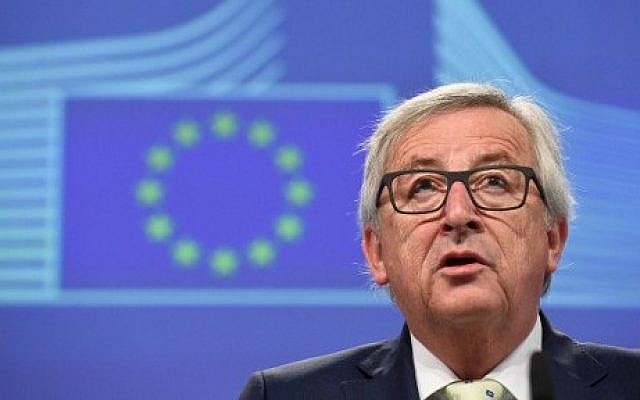
With global stock markets tumbling and allies riled, the president greeted the negative reaction by raising the stakes and vowing even more sweeping trade attacks in a series of angry tweets.
Despite Trump’s reaction, European Commission vice president Jyrki Katainen told AFP “there is a little window of opportunity still open” and that Europe was not a danger to the US.
“That means that the president of the US has not yet signed the proposals. So we do hope that he will reconsider his aims,” the former Finnish prime minister said.
“We are very close to a fast spreading trade war and in this kind of war there are only victims, not winners,” Katainen said.
Katainen, who handles trade policy for the EU with trade commissioner Cecilia Malmstrom, said he understood that the US was seeking to take a stand against China, which has flooded the globe with cheap steel.
“I understand the frustration but the medicine the US administration is willing to use is not right,” he said.
A “global trade war… means in concrete terms unemployment, less economic growth, and worse relations between trading partners,” he said.
“At a time when we have just come out of the most severe economic crisis in decades, nobody should do anything in order to harm the stability we have achieved,” he added.
The EU would “form a coalition of like-minded countries and potentially take the US to the WTO court together,” Katainen said in reference to the World Trade Organization tribunal in Geneva.
These countries could include Japan, Canada, Turkey and Mexico, he said.
The EU’s targeting of bourbon whiskey and motorcycles had been expected and matches similar moves in 2003 during a “steel war” unleashed by the administration of George W. Bush.
At the time, the list included not just steel products but also orange juice, apples, sunglasses, photocopiers and other goods.
The United States backed down before the EU carried out its threat to impose the retaliatory measures.







The Times of Israel Community.