

Iran ready for dialogue with Gulf states, its deputy FM says
Abbas Araghchi meets with his Qatari counterpart in Doha, expresses readiness for talks on stability and security of the region
 Add ToI as a Preferred Source on Google
Stuart Winer is a breaking news editor at The Times of Israel.
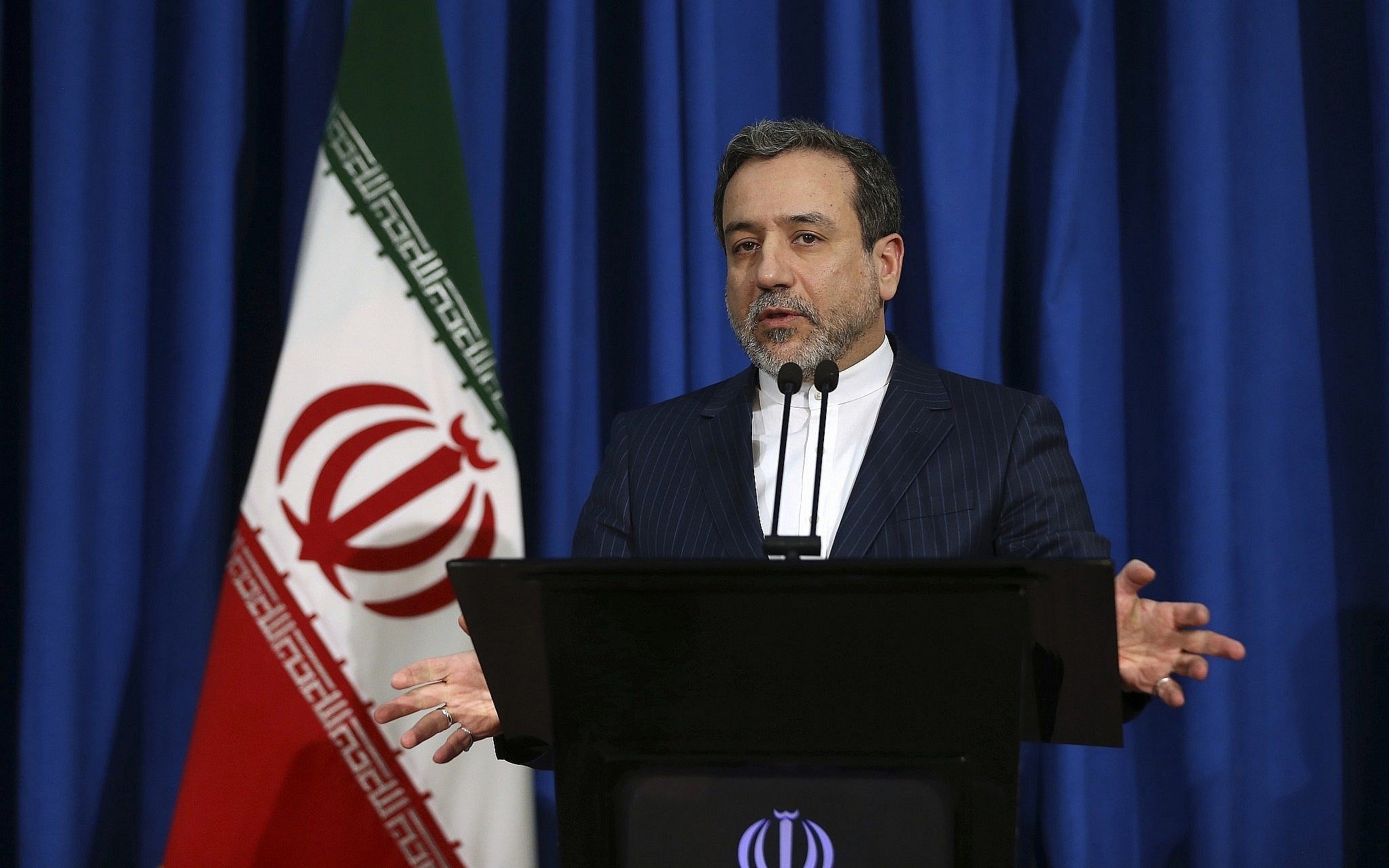
Iran is ready for dialogue with Gulf states to reduce regional tensions, the country’s Deputy Foreign Minister Abbas Araghchi indicated Tuesday, during a visit to Doha, the Qatari Foreign Ministry said.
Araghchi met Qatar Foreign Minister Sheikh Mohammed bin Abdulrahman Al-Thani and “confirmed his country’s readiness to enter into a dialogue between the Gulf States and Iran regarding the stability and security of the region,” the ministry said in a statement
The two discussed ways to boost bilateral relations “besides a number of regional issues of common concern” and “expressed their concern about the escalation and problems in the region.”
“Both sides expressed the importance of dialogue to resolve them,” the statement said.
Iran is locked in a tense standoff with the US and its Gulf allies, Saudi Arabia and the United Arab Emirates. Last Friday US President Donald Trump announced the US will deploy 1,500 additional troops to the Middle East. It follows a US decision in early May to send an aircraft carrier strike force and B-52 bombers in a show of force against what Washington’s leaders believed was an imminent Iranian plan to attack US assets.
On Sunday, Araghchi tweeted about his regional tour and declared that while Iran will hold no direct or indirect talks with the US, it is willing to negotiate “with each and every country in the Persian Gulf for balanced and constructive relations based on mutual respect and interests.”
Just visited Oman, will go to Kuwait & Qatar next: No direct/indirect talk with US, but ready to negotiate with each and every country in the Persian Gulf for a balanced & constructive relations based on mutual respect & intrests. pic.twitter.com/ohXyuwPXoH
— Seyed Abbas Araghchi (@araghchi) May 26, 2019
Tensions between the US and Iran have escalated after last year Trump pulled the US out of a 2015 nuclear agreement between Iran and world powers. Washington then reimposed strict sanctions that have caused Iran’s economy to plummet as the other partners to the deal, known as the Joint Comprehensive Plan of Action, struggle to keep the pact intact.





The Times of Israel Community.