

Israeli researcher finds that by eavesdropping, ‘genius’ dogs learn words like toddlers
In Shany Dror’s study, super-smart canines had 90% accuracy in fetching toys whose names they learned directly or overheard; findings shed light on how language learning may have evolved
 Add ToI as a Preferred Source on Google
Reporter at The Times of Israel

In a peer-reviewed study published in the journal Science, Israeli researcher Shany Dror, a postdoctoral researcher at the University of Veterinary Medicine in Vienna, found that super-smart canines, known as Gifted Word Learner dogs, can pick up new words from eavesdropping on their owners’ conversations, similar to 18-month-old human toddlers.
“We all know dogs can excel at learning actions like ‘sit’ or ‘down,’” said Dror, 37, speaking to The Times of Israel in a teleconference call. “But few studies have been done on dogs’ knowledge of object labels.”
Dror’s research on 41 GWL dogs shows they have unique social cognitive skills, enabling them to interpret humans’ voices, gazes, and gestures, she said, noting that humans first developed an ability to understand complex social interactions, and “only later used this complex understanding to develop language.”
“The fact that this skill exists in a species that does not have language suggests that the skill itself predates language,” Dror said. “The research helps us understand how language learning may have evolved.”
The researchers worked with 10 dogs from around the world, including border collies, a border collie rescue mix, and a Labrador.
They first asked the dog owners to introduce two new toys to each dog for one minute while repeating the toy’s name and letting the dog play with it for several days.
In the second phase, instead of introducing a new toy to the dog directly, family members passed the toy back and forth, all the while saying its name but without interacting with their dog.
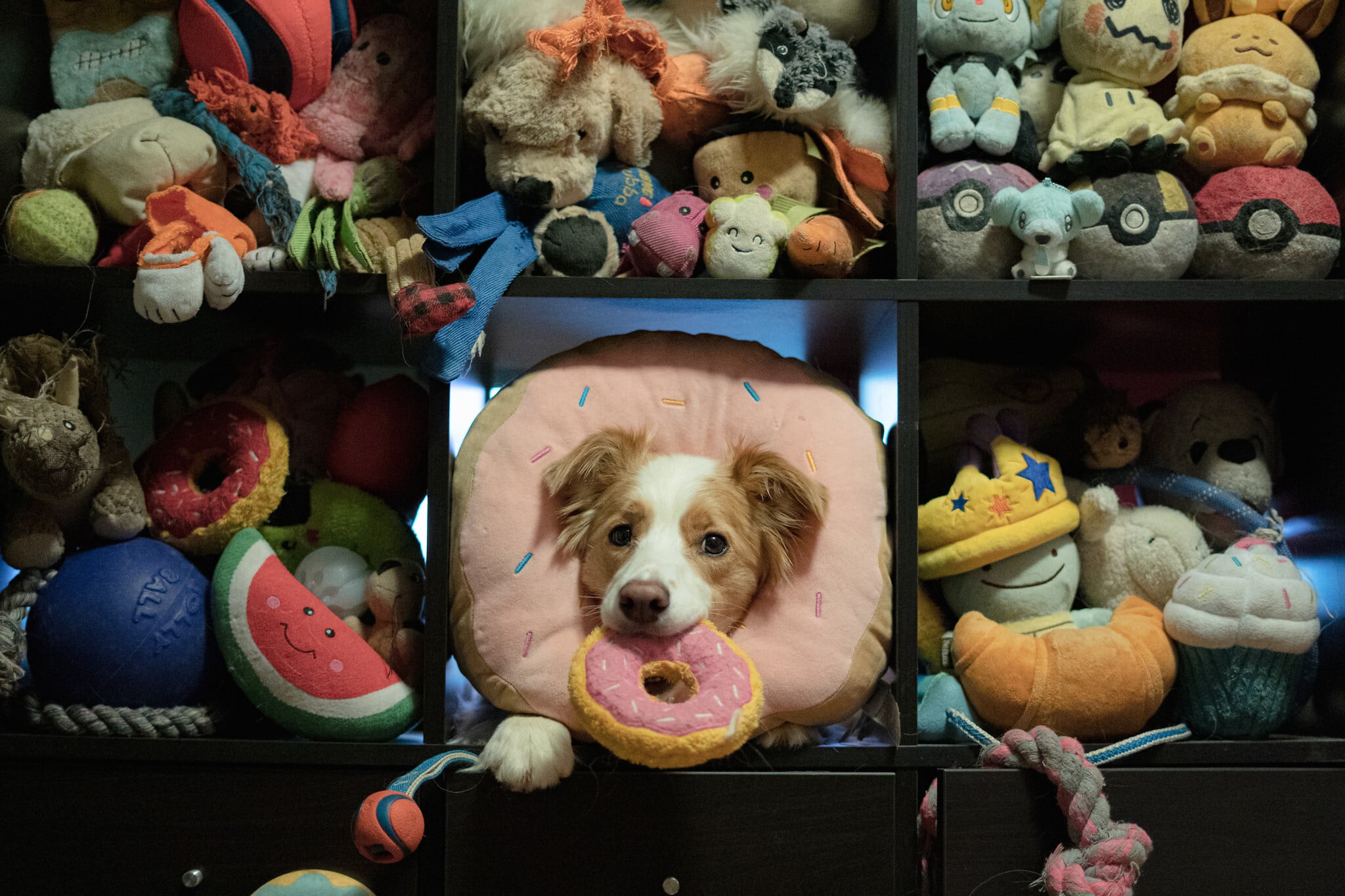
For both experiments, the canines heard the name of each new toy for a total of only eight minutes during a series of brief exposure sessions. The researchers then tested whether the dog had indeed learned the toys’ names. The toys were placed in a different room. The owner then asked the dog to fetch a certain toy, saying, for example, “Can you bring Teddy?”
The dog then scampered into the room where there was an assortment of toys to pick out the specific toy. Overall, the pups had 90% accuracy in bringing toys they had learned directly or overheard in speech.
“I think the exciting bit is what it tells us about these dogs’ ability to interpret our communication,” said Dror.
The team also conducted another experiment in which the owners showed a toy to their dog and then placed the toy inside a bucket. The owner named the toy only when it was out of the dog’s sight.
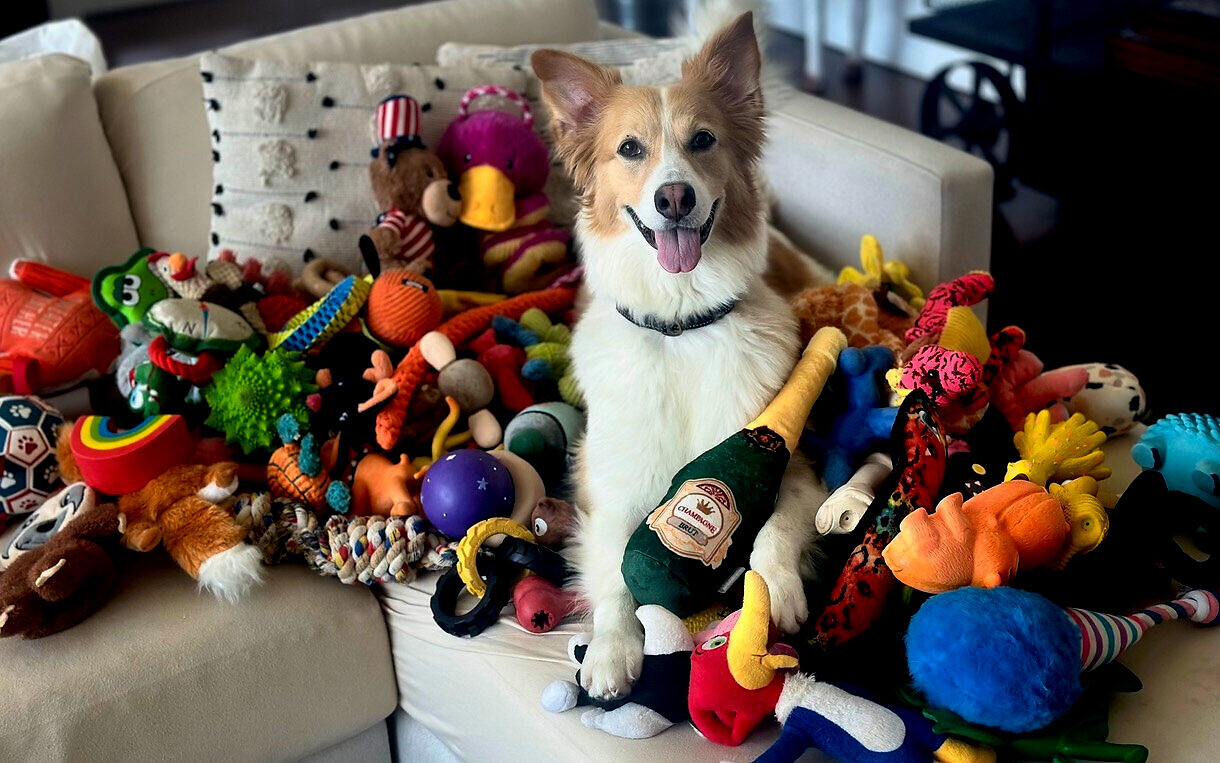
This created a temporal separation, Dror said, between seeing the object and hearing its name.
“Despite this discontinuity, most of the gifted dogs successfully learned the new labels,” Dror said. “Under the right conditions, some dogs present behaviors strikingly similar to those of young children.”
Even though only humans have language, Dror noted that some of the thinking skills needed for language may exist in other animals too, pointing out language research done with bonobos, a type of great ape, and African grey parrots.
If animals can learn an object’s name just by overhearing people talk, Dror said it suggests they have social skills similar to those of human babies, who learn by watching people talk and interact with things.
Horses, bats, and dogs
Dror, who grew up in Kibbutz Kabri in the Western Galilee, said she always loved animals and had her first horse at 12.
She served in the Israeli police force’s dog handler unit and qualified to represent Israel in four world-championship competitions for utility dogs with her dog, Mitos.

During her undergraduate studies at the Weizmann Institute of Science in Rehovot, she helped to train fruit bats to participate in navigation tasks. Later, she studied with Prof. Claudia Fugazza at Budapest’s Eötvös Loránd University in the Department of Ethology, which is the science of animal behavior.
While there, Dror and Fugazza began to search for GWL dogs in what they called the Genius Dog Challenge. After five years of social media campaigns, they found 41 GWL dogs from nine different countries.
They then conducted a series of experiments that they broadcast over YouTube in what is called a citizen science model, where researchers design experiments and ordinary people gather the information.
“It’s important to note that we didn’t study one or two dogs but had a large scientific sample,” Dror said.
The Genius Dog Challenge competitions
One of the final competitions Dror and Fugazza held was between Gaia, a seven-year-old Border Collie in Brazil, and Max, another seven-year-old Border Collie in Hungary, which aired on YouTube in 2020.
Both dogs had one week to learn the names of 12 new toys. Then, the owners commanded their dog to get a specific toy from another room and bring it back. The match ended in a tie, with both dogs able to fetch all 12 toys.
“Shany and I have quite a lot of experience with dogs, as scientists, as dog trainers, and living with dogs,” Fugazza said at the event. “But what we saw with these dogs, to me, honestly, was totally mind-blowing, and I really didn’t believe my eyes.”
Dror said that of the 41 GWL they have studied, 50 percent have a vocabulary of over 100 toys.
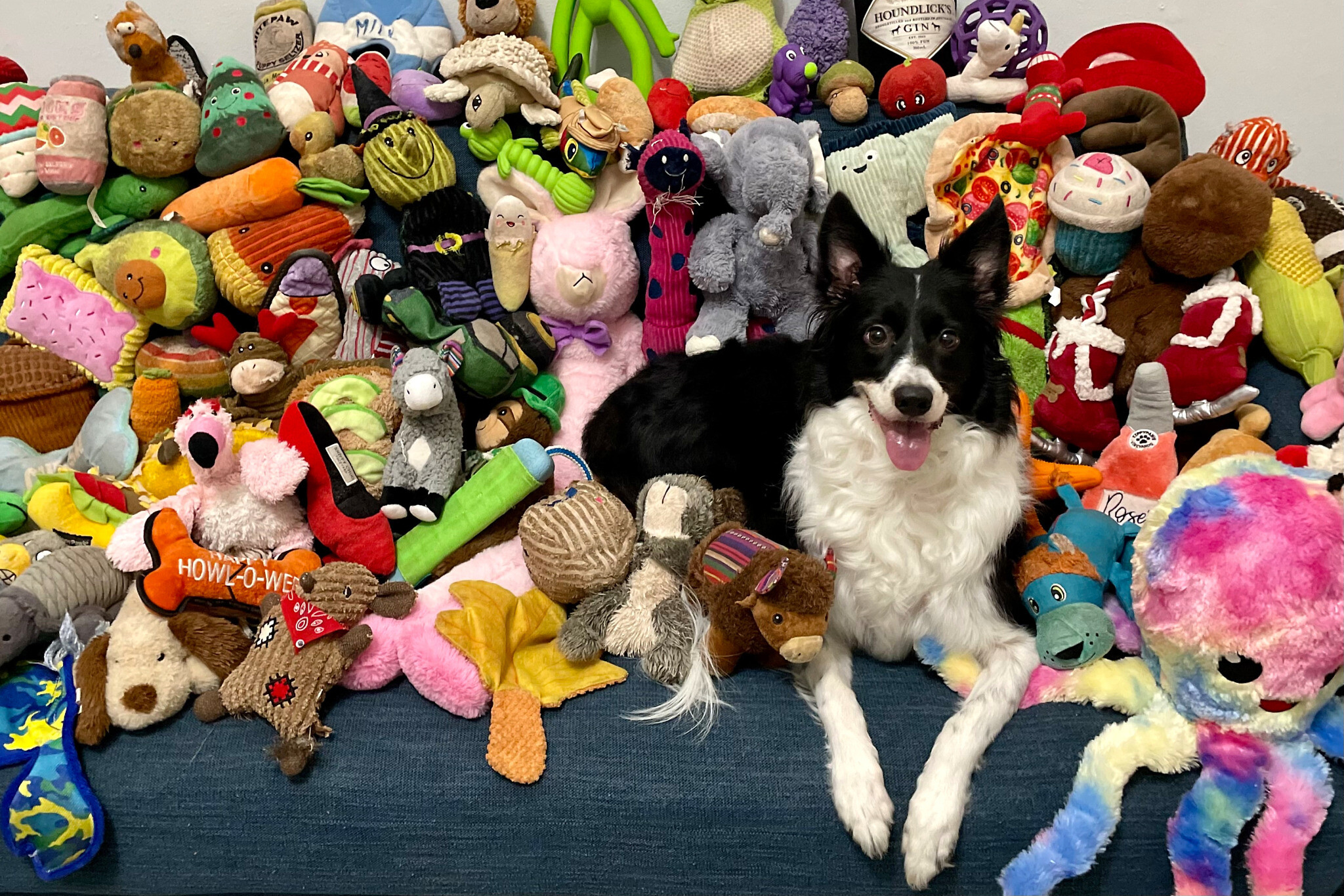
She also said she was surprised to learn that the majority of the dog owners lacked a professional background in dog training. However, most of the dogs were adopted when they were younger than 10 weeks old, and they lived in a single-dog household.
Most GWL dogs that have been found are border collies, a breed that Dror said is known for its trainability. However, there are also Yorkshire terriers that have been considered gifted word learners, suggesting that other breeds may also have that skill.
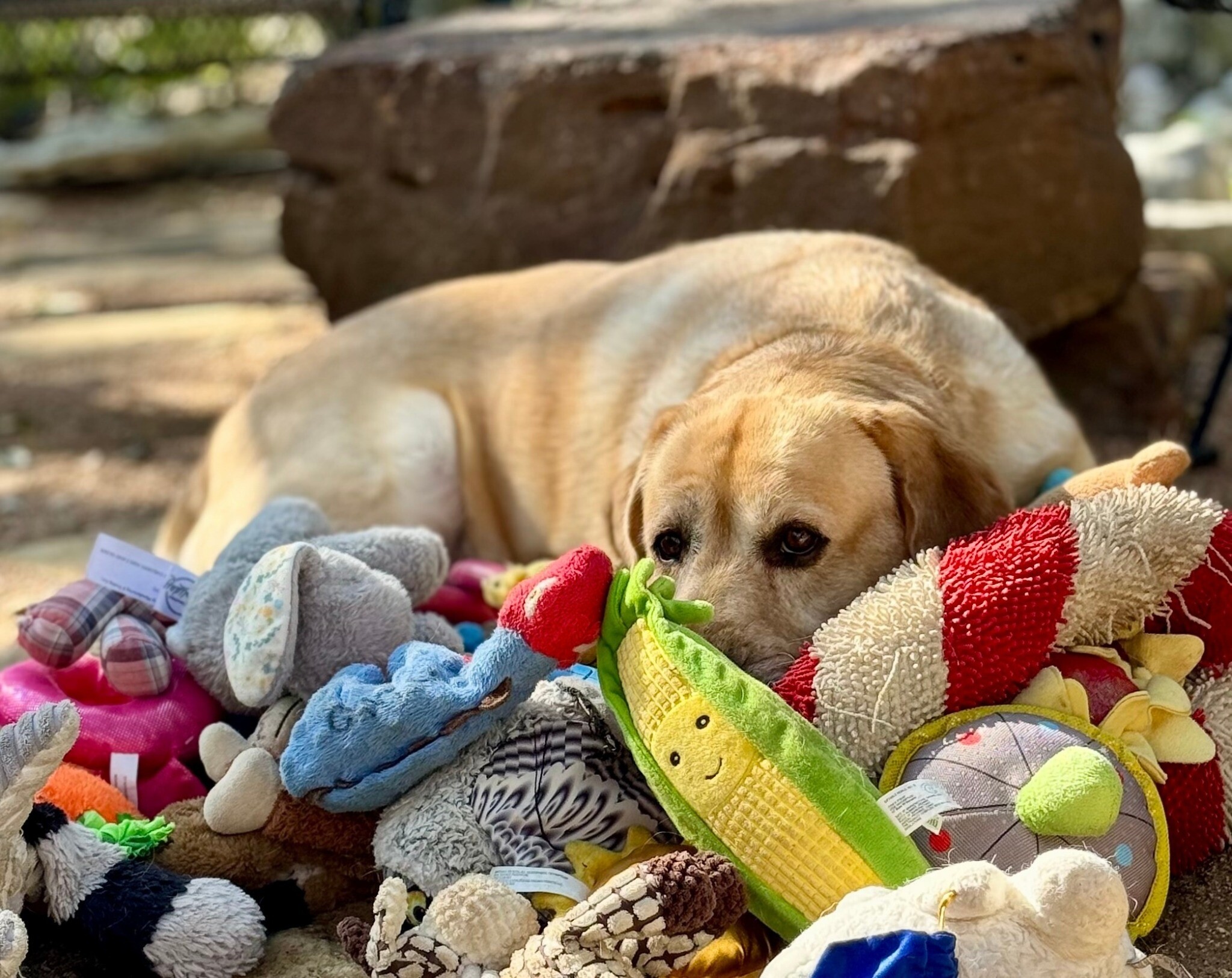
Dror speculates that, in general, dogs may have an evolutionary advantage over other animals because they can listen to and learn from human verbal interactions.
“This study provides an interesting and novel demonstration that dogs can learn words for new objects simply by overhearing human conversations,” said Dr. Amalia Pinkusfeld Medeiros Bastos, a lecturer in the School of Psychology & Neuroscience at the University of St. Andrews, who was not involved with the study.
She said the research raises “exciting” possibilities for future studies, including testing whether dogs can also acquire non-object words, such as action terms like “sit” or “heel,” only by eavesdropping.

Dror said that she is searching for more GWL dogs and encourages owners who think their dogs know the names of at least 10 toys to contact her via her website.
“We need more genius dogs to continue our research,” Dror said.
When asked about how people should pick a dog for a pet, she explained that the most important thing is for “owners to match themselves to their dogs’ lifestyle and not try to get the dog to match their lifestyle.”
While border collies are smart, she said, they are also very energetic and require owners who have the time and energy to care for them properly.
Dror currently has a Schipperke puppy, a small dog breed from Belgium, that she is training.
When asked if she thinks this puppy is a GWL dog, Dror said, “I don’t know yet, but I hope she is.”










The Times of Israel Community.