

Israeli settler berates Palestinian American near his besieged West Bank home
After Loui Abu Ridi flies in from US amid extended blockade, extremist steps onto his property despite closed military zone, sparking face-off
 Add ToI as a Preferred Source on Google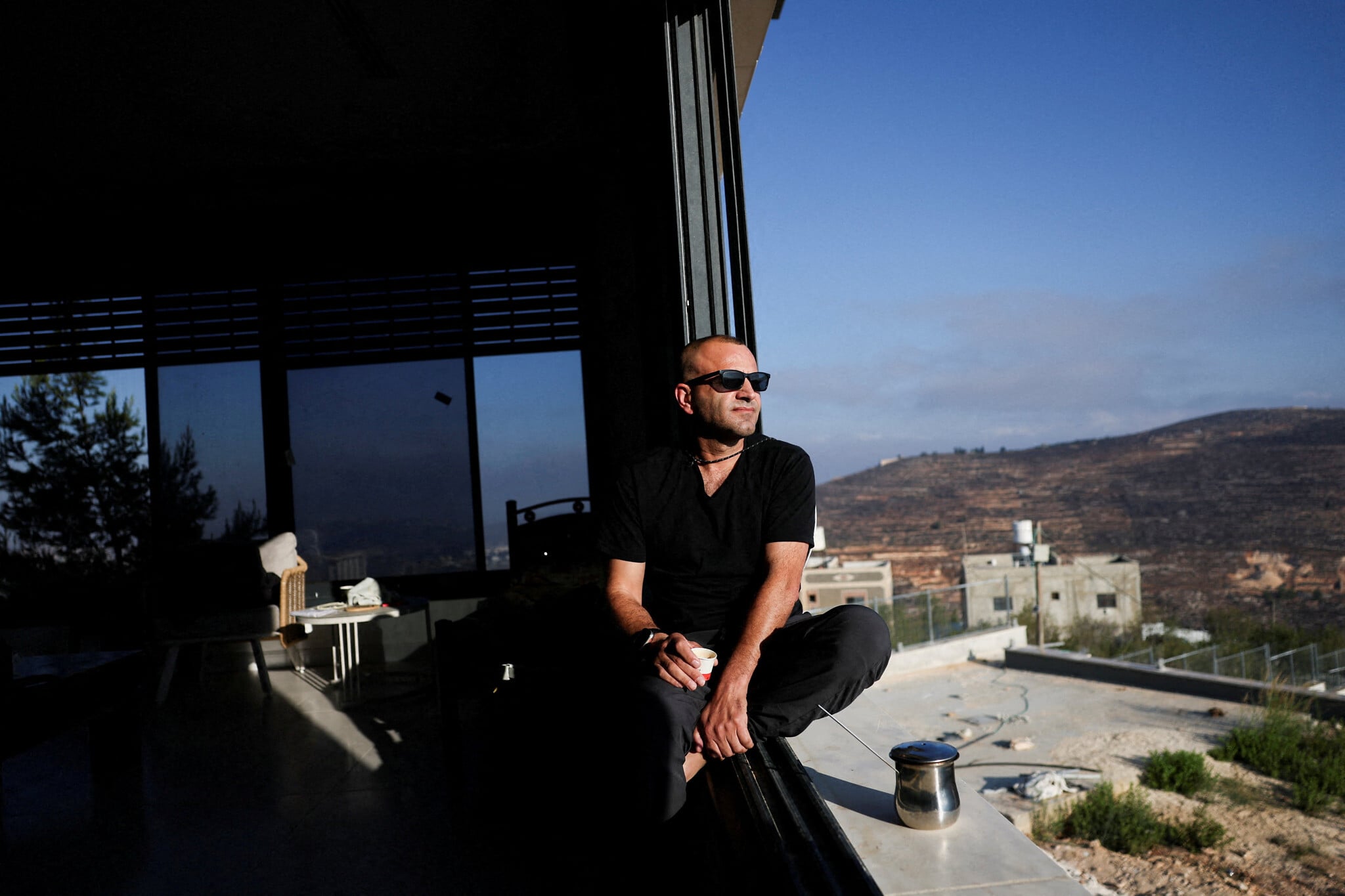
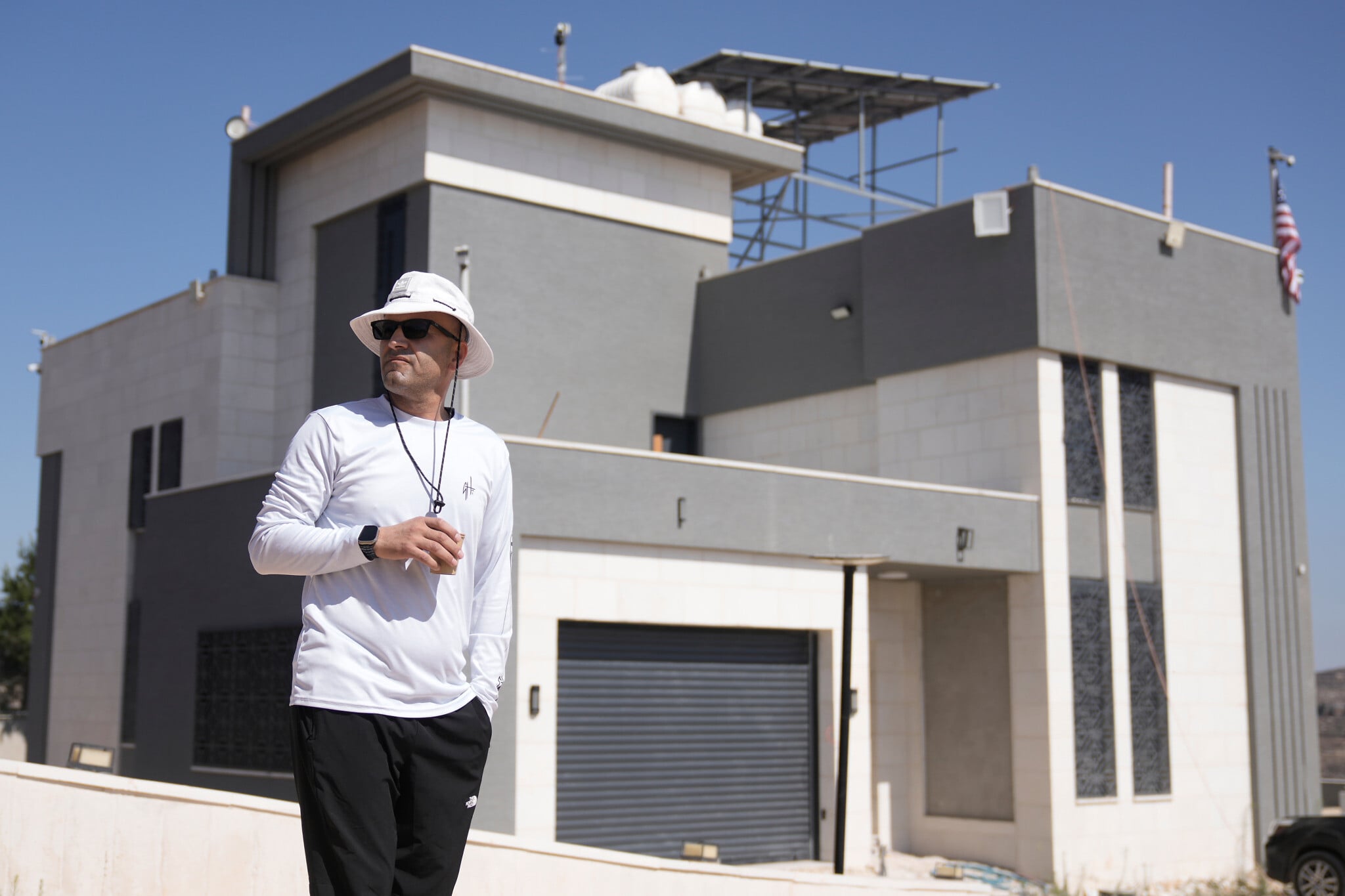
QUSRA — Palestinian American Loui Abu Ridi raised a giant American flag over his West Bank home, hoping it might deter extremist settlers besieging the property. But it wasn’t enough to stop one of them from walking onto Abu Ridi’s land on Tuesday, during a tense face-off.
Abu Ridi arrived in Qusra late on Monday after traveling from the US, fearing he could lose the property to Jewish settlers who have encircled three Palestinian homes in the village for more than a week, prompting US condemnation.
Abu Ridi, who grew up in the West Bank village, was taking a morning walk among his cherry and fig trees on Tuesday when a settler approached from the hill above, in an encounter filmed by Reuters.
“You came to make a mess, ha?” the settler said in Hebrew as he approached, holding what appeared to be a Jewish law code book in one hand and filming Abu Ridi with a mobile phone.
“You are a terrorist settler, you know that?” Abu Ridi said, also filming with his mobile.
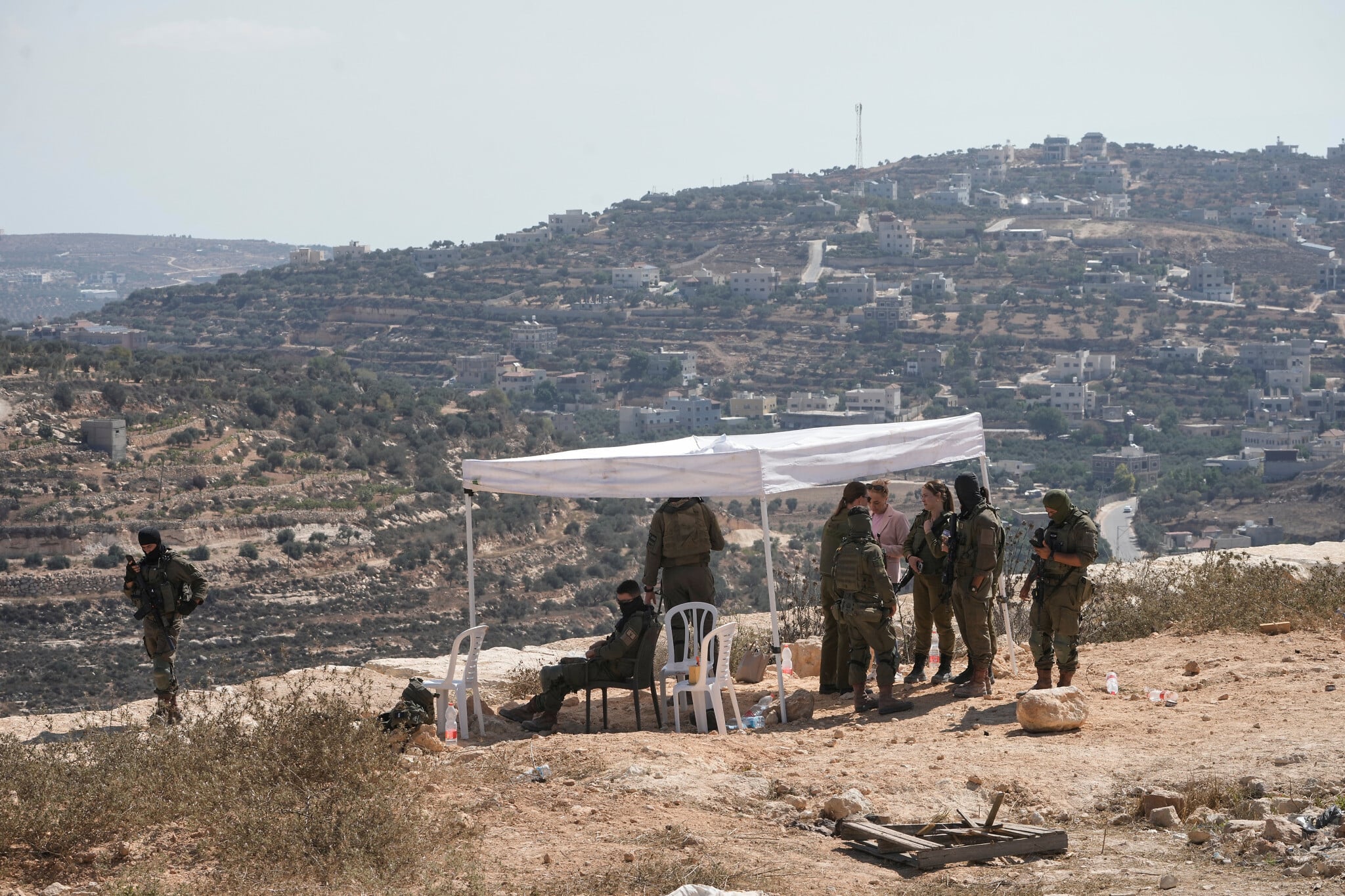
An Israel Defense Forces vehicle drove by a few times before soldiers approached and spoke to the settler, telling him it was a closed military zone.
???????????????????????? A Palestinian-American raised a giant U.S. flag over his West Bank home to keep settlers away. It didn’t work.
Loui Ridi returned to Qusra after settlers surrounded three homes for more than a week.
On Tuesday, a settler entered his land while filming.
Soldiers later…
— Mario Nawfal (@MarioNawfal) August 18, 2026
“I’ll leave if they leave. There are a lot of guys here. We’re all just guarding our territory. If they go inside the house, we’ll leave,” the settler told the soldiers.
The settler eventually retreated up the road before he was joined by two more settlers, and did not respond to a question from Reuters on what he was doing there. Eventually they ambled up the hill and out of sight.
“Just be inside, they go and you’ll be inside. Don’t talk to each other, okay? I’ll solve this problem,” an Israeli soldier told Abu Ridi, instructing him to enter his home.
Abu Ridi told the soldiers the settler should be arrested as his presence is illegal.
Related: From Ohio, a Palestinian American watches as settlers besiege his family in Qusra
The confrontation captured tensions in the village, where settlers began besieging the homes more than a week ago in an apparent effort to force the residents to flee, trapping residents inside and generating condemnation around the world.
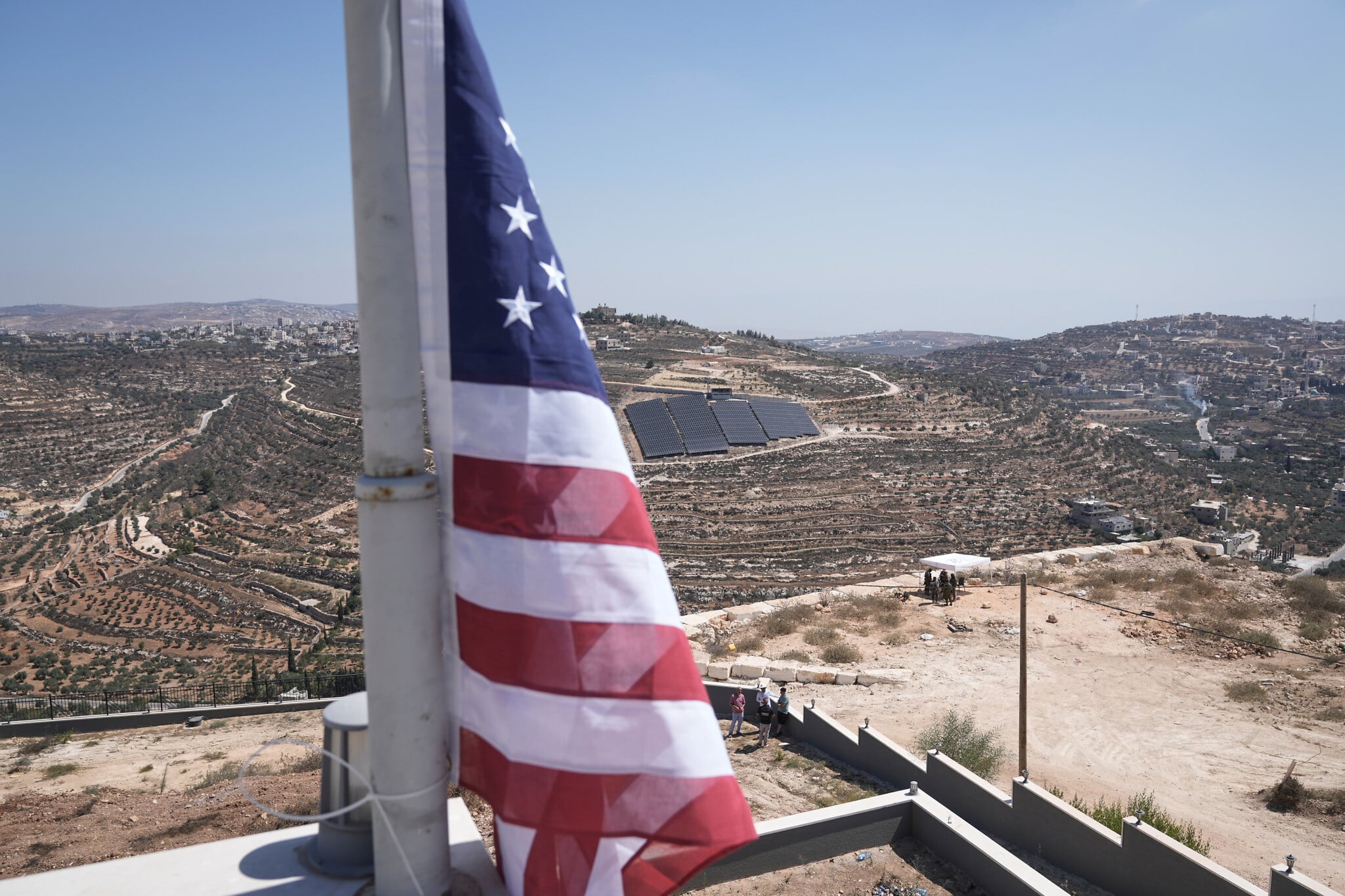
Abu Ridi hoisted the US flag over his property after arriving.
“I decided I want to raise this flag. If, God forbid, I’m unable to protect this house and the settlers end up here, they’re going to raise [their] flag. But before they raise their flag, they have to move the American flag, and that’s the message.”
Some 11 days after settlers commenced a siege of several Palestinian homes on the outskirts of the northern West Bank village of Qusra, residents of those houses told The Times of Israel on Wednesday that they are still trapped inside.
It took soldiers about a week just to clear several illegal outposts that settlers established adjacent to the three besieged homes on August 9.
The army declared the area a closed military zone, but soldiers have largely refrained from enforcing the directive against settlers, who have continued roaming the area every day to intimidate Qusra residents.
No settlers have been arrested for taking part in the siege, which appears to be a repeat of the strategy used to coax a Palestinian family to flee their home in the nearby village of Jalud last month. The building was subsequently taken over by settlers.
Residents of two of the three besieged Qusra homes told The Times of Israel that troops operating in the area have told them that they’re not allowed to leave their homes unless they coordinate the exit with the army ahead of time.
However, they said they’re hesitant to leave, even briefly, due to concerns that the settlers, whom the IDF refuses to arrest, will seize the opportunity to take over their homes.
“We still can’t go to work or go to the [center of the] village. We are still besieged,” says Qusay Abu Ridi, who lives in one of the homes owned by his Ohio-based brother Loui.
“The settlers are still here. We feel the same [as we have in recent days],” added Yusuf Hassan, the owner of the second home targeted by settlers.
The two families’ attorney, Roni Pelli of Yesh Din, sent a letter to the IDF on Monday regarding the restrictions imposed on the residents and the failure to remove the settlers from the entire area, but has not received a response.
The IDF has not responded to requests for comment.
Flag ‘a form of protection’
US officials have estimated that tens of thousands of Americans live in the West Bank, many of them in a cluster of villages between Ramallah and Nablus, where Qusra lies.
In the nearby village of Turmus Ayya, about 7 kilometers (4.3 miles) southwest of Qusra, local officials say that 80 percent of the town’s population holds US citizenship.
Yaser Alkam, 58, a spokesman for the village’s Palestinian American community, said there were a number of reasons why he and many others in the village fly American flags over their houses.
“It’s a form of security, a form of protection. It provides deterrence not only to the settlers but also to the IDF,” he said.
He also said it sent a direct message to the administration of US President Donald Trump.
“Here’s an American citizen being attacked in the West Bank by an American tax-funded army, American weapons used to attack Palestinian Americans in the West Bank,” Alkam said.
US Ambassador to Israel Mike Huckabee — a strong supporter of Jewish settlement in the West Bank — on Thursday condemned settlers besieging Abu Ridi’s home as “Israeli terrorists.”
A US official and an Israeli official said on Friday that White House officials are pressing Prime Minister Benjamin Netanyahu to publicly condemn the settlers’ actions.
Netanyahu has not commented on the siege in Qusra.








The Times of Israel Community.