

Israeli who survived 9/11 and October 7 now faces down Iranian missiles in Dubai
Chicago native Deborah Benson-Ben Aderet is stranded in the United Arab Emirates while her two daughters weather the war in their southern Israel home
 Add ToI as a Preferred Source on Google
Sue Surkes is The Times of Israel's environment reporter

No one would call Deborah Benson-Ben Aderet paranoid for believing that terror follows her everywhere. Not only did the Chicago native survive the deadly Hamas attack on the Gaza border on October 7, 2023, but she was also present for the 9/11 attacks in New York and the July 4, 2022, mass shooting in Chicago’s Highland Park.
Today, she is stranded in Dubai with her husband, Yossi, at a hotel just three buildings away from a resort that was hit by an Iranian projectile and caught fire on Saturday night. The couple’s two young girls are “safe” in their bomb shelter in their rented home in southern Israel, cared for by their maternal grandparents.
“We got to Dubai on Thursday, and were due to fly home Monday,” Benson-Ben Aderet told The Times of Israel via WhatsApp messaging. “We knew we were taking a risk that we might get stuck here,” she said. “But when you’re Israeli and living on the Gaza border, you understand that anything can happen at any time and you just have to live your life.“
The couple flew to the Emirati tourist destination last Thursday to celebrate their tenth wedding anniversary. It was a trip two and a half years in the making after having aborted a previously planned trip to Italy scheduled for October 2023. Then, instead of marking a decade of marriage, they were evacuated from their Kibbutz Zikim home after surviving October 7, 2023, in the bomb shelter of their home near the Gaza border, with their girls, then aged six and eight.
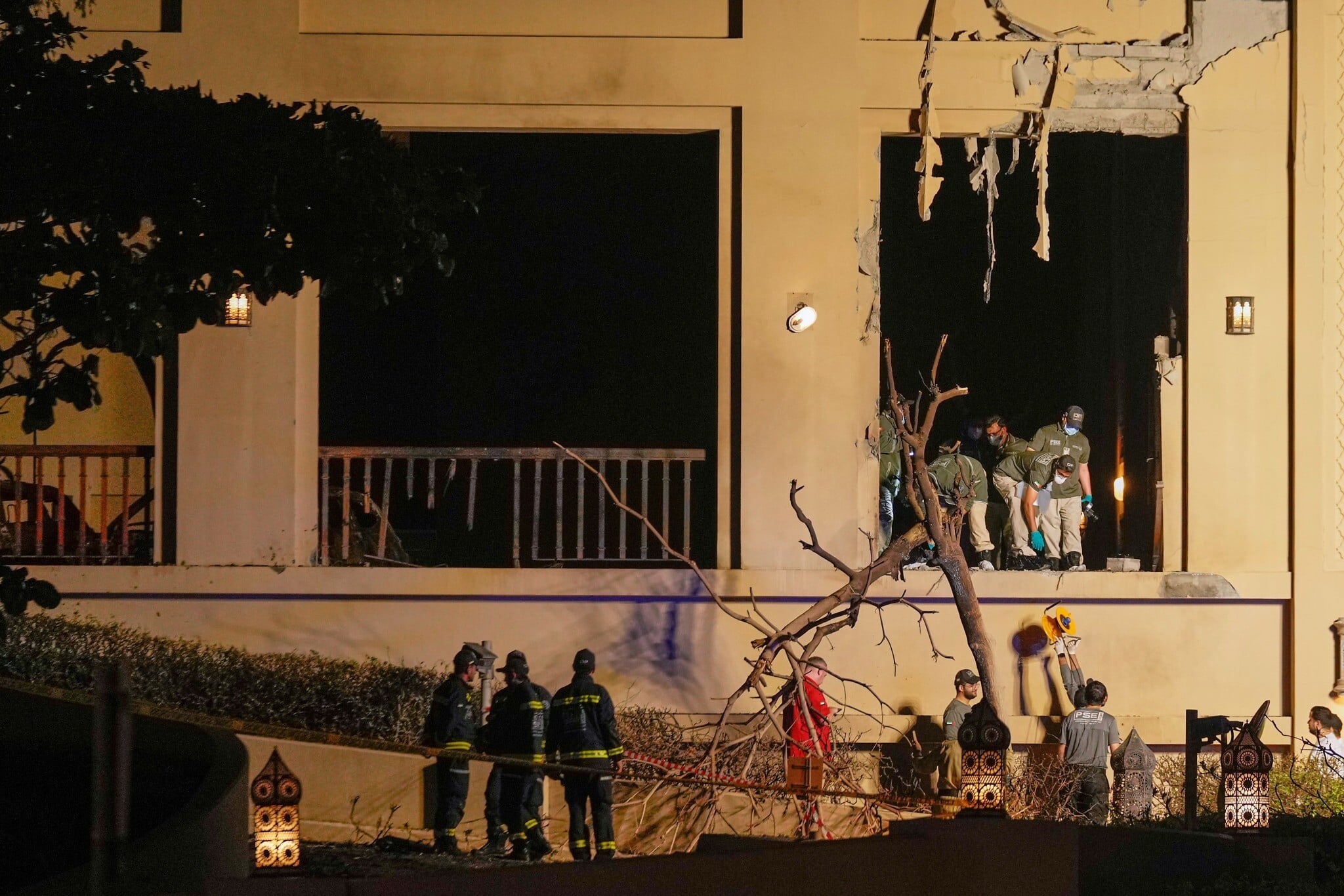
On Saturday night, shrapnel from an Iranian missile struck the Fairmont Hotel in Palm Jumeirah, just 400 meters (1,300 feet) away from where they are staying.
“We were in the local mall and heard a massive explosion,” Benson-Ben Aderet recalled. “We weren’t freaking out as much as the store employees. Around 80% of Dubai’s residents are foreigners. They were panicked, and one was crying. We were trying to calm them down, saying we’re Israeli, and this happens, and it’s already over.”
She described how the Dubai mall’s security personnel, unsure how to proceed, closed all the stores and restaurants down. “They don’t have shelters in Dubai.”
Benson-Ben Aderet continued, “This morning, when we went down for breakfast, they wouldn’t let anyone eat outside. We found the head of security and tried to explain that keeping everyone in a space enclosed by 30- to 40-foot-high glass windows wasn’t the best idea in the event of a blast. He told us the pool and sundeck were closed, but that we could go out at our own risk, so my husband and I were the first people in the pool this morning, arguing with the Ethiopian security guard that we were allowed to be there.”
“Now, the pool is full,” she went on. “They gave up and are letting everyone do what they want. There’s another couple here from [the southern city of] Beersheba, and we’ve been able to laugh about it together.”
Separated from her children
But being stuck in Dubai is no laughing matter.
As Benson-Ben Aderet communicated with this reporter, her daughters and her parents, who had come to Israel to look after them, were under missile attack in the bomb shelter of their rented home on Moshav Bitzaron, near Gan Yavne in southern Israel.

“One minute, the girls are OK,” she said. “They’re giggling and playing in the protected space. The next minute, it hits them. They’re worried about us and that we won’t get back.”
She bemoans the fact that since schools were closed Sunday and Monday due to the war, her girls will miss out on Purim festivities and wonders when she will be able to return to them.
“We read that El Al won’t fly until Tuesday night. We can’t get any answers from them. We’re just hoping we can be back in time for our daughter’s birthday on Wednesday.”
The constant sirens are difficult for her parents, who have also had their share of crises in Israel. They have needed a refresher on how to close a safe room window.
“But they were visiting with us on October 7, 2023, and even before then, when we were under Hamas rocket fire, so they’re not new to this either.”
Decades under fire
Benson-Ben Aderet moved to Israel in 2011 and met her Israeli-born husband, Yossi, a scientist.
In 2014, they moved to Ashkelon, where he grew up. The southern city is located 13 kilometers (about eight miles) north of the border with Gaza, and that year, the couple lived through the Protective Edge war with Hamas in Gaza.
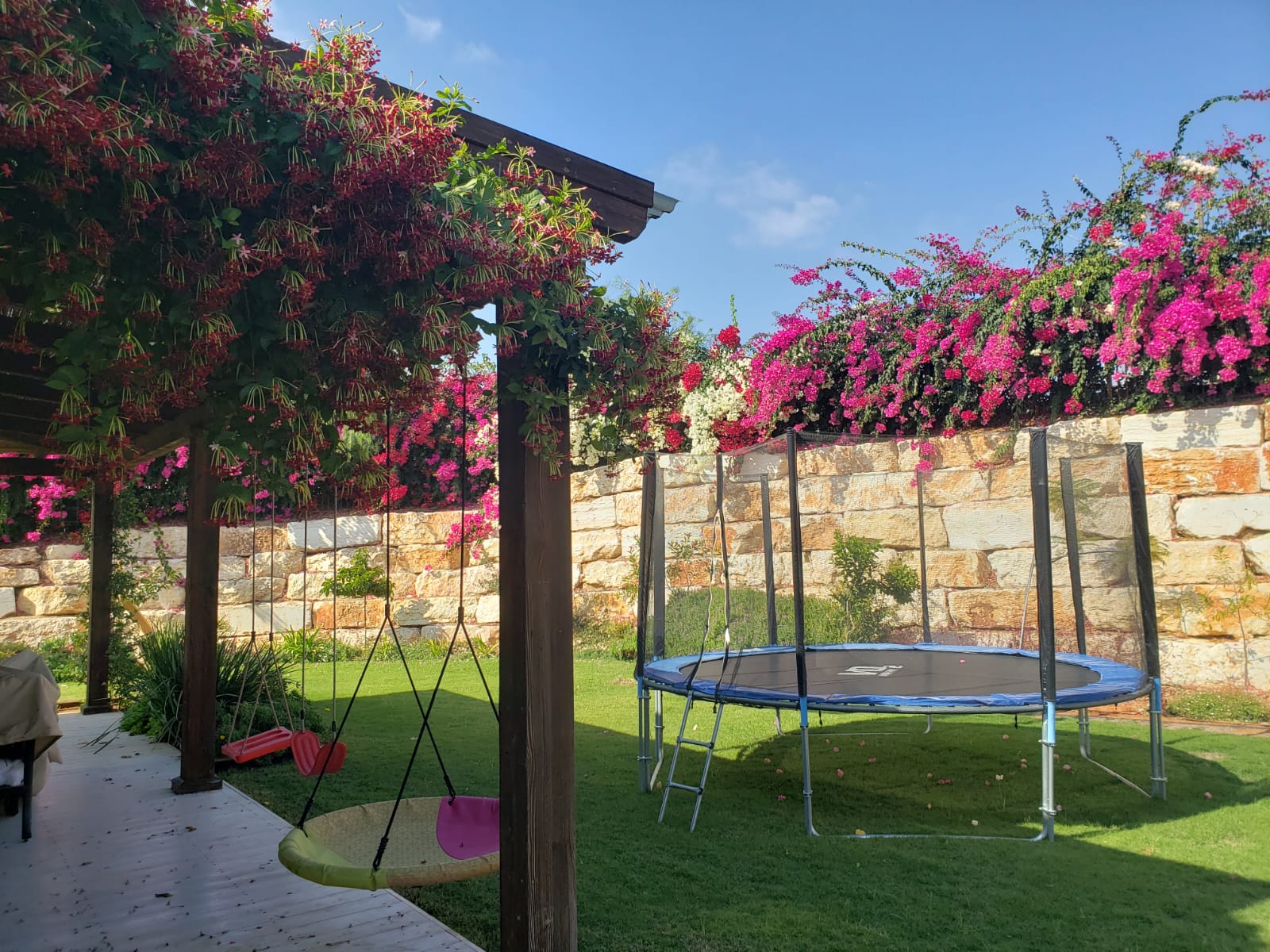
With Yossi working in the southern city of Sderot (his work has since moved to Rehovot), the two built their “dream house” in Kibbutz Zikim, which is just two to three kilometers (less than two miles) north of the Gaza border fence. They moved in in 2016.
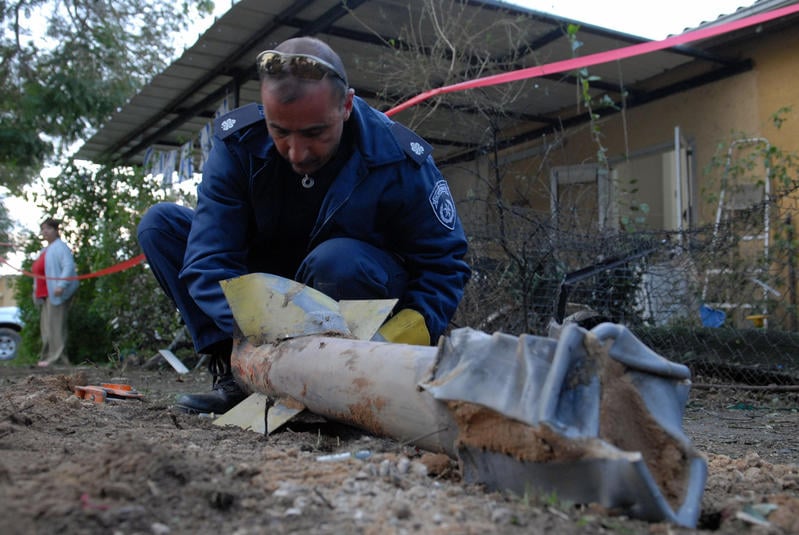
As Benson-Ben Aderet tells it on her Instagram and Facebook accounts, where she has become an active pro-Israel advocate (she was a teacher until October 7, 2023), the move meant enduring rocket attacks, incendiary balloons that set the fields on fire, and the burning of tires along the Gaza border prior to the October 7 attack.
Having survived the Hamas assault (Kibbutz Zikim’s civil defense squad successfully fought back terrorists, preventing an infiltration of the community), the family was evacuated to a hotel in Jerusalem.
“It was the third time we’d been evacuated,” she said, “Usually, it just didn’t make the news.”
A fortnight later, with her husband’s full backing, Benson-Ben Aderet flew to the US with the girls, only returning this past August to live in the rented house on Moshav Bitzaron.
“As a mom, I think about my girls first,” she said. “It’s just heartbreaking that 80 percent of their lives have been spent living under radical Islamic terror and coronavirus. Even when we moved from Zikim to Bitzaron and the girls understood we no longer had five to eight seconds to get to the protected space, but 45 seconds, my older girl chose the protected room as her bedroom.”
A return to the house in Zikim was unlikely, she said.
“As an American, I carry some guilt that I chose to live on the Gaza border, and in Israel,” she continued.
Asked about moving back to the US, she said the couple had discussed spending a few years there for the girls’ education, but that the idea was “on the back burner” because their older daughter was struggling so much to readjust to a new school in Israel.
“Terror follows us everywhere,” Benson-Ben Aderet concluded. “Radical Islam dictates my life and my travel plans, and it’s all very tiring… We keep thinking it’s over, and then another war happens.”










The Times of Israel Community.