

Jerusalem mayor inaugurates ‘huge but intimate’ stadium
11,600-seat indoor Payis Arena will soon be able to host big-name performers — such as Maccabi Tel Aviv and, authorities hope, the likes of Beyoncé
 Add ToI as a Preferred Source on Google
Jessica Steinberg, The Times of Israel's culture and lifestyles editor, covers the Sabra scene from south to north and back to the center
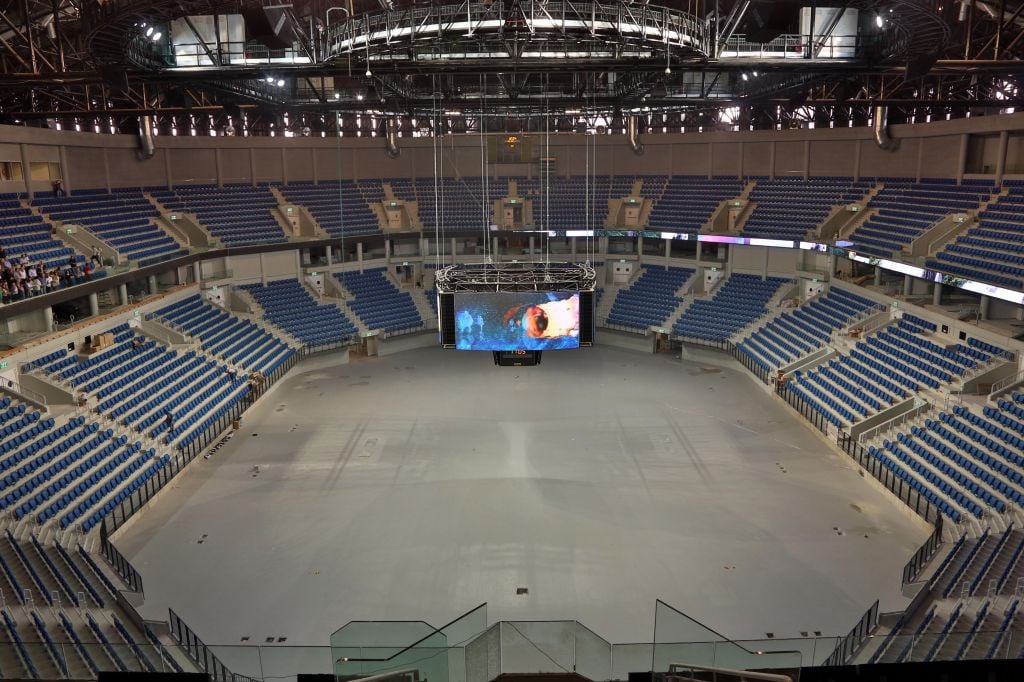
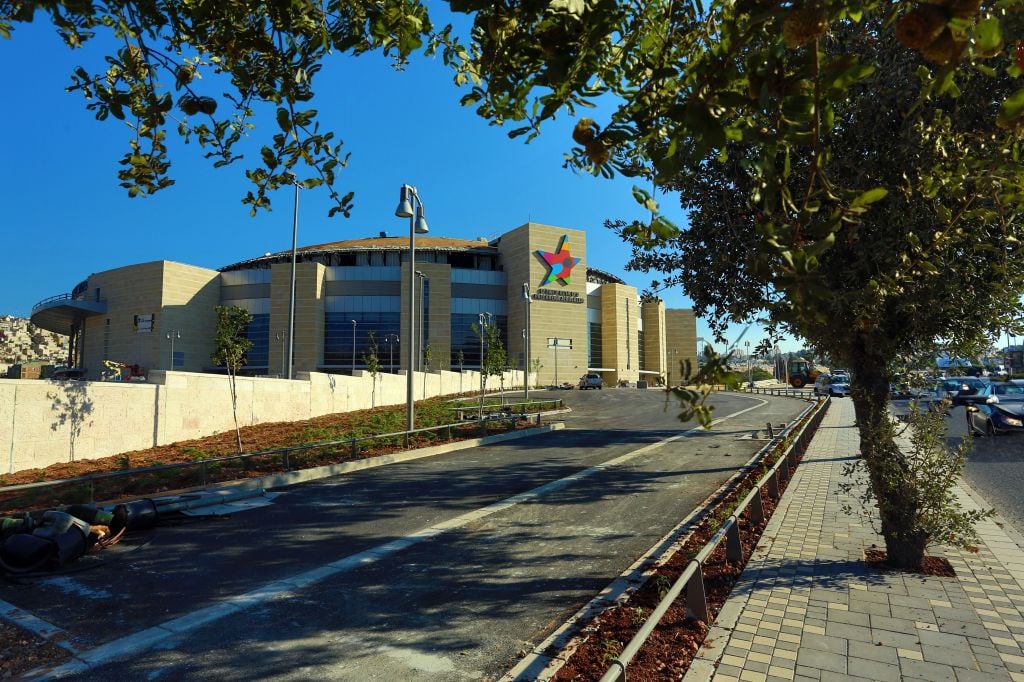
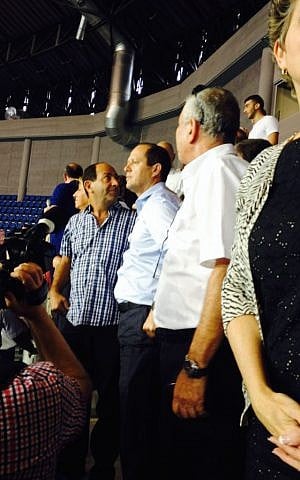
Jerusalem Mayor Nir Barkat inaugurated the brand-new, not-quite-completed Jerusalem Payis Arena on Monday, introducing the region’s largest sports, cultural and recreational center.
With 11,600 seats on 47,00 square meters (506,000 square feet) on eight levels, as well as 18 seating galleries and 16 executive boxes, the wheelchair-accessible arena, located next to Teddy Stadium in Jerusalem’s Malha neighborhood, is “the most advanced, state-of-the-art venue of its kind in the Middle East,” said the mayor.
It’s the kind of stadium where, the authorities hope, even Beyoncé could perform, if the pop star ever came to Israel.
Built over the course of five years, at a cost of NIS 399 million shekels ($111 million) — “just under budget,” said Barkat — the arena is a joint venture, financed by the national lottery organization Mifal Hapayis — which spent NIS 281 million ($78 million) — and the municipal and national governments.
It’s one of several major metropolitan projects being financed by Mifal Hapayis, said Uzi Dayan, a former major general who is the chairman of the organization. “It’s an engine for growth,” said Dayan.
Barkat said the complex was aimed to make use of the developments taking place throughout the southern end of the city, including the expansion of Begin Highway and the fast train to Tel Aviv, which is expected to be ready by 2018.
He said there would be extra trains and shuttles for special events, as well as access to the parking spaces available at Teddy Stadium.
The complex is also accessible from Hamesila Park, the train track park that runs from the First Station through the Pat intersection.
There are only 1,500 parking spaces in the arena parking lot, and a total of 3,435 spaces nearby.
Barkat didn’t seem fazed by the lack of available parking spaces.
“We don’t just dream these things, we do them,” said Barkat. “We now have the marathon, Formula 1, new theaters, the train station, the Hansen complex, Park HaMesila, the skate park. All these things help Jerusalem, and help with more employment opportunities, more growth, and a better quality of life. It makes Jerusalem more attractive.”
The last arena built in Jerusalem was Teddy Stadium, completed during the reign of longtime mayor Teddy Kollek, and used primarily by the city’s three soccer teams, Beitar Jerusalem, Hapoel Jerusalem and Hapoel Katamon. It went through another renovation in 2013, adding 12,000 seats and increasing its seating capacity to 32,700.
But while the outdoor Teddy Stadium was a major upgrade for the city’s teams, who once played at the YMCA stadium nicknamed the Sandbox, the arena takes the city’s hosting capabilities to a new level.
The complex, which is also the new home for the Hapoel Jerusalem basketball team, will include a hotel, commercial center, Olympic-sized pool, ice skating rink and bowling alley.
“I never thought we’d be playing here by 2014,” commented David Bassan, the Hapoel spokesperson.
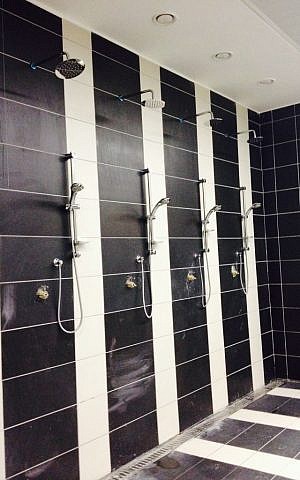
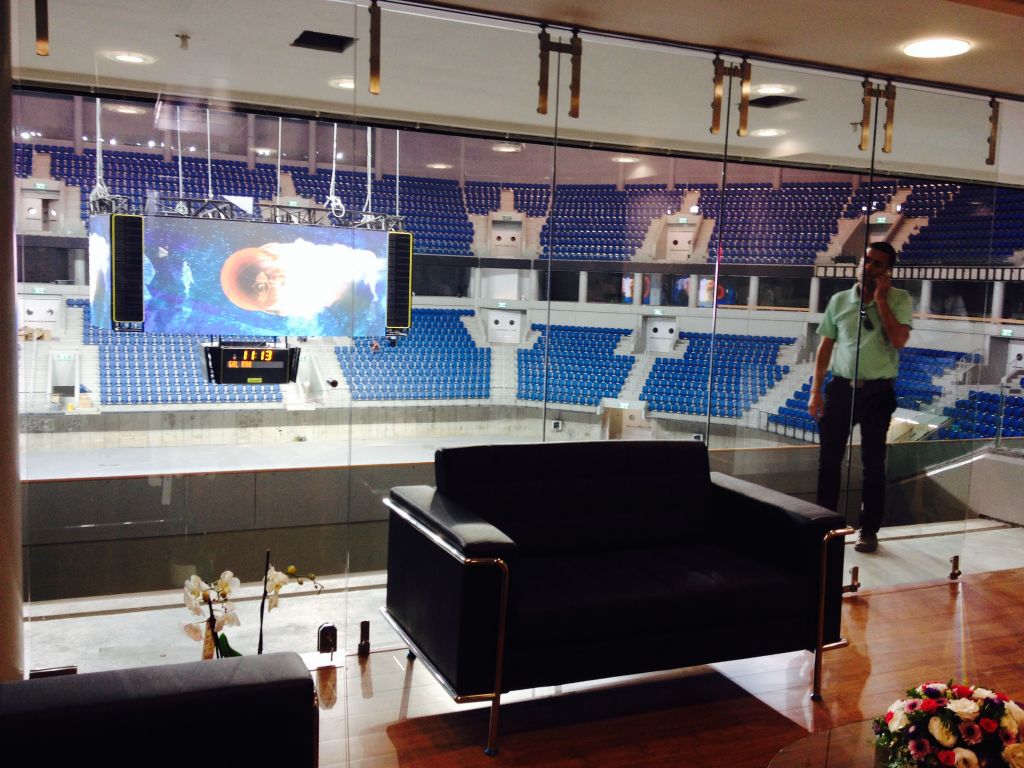
The arena includes a media center, three-meter-high shower stalls for towering basketball players, as well as spa facilities, a gym, and luxury dressing rooms for performers. There are food counters situated throughout the complex, as well as two restaurants and a 900-square-meter (9,687 feet) viewing suite for private parties, with a private chef, waiters and a private elevator leading directly to the parking lot.
The center of the Arena is the LED cube, a 200-square-meter (2,153 feet) video and score board visible from every seat in the arena, and the largest of its kind in Europe. The court, which will be floored in parquet and will include floor seating, meets International Basketball Federation (FIBA) standards, including Euroleague and Eurobasket games.
Until now, Jerusalem hasn’t had an indoor venue that could hold more than a few thousand people. Outdoor events are restricted by the city’s 11 pm deadline.
“We can hold all kinds of events now,” said Zion Turgeman, CEO of the Ariel Municipal Company. “The basketball playoffs will be here, and so will all the larger conventions.”
For it’s the thought of hosting Maccabi Tel Aviv, the championship-winning basketball team, that sends shivers down the spines of every local bureaucrat.
“To have Maccabi Tel Aviv here would be a great thing,” said Turgeman.
Turgeman added that they would soon be announcing an upcoming performance by a major artist at the venue.
The mayor beamed throughout most of the half-hour press conference and tour that followed, pointing out his favorite parts of the new arena.
“The whole place was designed with a certain modularity in mind,” he said, indicating the arena’s accessibility for different kinds of events. “You see how it has a steep roof, rather than a wide one? That means everyone gets a good seat, because no seat is too far from the action.”
That was the idea, said Ira Davelman, Moriah’s head engineer for the project. There are no corner seats that don’t offer views of the game or stage.
“It’s huge, but intimate,” she said. “It’s Jerusalem’s new home.”
It’s a stadium for everyone, said Nir Partzilena, the project manager who oversaw the arena project and has done the same for Tel Aviv’s Bloomfield and Nokia stadiums.
“You can be rich or not, but you’ll have a great seat wherever you are in the stadium,” he said.
And when Maccabi Tel Aviv comes to play?
“I’ll be sitting with my family, in the tenth row,” he said.






The Times of Israel Community.